PM urges legal reforms to remove obstacles, foster development

Law-making should strengthen the Party’s leadership, broaden consultations with stakeholders, facilitate growth, serve the people, streamline administrative procedures, promote decentralisation, and stay closely aligned with realities, said Prime Minister Pham Minh Chinh.

PM urges legal reforms to remove obstacles, foster development -0
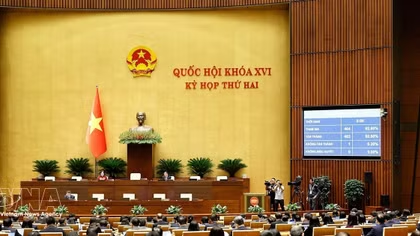
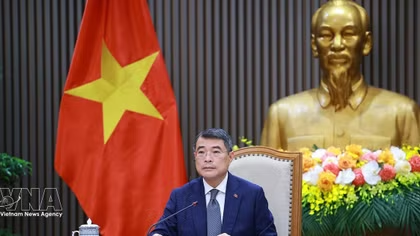
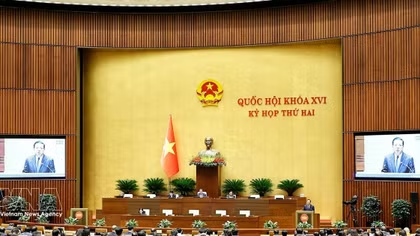
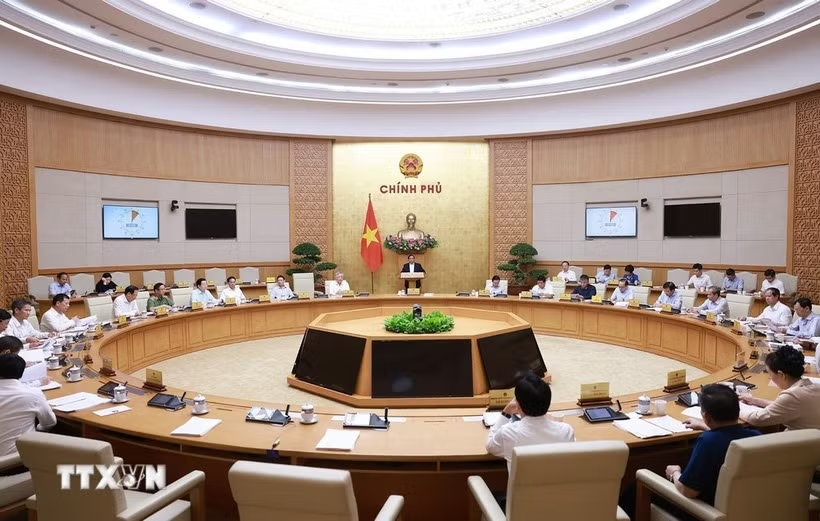
Prime Minister Pham Minh Chinh chairs the Government’s law-making session on September 8. (Photo: VNA)

Prime Minister Pham Minh Chinh stressed that legislation must both remove obstacles and create an open yet manageable framework that fosters development while chairing the Government’s first law-making session in the month to review and give opinions on nine draft laws on September 8.

He underlined that law-making should strengthen the Party’s leadership, broaden consultations with stakeholders, facilitate growth, serve the people, streamline administrative procedures, promote decentralisation, and stay closely aligned with realities.

The PM requested that draft amendments clearly explain why provisions are removed, refined, or supplemented, and why decentralisation is necessary. New draft laws, he noted, must fully reflect the Party’s guidelines, address real-life challenges, consider expert and public feedback, assess policy impacts, follow proper procedures, and ensure adequate resources for enforcement.

He emphasised that alongside drafting laws, relevant decrees and guidelines must be promptly issued to put them into practice. He called for stronger inspection and supervision to prevent corruption and policy abuse, better communication to build public consensus, improved human resources with adequate incentives, and prioritisation of infrastructure for digitalisation, big data, AI, and virtual assistants in law-making and enforcement.

PM Chinh also urged effective implementation of laws and resolutions adopted at the 15th National Assembly’s ninth session, particularly in removing institutional and policy bottlenecks to create breakthroughs in infrastructure and development. Funding and personnel for law-making must be allocated urgently in line with Party and National Assembly documents, especially Resolution No. 197/2025/QH15 on special mechanisms for legal reform, which took effect on July 1.
PM urges legal reforms to remove obstacles, foster development -0
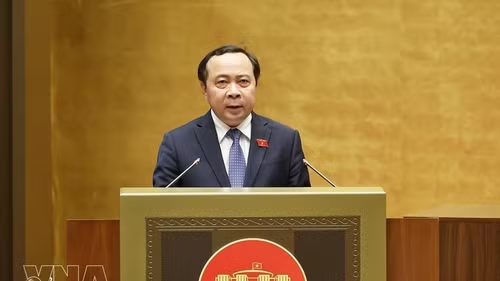
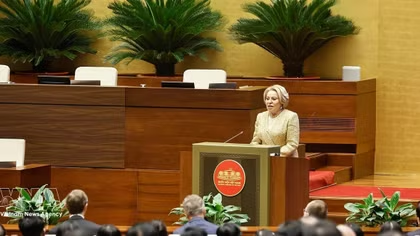
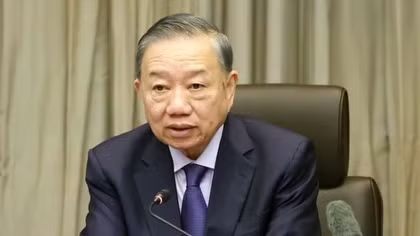
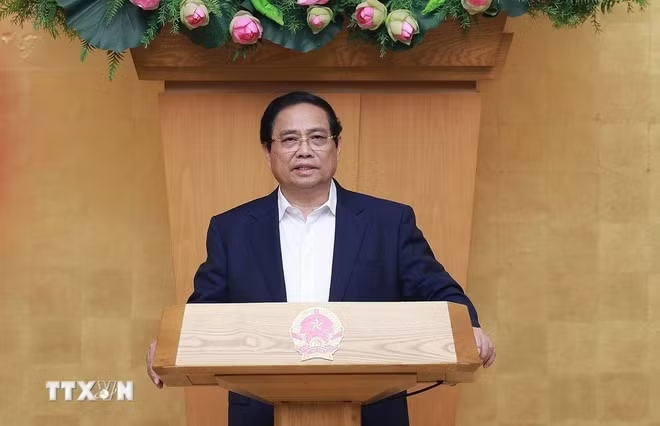
Prime Minister Pham Minh Chinh speaks at the event. (Photo: VNA)

At the meeting, Government members discussed draft amended and new laws, including the replaced Personal Income Tax Law; the amended Law on High Technologies; the Law on amending and supplementing some articles of the Law on Technology Transfer; the Law on amending and supplementing some articles of the Law on Intellectual Property; the Law on amending and supplementing some articles of the Law on International Treaties; the Law on amending and supplementing 10 laws related to security and order; the amended Law on Protection of State Secrets; the Law on amending and supplementing 15 laws on agriculture and environment; and the amended Press Law.

Particular attention was given to the two laws – the Law on amending and supplementing 10 laws related to security and order and the Law on amending and supplementing 15 laws on agriculture and environment – due to their wide-ranging impact.

On the amended Press Law, Government members proposed that it create conditions for the press to develop in a professional, humane, and modern manner. The law should define the classification, roles, and functions of press agencies; separate press management from social media; establish mechanisms for major press agencies; and specify the rights and responsibilities of journalists and collaborators, they said.

Concluding the session, PM Chinh praised the Ministries of Public Security, Foreign Affairs, Finance, Culture, Sports and Tourism, Science and Technology, Agriculture and Environment, and other relevant agencies for their thorough preparation of the draft laws and documents. He acknowledged the responsible and practical contributions of Government members and participants, and instructed drafting agencies to quickly finalise the bills in accordance with the Law on Promulgation of Legal Documents for submission to the National Assembly at its 10th session in October.
VNA

Other News

Vietnam aims to promote ASEAN unity, resilience and practical cooperation: Deputy FM

Vietnam aims to promote ASEAN unity, resilience and practical cooperation: Deputy FM

Prime Minister Le Minh Hung's attendance at the 49th ASEAN Summit and related summits in Manila, the Philippines, from November 14-17 aims to concretise Vietnam's foreign policy of independence, self-reliance, resilience, multilateralisation and diversification, and reaffirm ASEAN's position as Vietnam's foremost strategic priority in its foreign policy.

Vietnam's development inspires Francophone community: OIF Representative

Vietnam's development inspires Francophone community: OIF Representative

The IOF official recalled that the Francophonie Summit in Hanoi in 1997 marked a turning point for the organisation, with leaders establishing the position of OIF Secretary-General and placing economic cooperation at the centre of its agenda. Nearly three decades later, the Francophonie Summit is returning to Asia, with Phnom Penh hosting the summit under the theme “Reinvesting in Peace for Shared Prosperity and Lasting Stability”.

PM to attend 49th ASEAN Summit and related meetings in Philippines

PM to attend 49th ASEAN Summit and related meetings in Philippines

Prime Minister Le Minh Hung will lead a high-level Vietnamese delegation to attend the 49th ASEAN Summit and related meetings in Manila, the Philippines, from November 14 – 17 at the invitation of President Ferdinand Romualdez Marcos Jr. of the Philippines, the Chair of ASEAN in 2026.

Vietnam's top leader concludes official visit to Japan

Vietnam's top leader concludes official visit to Japan

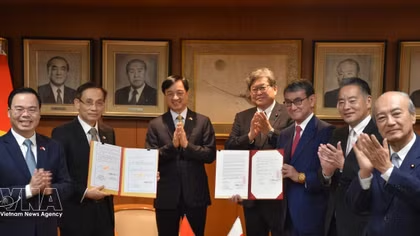
At their talks, General Secretary and President Lam and Japanese Prime Minister Takaichi Sanae reaffirmed that Vietnam and Japan are each other's leading and long-term important partners, sharing many common interests, with the development of one country creating favourable conditions for the groth of the other. Vietnam is a priority partner in Japan's foreign policy and the implementation of its New Growth Strategy.

Vietnamese, Venezuelan foreign ministries hold 11th political consultation

Vietnamese, Venezuelan foreign ministries hold 11th political consultation

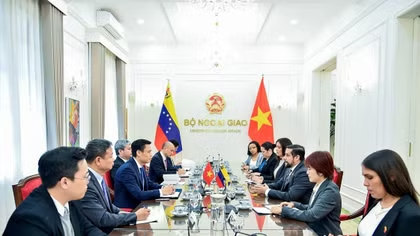
To further strengthen the Vietnam-Venezuela Comprehensive Partnership and make it more effective, Giang proposed both sides make full use of existing cooperation mechanisms, promptly address difficulties and seize new opportunities to expand cooperation in areas with potential, including oil and gas, telecommunications, agriculture, education and training, and tourism.

Top Vietnamese leader, his spouse meet with Japanese Emperor, Empress

Top Vietnamese leader, his spouse meet with Japanese Emperor, Empress

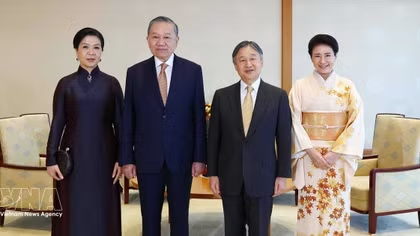
In a warm and friendly atmosphere, Emperor Naruhito and Empress Masako expressed their pleasure at the positive, substantive and comprehensive development of Vietnam-Japan relations, as well as increasingly vibrant exchanges between the two countries’ leaders and people.

Lawmakers to discuss amendments to Law on Food Safety on November 11

Lawmakers to discuss amendments to Law on Food Safety on November 11

The draft law adds provisions on the principles governing its application in cases of legal conflicts between the Law on Food Safety and other laws. It sets out additional obligations for businesses operating through e-commerce, provides for a food safety information and data system, and requires food businesses to meet good hygiene practices and apply advanced food management systems.

Top Vietnamese leader meets leading Japanese financial institutions in Tokyo

Top Vietnamese leader meets leading Japanese financial institutions in Tokyo

General Secretary of the Communist Party of Vietnam Central Committee and President To Lam expressed his wish for bilateral financial cooperation to move beyond a traditional provider-recipient relationship towards a development partnership in which the two sides jointly develop financial markets, design effective capital mobilisation solutions and invest in projects and sectors that build long-term competitiveness.