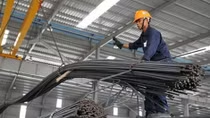
Trade war puts steel products at risk of unfair competition
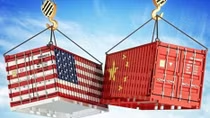
Domestically-produced steel products are facing the risk of unfair competition from those originating from China as result of the ongoing US-China trade war, insiders have warned.
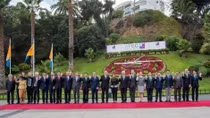
Twenty one member economies of the Asia – Pacific Economic Cooperation (APEC) forum have voiced their support for free trade in the context that global economy is being affected by the US-China trade war.
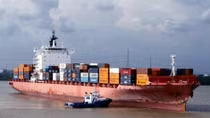
Vietnam is expected to cash in on container shipping in 2019 as the US-China trade war will make the country busier with import and export activities, experts said.
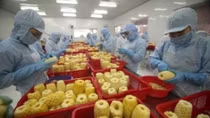
Experts have judged that the national export goal and trade deficit rate next year set by the Government was feasible.
Yokowo and Zhejiang Hailide New Material’s plan to relocate their factories from China to Vietnam shows that Vietnam will be one of the leading destinations for investors operating in China due to the impact of the US-China trade war.
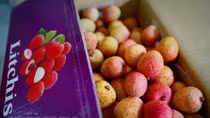
Earnings from vegetable and fruit exports in the first seven months of the year are estimated at US$2.3 billion, a year-on-year surge of 12.6%, according to the Ministry of Agriculture and Rural Development’s Processing and Market Development Authority (AgroTrade).
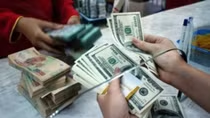
The Government will have to decide either to devalue the Vietnamese dong further against the US dollar to support exports and avoid cheaper Chinese goods to flood in the local market, or keep the dollar/dong exchange rate stable to avoid increased public debt and control inflation as the US-China trade war accelerates.
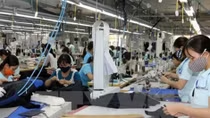
Vietnam’s key commodities, including apparel, leather, and footwear, are forecast to be hurt by the US-China trade war, which began on July 6 when the US imposed new tariffs on a majority of Chinese imports into the country, worth nearly US$34 billion.
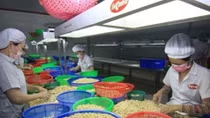
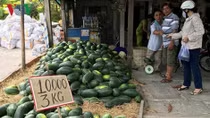
The ongoing US-China trade war will greatly impact on the structure of the world economy in the future, causing damage but also generating indirect opportunities for countries where the economy relies heavily on agricultural production like Vietnam.