Hosting APEC in 2027 will mark a shift in Vietnam’s economic trajectory, from an emerging manufacturing hub toward a more active role in shaping regional economic governance, said security and foreign affairs analyst Collins Chong Yew Keat from the University of Malaya.
Speaking to Vietnam News Agency reporters based in Kuala Lumpur, Collins Chong said Vietnam joined APEC in 1998 and hosted the forum in 2006 and 2017. Its third hosting year comes after decades of deeper economic integration, export-led industrialisation and foreign investment, as the country has become more embedded in regional production networks.
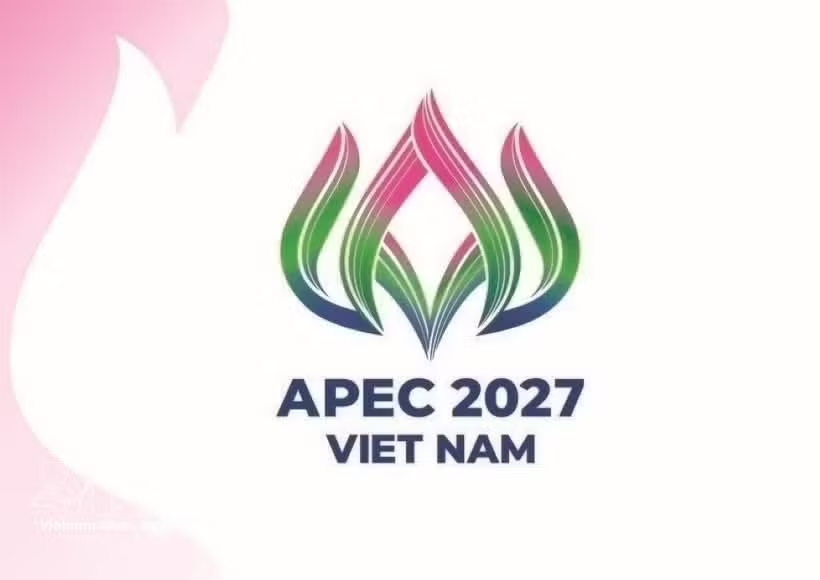
Receiving the role as APEC 2027 host from Chinese Party General Secretary and President Xi Jinping, General Secretary of the Communist Party of Vietnam Central Committee and President To Lam unveiled the theme for 2027 “Creating a New Era of Resilience, Innovation and Shared Prosperity”. Vietnam has set three priorities of lifting productivity; expanding regional trade and investment; and bolstering economic resilience and dynamism and improving living standards. The agenda reflects a broader economic imperative that low-cost manufacturing and export growth alone will not sustain Vietnam’s next phase of development. The country must move into higher-value activities, build domestic technological capacity and secure a stronger position in advanced supply chains. APEC gives Vietnam a platform to connect that domestic shift with regional economic cooperation.
The host year also gives Vietnam an opening to push for more predictable trade rules, transparent supply chains and a wider range of economic partnerships. But APEC cannot substitute for bilateral trade negotiations or shield members from tariff risks. Vietnam is therefore likely to anchor its approach in independence, self-reliance and diversified foreign relations, rather than alignment with any single major power.
One near-term opportunity is to turn China’s 2026 digitalisation and connectivity initiatives into workable regional programmes, Collins Chong said. Vietnam need not start from scratch. It can build on trade digitalisation frameworks, artificial intelligence cooperation and connectivity commitments agreed at the 33rd APEC Economic Leaders’ Meeting in Shenzhen. Interoperable electronic customs documents and digital trade procedures could cut compliance costs and administrative delays for firms. Support for smaller companies to adopt digital tools, enter regional value chains and raise productivity is another potential priority. Cooperation could also target semiconductor skills, digital infrastructure, responsible AI application and technology-focused workforce training.
According to him, Vietnam is also positioned to bridge ASEAN economic integration with wider Asia-Pacific cooperation. Its location and role in regional manufacturing networks give it a stake in transport corridors, logistics, maritime trade and supply chain diversification. The country could use APEC 2027 to improve practical alignment across existing trade agreements, including the Regional Comprehensive Economic Partnership (RCEP) and the Comprehensive and Progressive Agreement for Trans-Pacific Partnership. Areas (CPTPP). Joint work could target trade facilitation, clearer rules-of-origin procedures, digital commerce and more compatible regulations.
Economic resilience offers another area for cooperation. Vietnam could push for closer regional work on food security, energy infrastructure, disaster preparedness and climate adaptation, with particular relevance for developing and coastal economies. Those priorities have been already featured in the Shenzhen Declaration, providing continuity between China’s and Vietnam’s respective APEC host years.
The selection of Phu Quoc as host of the 2027 APEC Economic Leaders’ Week carries economic and development significance. The gathering could accelerate upgrades to international connections, tourism facilities and conference infrastructure, while raising the island’s profile among foreign investors. Preparations include airport expansion, conference facilities, transport projects and environmental infrastructure. But the investment push also brings longer-term pressures as water security, waste treatment and environmental protection will be critical to sustaining tourism and safeguarding the island’s coastal ecosystems.
APEC’s limits will shape what Vietnam can realistically achieve. The forum cannot force members to cut tariffs, align technology rules or settle strategic disputes. Vietnam’s room will depend instead on finding areas of overlapping economic interest where members are prepared to cooperate voluntarily. The most credible agenda will centre on measurable gains: paperless-trade pilots, digitalisation schemes for small and medium-sized enterprises, technical training partnerships and better logistics coordination. Vietnam could also work through the APEC Business Advisory Council to ensure that initiatives address the operational needs of companies and investors. Concrete results will show that multilateral economic cooperation can deliver value even as geopolitical divisions persist.
In his view, China’s and Vietnam’s back-to-back APEC host years create room for continuity in regional economic governance. China’s 2026 agenda focused on connectivity, technology and regional integration while Vietnam’s 2027 priorities centre on productivity, trade, investment and resilience. The convergence could give room for sustainable cooperation without requiring the two economies to share the same political or strategic outlook. Vietnam will still pursue its own national interests and development priorities. Its opportunity as host is to steer the forum towards practical issues where regional economies can make progress.
For Vietnam, APEC 2027 is a chance to advance productivity, innovation, infrastructure links and economic resilience while expanding its diplomatic reach, the scholar said. China’s 2026 initiatives provide a starting point, and Vietnam’s host year will test whether that momentum can be carried forward into durable regional cooperation, he added.