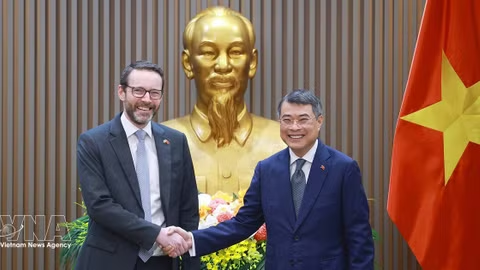
Deputy Prime Minister and Foreign Minister Pham Binh Minh has highlighted the Association of the Southeast Asian Nations (ASEAN) as a strong and cohesive community in an article written on the occasion of the bloc’s 52nd founding anniversary (August 8).

A politically strong, economically cohesive, mutually sharing community
In his article, the official noted that with a population of more than 642 million and an area of over 1.7 million sq.km., ASEAN is a highly potential market. It is forecast to become the world’s fourth largest economy by 2050.
The ASEAN Community has entered the fourth year of development since its establishment on December 31, 2015 and is making efforts to realise the ASEAN Community Vision 2025, a process in which it has reaped initial encouraging progress.
For a regional environment of peace, security and stability, the ASEAN countries have been striving to promote dialogue, enhance cooperation, build trust, push for adherence to international law, and form and share common values and standards as recognised in the Treaty of Amity and Cooperation in Southeast Asia (TAC), the ASEAN Charter, the Southeast Asian Nuclear Weapon-Free Zone (SEANWFZ), and the Declaration on the Conduct of Parties in the East Sea (DOC), Minh said.
He noted the bloc has also showed its steadfastness and capability of maintaining solidarity and unanimity in the face of issues affecting regional peace and security like the issues of the East Sea, the Muslims in Myanmar’s Rakhine state or the Korean Peninsula. Cooperation to prevent non-traditional security challenges have also continued to be enhanced.
According to Deputy PM Minh, efforts to boost economic partnership within the bloc and with partners have given ASEAN stable economic growth, predicted at 4.9 percent in 2019 – almost doubling the world’s average. The grouping’s gross domestic product (GDP) totals about 3 trillion USD while its market has expanded to the leading economic partners through bilateral free trade agreements and the Regional Comprehensive Economic Partnership (RCEP).
The initiatives on ASEAN connectivity, development gap narrowing or the ASEAN Open Skies are gradually realising the association’s goal of inclusive and sustainable development.
ASEAN has also become a popular travel destination with the number of intra-bloc tourists almost reaching 50 million and that of foreign tourists approximating 130 million in 2018.
Notably, people have been being put at the centre of the ASEAN Community building process, Deputy PM and FM Minh said, noting that the rights and interests of people in the region have been promoted through cooperation in coping with climate change, natural disasters and epidemics, protecting vulnerable groups, visa-free movement among ASEAN countries in 15 – 30 days, freely seeking employment through mutual recognition arrangements, and receiving consular assistance when encountering difficulties in a third country where their countries do not have representative agencies.
Solid central role in an open regional architecture
According to Deputy PM Minh, the ASEAN region, located in an important site of geo-strategic importance at the centre of the wide region connecting the Oceania and the Pacific, has been able to bring into play its central role in shaping an open, transparent, inclusive and rule-based regional cooperation architecture, with connectivity and harmonized interest with partners.
Forums launched and led by ASEAN have attracted the active engagement of countries, including world power, he noted, adding that five permanent members of the UN Security Council are all full partners of the ASEAN, while more and more countries are wishing to set up partnership with the ASEAN and join the TAC.
The official noted in the regional strategies of world powers, such as the Indo-Pacific Strategy, the Road and Belt, and the “Act East Policy”, the central role of the ASEAN has always been highlighted.
Cohesion for adaptation
Over the past five decades, the ASEAN has seen many ups and downs. But the association has managed to mature and become self-reliant and sustainable than ever. The key to success and strength of the ASEAN is solidarity, stated Minh.
He held that in order to stay steady and effectively adapt to complicated changes in the regional and global environment, more than ever the association must maintain solidarity and unity, enhancing self-reliance in economy as well as the capacity to cope with emerging challenges in a proactive manner.
Under the 2019 theme of “Advancing Partnership for Sustainability,” the ASEAN has continued to show its proactivity and adapting capacity.
With the adoption of the ASEAN Outlook on Indo-Pacific (AOIP) at the 34th ASEAN Summit in June, 2019, the ASEAN has demonstrated its central role and proactivity in the mixed changes of the region.
Developing smart city, dealing with oceanic debris, combining the ASEAN Community Vision 2025 with the UN Sustainable Development Goals 2030, protecting cyber security, and coping with population aging are among remarkable milestones of the ASEAN over the years.
In the 52nd ASEAN Foreign Ministers’ Meeting in early August this year, amidst complicated developments in the region, the minister continued to affirmed the ASEAN’s principled stance, highlighting the significance of conforming to international law and the UN Convention on the Law of the Sea, and expressing concern about the current serious situation.
With the tension among major economies and the rising protectionism, the ASEAN is committed to further strengthening intra-bloc trade and investment, soon concluding the negotiations on the RCEP and reinforce the equal and rule-based international multilateral trade system.
As long as the ASEAN maintains its solidarity and unity, and remains bound by common values and interest that go beyond differences due to diversity, the ASEAN Community will be stable and everlasting, he underlined.
2020: Important milestone for Vietnam
The year 2020 will mark an important milestone when Vietnam assumes the role as the ASEAN Chair and the 25th anniversary of Vietnam’s accession to the bloc is celebrated, Deputy PM Minh wrote, adding that in the year, the country will also serve as a non-permanent member of the United Nations Security Council for the 2020-2021 tenure.
The official shared that the top priority of Vietnam in 2020 will be working with ASEAN to successfully implement goals of the ASEAN Community Vision 2025. This is also a chance for the country to boost bilateral relations with other ASEAN member states and partners, improve its international position, and promote the image of the country and its people.
To that end, Vietnam needs support from ASEAN member states and the bloc’s partners and joint efforts from all ministries, sectors, localities, businesses and people, Minh said.
According to him, Vietnam is doing its utmost to successfully perform its role as the ASEAN Chair in 2020 so as to build a united ASEAN Community that is proactively adaptive to any possible opportunities and challenges, Minh added.
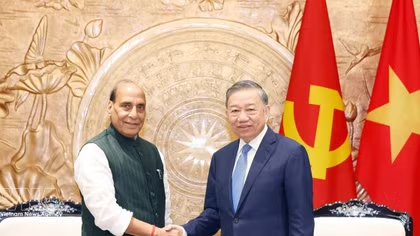
Vietnam highly evaluates India’s role and contributions to regional peace, stability and development, and always regards India as one of its most important partners, the top leader said.
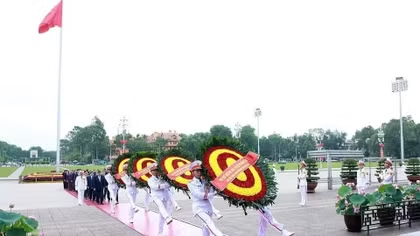
The Party and State leaders expressed their profound respect and boundless gratitude to President Ho Chi Minh, who founded and trained the Communist Party of Vietnam and made immense contributions to the Party and nation’s glorious revolutionary cause.
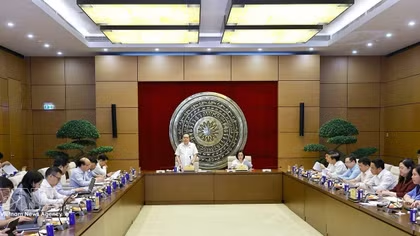
The NA's Committee for Cultural and Social Affairs has moved fast to reshuffle its organisation after the 14th National Party Congress and the election of deputies to the 16th NA, updating its work agenda to match new directives set out in the resolutions of the 14th National Party Congress and the first Congress of the NA Party Organisation for the 2025–2030 term.
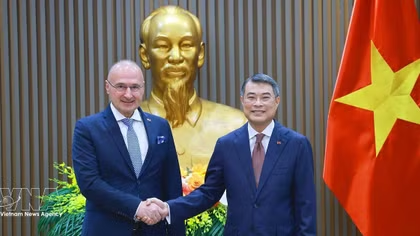
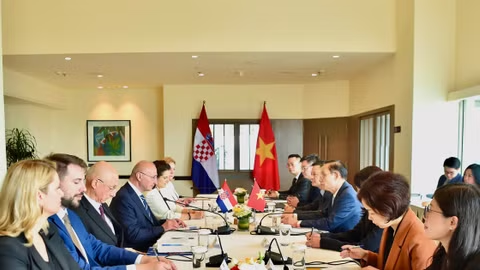
Vietnam and Croatia should strive to double bilateral trade turnover from the current level of 161 million USD; study the establishment of a Joint Committee on Economic Cooperation to create a long-term, stable, and effective framework for collaboration, said Prime Minister Le Minh Hung.
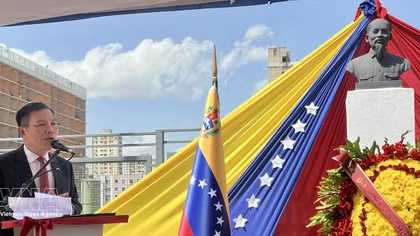
Vice President of the United Socialist Party of Venezuela (PSUV) Jesús Faria expressed deep admiration for President Ho Chi Minh and Vietnam’s indomitable struggle for national independence. He described President Ho Chi Minh as an immortal symbol of 20th-century national liberation movements, whose legacy continues to inspire leftist parties, progressive movements, and peoples across Latin America, including Venezuela.
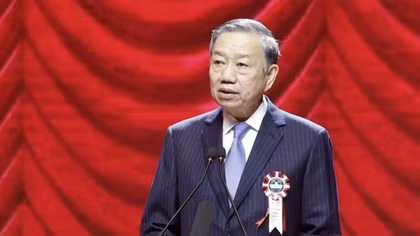
Vietnam National University, Hanoi must rise even further, becoming a leading academic pillar, a major hub of innovation, and a pioneering force in Vietnam’s higher education system; while also serving as a distinguished and reputable representative of Vietnamese intellect on the international stage.
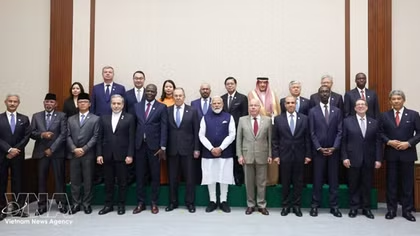
Deputy Foreign Minister Nguyen Minh Hang shared Vietnam’s approach to building an independent and self-reliant economy linked to deep international integration, while proposing several key areas for enhanced cooperation between BRICS and partner countries at the Expanded BRICS Foreign Ministers' Meeting that opened on May 14 in India.
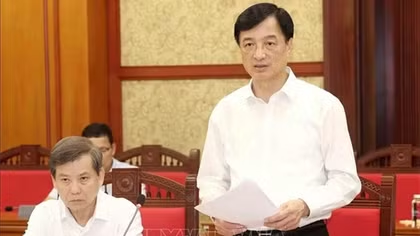
The Central Steering Committee for reviewing the one-year operation of the political system’s apparatus and the two-tier local administration model convened its first session in Hanoi on May 14.
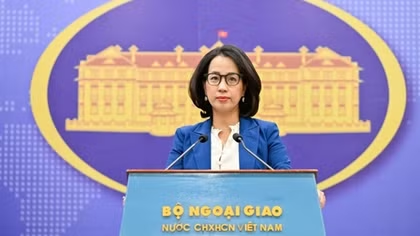
PSNews - The spokesperson stated that the dispatch of personnel by relevant parties to features belonging to Truong Sa without Vietnam’s permission constitutes a violation of Vietnam’s sovereignty under international law. She stressed that such actions run counter to the Declaration on the Conduct of Parties in the East Sea (DOC) as well as ongoing efforts by countries to negotiate a Code of Conduct in the East Sea (COC).
PSNews - Vietnam’s proposals placed the highest priority on ensuring a peaceful and stable environment conducive for continued sustainable development and improving the well-being and happiness of the ASEAN people. They were praised by member states and incorporated into the core contents of the ASEAN Leaders’ Statement on the response to the Middle East crisis.
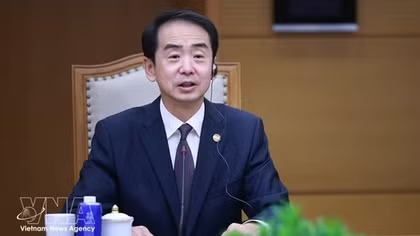
Both sides emphasised that advancing bilateral relations is a shared strategic choice, and pledged to steadfastly pursue the socialist path and jointly safeguard the socialist regimes and the leadership role of their Communist Parties as their most fundamental common strategic interest, Ambassador He Wei said.
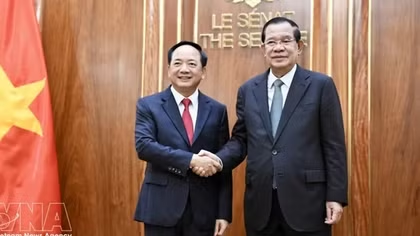
At the meetings, the senior Vietnamese Party official affirmed that Vietnam would continue to work closely with Cambodia to strengthen and deepen bilateral ties, while consistently supporting Cambodia’s peaceful, stable and prosperous development.
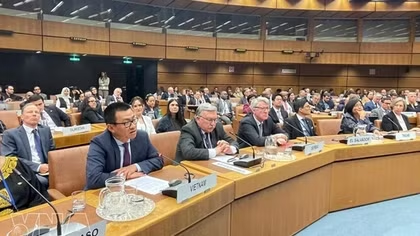
Vietnam highly values the support of the United Nations Office on Drugs and Crime (UNODC) in strengthening national capacity in crime prevention and criminal justice, drug control, and addressing emerging challenges, particularly cybercrime, said Ambassador Vu Le Thai Hoang.
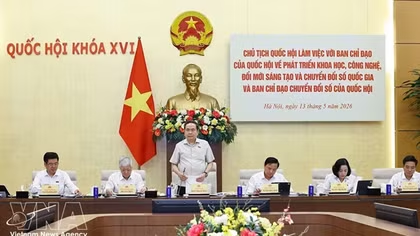
NA Chairman Tran Thanh Man underlined that digital transformation must go beyond investing in software or platforms and instead create substantive changes in working methods, advisory quality and operational efficiency.
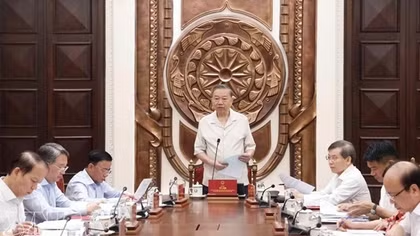
Consolidating the central steering committees for institutional and legal reform and for judicial reform is necessary in order to streamline organisational structures without reducing responsibilities, while ensuring clear accountability, measurable outputs and concrete results. Following the restructuring, the body will be renamed the central steering committee for institutional improvement and law enforcement, with the Party General Secretary and State President serving as its head.
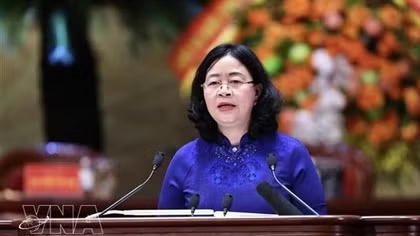
Bui Thi Minh Hoai was re-elected President of the the Vietnam Fatherland Front (VFF) Central Committee for the 2026-2031 tenure at the first conference of the 11th-term VFF Central Committee, held before the closing session of its 11th National Congress on May 13 morning in Hanoi.
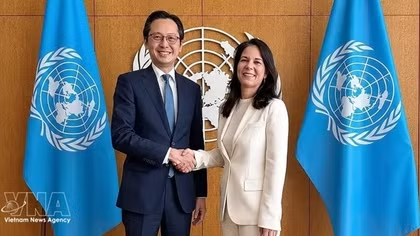
At the meeting this week, Ambassador Viet briefed the UNGA President on developments during the first two weeks of the conference. He stressed that the current international geopolitical landscape poses numerous complex challenges, while reaffirming Vietnam’s determination, together with other member states, to promote substantive and balanced outcomes at the conference.
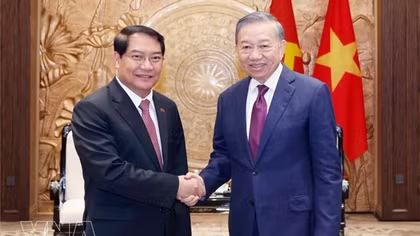
The host leader stressed that cooperation between localities, particularly between the capitals of Hanoi and Vientiane, plays an especially important role as a pioneering force in effectively implementing the foreign polices of the two Parties and States, while also serving as a bridge between politics and development, as well as between strategy and concrete action.
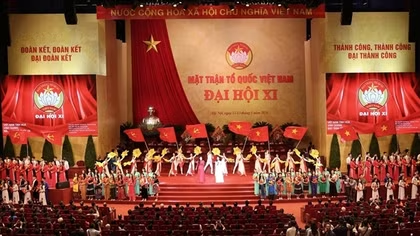
More than 1,300 delegates are attending the 11th National Congress of the Vietnam Fatherland Front (VFF) for the 2026–2031 tenure, including 1,138 official delegates.
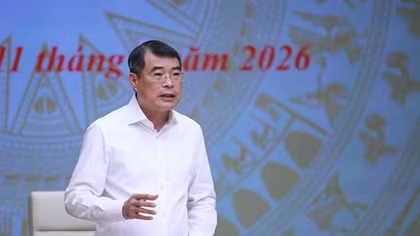
Prime Minister Le Minh Hung praised ministries and agencies for their proactive steps since the beginning of this year and especially from early April to follow the Politburo’s Resolution 57 and Conclusion 18, with clear, positive progress.