Top leader urges sweeping legal reform for dispute settlement, judgment enforcement

General Secretary and President To Lam demanded a sweeping review rather than piecemeal amendments to individual laws, so that people's rights are protected on a continuing basis.

General Secretary of the Communist Party of Vietnam Central Committee and President To Lam has called for continued, coordinated refinement of laws governing the prevention and settlement of civil and administrative disputes and the enforcement of judgments.

At a working session with the Party Central Committee's Commission for Internal Affairs and relevant agencies in Hanoi on September 28, General Secretary and President Lam told Party committees, organisations and their heads to keep a close watch on direction and move quickly to spot prolonged backlogs and loopholes that invite violations and misconduct.
vnanet-e.jpg
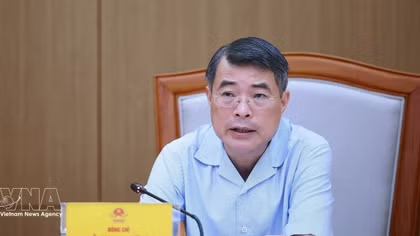
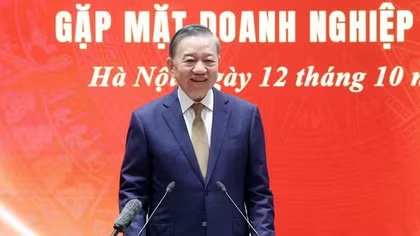
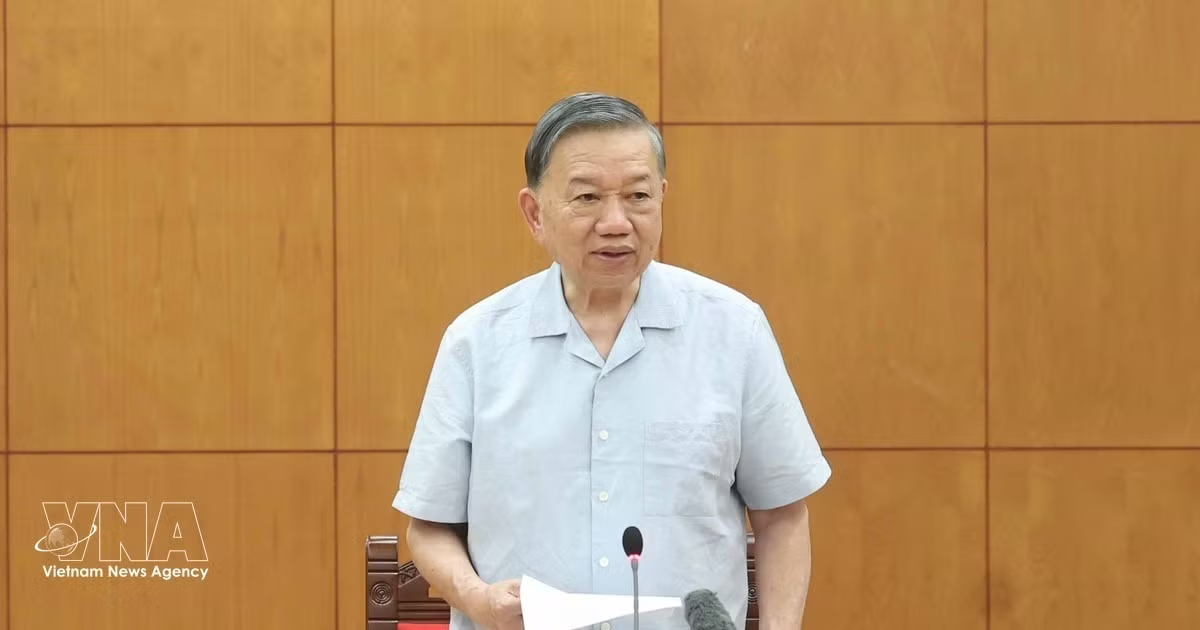
General Secretary of the Communist Party of Vietnam Central Committee and President To Lam speaks at the meeting with the Party Central Committee's Commission for Internal Affairs and relevant agencies in Hanoi on September 28, 2026. (Photo: VNA)

Party leadership must be principled and never illegally interfere in adjudication, he said. Judicial independence, however, must not serve as a pretext for loosening leadership, examination, supervision or control of power. Oversight by people-elected bodies and the Party must become more substantive, with the whole political system involved, he requested.

He demanded a sweeping review rather than piecemeal amendments to individual laws, so that people's rights are protected on a continuing basis.

He said rules must be clarified on evidence collection, provision and evaluation; expert examination; valuation; temporary emergency measures; appellate review; cassation; retrial; and responsibility for judgment enforcement. Erroneous administrative judgments must be corrected on proper grounds and through proper procedures, without undermining the stability of rulings. Legally effective decisions must not leave cases dragging on without a legal basis, and every dispute must have an endpoint.

The top leader said problems must be settled well before they become lawsuits. He called for a multi-tiered dispute settlement system that is more convenient and cost-effective, greater use of negotiation, mediation and arbitration where the law allows, and a study of rules to strengthen the legal effect of these mechanisms and make court-based mediation and dialogue more effective.

Priority should go to settling disputes early through suitable, convenient and low-cost methods on a voluntary and lawful basis, without curbing the right to sue, he went on, adding that courts are a reliable pillar of justice, but they are not necessarily the first port of call for every dispute.
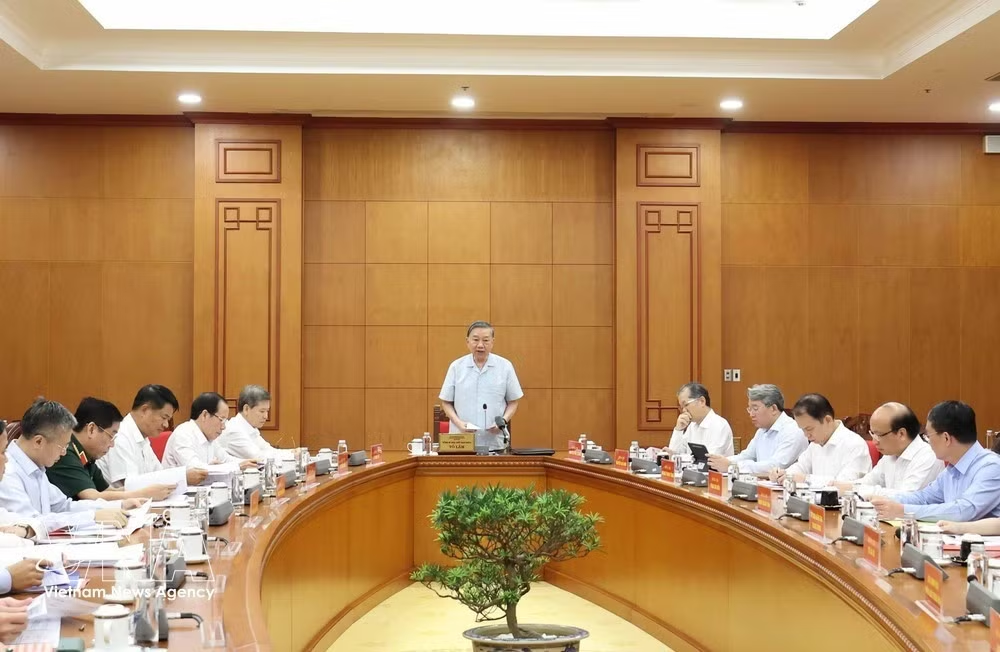
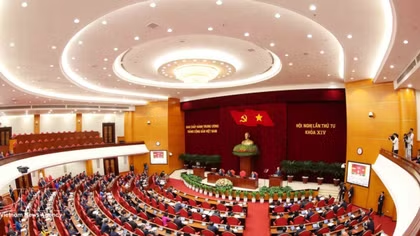
General Secretary and President To Lam chairs the meeting in Hanoi on September 28, 2026. (Photo: VNA)

The procuracy, General Secretary and President Lam said, must raise the quality of its supervision and proactively detect errors, make recommendations and lodge protests. It should draw on supervision practice to identify systemic shortcomings and propose fixes that address root causes, particularly by improving the handling of administrative cases and ensuring all citizens are truly equal before the law.

Legitimate rights and interests recognised by a court judgment must be realised in practice, because only then is there a final result. He called for a focus on enforceable but delayed judgments, backed by strict oversight, asset verification, distraint, valuation, auction and coercive enforcement.

The leader stressed the need for tighter coordination to end fragmentation among agencies and stages of the settlement process, and for wider international cooperation in dispute settlement.

He asked for clearer coordination among courts, procuracies, enforcement agencies, police, local authorities, and bodies managing land, assets, banking, taxation, expert examination, valuation and auction. Complex, long-running cases must be dealt with, and the situation must end in which each agency handles only one segment and each sector meets its targets while people's cases remain unresolved.

The General Secretary and President urged resources to match the task, starting with a judicial workforce of sufficient size, strong quality and growing professionalism. Technology, digital transformation and data-driven governance must be accelerated. He also ordered a full mapping of corruption, wastefulness and other risks at every stage and step, so they can be prevented early and from afar rather than addressed only after violations occur.

en.vietnamplus.vn

Other News

PM orders power plan overhaul to meet double-digit growth

PM orders power plan overhaul to meet double-digit growth

Securing adequate power supply is an urgent priority and a prerequisite to successfully achieve socio-economic development goals 2026, a foundational year for accelerating progress, with breakthroughs to follow in 2027 and the goals for the full term to be delivered, said Prime Minister Le Minh Hung.

Vietnam, China step up legislative cooperation, experience sharing

Vietnam, China step up legislative cooperation, experience sharing

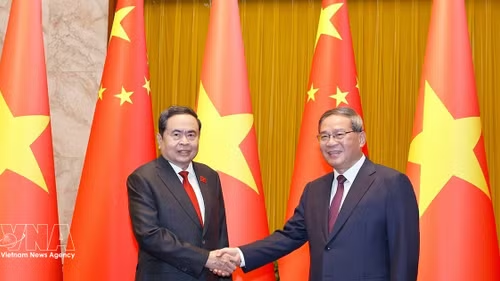
Vietnamese National Assembly (NA) President Tran Thanh Man and Chairman of the Standing Committee of the National People’s Congress (NPC) of China Zhao Leji called for more balanced and sustainable trade, high-quality investment, modern and coordinated railway connectivity, and stronger cooperation in science and technology.

Top leader pledges support for firms, presses tech self-reliance

Top leader pledges support for firms, presses tech self-reliance

The country needs more firms that master technologies, build trusted brands and run production networks able to compete globally. Progress over the next five to 10 years must show up in productivity, job quality and market position, said top leader To Lam.

Vietnam, China to boost legislative, people-to-people exchanges

Vietnam, China to boost legislative, people-to-people exchanges

To further consolidate the three pillars of political, material and social foundations underpinning ties between the two Parties and countries, NA President Man proposed maintaining exchanges at all levels, strengthening national defence-security ties, and supporting each other’s development and international standing.

NA President visits Beijing legislative liaison station

NA President visits Beijing legislative liaison station

Praising the model of bringing legislative work closer to grassroots communities, voters and the public in Nanmofang and Beijing at large, National Assembly (NA) President Tran Thanh Man said Vietnam attaches importance to legislative work in building a socialist rule-of-law state of the people, by the people and for the people. That includes listening to experts, intellectuals, businesses, voters and the general public, especially those directly affected by policies and laws.

Vietnam pledges to advance rule of law at home, uphold law-based global order at UN

Vietnam pledges to advance rule of law at home, uphold law-based global order at UN

As it updates its legal framework, Vietnam has also put in place rules governing digital technologies, personal data protection, cybersecurity, artificial intelligence and digital transformation. The country upgraded its National Legal Database and expanded digital platforms to broaden access to legal information, education and aid.

NA President arrives in Beijing, beginning official visit to China

NA President arrives in Beijing, beginning official visit to China

Vietnam–China relations have continued to develop, particularly following reciprocal visits by General Secretary of the Communist Party of Vietnam Central Committee and President To Lam and General Secretary of the Communist Party of China Central Committee and President of China Xi Jinping.

14th Party Central Committee wraps up fourth meeting

14th Party Central Committee wraps up fourth meeting

The decisions issued at this meeting aim to strengthen leadership and implementation capacity and rally the strength of the entire nation, with the value of the plenum ultimately reflected in the issues addressed and improvements in people’s lives.

PM arrives in Vientiane, beginning official visit to Laos

PM arrives in Vientiane, beginning official visit to Laos

The visit provides an opportunity for the two Parties and Governments to reaffirm the special solidarity and faithful bond between Vietnam and Laos, a close relationship forged, tested and continuously nurtured throughout history. It also demonstrates the political resolve of the senior leaders of the two Parties and Governments to further develop the Vietnam–Laos special relationship in an increasingly substantive and effective manner.

JICA broadens support for Vietnam, from “brain circulation” to economic security

JICA broadens support for Vietnam, from “brain circulation” to economic security

PSNews — The Japan International Cooperation Agency (JICA) has identified four core pillars in its new support package assisting Vietnam's transition to a high-value growth model. Notably, the agency aims to foster "brain circulation" between Vietnam and Japan while expanding cooperation into economic security and sustainable development.

PM's Laos visit to help deepen bilateral relations

PM's Laos visit to help deepen bilateral relations

The two countries established diplomatic relations on September 5, 1962. On July 18, 1977, they signed the Treaty of Friendship and Cooperation, providing an important political and legal foundation for strengthening bilateral ties and supporting each country’s cause of national construction and defence.