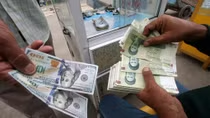
France, Germany and Britain have set up a European mechanism for non-dollar trade with Iran to avert U.S. sanctions, although diplomats acknowledged it is unlikely to yield big commercial transactions Tehran says it needs to keep a nuclear deal afloat.
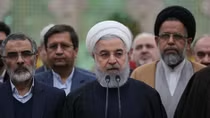
The United States announced a new raft of sanctions on Iran on Monday and threatened further action to pressure its old adversary, steps the Islamic Republic condemned as “economic war” and vowed to defy.
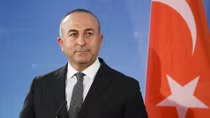
Ankara will not uphold Washington's sanctions against Tehran and will continue its trade with the Middle Eastern country, Foreign Minister Mevlut Cavusoglu told Sputnik.
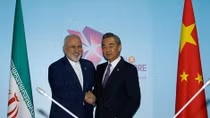
China’s business and energy ties with Iran do not harm the interests of any other country, the country’s Foreign Ministry said, after U.S. President Donald Trump said companies doing business with Iran would be barred from the United States.
Iran will react with equal countermeasures if Washington tries to block its oil exports, the foreign ministry said on Tuesday, while the Islamic Republic’s armed forces chief said U.S. threats would draw an “unimaginable and regrettable” reaction.
Any new European sanctions against Iran will have a direct effect on the nuclear deal struck between world powers and Tehran, Iran’s deputy foreign minister said Friday, according to state media.
The United States is due to announce its largest package of sanctions against North Korea to pressure the reclusive country to give up its nuclear and missile programs, as South Korea readies itself for more talks with the North.
The United Nations Security Council imposed new sanctions on the Democratic People's Republic of Korea on Wednesday aimed at cutting the Asian country's annual export revenue by a quarter in response to Pyongyang's fifth and largest nuclear test in September.