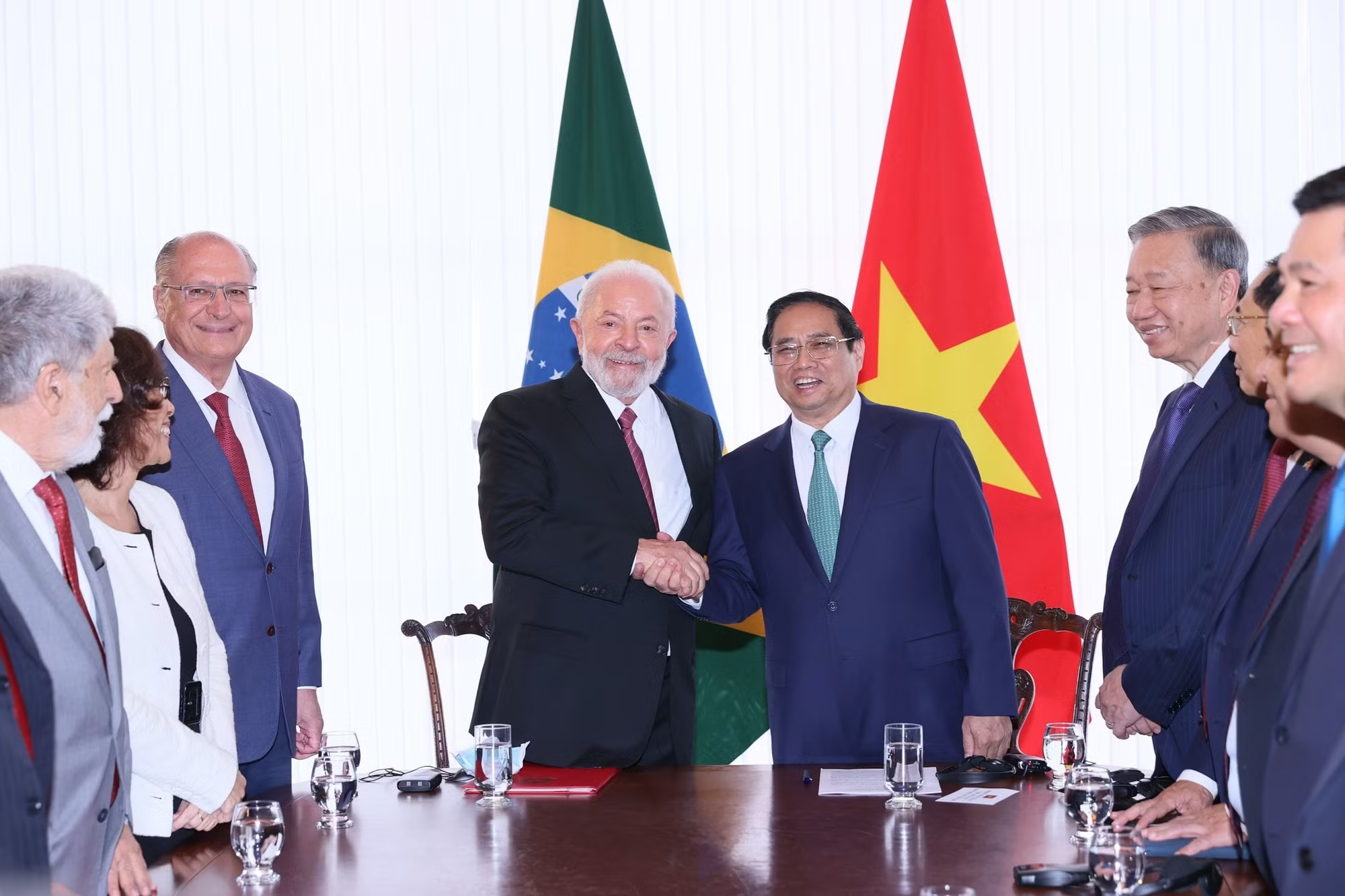
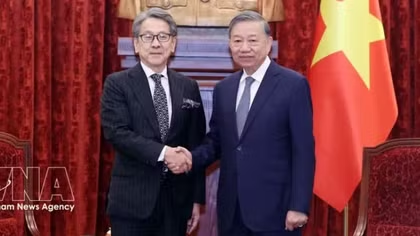
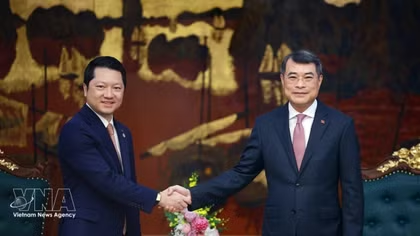
His Excellency Luiz Inácio Lula da Silva, President of the Federative Republic of Brazil, was honoured to receive the Prime Minister of the Socialist Republic of Viet Nam Pham Minh Chinh, who led a high-ranking state delegation, on an official visit to the Federal Republic of Brazil from September 23 to 25, 2023. Prime Minister Phạm Minh Chinh and President Luiz Inácio Lula da Silva. The two Leaders highlighted the significance and importance of this visit - the first ever official visit to Brazil by a Prime Minister of Viet Nam, as well as the first visit to Brazil by a Vietnamese top leader in 16 years, as the two countries head towards the 35th anniversary of the establishment of diplomatic relations in 2024.
In a spirit of mutual trust, openness and sincerity, H.E. Prime Minister Pham Minh Chinh and H.E. President Luiz Inácio Lula da Silva held discussions on important areas of Brazil-Viet Nam relations. They reaffirmed that Brazil and Viet Nam share common values of peace, cooperation, and the goal of sustainable development for their respective societies, which underpin their presence in the world and engagement in international affairs. They concurred that Brazil and Viet Nam have built a robust relationship founded on friendship and mutual respect and expressed their satisfaction at the progress achieved along 35 years of diplomatic relations between the two countries. The Leaders agreed on the importance of reconciling economic growth, social development, and environment protection, which encompasses issues such as energy security and food and nutritional security.
The Leaders witnessed the signing ceremony of four documents of cooperation, namely: an Agreement of Cooperation on Education; a Memorandum of Cooperation between the Ministry of Defence of the Socialist Republic of Viet Nam and the Ministry of Defence of the Federal Republic of Brazil; the 2024-2026 Plan of Action to Implement the Memorandum of Understanding on Agricultural Cooperation between the Ministry of Agriculture and Rural Development of Viet Nam and the Ministry of Agriculture and Livestock of Brazil; and the 2024-2025 Plan of Action between the Diplomatic Academy of Viet Nam and the Rio Branco Institute of Brazil.
The Leaders emphasized the importance of furthering effective cooperation in areas of political dialogue, economics and trade, science and technology, innovation, environment, renewable energy transition, defence and security, culture, education, high–performance sports, especially football, tourism, among others, as a basis to promote sustainable development and to increase the well-being of their countries´ citizens.
The Leaders welcomed the increasing bilateral economic exchanges between Brazil and Viet Nam in recent years and emphasized the importance of further promoting trade and investment between the two countries. In this context, Viet Nam proposed that Brazil acknowledge soon its status as a market economy.
President Luiz Inácio Lula da Silva saluted the visit of a business mission from Viet Nam. They concurred that such missions play a pivotal role in enhancing dialogue between the private sectors of both countries. With the aim of increasing bilateral trade volume to USD 10 billion in 2025 and USD 15 billion in 2030, the Leaders pledged to expand economic, trade and investment cooperation; promote the diversification of bilateral trade exchanges; promote cooperation between relevant authorities on both sides in economics, trade and investment; promote closer linkages between businesses of the two countries; create favorable conditions for businesses to deepen cooperation in areas where the two sides can complement each other such as logistics, green development, digital transformation, renewable energy, climate change and innovation.
Prime Minister Pham Minh Chinh emphasized that a Free Trade Agreement (FTA) between Viet Nam and the Common Market of the South (MERCOSUR) would lead to breakthroughs in economic, trade and investment cooperation between the two countries, bringing substantial benefits to businesses and peoples of both sides, and proposed that Viet Nam and MERCOSUR would soon begin negotiations on such an Agreement. President Luiz Inácio Lula da Silva expressed the intention to discuss the matter with MERCOSUR partners during the Brazilian presidency of MERCOSUR.
The Leaders noted with satisfaction the signing of the Memorandum of Understanding on Defence Cooperation, which will provide a basis for enhancing cooperation and promoting closer ties between the armed forces of both countries.
The Leaders also agreed to promote bilateral cooperation in the fields of security, police and law enforcement to prevent and fight crimes, including cybercrimes, and to research the possibility of signing cooperation agreements to create legal framework for criminal justice cooperation between the two countries.
The leaders recognized the unrealized potential in scientific and technological cooperation between Brazil and Viet Nam and, in this context, highlighted the importance of further increasing bilateral cooperation in research, development, and innovation, as a basis to promote sustainable development and increase the well-being of their countries’ citizens. Pursuant to the bilateral agreement for scientific and technological cooperation, they expressed their willingness to exploring ways to intensify this partnership for mutual benefit, by promoting joint research and development projects in areas such as industrial modernization, the implementation of information and communication technologies in urban environments, clean energy and sustainability, agricultural modernization, and any other areas of mutual interest.
The Leaders agreed to further promote high-level engagements, visits and exchanges of delegations through all channels, thereby strengthening and constantly solidifying the foundation of the partnership between the two nations.
The Leaders recognized Brazil and Viet Nam´s active roles in regional and global affairs. Both sides underscored the importance of an international system founded on the principles of the rule of law and multilateralism, affirmed their support for the central role of the United Nations in global governance, stability, and prosperity; commended the cooperation between the two countries in multilateral frameworks globally and regionally, and pledged to continue strengthening coordination and mutual support, especially at the United Nations.
The Leaders reiterated their countries’ respect for international law, especially the United Nations Charter, and their support for the peaceful settlement of disputes in international relations on the basis of international law, including compliance and good faith implementation of the provisions of international law on seas and oceans, especially the 1982 United Nations Convention on the Law of the Sea (UNCLOS 1982). Brazil welcomed the UNCLOS Group of Friends Initiative spearheaded by Viet Nam and a number of key countries.
They expressed support for the reform of the United Nations, including its Security Council, with the expansion of permanent and non-permanent seats for developing countries, in order to turn it into a more representative, legitimate and effective body. Viet Nam reaffirmed its support for Brazil as permanent member of an expanded Security Council.
The leaders recognized that climate change represents one of the greatest challenges of our time that needs to be addressed in the context of sustainable development and of efforts to eradicate poverty and hunger. They decided to join efforts towards a strengthened global governance under the United Nations Framework Convention on Climate Change (UNFCCC), its Kyoto Protocol and its Paris Agreement. Prime Minister Pham Minh Chinh welcomed the decision by Brazil to offer the city of Belém to host the 30th Conference of the Parties of the United Nations Framework Convention on Climate Change (COP-30), in 2025.
The Leaders recognized the need for further opening of their countries markets for agricultural products and celebrated the signing of the Plan of Action on Agricultural Cooperation between Brazil’s Ministry of Agriculture and Livestock and Viet Nam’s Ministry of Agriculture and Rural Development. They agreed to promote bilateral cooperation in the sustainable development of the coffee industry, including within the framework of the International Coffee Organization.
The Leaders emphasized the significance of ASEAN-Brazil relations and reiterated their support for expanded dialogue and cooperation to solidify ASEAN-Brazil Sectoral Dialogue Partnership. Brazil reaffirmed its commitment to foster cooperation with ASEAN and its member States in various areas, including sustainable development; renewable energy; climate change; science, technology and innovation; agriculture; and food security. Brazil highly valued its relations with ASEAN and supported ASEAN centrality in the region.
Viet Nam and Brazil supported further strengthening of the rules-based, non-discriminatory multilateral trading system, in which the World Trade Organization (WTO) plays a pivotal role. Both sides supported collaboration to improve WTO operations, including negotiation, monitoring, and dispute resolution mechanisms to appropriately address challenges, benefiting all peoples and businesses. The Leaders agreed that WTO reform must be carried out in line with the interests of all members, taking into account the needs and legitimate interests of developing countries. The two countries agreed to regularly coordinate their views on issues of concern in the WTO.
The Prime Minister Pham Minh Chinh valued his meetings with the Chairman of the Brazil-Viet Nam Friendship Parliamentary Group, leaders of several political parties, and the Brazil – Viet Nam Friendship Association (ABRAVIET); delivered a speech on Viet Nam's foreign policy at the Ministry of Foreign Affairs of Brazil; hosted the opening ceremony of the "Ho Chi Minh – A Portrait" photo exhibition; and attended the Viet Nam – Brazil arts and culture performance. In the State of São Paulo, the Prime Minister also attended and delivered an opening speech at the Viet Nam - Brazil Business Forum, visited the EMBRAER Aerospace Corporation, the Corinthians Football Club, and met with the Vietnamese community currently living and working in São Paulo.
The Leaders hailed the success of the visit, which generated momentum for further strengthening Brazil-Viet Nam relations and highly contributed to elevating the bilateral partnership.
Prime Minister Pham Minh Chinh thanked President Luiz Inácio Lula da Silva for the warm and friendly reception that the Government and the people of Brazil accorded the Vietnamese delegation throughout the visit, and cordially invited President Luiz Inácio Lula da Silva to pay an official visit to Viet Nam in 2024, on the occasion of the 35th anniversary of the establishment of diplomatic relations between the two countries. President Luiz Inácio Lula da Silva gladly accepted the invitation.
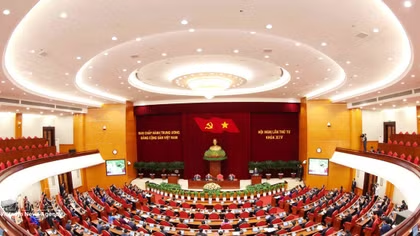
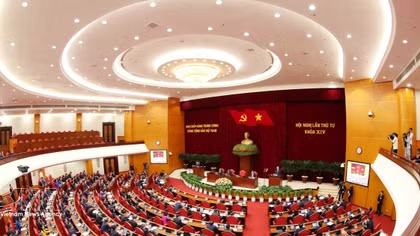
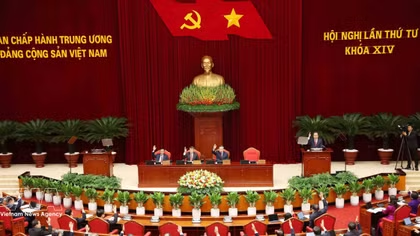
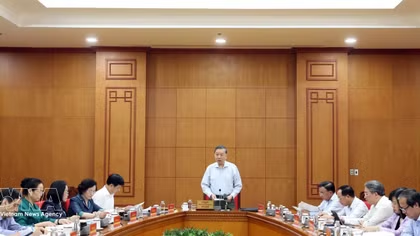
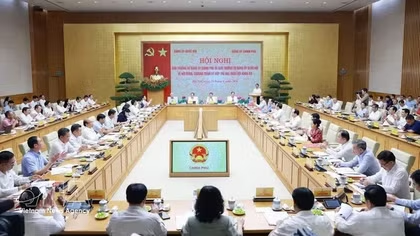
Delegates held group discussions on the CPV Central Committee resolution calling for stronger building and rectification towards a clean, strong and comprehensive Party and political system able to meet the country's development needs in the new era.
The Communist Party of Vietnam always values its solidarity and friendship with the Hungarian Workers' Party and communist and workers' parties worldwide, which helps build political trust and supports Vietnam's relations with other countries, said key Party leader Tran Cam Tu.
In his opening remarks, General Secretary and President To Lam said that the 14th National Party Congress set out major orientations and strategic goals, while the second and third plenums adopted important policies on Party building, personnel, development and national defence. The fourth plenum must focus on creating conditions for effective implementation while preparing the theoretical, organisational and human resources foundations for the country’s long-term development.
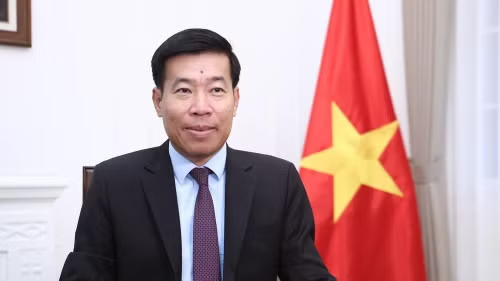
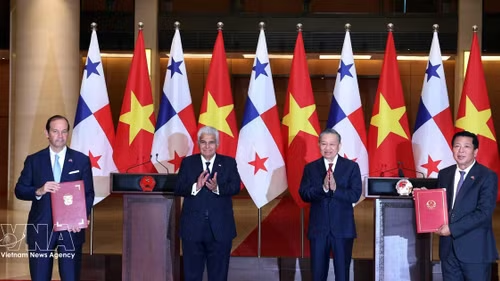
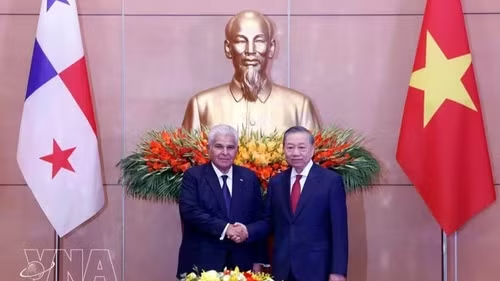
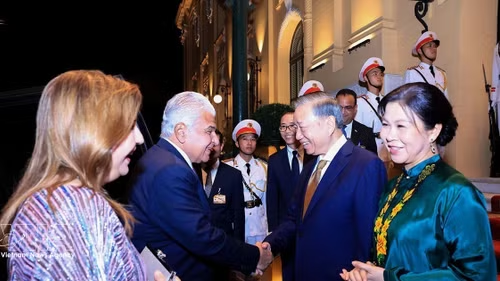
Vietnamese Ambassador to Mexico and Panama Nguyen Van Hai noted that the visit is particularly significant as the first high-level exchange between the two countries in nearly 15 years, following then-President Ricardo Martinelli’s visit to Vietnam in 2012, and came shortly after the 50th anniversary of diplomatic relations in 2025.
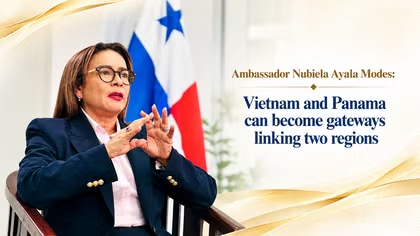
"Panama can serve as a strategic platform for Vietnamese companies seeking greater access to Latin America and the Caribbean, while Vietnam represents an important gateway for strengthening Panama’s engagement with Southeast Asia", Ambassador Nubiela Ayala Modes confirmed.
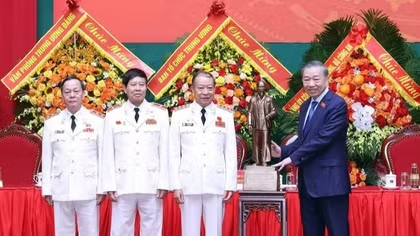
The Vietnam Association of Former People's Public Security Officers must truly serve as a common home that fosters comradeship and solidarity among former public security officers and those who have contributed to the cause of safeguarding security and social order, said top leader To Lam.
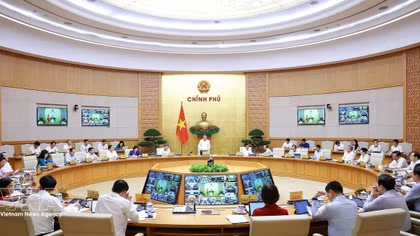
Localities nationwide hailed effective and flexible directions delivered by the Government so far this year, resulting in positive nine-month socio-economic growth, and reaffirmed their commitment to achieving targets set for the whole 2026 at an online Government-locality conference on October 3.
The elevation of bilateral ties to a Strategic Partnership shows that Vietnam and Canada increasingly view each other not simply as trading partners, but as long-term partners in addressing economic, technological and regional challenges.
National Assembly President Tran Thanh Man on October 1 sent a congratulatory letter to Vyacheslav Volodin on his re-election as Chairman of the State Duma of the Federal Assembly of Russia.
The top leader applauded the efforts of ministries, sectors, localities, social organisations, coaches, athletes, experts in developing physical education and sports in recent times, stressing that Resolution No. 08 has provided an important political foundation for sports development over the past 15 years, while Conclusion No. 70 set important orientations for the new period.
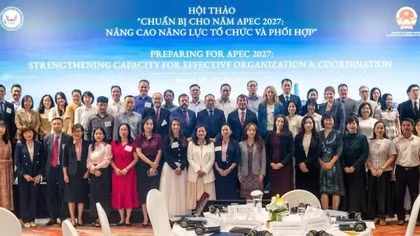
PSNews - Vietnam is recognised by its partners as an influential member of the Asia-Pacific Economic Cooperation (APEC) forum, with expectations that it will continue to demonstrate leadership when it hosts APEC for the third time in 2027, according to Standing Deputy Minister of Foreign Affairs Nguyen Minh Vu.
General Secretary and President Lam urged JBIC to continue promoting the substantive implementation of projects under the Asia Zero Emission Community (AZEC), and step up discussions on potential cooperation within the framework of the POWERR Asia (Partnership on Wide Energy and Resources Resilience Asia) initiative, including the development of strategic energy reserves.
Overhauling the Party’s leadership methods is an objective, inevitable and urgent requirement to elevate the Party’s governing capacity and combat strength and keep the political system effective in the new development era.
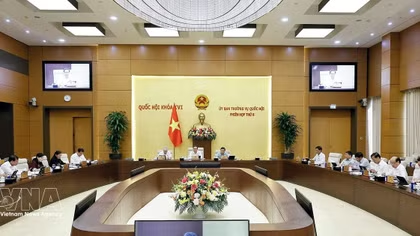
During the session, the NA Standing Committee will give opinions on a number of draft laws, namely the revised Land Law, the revised Housing Law, the revised Law on Real Estate Business, the Law on Legal Normative Documents, and the consolidated Law on the State Budget.
National Assembly President Tran Thanh Man coordination must go beyond finishing the agenda to improve the quality of NA decisions and Government enforcement; deal with policies rather than just paperwork, especially in the fight against corruption and other negative phenomena; and pin down final responsibility for each product, not just progress.
Prime Minister Le Minh Hung asked the two countries' inspection agencies to build on their achievements by regularly exchanging information and experience, maintaining delegation exchanges, and coordinating inspections in areas related to bilateral economic, trade and investment cooperation.
General Secretary and President To Lam demanded a sweeping review rather than piecemeal amendments to individual laws, so that people's rights are protected on a continuing basis.