
Reporter: The upcoming visit to Vietnam by President José Raúl Mulino comes as Vietnam–Panama relations enter a new chapter after more than 50 years of diplomatic ties, with both sides actively promoting new mechanisms for cooperation. Could you share your views on the significance of the visit, as well as the message Panama wishes to convey to Vietnam through President Mulino’s visit?
Ambassador Nubiela Ayala Modes:
President José Raúl Mulino’s visit to Vietnam marks an important moment in the relationship between our two countries, built over more than five decades of friendship, mutual respect and constructive dialogue.
The visit reflects Panama’s commitment to further strengthening its ties with Vietnam and to exploring new opportunities for cooperation in areas of shared interest, including trade, investment, maritime affairs, logistics, education and cultural exchange.
The message Panama wishes to convey is clear: Vietnam is a valued partner and friend. We see this visit as an opportunity not only to deepen our bilateral relationship, but also to build stronger bridges between Southeast Asia and Latin America.
Panama looks forward to continuing this relationship with a long-term vision, based on trust, mutual benefit and shared prosperity.
Reporter: Bilateral trade between Vietnam and Panama has grown significantly in recent years, while both sides are seeking to deepen and further substantiate their bilateral relations. Which areas have the potential to become the “new pillars” of Vietnam–Panama relations in the years ahead?
Ambassador Nubiela Ayala Modes:
I believe the new pillars of Vietnam–Panama relations can be built around areas where our countries are naturally complementary: trade and investment, maritime affairs, logistics, connectivity, technology, education and sustainable development.
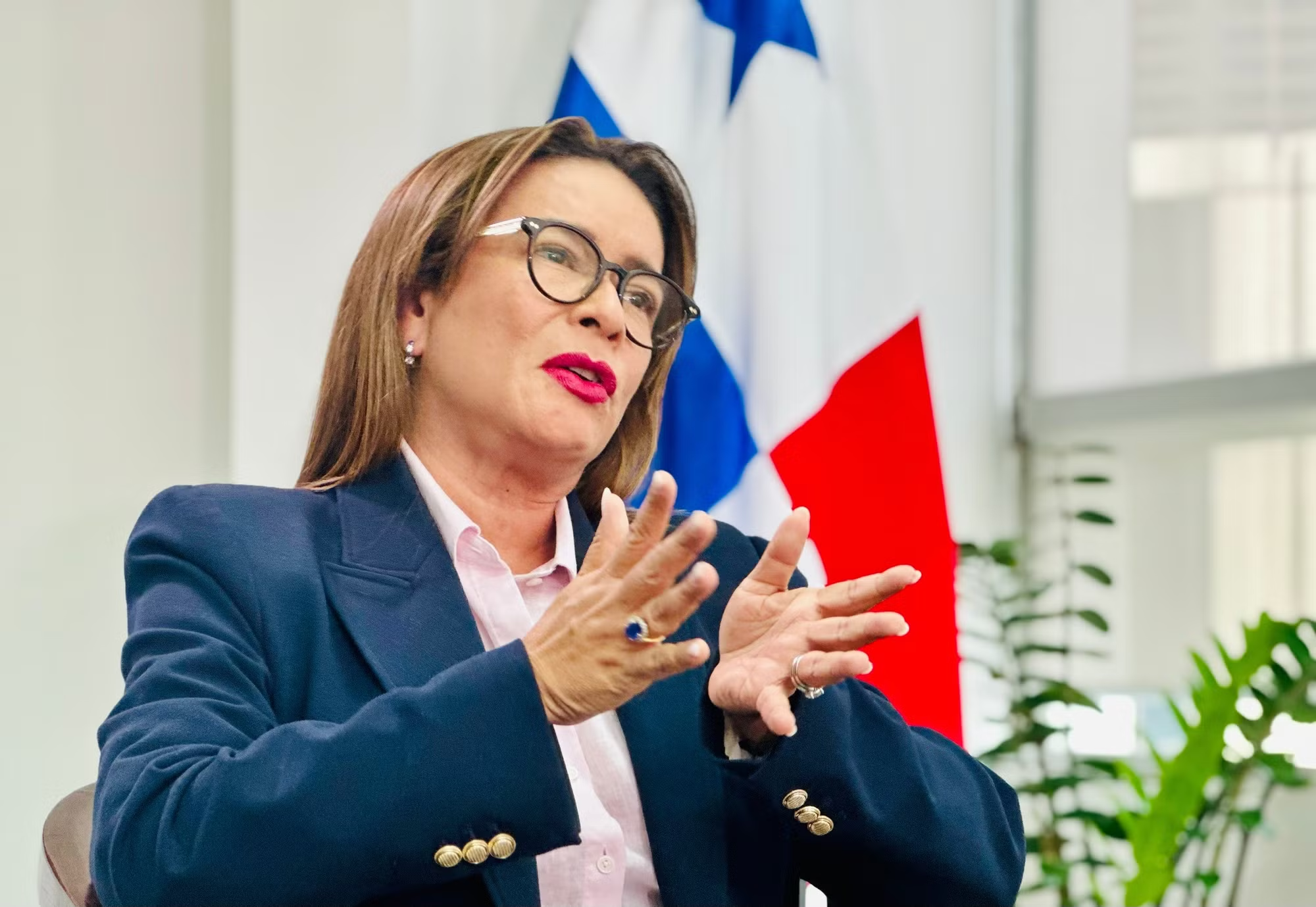
Panama can serve as a strategic platform for Vietnamese companies seeking greater access to Latin America and the Caribbean, while Vietnam represents an important gateway for strengthening Panama’s engagement with Southeast Asia.
Ultimately, the objective should be to build a more diversified and practical partnership that goes beyond trade alone, creating stronger links between our economies, institutions and people, and generating long-term benefits for both countries.
Reporter: Panama holds a unique position in the global trade network thanks to the Panama Canal, its logistics and port infrastructure, and the Colón Free Trade Zone. What specific advantages can Panama offer to help Vietnamese businesses gain deeper access to the Latin American and Caribbean markets? How does Panama view Vietnam’s role in the current regional architecture, and what does Panama expect from Vietnam in expanding its engagement with ASEAN?
Ambassador Nubiela Ayala Modes:
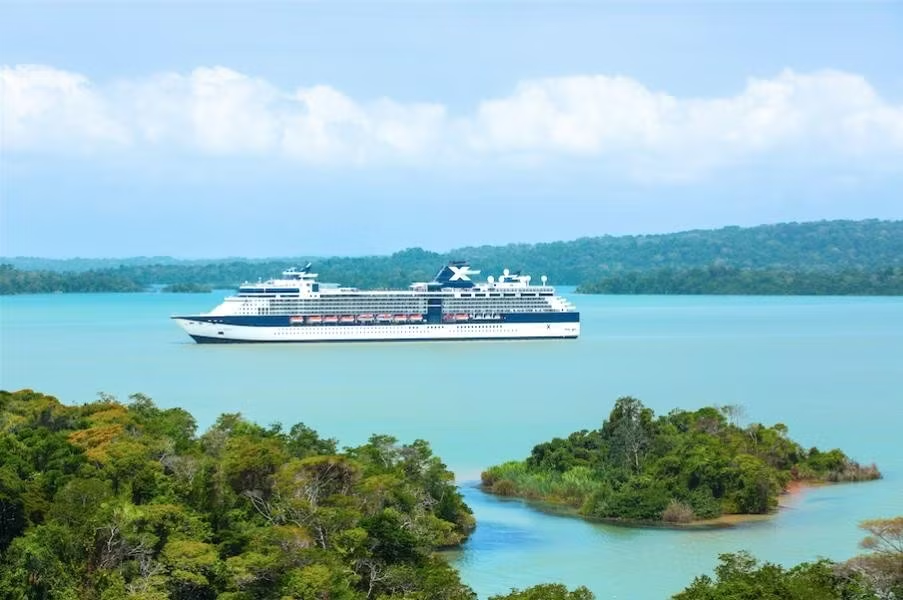
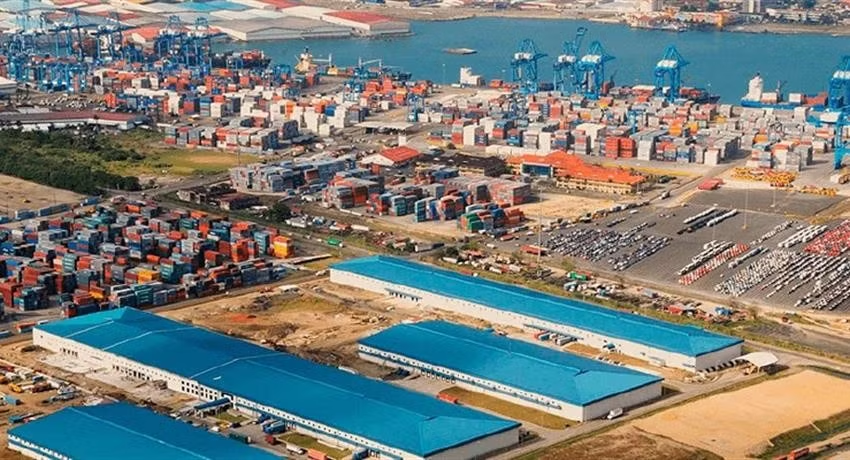
Panama’s greatest advantage is that it offers much more than access to its domestic market; it serves as a strategic platform connecting global trade with Latin America and the Caribbean. The Panama Canal, our ports and logistics infrastructure, the Colón Free Trade Zone and our international connectivity provide Vietnamese companies with an attractive environment from which to develop distribution, logistics, commercial and investment activities across the region.
For Vietnam, this can translate into a stronger presence in Latin American and Caribbean markets, while Panama can benefit from Vietnam’s dynamism, productive capacity and growing importance in Southeast Asia.
We view Vietnam as an important partner and a natural bridge for strengthening Panama’s engagement with ASEAN. Our aspiration is to deepen dialogue, promote greater interaction between our business communities and institutions, and identify practical opportunities that bring Southeast Asia and Latin America closer together.
In this sense, Panama and Vietnam have the potential to serve as complementary gateways between two dynamic regions, creating new opportunities for trade, investment, connectivity and long-term cooperation.
Reporter: Vietnam and Panama both have significant interests in the maritime sector, while global supply chains are facing increasing uncertainties and disruptions. How can the two countries enhance cooperation in maritime security, logistics, ports, shipping, and ensuring the smooth and uninterrupted flow of global supply chains?
Ambassador Nubiela Ayala Modes:
Panama and Vietnam share a strong interest in the stability, efficiency and resilience of global maritime trade. This creates important opportunities to deepen cooperation in port management, logistics, shipping services, maritime training, digitalization and the exchange of best practices.
Our maritime relationship already has a practical foundation through the Consulate General of Merchant Marine of Panama in Ho Chi Minh City, which provides maritime and seafarer services and maintains close engagement with Vietnam’s maritime community. In particular, the issuance of Panamanian seafarer licenses to qualified Vietnamese nationals enables them to serve aboard vessels flying the Panamanian flag, creating a direct link between Vietnamese maritime professionals and the Panamanian Maritime Authority.
To help prevent disruptions to global supply chains, both countries can also strengthen cooperation in port coordination, information sharing, digital connectivity, maritime safety, cybersecurity and contingency planning. Greater coordination between maritime authorities, ports, shipping companies and logistics operators can help improve predictability, reduce delays and respond more effectively when disruptions affect international trade routes.
Panama’s global maritime and logistics experience, combined with Vietnam’s growing role in international trade and its strong maritime workforce, provides a solid foundation for making maritime cooperation one of the most concrete and strategic pillars of our bilateral relationship, while contributing to the smooth and reliable flow of global commerce.
Beyond trade, martime, there is also considerable potential in port development, digitalization, professional training and people-to-people exchanges. These are areas in which both countries can build a more diversified, practical and long-term partnership based on mutual benefit.
Reporter: So how can cultural exchanges and tourism help bring the peoples of Vietnam and Panama closer together?
Ambassador Nubiela Ayala Modes:
Cultural exchanges and tourism can play a very important role in bringing the peoples of Panama and Vietnam closer together. Beyond diplomacy and trade, lasting relationships between countries are built through greater mutual understanding, personal connections and shared experiences.
Both countries have rich cultural traditions, distinctive gastronomy, natural attractions and strong national identities that offer many opportunities for greater exchange. Promoting tourism, cultural activities, academic cooperation and exchanges among students, professionals and young people can help our societies know each other better and create stronger bonds of friendship.
In this sense, culture and tourism can become important bridges between Panama and Vietnam, complementing our economic and maritime cooperation and giving our bilateral relationship a more human and enduring dimension.
Reporter: Thank you, Ambassador!