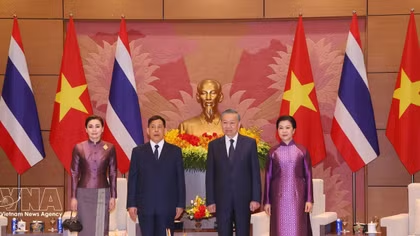
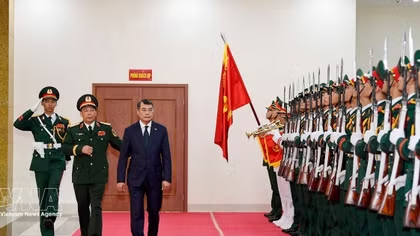
Emerging from the ruins of war, Vietnam has steadily evolved into an active, proactive, and responsible member of the global community. Transitioning from a recipient of UN assistance, the country now makes practical contributions to addressing humanity's shared challenges. This trajectory serves as a vivid testament to the efficacy of multilateral cooperation while reflecting the maturation of Vietnamese diplomacy.
From Reconstruction Assistance to a Partnership for Development
Upon joining the UN in 1977, Vietnam faced severe post-war consequences, widespread public hardship, and limited resources for recovery. In those formative years, UN organizations, funds, and programs actively supported Vietnam in overcoming the legacies of war, driving socio-economic recovery, and improving living standards, particularly in healthcare, education, population planning, and maternal and child care.
According to the Ministry of Foreign Affairs, total UN system aid to Vietnam between 1977 and 1986 exceeded $500 million. This assistance was instrumental in the nation’s reconstruction efforts, simultaneously providing Vietnam with access to global knowledge, expertise, and international resources.
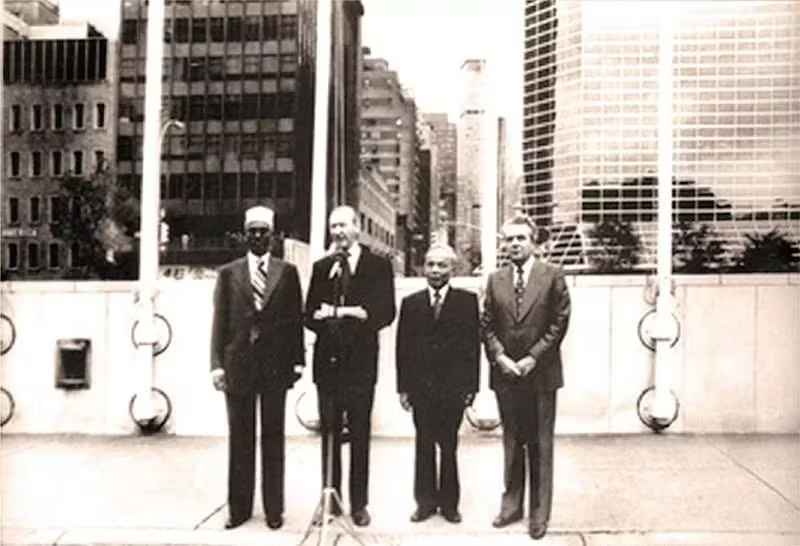
Entering the era of Doi Moi (Renewal) and international integration, the Vietnam-UN relationship transitioned from primarily development assistance to a comprehensive, equal partnership based on mutual contribution. Bilateral cooperation programs are increasingly aligned with Vietnam’s strategic priorities, ranging from poverty reduction, sustainable development, healthcare, and education to green growth, digital transformation, and climate change adaptation.
The Vietnam-UN Sustainable Development Cooperation Framework for 2022-2026, with a total budget of over $542 million, exemplifies the growing depth of this partnership.
Notably, in tandem with national development, Vietnam has moved beyond merely receiving assistance to taking an increasingly proactive role in contributing to the UN's shared endeavors.
Active Participation and Substantive Contributions
Vietnam’s prominence at the UN is primarily demonstrated through its assumption of numerous critical positions and responsibilities. The country was twice elected as a non-permanent member of the UN Security Council for the 2008-2009 and 2020-2021 terms, and has served multiple tenures on the Human Rights Council, the Economic and Social Council (ECOSOC), and other key UN bodies.
Vietnam has also undertaken milestone responsibilities, including the Presidency of the 11th Review Conference of the Parties to the Treaty on the Non-Proliferation of Nuclear Weapons in 2026, and its inaugural role as President of the 35th Meeting of States Parties to the UN Convention on the Law of the Sea (UNCLOS).
Through these positions, Vietnam has steadily asserted a proactive role in building consensus, fostering dialogue, and resolving international issues in accordance with the UN Charter and international law.
More importantly, Vietnam has not only participated in multilateral mechanisms but has also introduced meaningful initiatives. Security Council resolutions on the role of women in post-conflict contexts and the protection of critical infrastructure during conflicts, alongside General Assembly resolutions on the International Day of Epidemic Preparedness, the International Day of Play, and the International Decade of Sciences for Sustainable Development, all illustrate Vietnam’s growing capacity to shape the global agenda.
This marks a crucial transition from merely "being present" to "contributing," and from implementing policies to proactively proposing initiatives and advancing issues of significance to the international community.
Contributions to International Peace and Security
Vietnam’s involvement in UN peacekeeping operations serves as a vivid manifestation of its international responsibility.
Nearly 1,400 deployments of Vietnamese officers and soldiers have been dispatched to peacekeeping missions in South Sudan, the Central African Republic, and the Abyei region. Once a nation that endured immense devastation from war, modern-day Vietnam now directly deploys forces to participate in international efforts to maintain peace and protect civilians in conflict-affected areas.
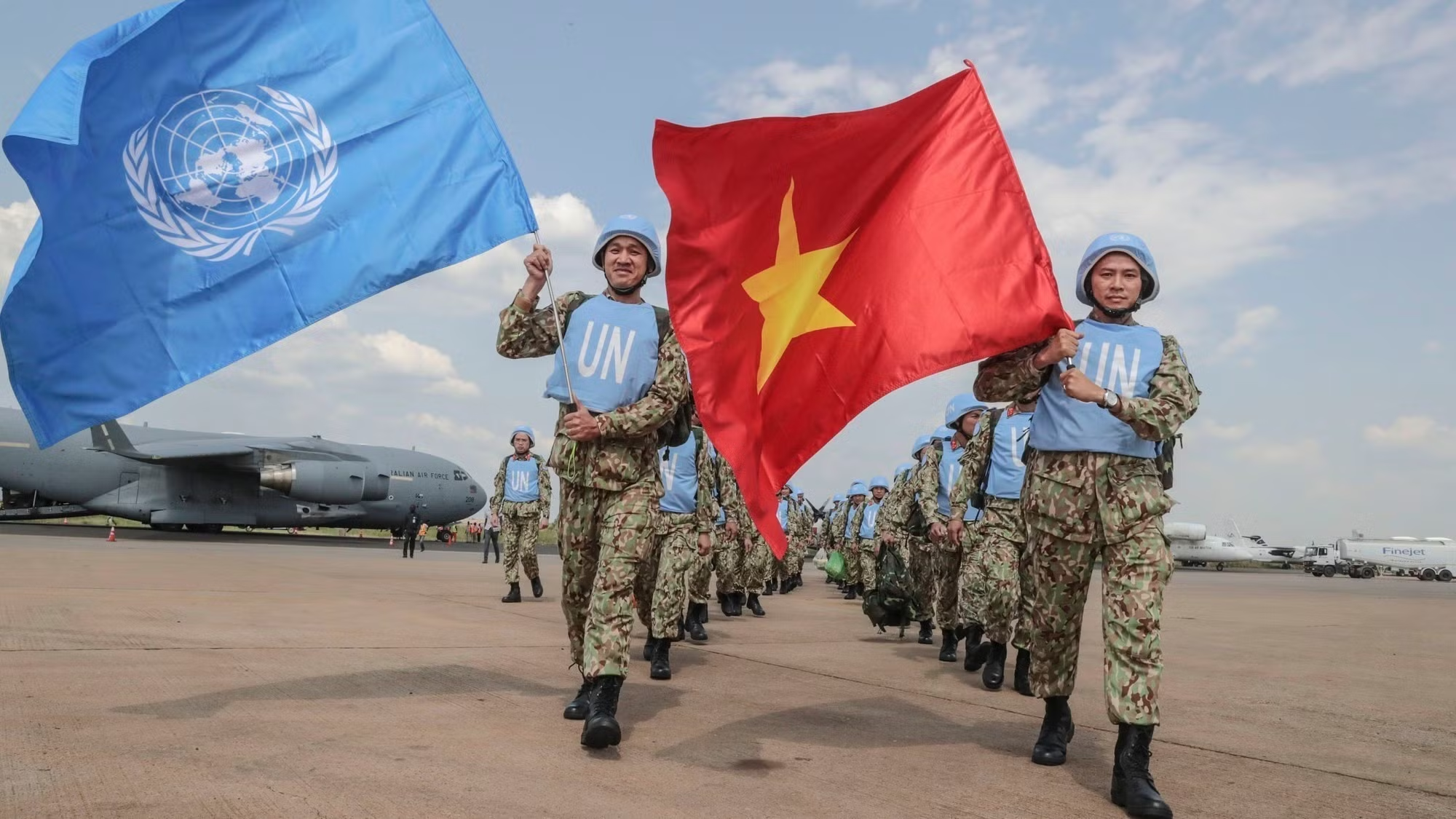
This participation not only underscores Vietnam’s commitment to the international community but also helps project the image of a peace-loving nation that respects international law and stands ready to contribute to collective endeavors.
As the world confronts complex, intersecting challenges—ranging from conflicts and humanitarian crises to cybersecurity, climate change, and non-traditional security threats—Vietnam’s contributions at the UN carry even greater significance.
A New Era of Cooperation
A landmark moment in the Vietnam-UN relationship is Vietnam's hosting of the signing ceremony for the UN Convention against Cybercrime in Hanoi in October 2025.
The selection of Hanoi as the venue for opening signatures on the UN's first global cybercrime convention is an acknowledgment of Vietnam's role in advancing international cooperation against the emerging threats of the digital age.
This event also highlights the continually expanding scope of Vietnam-UN cooperation. Progressing from traditional areas such as socio-economic development, poverty eradication, healthcare, and education, the partnership now encompasses global imperatives like cybersecurity, climate action, peacekeeping, and global governance.
UN Secretary-General António Guterres has visited Vietnam twice, in 2022 and 2025. During his 2025 visit, he praised Vietnam as an exceptional partner that has actively engaged and contributed across all UN priority areas, particularly in peacekeeping, sustainable development, climate change adaptation, and the energy transition.
Such commendations validate Vietnam's increasingly substantive contributions while establishing new expectations for the nation to further amplify its role within multilateral mechanisms.
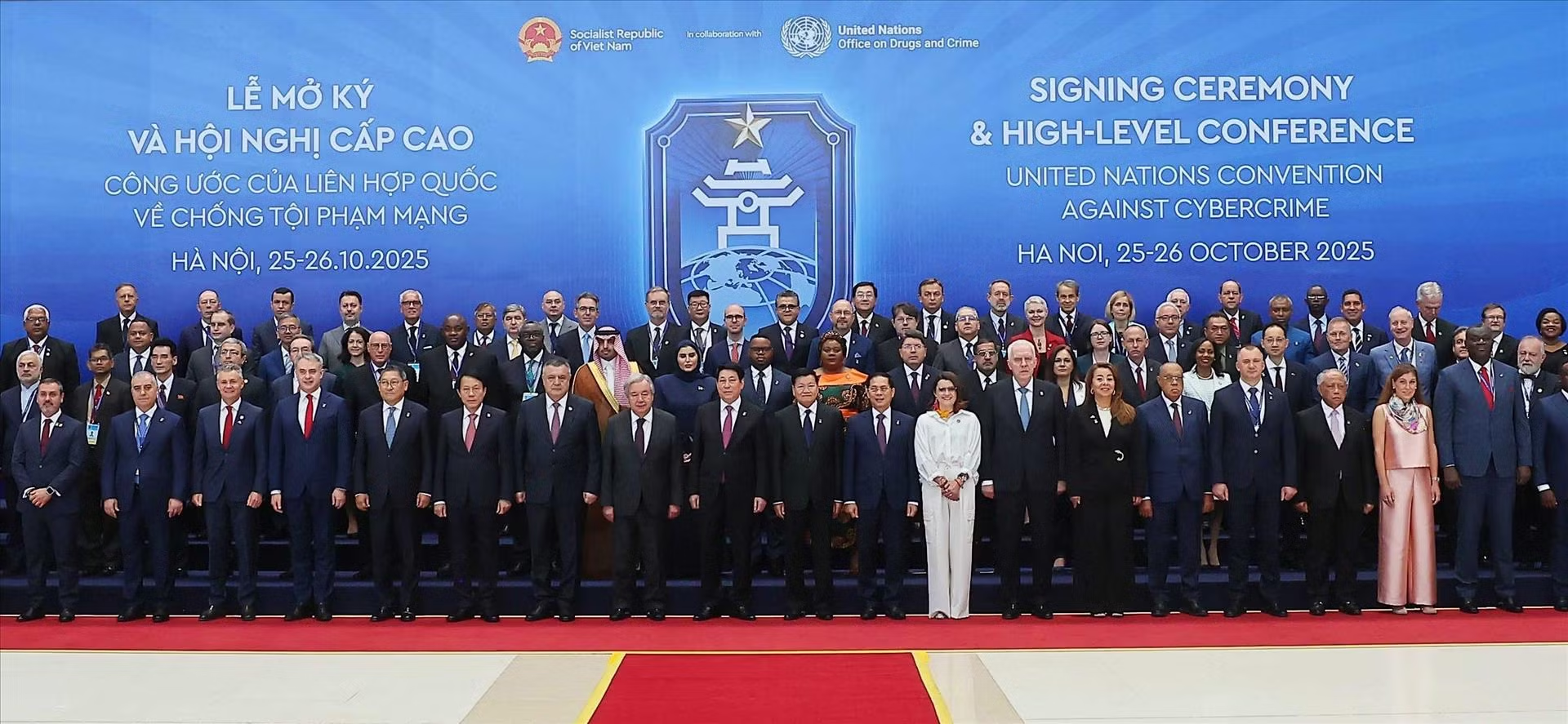
According to Deputy Minister of Foreign Affairs Dang Hoang Giang, reflecting on the journey thus far, it can be proudly stated that the relationship between Vietnam and the UN is currently in an exceptionally positive and substantive phase of development. From its years of fighting for independence, modern-day Vietnam has emerged as a highly reliable partner, making proactive, responsible, and breakthrough contributions across the core pillars of the UN.
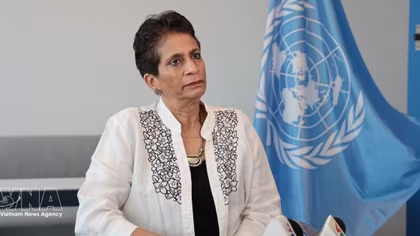
Looking to the future, Pauline Tamesis, UN Resident Coordinator in Vietnam, expressed confidence that Vietnam possesses a profound opportunity to contribute even more—not solely by participating in multilateral institutions, but by actively shaping the solutions, norms, and standards that will define humanity's shared future.
This includes fields where Vietnam itself is undergoing fundamental transformations: responsible digital transformation and AI governance; a just and inclusive energy transition; climate action and adaptation; as well as development paradigms that harmoniously integrate economic dynamism with social inclusion and environmental sustainability.