The sixth political consultation between Vietnam and Cambodia was held in Phnom Penh on July 18.

The event was co-chaired by Vietnamese Deputy Minister of Foreign Affairs Nguyen Quoc Dung and Cambodian Secretary of State at the Ministry of Foreign Affairs and International Cooperation Eat Sophea.
The two sides expressed their satisfaction at the growing friendly neighbourliness and comprehensive cooperation between Vietnam and Cambodia with the regular exchange of high-level delegations and meetings.
The cooperation between ministries and localities as well as people-to-people exchanges have been further deepened while the bilateral economic and trade partnership has developed strongly with two-way trade reaching 4.7 billion USD in 2018.
Vietnam is among the top five foreign investors in Cambodia with 211 projects worth over 3 billion USD.
The two sides held that there is still large room for Vietnam and Cambodia to collaborate in the fields of economy, trade, investment, education-training, and tourism.
They agreed to enhance trade relations, especially cross-border trade, and promote connectivity at border gates and develop infrastructure at border areas in order to increase two-way trade to over 5 billion USD and soon complete an overall plan connecting the two economies through 2030.
Vietnam affirmed to continue prioritising cooperation in education and training high-quality human resources for Cambodia under the signed agreements.
The two sides agreed to speed up the implementation of land border demarcation and marker planting and sign two legal documents recognising the completion of 84 percent of the work in 2019.
They vowed to closely work together to stabilise the legal status for Vietnamese-Cambodians.
Vietnam and Cambodia highly evaluated the political consultation mechanism and pledged to promote exchanges between Vietnam’s Ministry of Foreign Affairs and Cambodia’s Ministry of Foreign Affairs and International Cooperation for better mutual understanding.
They agreed to coordinate to successfully organise the 17th session of the joint committee for economic, cultural, scientific and technological cooperation in 2019.
The two sides agreed to increase the sharing of information and coordination at regional and international forums, especially in the cooperation mechanisms of the Greater Mekong Sub-region (GMS) and the Association of Southeast Asian Nations (ASEAN) and related forums, contributing to the common goal of peace, stability and sustainable and inclusive development in the region, as well as promoting solidarity, unity and central role of ASEAN.
They pledged to strengthen coordination in 2020 when Vietnam will take over the ASEAN Chairmanship and Cambodia will host the Asia-Europe Meeting (ASEM).
Later on the same day, Deputy Foreign Minister Nguyen Quoc Dung paid a courtesy visit to Cambodian Deputy Prime Minister and Minister of Foreign Affairs and International Cooperation Prak Sokhonn.
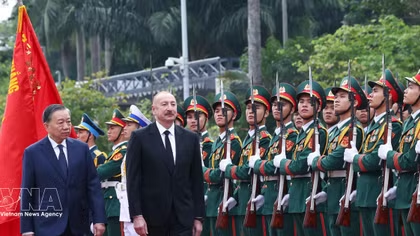
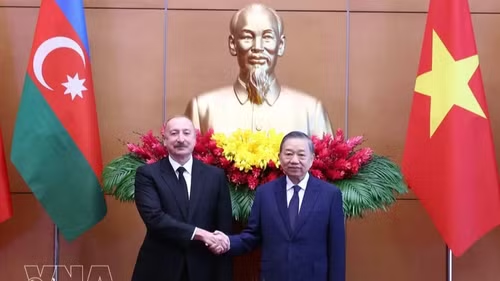
The two leaders walked along the red carpet to the ceremonial podium as military bands performed the national anthems of Azerbaijan and Vietnam. They then reviewed the Guard of Honour of the Vietnam People's Army and introduced members of their respective high-level delegations.
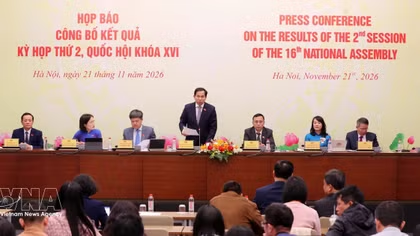
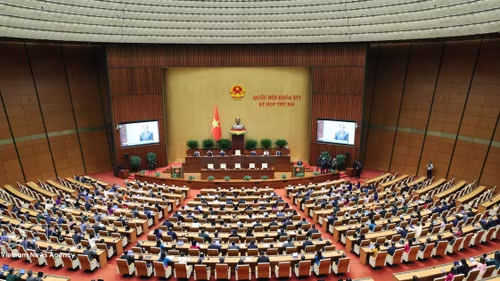
According to NA Secretary-General and Chairman of the NA Office Le Quang Manh, the outcomes reflect the legislature’s strong determination and commitment to reform in response to the country’s development requirements.
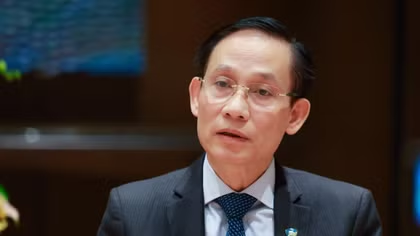
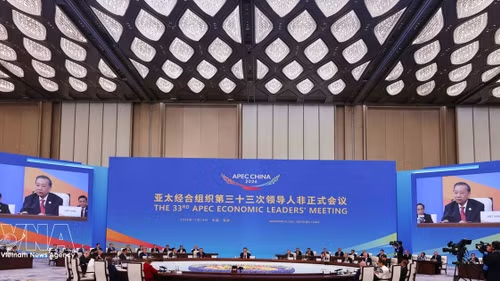
Vietnam participated in APEC 2026 not only as an active and proactive member but also with the responsibility of the host of APEC 2027. Its engagement reflects the country's consistent foreign policy, ambitious and sustainable development goals in the new era, and desire to make greater contributions to the common future of the Asia-Pacific region.
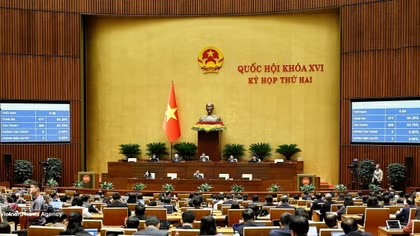
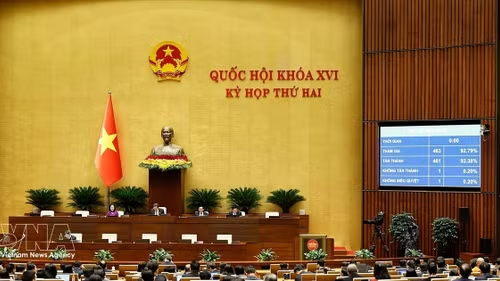
With 463 of the 472 NA deputies present voting in favour, the National Assembly (NA) passed the revised Penal Code, which consists of 25 chapters and 417 articles.
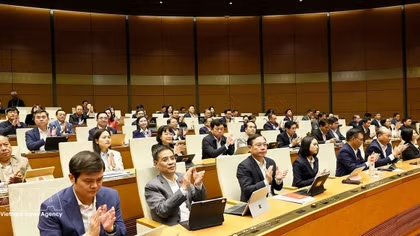
On November 20, the 16th National Assembly (NA) voted to approve the amended Law on International Agreements and the amended Law on the Implementation of Democracy at the Grassroots Level. Both laws are set to take effect on March 1, 2027.
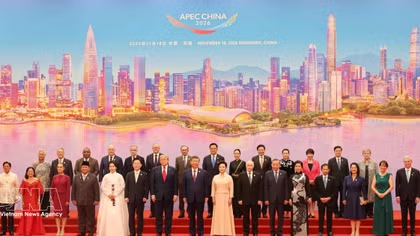
General Secretary of the Communist Party of Vietnam Central Committee and President To Lam’s working trip to China for the 33rd APEC Economic Leaders’ Week and bilateral engagements from November 17–20 has been a success.
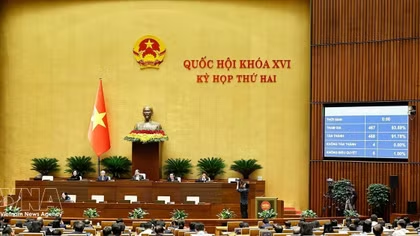
The Law on Protection of Important Works related to National Security passed with 473 of the 473 deputies in favour and will take effect on July 1, 2027.
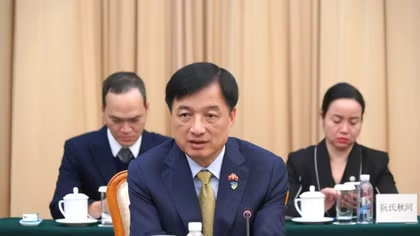
Vietnam treats human capital, science - technology, innovation and digital transformation as drivers of national development, prompting new demands for personnel affairs, including the need for officials with technical expertise and stronger leadership capabilities across Party committees, Head of the Communist Party of Vietnam (CPV) Central Committee’s Organisation Commission Nguyen Duy Ngoc said, adding that Vietnam wants to draw on Yunnan’s experience in this regard.
The Law amending and supplementing several articles of the Law on Corporate Income Tax, the Law on Non-Agricultural Land Use Tax, and the Law on Personal Income Tax was passed with 475 of the 477 NA deputies present voting in favour.
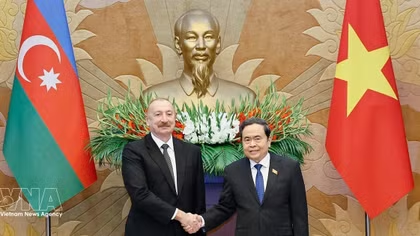
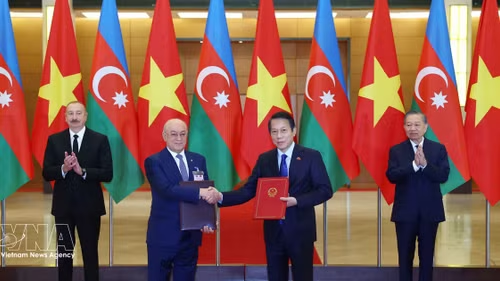
The two sides vowed to expand parliamentary cooperation, education - training, culture, tourism and people-to-people exchanges, and ease travel and cooperation for their citizens and companies, for the two peoples’ interests and for peace, stability and development.
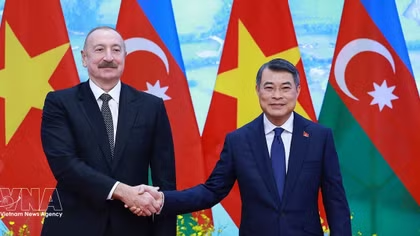
Vietnam is one of Azerbaijan’s important partners in Southeast Asia, Azerbaijani President Ilham Aliyev said, expressing his desire to further develop bilateral cooperation across fields in line with their traditional friendship and established strategic partnership.
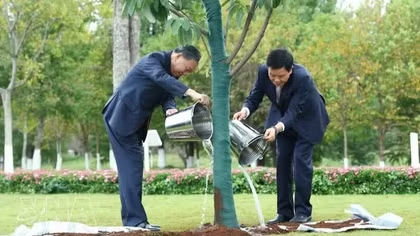
The leader, together with Mo Gaoyi, Secretary of the Communist Party of China Committee of Yunnan province, jointly planted a magnolia tree in the presence of officials from both countries.
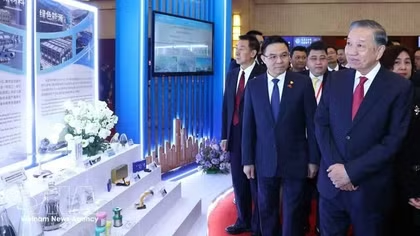
Southwest China has a vast market and increasingly strong industrial and innovation capabilities, while Vietnam boasts a dynamic economy, extensive international integration and seaports connecting it to major global shipping routes. By bringing into full play these advantages, the two sides can create shared development opportunities, linking inland areas with the sea, China with Southeast Asia and both with global markets.
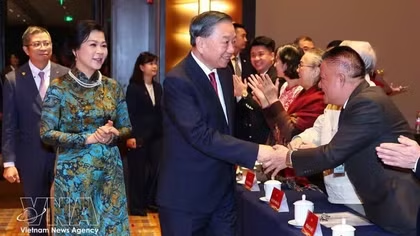
General Secretary and President To Lam called on diplomatic missions and the Vietnamese community to seriously implement the Resolution of the 14th National Party Congress, along with the Party and State’s guidelines on external relations.
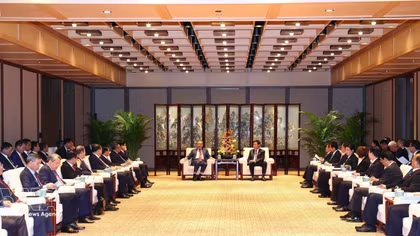
The Vietnamese leader proposed the two sides leverage strategic strengths and geographical proximity to make substantive progress in four connectivity axes of policy, seamless infrastructure, trade and investment, and people-to-people links.
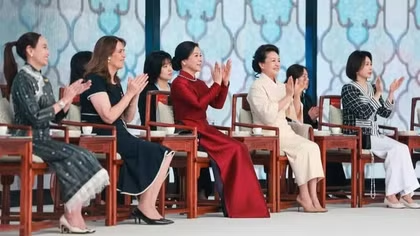
Madame Ngo Phuong Ly, spouse of General Secretary of the Communist Party of Vietnam Central Committee and President To Lam, attended a gathering of spouses of leaders and representatives of APEC economies in Shenzhen on November 19, using the occasion to spread Vietnam’s image on the sidelines of the APEC 2026 Economic Leaders’ Week.
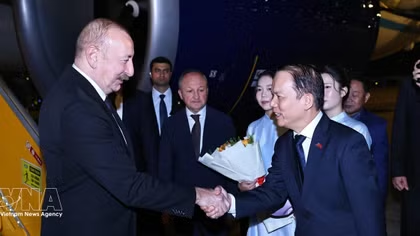
President of Azerbaijan Ilham Aliyev’s visit carries particular significance. It offers high-ranking leaders a chance to reinforce political trust, review the full range of relationship-building directions and set concrete steps to realise the Strategic Partnership, adding new momentum across politics, diplomacy, economy, trade, investment, energy, education, science-technology, and people-to-people exchanges.
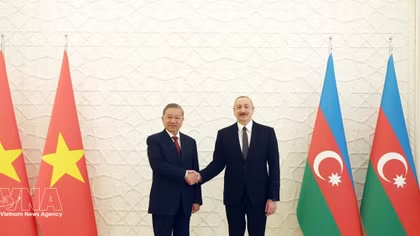
This time's visit will not only mark an important milestone in political and diplomatic ties but also open up tangible cooperation opportunities and deliver practical benefits to the peoples and businesses of both countries.
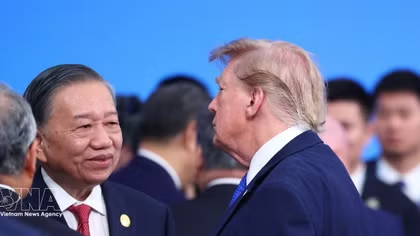
Vietnam considers the US one of its partners of strategic importance and wishes for further efforts to promote stable, balanced, sustainable and mutually beneficial economic, trade and investment ties.
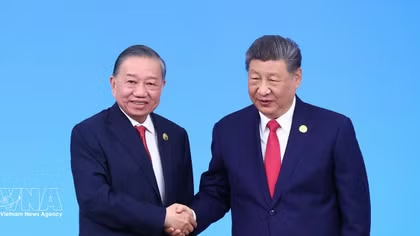
The top Vietnamese leader noted that hosting APEC for the third time marks an important milestone in Vietnam’s integration and development. The country pledges to be a dedicated host, listening to build consensus and connecting members to expand cooperation and deliver lasting results.