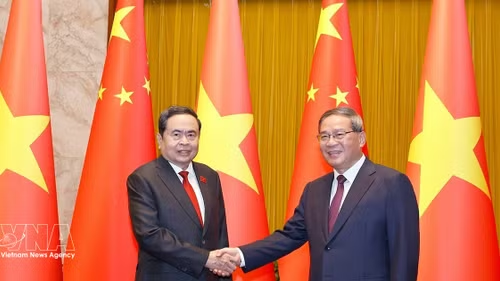
Paris (VNA) – Vietnam and France have issued a joint statement on promoting the implementation of their comprehensive strategic partnership framework on the occasion of General Secretary of the Communist Party of Vietnam Central Committee and President To Lam’s official visit to France and attendance at the International Space Summit at the invitation of French President Emmanuel Macron.
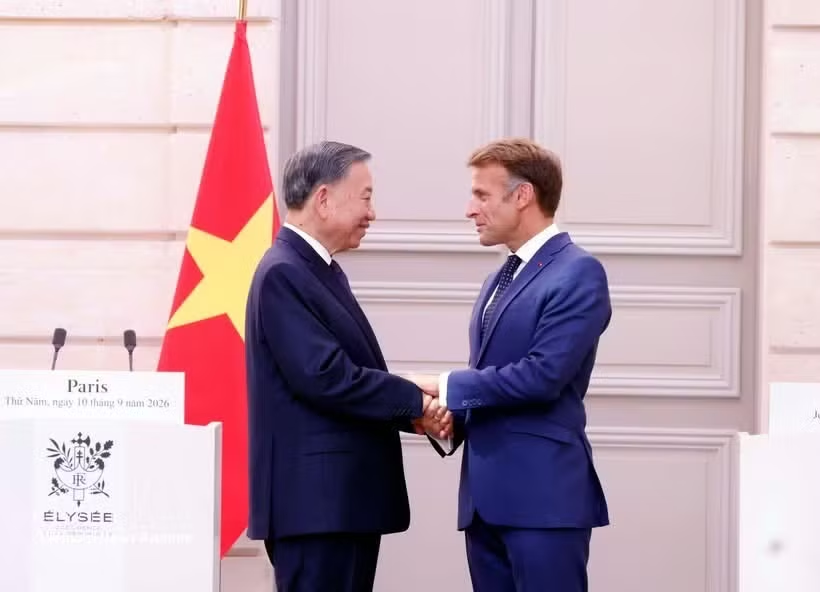
This marked the third meeting between the two leaders in nearly two years, serving as a testament to the dynamism of the bilateral relationship and the importance both Vietnam and France attach to fully implementing the comprehensive strategic partnership framework which was established during General Secretary and President Lam’s visit to France in October 2024.
Discussions between the two leaders affirmed a high level of trust and significant alignment regarding views and interests concerning sovereignty, sustainable economic development, and the upholding of multilateralism. In the spirit of the speeches delivered at the Shangri-La Dialogue by French President Emmanuel Macron in May 2025 and General Secretary and President To Lam in May 2026, Vietnam and France expressed their desire to cooperate with partners from the European Union and the Association of Southeast Asian Nations (ASEAN), as well as other close partners in Europe and Asia, to safeguard the principles of open international trade and a rules-based international order, while opposing power politics and any form of threat or use of force contrary to international law. To strengthen societal resilience in both nations, the two leaders called for the fostering of a spirit of independence and a cooperative mindset. This serves as the foundation for the 2026–2028 action plan aimed at implementing the comprehensive strategic partnership framework between Vietnam and France, which was warmly welcomed and adopted by the two leaders.
In a world marked by profound instability and mounting crises and challenges to the fundamental principles of international law, Vietnam and France reaffirm their commitment to joint action aimed at restoring a stable and prosperous world order that fully respects international law and the UN Charter. This is essential for addressing the three global crises — climate change, biodiversity loss, and pollution — while ensuring global health protection and tackling sustainable development challenges. Both nations also reaffirmed the importance of promoting and protecting human rights and fundamental freedoms for the development of each country.
Vietnam and France emphasised the essential role of the United Nations in the international architecture while acknowledging the need for institutional reform within the organisation. The two leaders supported the UN Secretary-General’s UN80 initiative. Vietnam supported the initiative led by France and Mexico regarding the regulation of the veto power in the UN Security Council in cases of mass atrocities.
The two sides also committed to enhancing consultation and coordination in regional forums and supported strengthened cooperation between ASEAN and the EU. France welcomed the establishment of the comprehensive strategic partnership between the European Union (EU) and Vietnam in January 2026. Vietnam supported France in strengthening its ties with ASEAN, valued the progress made in the ASEAN-France development partnership, and backed France's proposal to become an ASEAN Sectoral Dialogue Partner. Both Vietnam and France advocated for enhanced cooperation between the European Union and the Comprehensive and Progressive Agreement for Trans-Pacific Partnership (CPTPP), of which Vietnam will hold the chairmanship in 2026.
The two leaders also affirmed their desire to strengthen cooperation within the framework of the International Organisation of La Francophonie, building on their shared commitment to the French language and in anticipation of the 20th Francophonie Summit to be held in Phnom Penh in November 2026. They welcomed the fact that this significant event is being hosted in Asia for the second time since the 1997 Hanoi Summit, and expressed hope that the summit would help promote the use of the world's fourth most spoken language across the region, thereby opening up numerous opportunities for cultural and economic cooperation. Both sides committed to fostering cooperation within the Francophonie community, including in the fields of education, training, science, and technology.
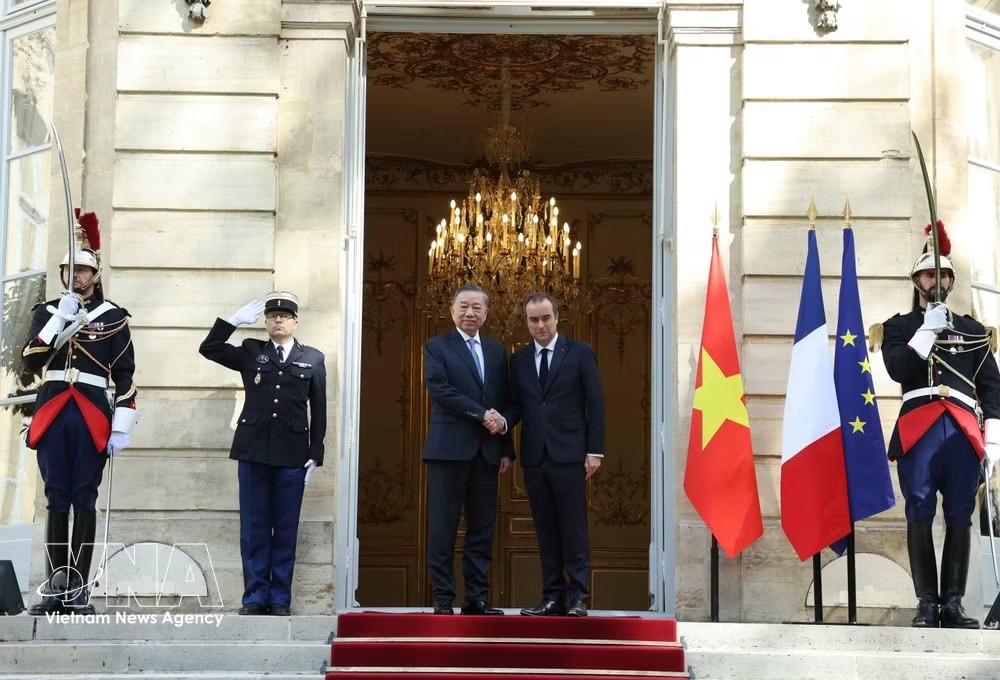
Vietnam and France reaffirmed the importance of maintaining peace, security, and stability in the East Sea and of full respect for the 1982 United Nations Convention on the Law of the Sea (UNCLOS). The two countries emphasised that the UNCLOS establishes the comprehensive legal framework for all activities in the seas and oceans; supported the principle of the peaceful settlement of disputes; firmly opposed any act involving the threat or use of force contrary to international law; and reaffirmed the importance of maintaining peace, stability, security, safety, freedom of navigation and overflight, and unimpeded trade, as well as the right of innocent passage in the East Sea and worldwide. The two countries supported regional efforts to establish an effective and substantive Code of Conduct (COC) that is consistent with international law, particularly UNCLOS.
Vietnam and France called on the relevant parties to soon conduct negotiations to end hostilities and achieve a comprehensive, just, and sustainable peace in Ukraine, in accordance with international law and based on the fundamental principles of the UN Charter. Vietnam and France reaffirmed their readiness to participate in international efforts and coordinate closely with relevant parties to promote dialogue, seek peaceful solutions to end the current conflict, and rebuild Ukraine.
Vietnam and France reaffirmed the essential importance of respecting the political independence, territorial integrity, and sovereignty of all nations.
The leaders of the two countries expressed deep concern regarding the highly alarming situation in the Near and Middle East. They called on all parties to de-escalate, exercise restraint, and work towards a diplomatic solution to the ongoing conflicts. The two leaders reaffirmed their commitment to freedom of navigation in straits used for international navigation worldwide and called for the restoration of safe, continuous, and unhindered passage for vessels and aircraft through the Strait of Hormuz, in accordance with international law as reflected in UNCLOS. France reiterated the French-British initiative on freedom of navigation in the Strait of Hormuz, in the launch meeting of which Vietnam had participated.
Vietnam and France expressed concern regarding the situation in Gaza, Jerusalem, the West Bank, and other ongoing conflict hotspots in the Middle East, while reiterating their commitment to the two-state solution—the only solution capable of meeting the legitimate aspirations for peace and security of both Palestinians and Israelis. The two leaders called on the parties to immediately cease actions that escalate tensions, strictly implement agreed-upon ceasefires, and establish lasting ceasefires to facilitate diplomatic solutions in Gaza, Lebanon, and other Middle East hotspots; and to respect international law and the UN Charter, including the principles of respect for the sovereignty and territorial integrity of states, for the sake of regional and global peace and stability.
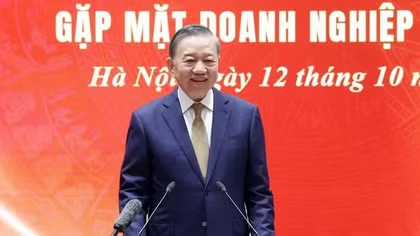
Amidst the restructuring of the global economy, the two leaders reaffirmed their determination to develop trusted and mutually beneficial economic partnerships, enhance supply chain resilience, and promote sustainable investment in strategic sectors, thereby contributing to regional peace, stability, and development, as well as global economic security. The two leaders welcomed the organisation of the Vietnam-France Business Leaders Forum, which they both attended, and emphasised the following priorities:
Vietnam and France will strengthen cooperation in the defence sector, prioritising defence industry and defence technology collaboration aligned with the needs and interests of each side. To enable Vietnam to achieve autonomy in this field, the two leaders encouraged relevant agencies and enterprises from both countries to accelerate the cooperation process. Vietnam and France welcomed enhanced cooperation in peacekeeping operations as well as in the sharing of historical and wartime memories.
Vietnam and France supported the promotion of security and cooperation, including training, in combating organised and transnational crime, preventing illegal migration and human trafficking, and implementing the United Nations Convention on Cybercrime (signed in Hanoi in October 2025). The two countries welcomed cooperation in the civil security industry, particularly through joint efforts to enhance aerial operational capabilities. The two sides committed to enhancing information exchange regarding crime prevention and control, and to developing cooperation in civil defence, particularly within the framework of the European Union’s Global Ports Safety (GPS) project.
The two sides welcomed the strengthening of cooperation in legal and judicial matters, especially between the French Council of State and the Ministry of Justice of Vietnam.
Vietnam and France supported enhanced cooperation in trade and the establishment of an international environment conducive to shared prosperity. Both sides committed to the continued full implementation of the EU-Vietnam Free Trade Agreement (EVFTA), including in areas such as market access and intellectual property rights protection, to foster balanced trade. Vietnam welcomed France's progress in the ratification process of the EU-Vietnam Investment Protection Agreement (EVIPA), which is expected to be completed this year.
The two sides will continue close cooperation in the fisheries sector. Notably, France will continue to provide technical assistance to Vietnam in combating illegal, unreported, and unregulated (IUU) fishing and in developing sustainable fisheries.
Cooperation in science and technology - a key pillar of the bilateral relationship - will be further intensified within the framework of the comprehensive strategic partnership action plan. This will be achieved particularly through training, the development of joint research programmes, investment in research infrastructure, and the encouragement of private-sector collaboration in areas of mutual interest identified in the action plan, starting with artificial intelligence, semiconductors, quantum technology, digital technology, biotechnology, energy and marine technologies, and smart transport.
Vietnam and France welcomed the success of the International Space Summit held in Paris on September 9–10, 2026. The two countries expressed their intention to cooperate on the VNREDSat-2 Earth observation satellite supply and launch project, a project supported by France through the mobilisation of French financial instruments.
The two sides welcomed the signing of the Letter of Intent on critical minerals, as well as the operationalisation of this cooperation through a trilateral agreement on the sustainable management of mineral resources and the enhancement of geological knowledge in Vietnam, involving the French Geological Survey (BRGM), the French Development Agency (AFD), and the Vietnam Department of Geology and Minerals.
Exchanges between the two countries' competent authorities and enterprises will be strengthened to support Vietnam in developing strategic infrastructure in the energy and transport network sectors, particularly regarding railways and urban transport. The two leaders particularly welcomed the signing of a Memorandum of Understanding between Vietnam’s Ministry of Construction and Systra regarding the renovation of the Hanoi–Haiphong railway line — a project France will support. The two leaders expressed satisfaction with the intensified dialogue between French and Vietnamese enterprises in the railway transport sector, as well as the Memorandum of Understanding among the Hanoi People's Committee, the French Development Agency (AFD), and the University of Transport Technology regarding the establishment of a Railway Technology School.
The two sides welcomed the continued promotion of the strategic partnership framework in civil aviation, alongside the signing and announcement of several major contracts between French and Vietnamese enterprises.
Building upon the Vietnam-France comprehensive strategic partnership, leveraging France's experience and strengths in the energy sector, and capitalising on the positive cooperation outcomes achieved to date, the two sides will continue their collaboration in this field. Regarding the peaceful use of nuclear energy, cooperation will focus specifically on assessing opportunities for nuclear power development for electricity generation, researching and applying advanced nuclear power technologies, ensuring nuclear safety and security, and fostering human resource training and development. Vietnam and France will also strengthen cooperation on energy infrastructure development and technical collaboration to modernise power system operation infrastructure and electricity markets, thereby enhancing the capacity to integrate renewable energy sources.
The two sides supported enhanced cooperation in the health sector through the signing of a new intergovernmental agreement at the bilateral level and continued collaboration at multilateral forums, in support of the "One Health" approach.
The two leaders called for continued efforts to address the three crisis of climate change, biodiversity loss, and pollution, particularly plastic pollution. They reaffirmed their determination to meet the goals of the Paris Agreement by announcing ambitious Nationally Determined Contributions (NDCs) and implementing commitments to phase out fossil fuels, advance low-carbon electrification, and develop low- and zero-emission energy sources. These actions aim to achieve carbon neutrality by 2050 while ensuring national energy security and sustainable development, in alignment with the best available scientific knowledge from the Intergovernmental Panel on Climate Change (IPCC).
The two countries reiterated the conclusions of the first Global Stocktake of the Paris Agreement adopted at COP28, particularly regarding the pathway to transition away from fossil fuels in a manner consistent with each country's specific conditions, circumstances, level of development, and energy security requirements.
France welcomed Vietnam’s ambitious goals to achieve net-zero emissions and phase out coal-fired power generation by 2050. In pursuit of this objective, Vietnam welcomed France’s continued, vigorous, and decisive implementation of its commitments under the Just Energy Transition Partnership (JETP).
Regarding nature and biodiversity conservation, the two sides reaffirmed their determination to implement and achieve the goals of the Kunming-Montreal Global Biodiversity Framework. Both countries recognised the importance of ocean conservation and sustainable management in achieving sustainable development goals. The two sides welcomed the entry into force of the Agreement on the Conservation and Sustainable Use of Marine Biological Diversity of Areas Beyond National Jurisdiction (BBNJ Agreement) and noted that the first Conference of the Parties (COP1), scheduled for January 2027, would lay a crucial foundation for the agreement's implementation.
Vietnam and France welcomed the organisation of the World Delta Summit on the sidelines of the UN Ocean Conference and affirmed their desire to further promote transboundary cooperation regarding the Mekong River. France stands ready to assist Vietnam in ratifying the Water Convention, which concerns cooperation on transboundary water basins.
The two countries will promote people-to-people exchanges by facilitating cooperation in cultural fields, particularly heritage preservation and promotion, artistic exchanges, and cultural industries, as well as in sports, science, and innovation. This includes exchange programmes for students and young researchers (including PhD candidates and post-doctoral fellows) under the new Hubert Curien Partnership (PHC Hoa Sen Lotus) programme. Both sides committed to the effective implementation of signed cooperation agreements on education and training, particularly those supporting French language teaching in Vietnam.
In this context, France welcomed the prospect of relocating the University of Science and Technology of Hanoi (USTH) to its new campus in Hoa Lac by 2028, a move that will enable the university to continue its rapid development into a regional centre of academic excellence.
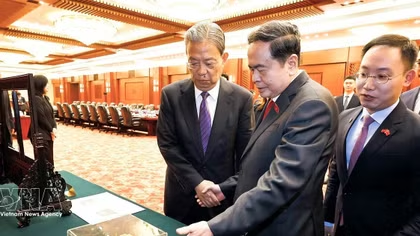
The two leaders welcomed France's return of a Dong Son bronze drum to Vietnamese authorities, an action taken within the framework of their mutual commitment to combating the illicit trafficking of cultural property./.