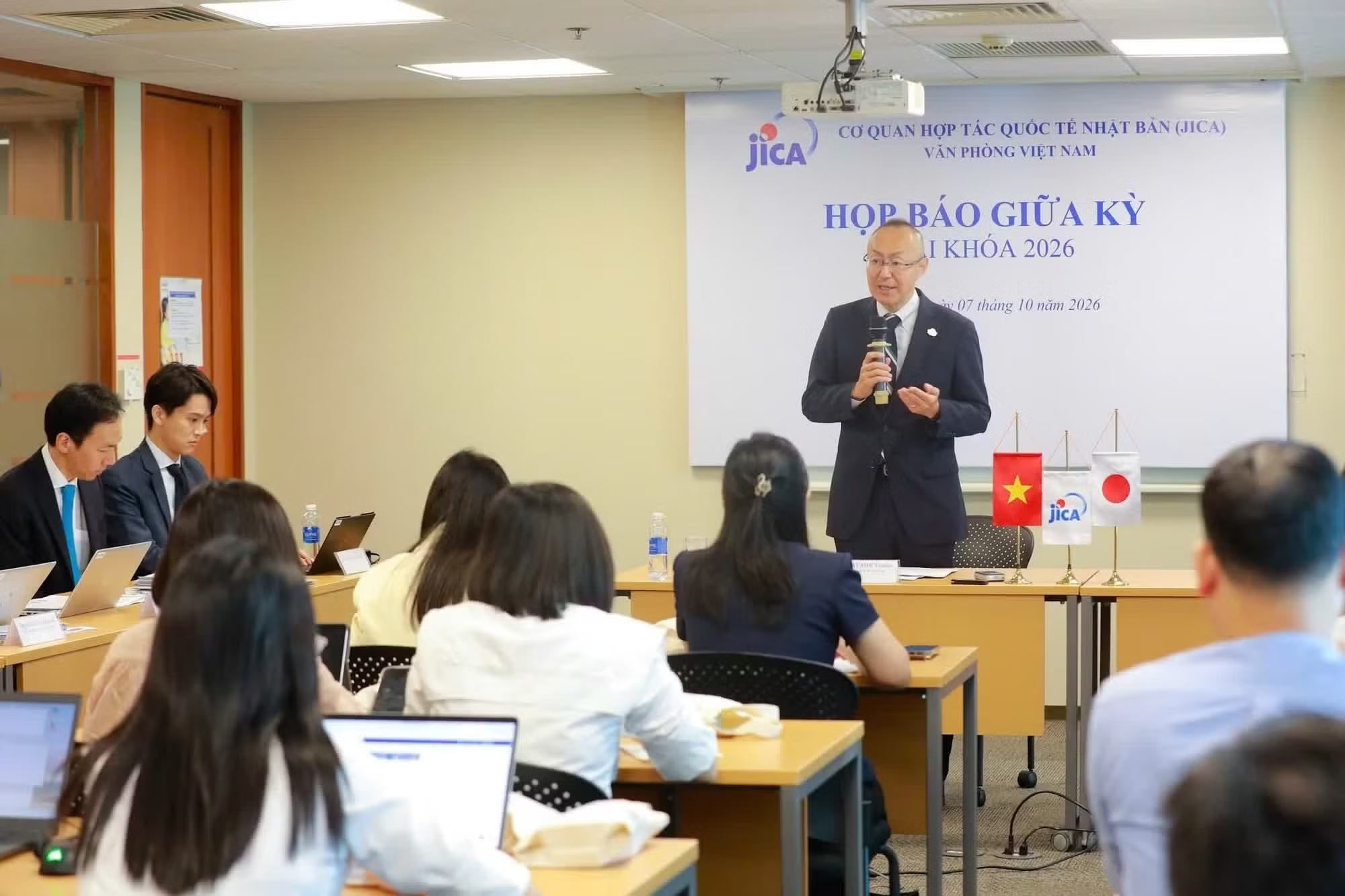
Speaking at JICA’s fiscal 2026 mid-year press conference on October 7 in Hanoi, Chief Representative Kobayashi Yosuke noted that, after decades of growth driven by labor-intensive manufacturing, foreign direct investment (FDI) and deep global integration, Vietnam is entering a pivotal phase. To achieve its goal of becoming a high-income nation by 2045, the country should unlock higher-value-added growth drivers.
Against a shifting global landscape where science, technology, innovation, economic security, supply chain resilience, energy transition, critical minerals, AI, semiconductors and space technology are paramount, JICA has crafted a comprehensive package of four mutually reinforcing pillars. JICA President Tanaka presented that strategic package to Prime Minister Le Minh Hung during his visit to Vietnam in early June.
The four pillars comprise:Advancing science, technology, innovation, digital transformation, and human capital development; Developing domestic enterprises and integrating them deeper into global value chains; Improving the investment environment; Constructing strategic infrastructure.

Under the first pillar, JICA will provide multi-tiered support ranging from policy and institutional advisory services to higher education development, joint research, and stronger linkages among government, industry, and academia.
Based on partnerships with over 20 Vietnamese universities and research institutes, including Vietnam Japan University, Can Tho University, and Hanoi University of Science and Technology, JICA will prioritize space technology, semiconductors, AI, and digital transformation. The agency is currently negotiating a new program loan with the Vietnamese government specifically tailored for AI and digital transformation initiatives.
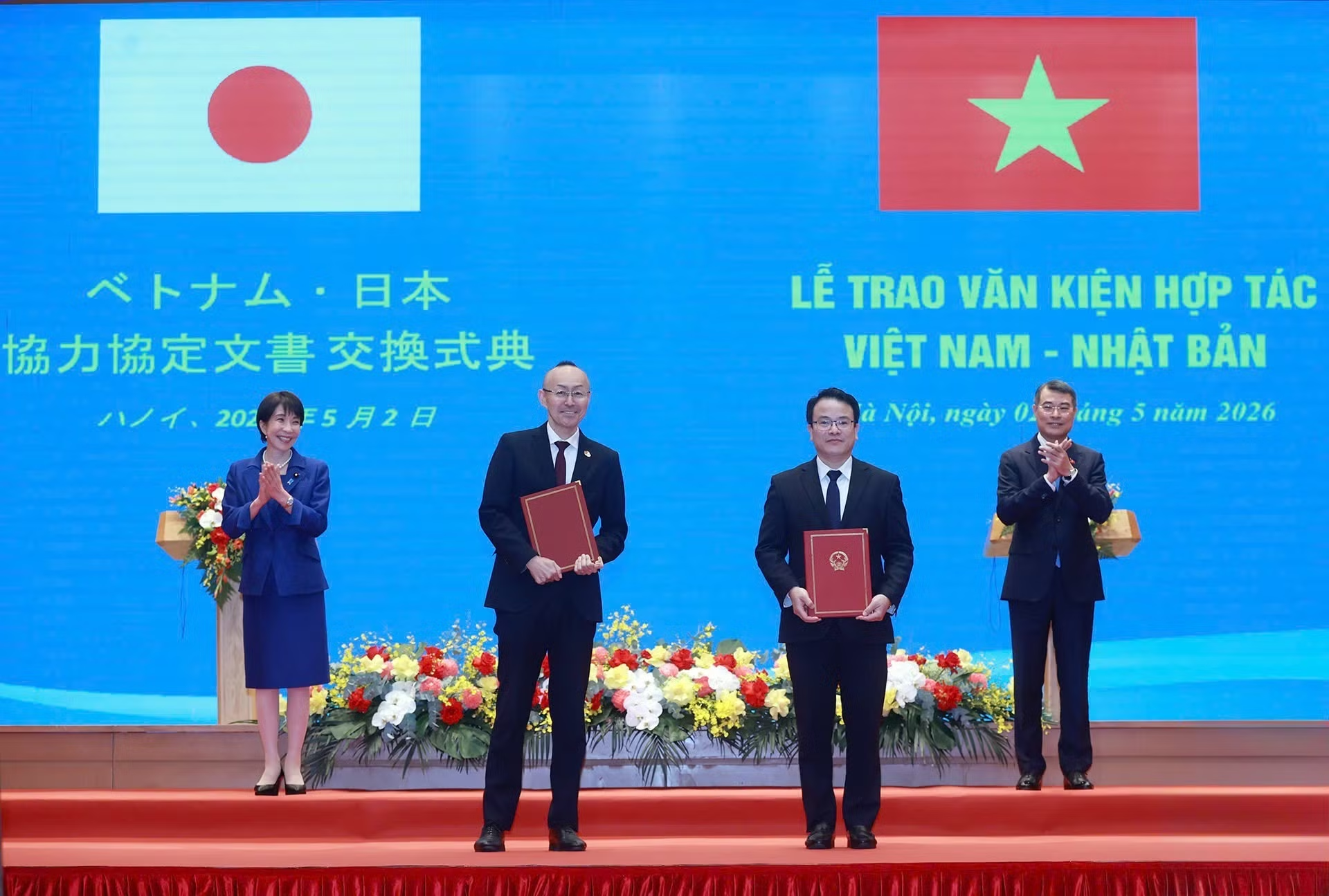
Furthermore, emerging technologies will be deployed in practical sectors such as green transition, disaster risk management, agriculture, transportation, and healthcare. In March 2026, JICA signed a 50 billion JPY (~US$316 million) loan agreement supporting Vietnam's green growth and climate resilience goals.
Several technical cooperation projects are already underway. A project to establish a digital early-warning system for landslides and debris flows in Central Vietnam is slated to launch in November 2026, while a project supporting public transport digitalization and travel demand management in Hanoi has been active since July.

Alongside technological advancements, JICA is placing heavy emphasis on "brain circulation," promoting two-way knowledge flows between Vietnam and Japan by expanding exchange programs for students, researchers, engineers and entrepreneurs.
Under the Human Resource Development Scholarship (JDS) framework, the two governments recently exchanged diplomatic notes to send promising young Vietnamese officials to Japan for master’s and doctoral studies. Additionally, the technical cooperation project with Vietnam Japan University entered its third phase in August 2026, underscoring JICA’s long-term commitment.
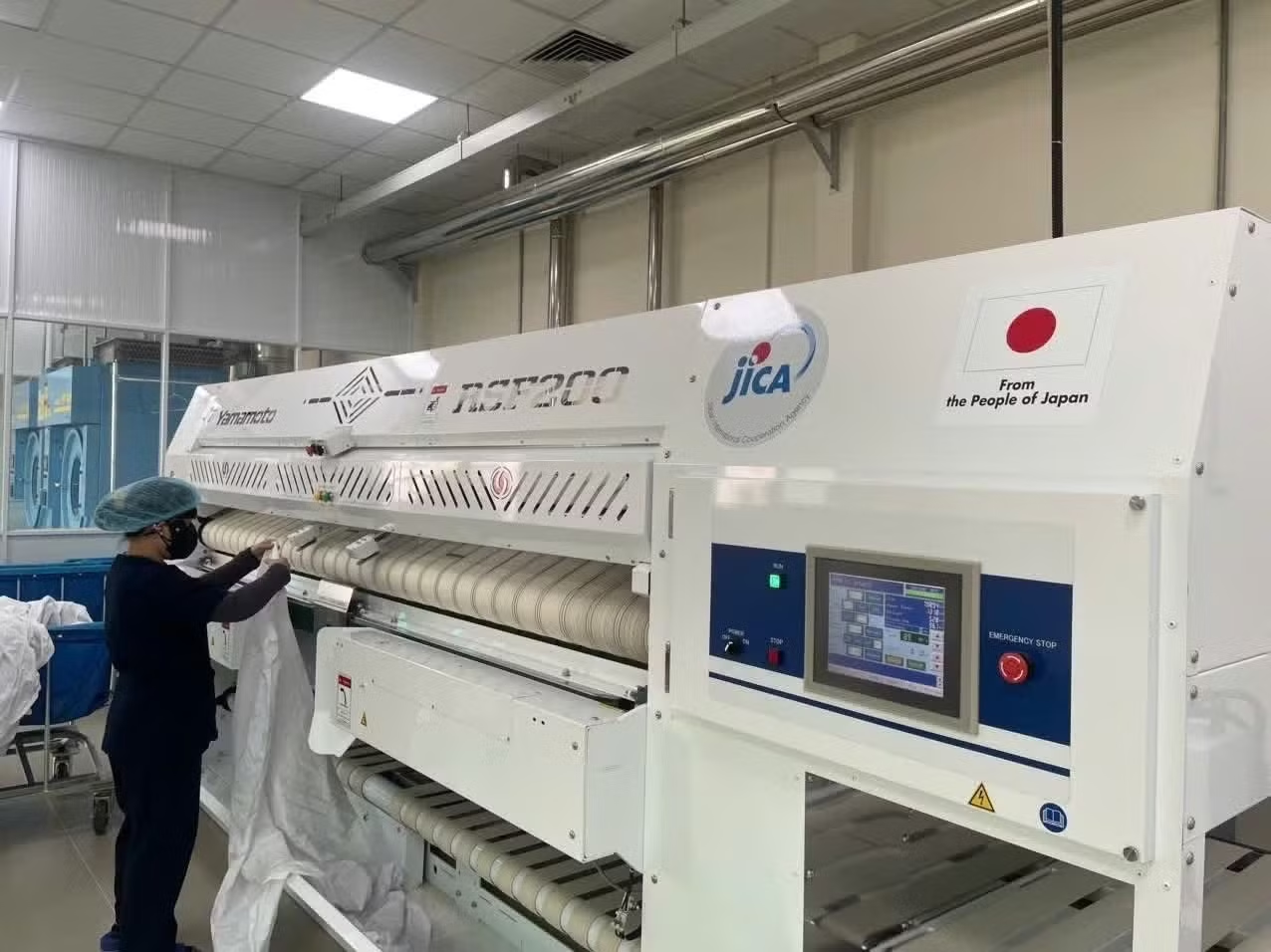
Beyond technology and human capital, JICA focuses on strengthening the capacity of Vietnamese enterprises. Following years of success in attracting foreign investment, Vietnam’s next structural challenge is enabling local firms to move up global value chains, enhance competitiveness, and become indispensable links in international production networks.
JICA plans to empower local businesses through innovation, technology transfer and upgrading, business matching, and improved financial access.


It will also continue collaborating with the Vietnam–Japan Institute for Human Resources Development (VJCC) on executive training. Through its signature 10-month Keieijuku course, over 1,000 Vietnamese SME executives and managers have been trained in Japanese management methodologies.
In the time to come, cooperation will expand into critical domains vital to economic security, including energy, strategic minerals, food security, and maritime security. JICA also plans to conduct a survey to assess potential support for fortifying Vietnam’s strategic petroleum reserves.

To optimize the investment climate, JICA stressed the necessity of transparency, predictability, administrative efficiency, and institutional trust. The agency will maintain its support in legal and judicial reform, intellectual property protection, tax policy, and governance modernizations, including the rollout of the two-tier local governance model.
Underpinning these initiatives is the final pillar: strategic infrastructure. This encompasses facilities for education and research, advanced tech infrastructure, urban railways, seaports, expressways, bridges, drainage, and wastewater treatment systems.
In addition to major urban projects, JICA remains committed to basic infrastructure in socio-economically disadvantaged regions. In May 2026, JICA signed two loan agreements totaling approximately 40 billion JPY (~US$250 million) to upgrade transport networks, irrigation, water supply, and riverbank embankments across eight northern mountainous provinces.
“Guided by our vision of ‘Connecting the world with trust,’ JICA looks forward to further deepening our cooperation with Vietnam on the foundation of high-level political trust and deep mutual confidence,” stated the Chief Representative of JICA Vietnam.
Designed as an integrated framework aligned with Vietnam’s national reform agenda and the shared vision of both leaderships, the four pillars aim to support Vietnam’s journey toward high-income status by 2045 while elevating bilateral ties in economic security and sustainable development.