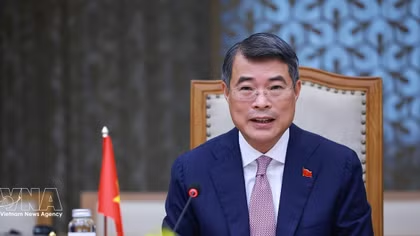
Prime Minister Le Minh Hung has urged Chinese companies to continue regarding Vietnam as a long-term production and trade base, while boosting investment into higher-quality projects with more advanced technologies and stronger spillover effects.
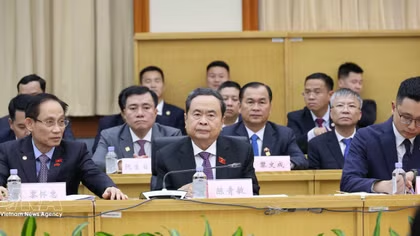
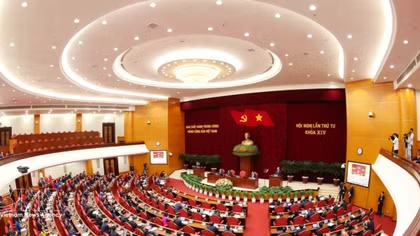
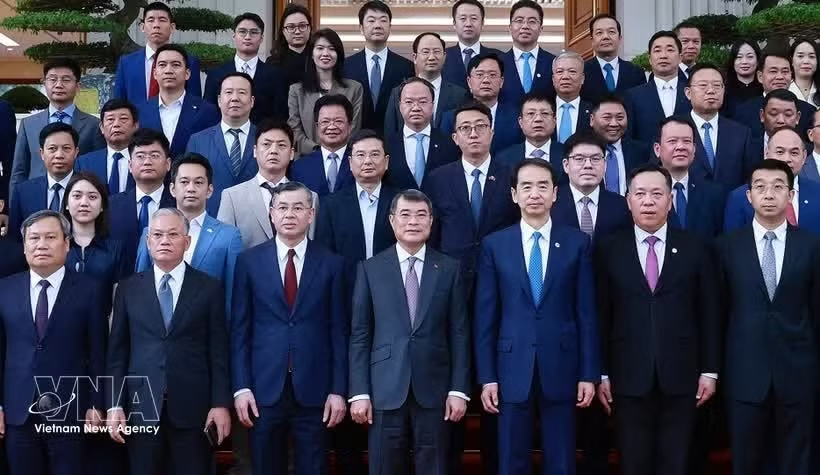
Chairing a meeting in Hanoi on August 26 with Chinese firms operating in Vietnam, PM Hung said Vietnam is entering a new growth phase following the 14th National Party Congress and strategic resolutions by the Party Central Committee and the Political Bureau. The shift requires overhauling the development model, pursuing rapid and sustainable expansion, and targeting double-digit growth anchored by macroeconomic stability, science and technology, innovation, digitalisation, green transition and higher labour productivity.
The Political Bureau’s Resolution 10-NQ/TW dated June 8, 2026 on developing the foreign-invested sector sets out a new approach and identifies foreign investment as an important component of the national economy, he said.
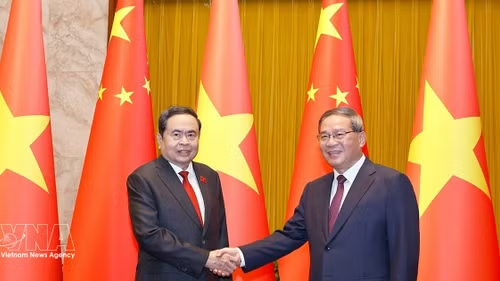
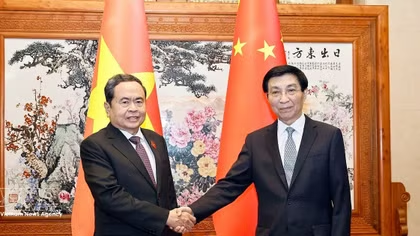
The PM noted with pleasure that Vietnam-China ties have advanced steadily in recent years. Vietnam always considers developing its relations with China a consistent policy, an objective requirement, a strategic and natural choice, and a top priority in its overall foreign policy of independence, self-reliance, multilateralisation and diversification, he stressed.
The two sides are actively implementing the common perceptions reached by their top leaders, pushing the Comprehensive Strategic Cooperative Partnership and building a Vietnam-China Community with a shared future that carries strategic significance at a higher level in the new era, PM Hung said.
Joint statements have identified key cooperation directions to advance the partnership. Economic, trade and investment ties continue to grow strongly, serving as a pillar and bright spot in the bilateral relations. China is Vietnam’s largest trade partner, while Vietnam is China’s largest trade partner in the Association of Southeast Asian Nations (ASEAN).
Briefing the Chinese firms on Vietnam’s recent socio-economic performance, he said the two economies’ complementary strengths and the directions set by leaders leave ample room for further collaboration. The new phase demands not just more investment, but investment that is better, higher quality and more substantive.
PM Hung said he hoped that Chinese companies will continue working closely with Vietnam to better unlock the potential, strengths and complementarities of the two economies.
The host urged them to follow the major cooperation directions agreed by the top leaders and take the lead in turning high-level perceptions into concrete projects and products. Priorities include strategic infrastructure connectivity, especially Vietnam-China railway links, urban rail, logistics and smart border gates, clean energy, modern processing and manufacturing, digital economy, artificial intelligence, semiconductors, 5G, big data and other emerging industries.
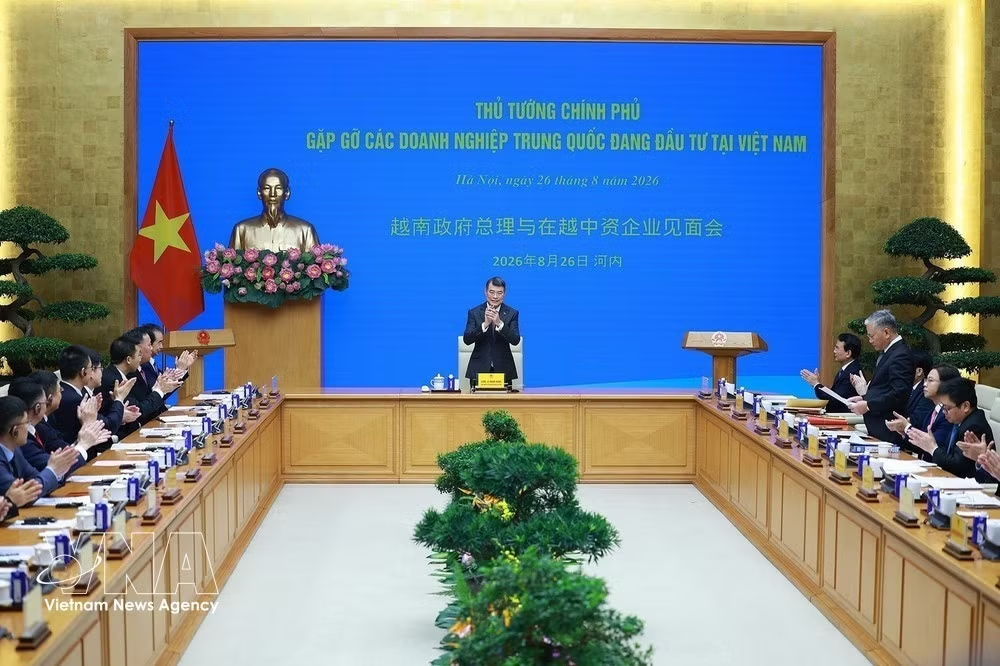
They were advised to shift decisively toward higher-quality investment with greater technological content, added value and spillover effects; increase research and development and innovation; build linkages that help Vietnamese companies join supply chains and raise localisation rates, facilitate technology transfer and substantive workforce training, adopt green and sustainable investment standards, and take a long-term vision while protecting workers’ livelihoods, rights and social responsibilities.
The PM suggested that each project should be profitable for investors but also contribute to production capacity, technology, job generation, budget revenue and the development of Vietnamese businesses. For large projects, investors should bring advanced technologies, management expertise and globally competitive solutions to Vietnam, creating quality facilities and products that become new landmarks in bilateral cooperation.
He broadly agreed with and gave specific instructions to ministries, sectors and localities on handling 44 proposals from Chinese companies across six areas.
According to the government leader, Vietnam is accelerating institutional reforms, improving the business climate and simplifying administrative procedures, including processing through the National Public Service Portal so businesses and investors do not have to resubmit information already available to authorities. The goal is to make regulations public, transparent and easier to follow while reducing compliance time and costs for companies, including foreign-invested ones.
The finance minister has been assigned to build a mechanism for the fastest possible collection and settlement of business difficulties and recommendations, including from Chinese companies. Ministries, agencies and localities must proactively clarify regulations, address issues substantively and give clear responses to proposals.
The host underscored a joint development agenda aimed at creating new value: moving from scale expansion to quality improvement, from processing and assembly to technology and innovation, and from standalone projects to interconnected, stable and long-term production and supply chain ecosystems.
Building on traditional friendship, political trust and priorities set by the top leaders, the two governments are responsible for turning those priorities into concrete action, he said, adding that the Vietnamese Government will continue to listen to and accompany investors, protect their legitimate rights and interests, and create conditions for companies to invest and operate successfully and sustainably.
Leaders of Chinese companies praised Vietnam’s improving business climate, citing the positive results of organisational apparatus restructuring, clearer responsibilities and streamlined procedures.
They said Vietnam is becoming an increasingly important market and outlined plans to expand investment, while discussing new cooperation opportunities and projects.
Chinese Ambassador He Wei said the attendees were all leading companies in their industries, and more Chinese firms are certain to come to Vietnam to do business.
In the January – July period, two-way trade approached 184.3 billion VND, up 35.1% year on year. Chinese investors registered nearly 3.7 billion USD in investment in Vietnam, with China ranking first in the number of newly registered projects at around 850.
As of late July, more than 7,000 Chinese-invested projects were valid in Vietnam with a total registered capital of nearly 37 billion USD, focusing on processing and manufacturing, infrastructure, energy, electronics and technology.