Amendments needed for transparent, coordinated land, housing and real estate policies: PM

Regarding the Housing Law, the PM said the Constitution provides that the State creates conditions for citizens to exercise their right to have a place to live. Therefore, policy thinking should shift from “having to own a home” to “having a place to live.”

Hanoi (VNA) – Prime Minister Le Minh Hung has called for amendments to Vietnam's laws on land, housing and real estate business to create a more coordinated and transparent policy framework, reduce input costs and lay a foundation for a new stage of development.
5.jpg
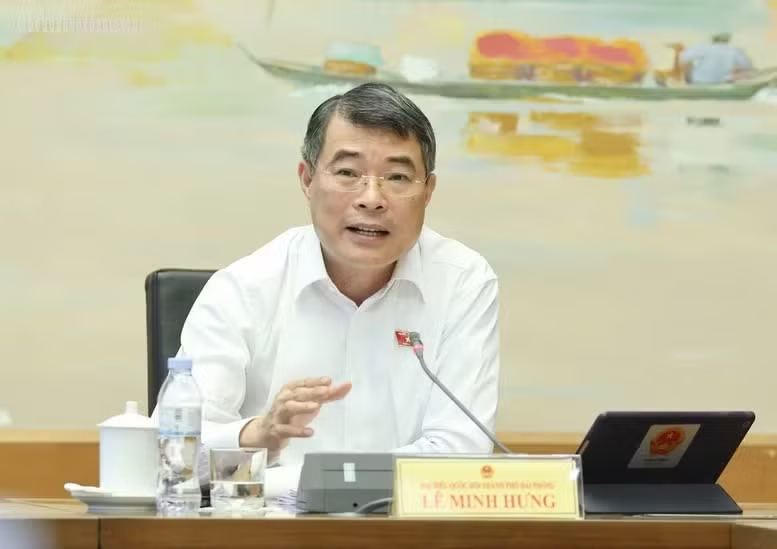
Prime Minister Le Minh Hung speaks at a group discussion on policy orientations for revising the Land Law, Housing Law and Law on Real Estate Business in Hanoi on August 19. (Photo: chinhphu.vn)

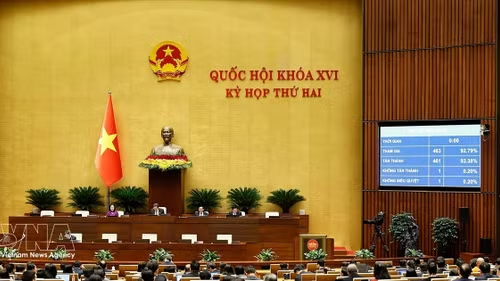
Speaking at a group discussion on policy orientations for revising the Land Law, Housing Law and Law on Real Estate Business in Hanoi on August 19, part of the 16th National Assembly's first extraordinary session, the PM said the revisions should not only address current problems but also introduce breakthrough policies to support development.

Revisions necessary for input cost control

Regarding the Land Law, PM Hung highlighted the need to reform land-use planning and planning procedures. In line with Resolution No 21-NQ/TW, issued on July 28, 2026 at the 14th Party Central Committee’s third session, on viewpoints and orientations for amending the Land Law and related laws (Resolution No. 21), he said each locality should move toward having a single integrated planning framework at the provincial level, instead of multiple overlapping plans.

He stressed that strict criteria and conditions must be set to prevent arbitrary changes to land-use plans or land-use purposes.

Land allocation, leasing and changes in land-use purposes must also be conducted in a public, transparent and competitive manner, he said. The law should clearly distinguish cases involving land-use rights auctions, bidding for projects using land and direct land allocation to investors, while providing clear rules on land-use payments.

Land prices are another major issue, PM Hung said, as they are an input cost for virtually all projects and economic activities. High land prices eventually push up the prices of final products while investors may also face higher borrowing costs and additional expenses when administrative procedures take too long.

The State should determine land prices based on scientific methods and reliable data while making the process transparent and connecting land databases with sectoral databases, he said.

These comprehensive measures are needed to control input costs and, subsequently, housing, land and final product prices, the Government leader underlined, adding that costs must be clearly calculated and measures introduced through laws as well as regulations guiding enforcement to minimise them.

Regarding land acquisition, compensation and resettlement, the PM demanded a shift from simply compensating people for assets taken by the State to rebuilding their lives. Living conditions after land acquisition should be better than before.

He also called for administrative reforms and greater decentralisation to shorten procedures, noting that lengthy land allocation procedures ultimately add to project costs and push up prices.

From home ownership to housing access

Regarding the Housing Law, PM Hung said the Constitution provides that the State creates conditions for citizens to exercise their right to have a place to live. Therefore, policy thinking should shift from “having to own a home” to “having a place to live.”
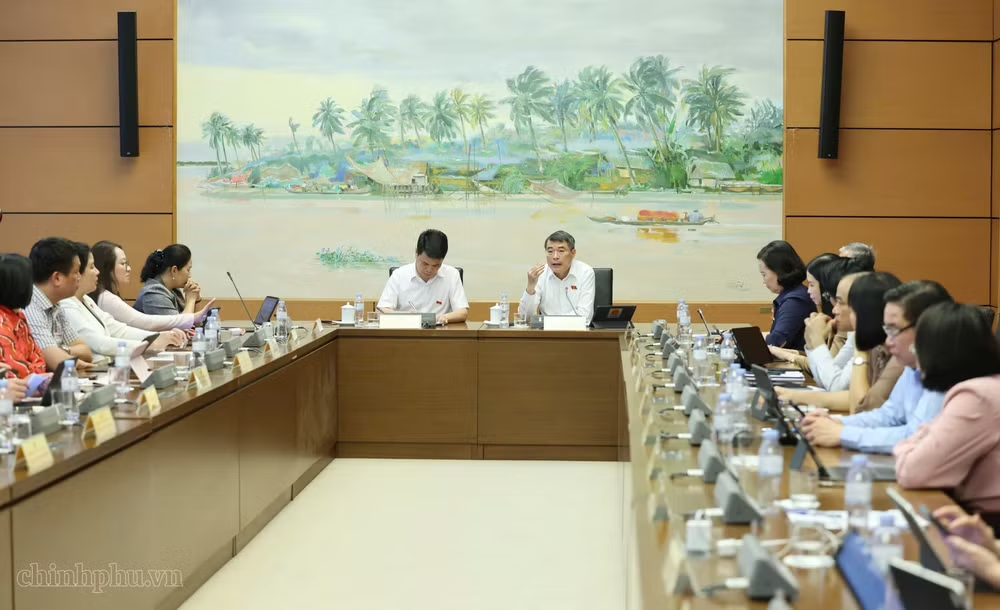
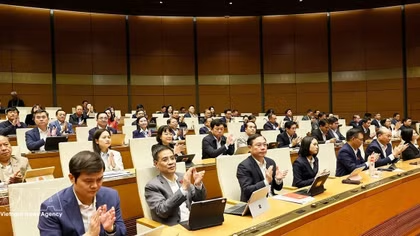
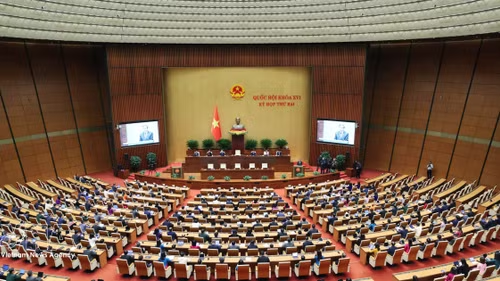
Prime Minister Le Minh Hung and deputies at the group dicussion on August 19. (Photo: chinhphu.vn)

A key priority should be the development of rental housing and social housing. The draft law distinguishes four types of housing: commercial housing, rental housing, public-service housing and policy housing.

The PM said the State alone cannot meet the housing needs of workers, students, public employees and members of the armed forces. More private-sector resources must therefore be mobilised.

The goal is to build a sufficiently large and high-quality source of rental housing with adequate infrastructure that gives tenants security, he said.

On the lifespan of apartment buildings, PM Hung noted that no building can last forever. Buildings must be inspected when they reach the end of their designed lifespan and, if they fail to meet safety standards, must be repaired or rebuilt.

However, residents' property rights must remain protected by law, he stressed. Rules must be detailed and transparent so that people understand their rights and feel secure.

Regarding the Law on Real Estate Business, the leader said the priority is to develop a transparent, healthy, stable and sustainable market. Information should be publicly available, while transactions through trading platforms and payments via banks should be encouraged and cash transactions discouraged.

He added that authorities are working to build an integrated information system linking real estate data with the national residents database and databases on planning, taxation, notarisation and banking. Measures are also being worked out to better protect vulnerable parties in real estate transactions./.
en.vietnamplus.vn

Other News

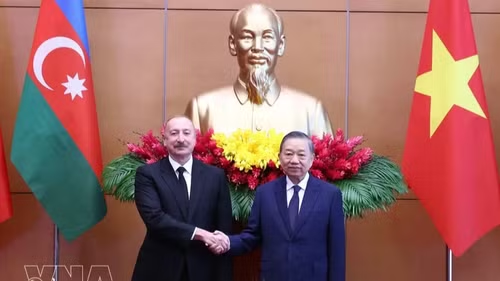
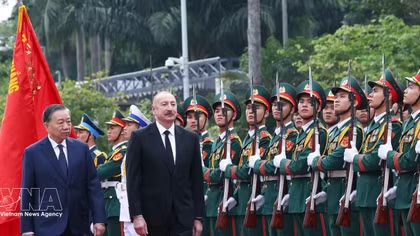
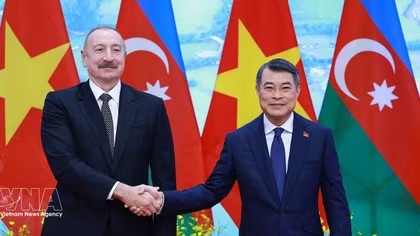
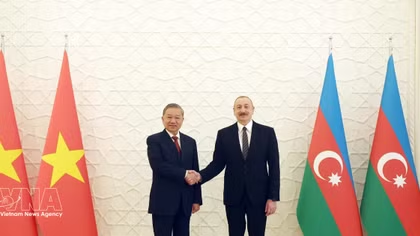
Welcome ceremony held for Azerbaijani President

Welcome ceremony held for Azerbaijani President

The two leaders walked along the red carpet to the ceremonial podium as military bands performed the national anthems of Azerbaijan and Vietnam. They then reviewed the Guard of Honour of the Vietnam People's Army and introduced members of their respective high-level delegations.

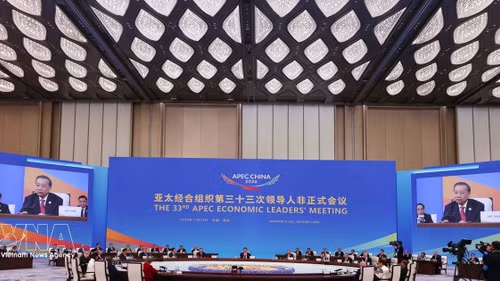
Vietnam builds on APEC 2026 outcomes towards hosting APEC 2027: Foreign minister

Vietnam builds on APEC 2026 outcomes towards hosting APEC 2027: Foreign minister

Vietnam participated in APEC 2026 not only as an active and proactive member but also with the responsibility of the host of APEC 2027. Its engagement reflects the country's consistent foreign policy, ambitious and sustainable development goals in the new era, and desire to make greater contributions to the common future of the Asia-Pacific region.

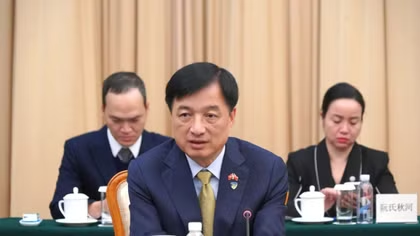
Vietnam, China share experience in personnel affairs

Vietnam, China share experience in personnel affairs

Vietnam treats human capital, science - technology, innovation and digital transformation as drivers of national development, prompting new demands for personnel affairs, including the need for officials with technical expertise and stronger leadership capabilities across Party committees, Head of the Communist Party of Vietnam (CPV) Central Committee’s Organisation Commission Nguyen Duy Ngoc said, adding that Vietnam wants to draw on Yunnan’s experience in this regard.

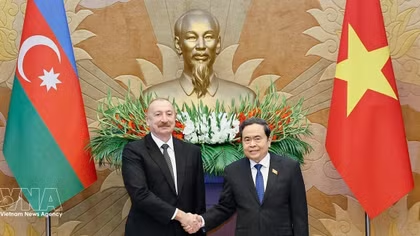
NA President meets Azerbaijani President in Hanoi

NA President meets Azerbaijani President in Hanoi

The two sides vowed to expand parliamentary cooperation, education - training, culture, tourism and people-to-people exchanges, and ease travel and cooperation for their citizens and companies, for the two peoples’ interests and for peace, stability and development.

Azerbaijan seeks expanded cooperation with Vietnam

Azerbaijan seeks expanded cooperation with Vietnam

Vietnam is one of Azerbaijan’s important partners in Southeast Asia, Azerbaijani President Ilham Aliyev said, expressing his desire to further develop bilateral cooperation across fields in line with their traditional friendship and established strategic partnership.

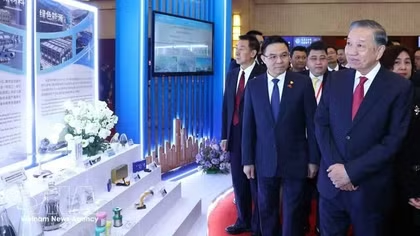
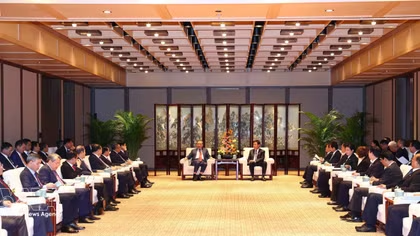
Top leader attends Vietnam-Southwest China Development Strategy Connectivity Forum

Top leader attends Vietnam-Southwest China Development Strategy Connectivity Forum

Southwest China has a vast market and increasingly strong industrial and innovation capabilities, while Vietnam boasts a dynamic economy, extensive international integration and seaports connecting it to major global shipping routes. By bringing into full play these advantages, the two sides can create shared development opportunities, linking inland areas with the sea, China with Southeast Asia and both with global markets.

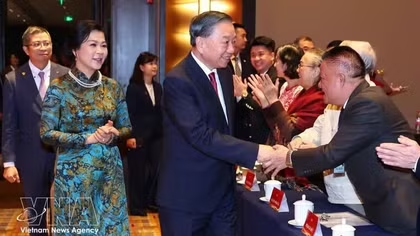
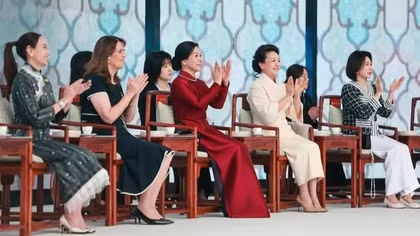
Madame Ngo Phuong Ly attends gathering of APEC's spouses

Madame Ngo Phuong Ly attends gathering of APEC's spouses

Madame Ngo Phuong Ly, spouse of General Secretary of the Communist Party of Vietnam Central Committee and President To Lam, attended a gathering of spouses of leaders and representatives of APEC economies in Shenzhen on November 19, using the occasion to spread Vietnam’s image on the sidelines of the APEC 2026 Economic Leaders’ Week.

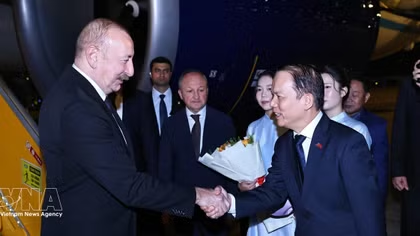
President of Azerbaijan and spouse begin official visit to Vietnam

President of Azerbaijan and spouse begin official visit to Vietnam

President of Azerbaijan Ilham Aliyev’s visit carries particular significance. It offers high-ranking leaders a chance to reinforce political trust, review the full range of relationship-building directions and set concrete steps to realise the Strategic Partnership, adding new momentum across politics, diplomacy, economy, trade, investment, energy, education, science-technology, and people-to-people exchanges.

Vietnam officially takes over as APEC 2027 host

Vietnam officially takes over as APEC 2027 host

The top Vietnamese leader noted that hosting APEC for the third time marks an important milestone in Vietnam’s integration and development. The country pledges to be a dedicated host, listening to build consensus and connecting members to expand cooperation and deliver lasting results.