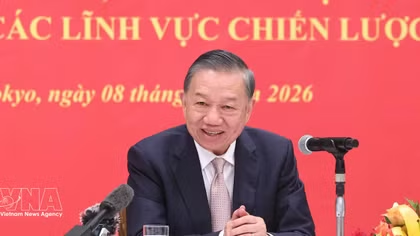
Hanoi (VNA) – China and Vietnam hosting APEC in 2026 and 2027, respectively, offers an opportunity for the two countries to develop a continuous agenda and translate the long-term orientations of the APEC Putrajaya Vision 2040 into concrete projects that benefit member economies, particularly developing ones, said a Chinese official.

From cross-border economic corridors and logistics to the digital economy, artificial intelligence (AI) and green energy, Vietnam is expected to build on the outcomes of APEC 2026 under China's chairmanship.
In an interview with Vietnam News Agency (VNA), He Xilin, Deputy Director of the China National Committee for Pacific Economic Cooperation (CNCPEC), said China's and Vietnam's consecutive hosting of the Asia-Pacific Economic Cooperation (APEC) forum in 2026 and 2027 presents an important opportunity for the two countries to strengthen multilateral coordination, deepen bilateral cooperation and advance regional economic integration.
According to her, in 2026, China is hosting APEC under the theme “Building an Asia-Pacific Community to to Prosper Together”, focusing on three priority areas: openness, innovation and cooperation. On this basis, four pillars of cooperation have been identified, including trade, connectivity, innovation and development. When Vietnam takes over as APEC host in 2027, it can build on these outcomes while promoting more substantive and in-depth cooperation.
In trade, Vietnam is well positioned to continue advancing the Free Trade Area of the Asia-Pacific (FTAAP), coordinate approaches to trade liberalisation and strengthen its capacity to participate in high-standard regional economic and trade agreements. As one of the few developing economies that are members of both the Comprehensive and Progressive Agreement for Trans-Pacific Partnership (CPTPP) and the Regional Comprehensive Economic Partnership (RCEP), Vietnam can make an active contribution to this process while supporting the World Trade Organisation (WTO)'s operations and reform efforts and safeguarding the multilateral trading system.
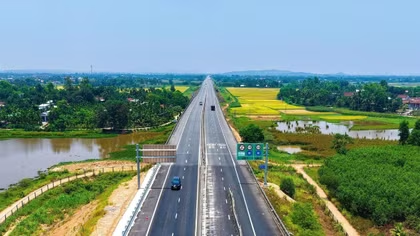
In connectivity, Vietnam, as a key hub along the China-ASEAN transport corridors, a meeting point for multiple free trade agreements and a bridge for subregional cooperation, can promote its role in promoting hard and soft infrastructure connectivity, coordinating rules and amplifying the voice of developing economies.
In innovation, cooperation in the digital economy and AI should be strengthened, with a focus on inclusive AI development, supporting the digital transformation of small and medium-sized enterprises (SMEs) and micro-enterprises, and promoting the responsible application of AI.
In development, Vietnam can promote regional cooperation on agricultural digital transformation, food security and disaster prevention and response amid the growing impacts of climate change. In energy, efforts should balance energy security with a reasonable energy transition, strengthen power grid connectivity and cross-border electricity trade, promote mutual recognition of green electricity standards, and expand investment and green finance cooperation.
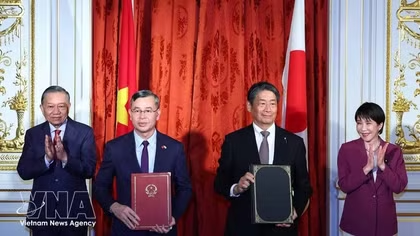
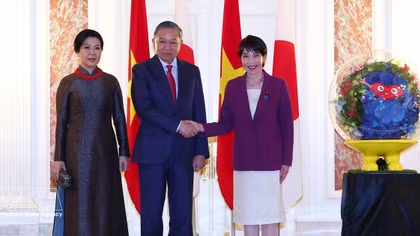
She said that during General Secretary of the Communist Party of Vietnam Central Committee and President To Lam's visit to China in April 2026, the two sides signed several important documents, including commitments to strengthen coordination within multilateral mechanisms, including APEC. As two members of the “troika” comprising the previous, current and incoming APEC host economies, the countries should step up exchanges and consultations at all levels and support each other on major issues. They should jointly promote economic growth and regional integration, safeguard the WTO-centred multilateral trading system, advance innovation and the green transition, reduce carbon emissions, and ensure energy and food security.
According to He, the two countries should also leverage their bilateral cooperation as a foundation for expanding multilateral engagement and effectively connect the Belt and Road Initiative with the “Two Corridors, One Belt” framework.
Priority areas could include developing cross-border economic corridors, logistics hubs, border economic and industrial cooperation zones, multimodal transport, and rail, road and border-gate connectivity. The two sides could also use the APEC framework to promote bilateral pilot projects in the digital and green economies, supply chains and cross-border connectivity.
The two-consecutive-year APEC hosting cycle also offers an opportunity for businesses, research institutions, young people and specialised government agencies from both countries to establish regular channels of engagement. Strengthening the roles of the APEC Business Advisory Council (ABAC), the Pacific Economic Cooperation Council (PECC) and thematic forums would help enhance dialogue, people-to-people exchanges and the social foundations for regional cooperation.

From the perspective of Chinese scholars and the business community, she said Vietnam is expected to continue advancing the building of an Asia-Pacific Community based on openness, inclusiveness and innovation, while translating its advantages as host economy into practical, implementable and measurable cooperation outcomes.
In trade, it is necessary to continue advancing the FTAAP, expanding cooperation agreements, coordinating economic and trade policies, reducing trade and investment barriers, and stepping up discussions on digital trade and smart trade rules.
In supply chain connectivity, efforts should focus on removing bottlenecks and building open, resilient supply chains; strengthening links among seaports, logistics hubs and border industrial zones; promoting mutual recognition of standards; and enabling SMEs to participate more deeply in global value chains through digital tools.
For digital infrastructure, the two sides should enhance connectivity and interoperability among digital infrastructure systems and products, coordinate planning for computing and energy infrastructure, narrow the digital divide, and step up skills transfer and digital workforce training, particularly in developing economies.
In energy, efforts should focus on advancing the establishment of an Asia-Pacific Energy Community, strengthening cross-border power grid connectivity, developing clean energy sources and applying AI in high-value energy sectors. The transition should be aligned with each economy's resources and level of development while ensuring energy security and meeting people's daily needs.
Assessing APEC's role in the current context, He stated that as global economic uncertainty intensifies and unilateralism, trade protectionism and the risk of economic fragmentation increasingly affect the region, APEC continues to play an important role in promoting trade and investment liberalisation and facilitation, as well as Asia-Pacific economic integration.
Over more than 30 years, the forum has helped the region become one of the world's key engines of economic growth, she affirmed.
She said that APEC's role extends beyond maintaining an open, connected environment for mutually beneficial cooperation. It also promotes inclusive development, sustainable growth and innovation. Through capacity building, technology transfer, workforce training, efforts to narrow the digital divide and support for SMEs, the forum helps developing economies participate more deeply in regional value chains.
At the same time, APEC provides a platform for members to exchange views on the digital and green economies, AI applications and governance, supply chain resilience and the implementation of pilot projects.
She stressed that China's and Vietnam's consecutive hosting of APEC presents an opportunity for the two countries to make practical contributions to regional economic integration and promote open, innovative, inclusive and sustainable development./.