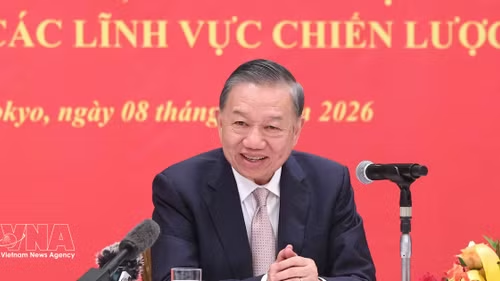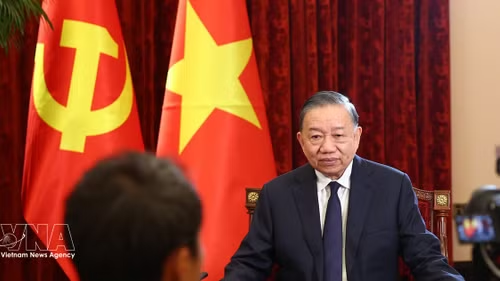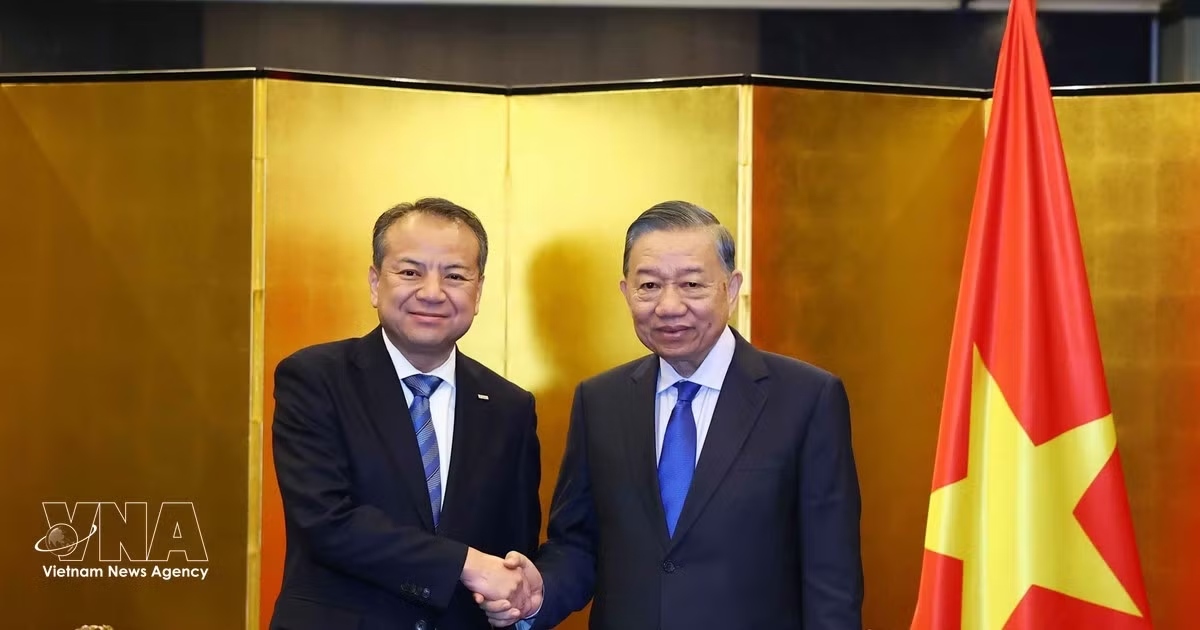
Tokyo (VNA) – General Secretary of the Communist Party of Vietnam Central Committee and President To Lam met with leaders of major Japanese corporations in Tokyo on November 9 as part of his official visit to Japan, discussing ways to expand investment and strengthen business cooperation between the two countries.
At a meeting with Masayoshi Fujimoto, Chairman and CEO of Sojitz Corporation, General Secretary and President Lam praised the group’s effective investment and business operations in Vietnam over the past 40 years.
He called on major Japanese corporations not only to expand their business activities but also to remain reliable, long-term partners in developing Vietnam’s industrial and energy infrastructure and new value chains.
Fujimoto affirmed Sojitz’s commitment to contributing to Vietnam’s economic development. He said the group operates across a wide range of sectors, including automobiles, aviation, infrastructure, energy, metals and minerals, chemicals, agriculture and consumer goods.
He also briefed the Vietnamese leader on several major projects in Vietnam, saying Sojitz planned to strengthen links among its business operations to develop integrated business clusters. The group also aims to explore new opportunities in industrial infrastructure, clean energy and consumer goods through cooperation with Vietnamese enterprises.
General Secretary and President Lam called on Sojitz to focus its investment and cooperation in Vietnam on four priorities: power generation and clean energy development; strategic mineral supply chains and advanced materials; data centres and digital infrastructure; and the consolidation of existing projects to form integrated business clusters.
He said the two sides should move their cooperation into a new phase, shifting from individual projects towards integrated business clusters that maximise links and synergies across different sectors.
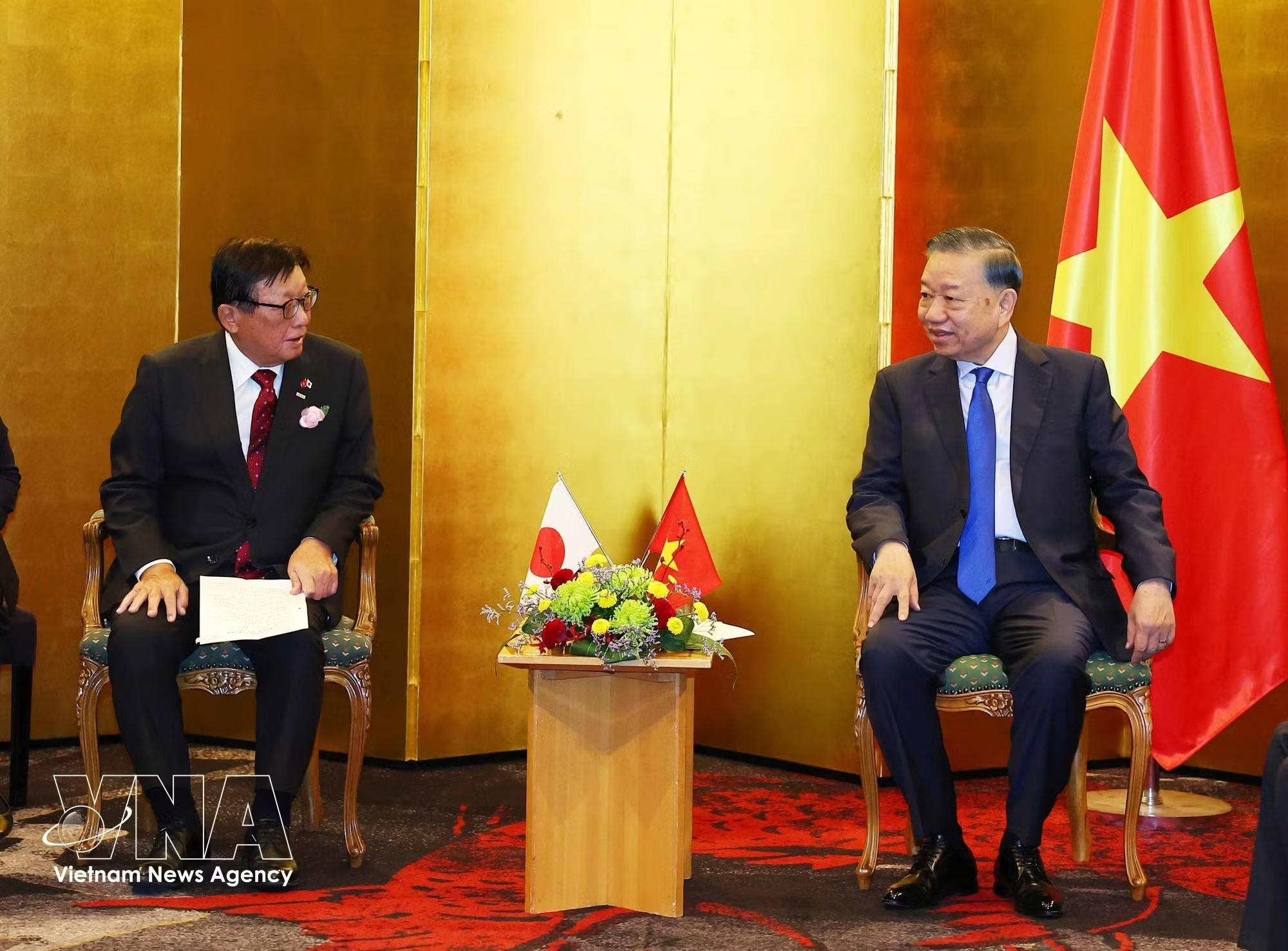
The Vietnamese leader said it is time for Vietnam and Sojitz to develop a longer-term cooperation programme. He affirmed that Vietnam would accompany the group in implementing effective, successful and sustainable investment and business activities.
At a meeting with Yoshitaka Kitao, Chairman, President & CEO of SBI Holdings Inc, General Secretary and President Lam welcomed the group's positive contributions to Vietnam in banking, securities, asset management, consumer finance and digital transformation technologies.
He expressed his hope that SBI Holdings would gradually expand its role from a financial investor to a development partner in building a multi-sector business ecosystem in Vietnam.
Kitao said SBI Holdings, one of Japan’s leading financial and investment groups, is working to develop a comprehensive financial ecosystem, offering services ranging from investment and capital mobilisation to asset management, payments and digital financial services.
In the coming period, the group plans to expand its investment and strategic partnerships in Vietnam. A notable initiative is its planned cooperation with Sun Group through a memorandum of understanding, with a view to studying the establishment of a joint venture to implement business projects in promising sectors.
The Vietnamese top leader said the proposed cooperation with Sun Group could mark an important milestone, opening up broader opportunities for Japanese and Vietnamese businesses in finance, technology, infrastructure and next-generation services.
He noted that Vietnam is entering a new development phase, with the determination to become a developed, high-income country by 2045. Achieving this goal would require substantial medium- and long-term financial resources for strategic infrastructure, energy, science and technology, green transition and improvements to the economy’s competitiveness.
He affirmed that Vietnam would continue improving its institutions and business environment, developing a transparent, modern, safe and internationally integrated financial market, maintaining macroeconomic stability and protecting investors’ legitimate rights and interests. These efforts aim to create favourable conditions for international financial institutions to operate effectively and sustainably in the country.
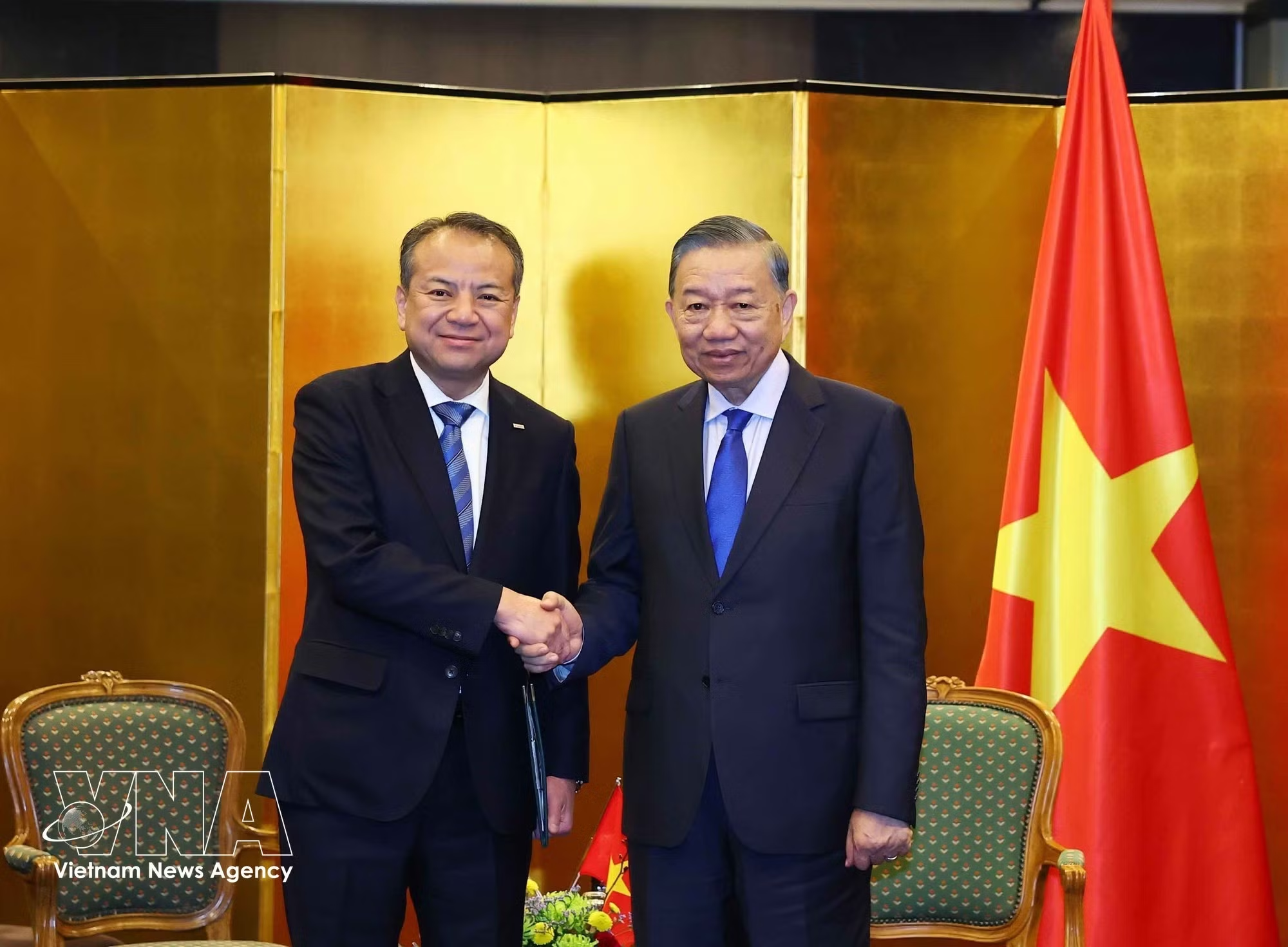
Meeting with Toru Nakashima, President and Group CEO of Sumitomo Mitsui Financial Group (SMBC Group), General Secretary and President Lam praised the group’s practical contributions during more than 30 years of operations in Vietnam, particularly to the development of the financial market and the improvement of the capacity of Vietnamese enterprises and credit institutions.
Nakashima said Vietnam is one of SMBC Group’s key strategic markets in Asia. Over more than three decades, the group has arranged and connected over 20 billion USD in international capital for foreign direct investment (FDI), industry, energy, oil and gas, transport, infrastructure and sustainable development.
He highlighted the strategic partnership with VPBank as clear evidence of the group’s long-term commitment to Vietnam. SMBC has also supported foreign investment and connected Japanese businesses and investors with Vietnamese partners, while helping Vietnamese enterprises access international capital markets.
Nakashima welcomed Vietnam’s resolution on private economic development, describing it as a breakthrough that creates new momentum and strengthens confidence in the country's long-term development orientation. He said the resolution would also contribute to deepening the Vietnam-Japan Comprehensive Strategic Partnership.
Going forward, SMBC plans to promote green finance, renewable energy, infrastructure and capital market development, while supporting the development of Vietnam’s international financial centres. The group hopes to serve as a long-term bridge connecting capital, businesses and expertise between the two countries.
General Secretary and President Lam called on SMBC to leverage its strengths in international finance and continue developing medium- and long-term capital mobilisation and arrangement programmes for Vietnam, particularly in transport infrastructure, logistics, clean energy, green transition and sectors with strong growth potential.
He encouraged the group to share experience and introduce advanced financial models and solutions, while promoting cooperation between international financial institutions, investors and Vietnamese enterprises and project developers. Such efforts would help diversify funding sources and improve the mobilisation and effective use of social resources.
The Vietnamese leader stressed that, alongside increasing the scale of capital mobilisation, attention should be paid to the quality and efficiency of capital use. Funding should be channelled into feasible projects that generate added value and new growth drivers, while ensuring effective risk management and financial security.
He also expressed his hope that SMBC would continue supporting Vietnamese businesses and financial institutions in accessing international capital markets and promoting trade finance, green finance and sustainable finance.
Meeting AEON executives, General Secretary and President Lam spoke highly of AEON’s positive and practical contributions to the development of Vietnam’s modern retail sector, the promotion of domestic consumption and exports of Vietnamese goods, job creation and improvements in people's quality of life, as well as the group’s cooperation proposals for the coming period.
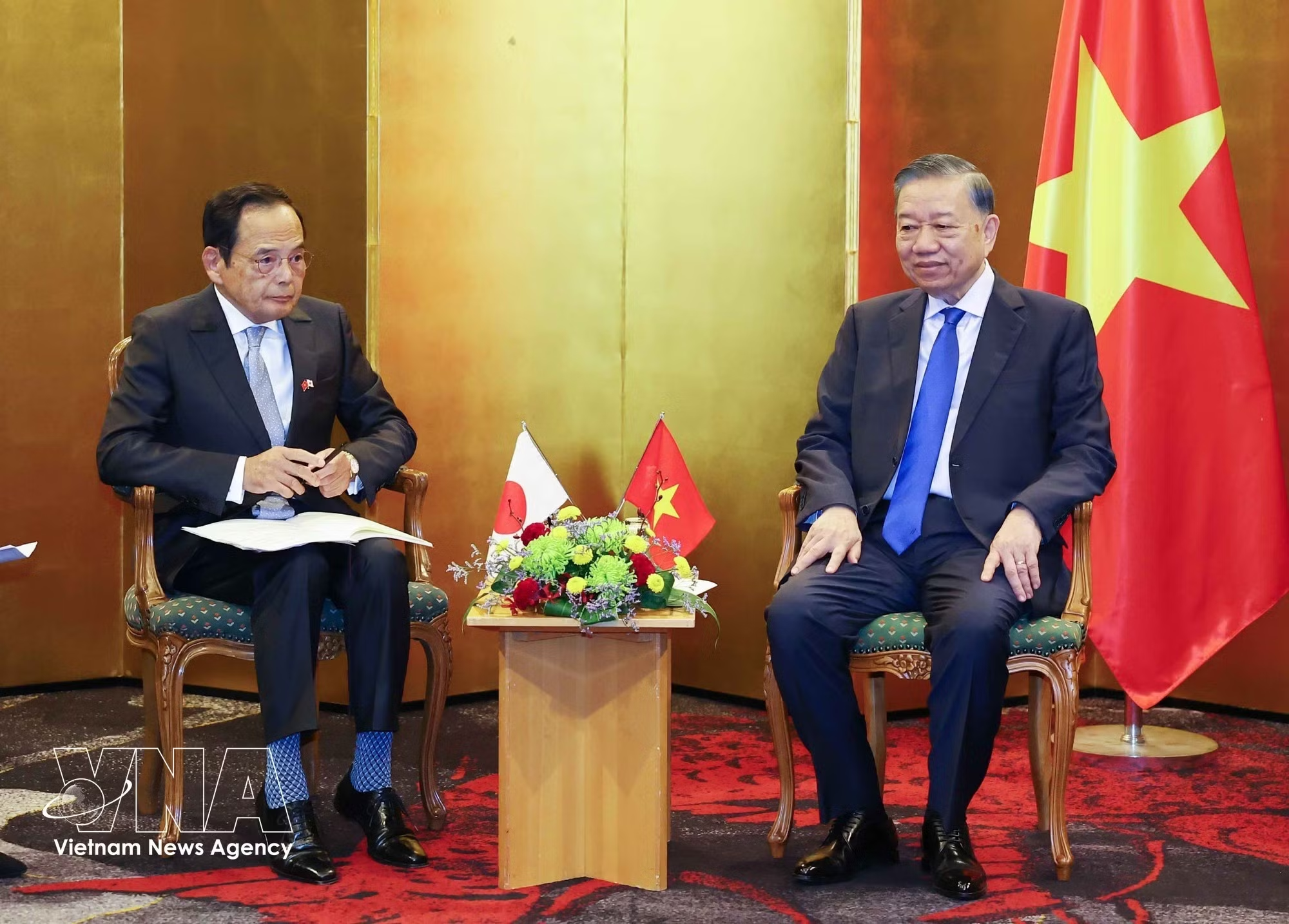
Motoya Okada, Chairman and Representative Executive Officer of AEON, said the group currently has 11 member companies operating in Vietnam in retail and commercial centre development. In 2026, AEON opened additional commercial facilities in several Vietnamese provinces and cities, contributing to the development of commercial infrastructure, logistics, expanding markets for locally produced goods and creating more jobs.
Assessing Vietnam’s investment and business environment as stable and continuously improving, with a market offering considerable potential, AEON leaders affirmed the group’s desire to continue investing in the country. They said that, under its medium-term management plan, AEON had identified Vietnam as one of its top strategic priority markets and would mobilise resources to triple the scale of its business in the country.
Welcoming AEON’s designation of Vietnam as a top strategic priority market in its 2026–2030 development plan, General Secretary and President Lam said Vietnam is a highly promising market with a population of over 100 million, rising incomes, and growing consumer demand.
Vietnam has favourable conditions to become not only a major growth market but also a production, product development and supply hub, he said. He expressed his hope that AEON would continue to be a major investor in the retail sector and become a strategic partner in modernising the country's commercial system, developing domestic enterprises, strengthening supply chain capacity, and bringing more Vietnamese products and brands into international distribution networks.
To effectively tap the potential and strengths of both sides, the leader called on AEON to continue developing modern and diversified retail models in Vietnam, tailored to the needs and conditions of each locality; invest in logistics, e-commerce, smart distribution systems and efficient supply chains; and link the expansion of its business network with the development of local product supplies and the connection of production areas with consumer markets. These efforts would help reduce circulation costs, improve product quality and promote local economic development.
General Secretary and President Lam also noted his hope that AEON would not only expand its procurement and distribution of Vietnamese goods but also work alongside Vietnamese enterprises in product research and development, improving management capacity, quality standards, food safety, traceability and brand building. This would help more Vietnamese enterprises become reliable, long-term suppliers to AEON’s global network.
He also called on the group to leverage its international distribution network to help Vietnam’s key products gain deeper access to the Japanese market and other markets, while gradually increasing the proportion of products developed, manufactured and generating added value in Vietnam.
On this occasion, the Vietnamese leader met with Masahiko Kato, President and CEO of Mizuho Bank, which was the first Japanese bank to establish a branch in Hanoi and had maintained a presence in Vietnam for decades through its Hanoi and Ho Chi Minh City branches.
Mizuho works closely with Vietnamese partners to support investment activities, strengthen financial, trade and investment ties, and connect Vietnamese businesses with international financial markets. The bank wishes to contribute to Vietnam’s economic development, Kato said.
General Secretary and President Lam spoke highly of Mizuho’s effective investment and business operations in Vietnam, and acknowledged the 15-year strategic partnership between Mizuho and Vietcombank. He noted that the achievements made by the two sides had demonstrated a model of effective cooperation between a Japanese financial institution and a Vietnamese bank.
Noting that considerable potential remains for further cooperation, the General Secretary and President said that, as Vietnam pursues high growth and sustainable development, the country needs substantial high-quality capital and encourages banks to step up investment and cooperation.
He called on the two sides to expand support for Vietnamese businesses, going beyond the provision of financial services to helping them access capital, partners, and investment and trade opportunities in Japan and other markets, while further deepening Vietnam-Japan cooperation.
At a meeting with Hitoshi Honna, President and CEO of Erex Group, General Secretary and President Lam spoke highly of the group’s vision for developing renewable energy in Japan and Southeast Asia, contributing to CO2 emission reductions. He noted that this direction aligns with issues of particular concern to Vietnam.
Vietnam hopes Japanese businesses such as Erex will go beyond investing in individual projects and become long-term partners in jointly developing a modern, sustainable and efficient biomass power industry.
Honna shared the group’s goal of developing biomass power plants in various localities across Vietnam. By developing biomass power generation using agricultural and forestry by-products as fuel, Erex aims to promote Vietnam’s sustainable transition to green energy, help increase rural incomes and create jobs in power plant operations, as well as fuel collection and transportation.
The group expressed its hope that the Vietnamese Government and the Ministry of Industry and Trade would improve the regulatory framework for biomass power development, designate an inter-agency focal point and establish a roadmap for addressing obstacles, while promoting Vietnam-Japan cooperation on carbon credits under the Joint Crediting Mechanism (JCM).
Acknowledging Erex’s contributions to Vietnam, the General Secretary and President said there remained considerable potential for further cooperation. He noted that the long-term goal of developing biomass power plants with a combined capacity of more than 1,000 MW would require both sides to make thorough preparations in terms of mechanisms, feedstock sources, locations and implementation schedules.
Regarding the proposed biomass power and waste-to-energy projects, he called on Erex to conduct thorough studies and establish clear implementation roadmaps, taking into account the needs of each locality and Vietnam’s legal regulations.
He affirmed that Vietnam would continue to improve its institutional framework and investment and business environment while safeguarding investors’ legitimate rights and interests.