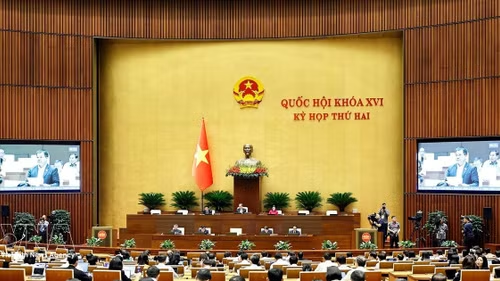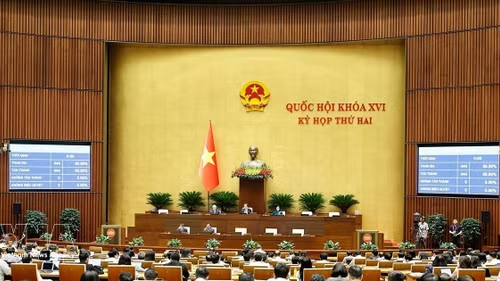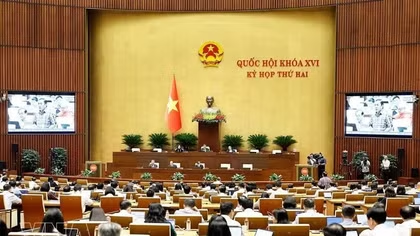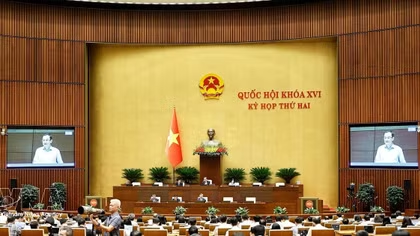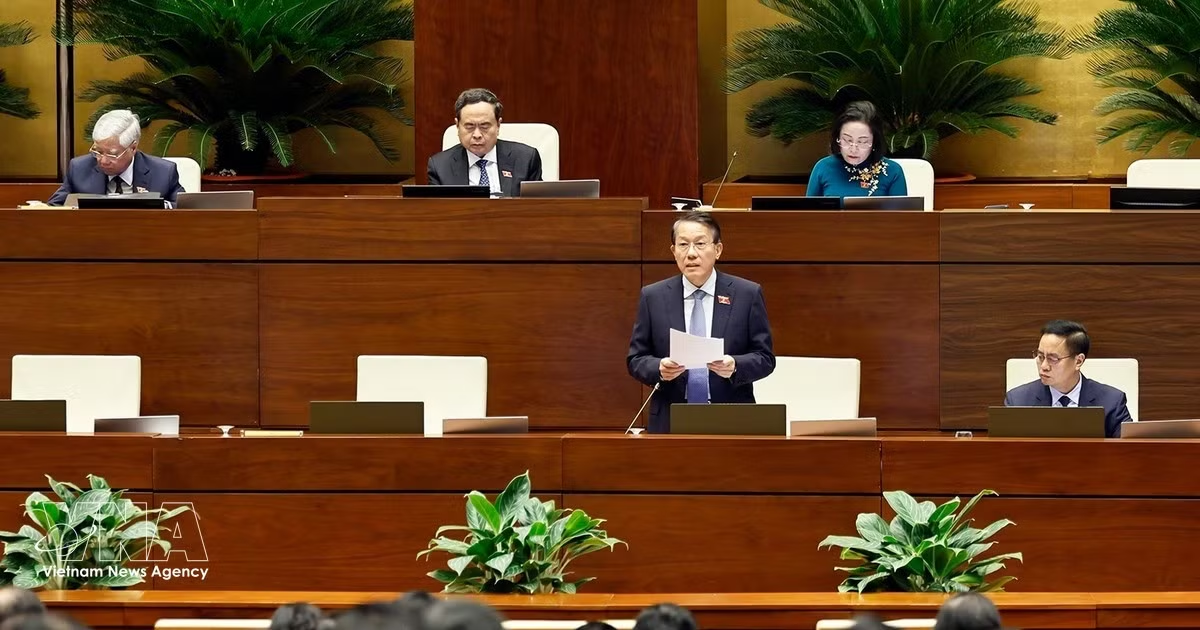
Hanoi (VNA) – The 16th National Assembly on November 5 pressed for tighter criteria to identify and classify facilities deemed critical to national security, focusing on security impact and the fallout from disruption.
They also emphasized the need for clearer delegation of authority, streamlined administrative procedures, and stronger coordination between management, inspection, and oversight mechanisms.
Criteria, classification under scrutiny
Deputy Duong Khac Mai from Lam Dong province said the draft law on protecting infrastructure related to national security should identify core conditions, including the level of impact on national security, the risk of disrupting essential operations, and the need for special protection. He said the Government should set detailed technical criteria.
Deputy Tran Manh Huy from Da Nang city argued that importance should be judged by disruption consequences, not size or location alone. That means identifying affected services if a facility goes down, backup options, and restoration time. For digitally dependent facilities, protection plans should name control systems, transmission links, essential operating data, and the unit accountable when incidents hit.
Deputy Tran Manh Huy warned against stretching the law to cover all identity, tax and social insurance data or every digital platform. Those systems should remain governed by data, cybersecurity and sector-specific rules.
On investment-phase protection, deputy Hoang Quoc Khanh from Lai Chau province urged deeper decentralization of appraisal for Class III facilities managed by a city or province.
Khanh said the Ministry of Public Security should issue a technical framework on security conditions, giving a common basis for listing facilities and applying rules nationwide to reconcile early, far-reaching security safeguards with administrative reform.
Draft law needs coherence
Minister of Public Security Luong Tam Quang said the drafting team is preparing a Government decree to detail the law. It will specify which electricity, oil and gas, telecom, data, finance, transport, digital infrastructure and other facilities qualify for the Class I, II and III national-security list if they meet all criteria.
On calls to clarify the Prime Minister’s power to apply protection measures not yet codified in special or urgent cases, he said technology is widening and complicating attack methods, including unprecedented ones. The draft therefore adds that mechanism to allow timely protection measures for facilities critical to national and regime security, in line with the Party Central Committee’s Resolution 22-NQ/TW on the National Security Strategy.