
Reporter: As you commence your tenure in Viet Nam, what are your first impressions of the country and its people?
Ambassador Didier Le Bret: If I had to encapsulate my first impressions of Viet Nam, I would choose two words: generosity and dynamism.
When a nation is confident in its potential, it embraces the world with open arms. Viet Nam exemplifies this spirit. The country’s remarkable development achievements have fostered a growing sense of national confidence, shaping an increasingly open, welcoming, and outward-looking nation that is eager to engage with the international community and extend a warm welcome to tourists, investors, and partners from around the globe.
Viet Nam has gone a remarkable development journey. At the start of the "Đổi Mới" (Renovation), Viet Nam’s GDP was only about $26 billion USD. More than three decades later, the economy has grown nearly twentyfold, approaching $500 billion USD.
While these are significant figures one can learn before arriving in Viet Nam, only by being here in person can one truly feel the profound transformation, what many economists call a development miracle.
This confidence in its development path has enabled Viet Nam to warmly welcome those who wish to explore the country, invest in its economy, or contribute to its future.
As an ambassador who has recently begun my term of office, I look forward to discovering more about Viet Nam and meeting people from all walks of life.
Reporter: Following high-level meetings and the adoption of the 2026–2028 Bilateral Action Plan, which areas will France prioritize to advance relations with Viet Nam?
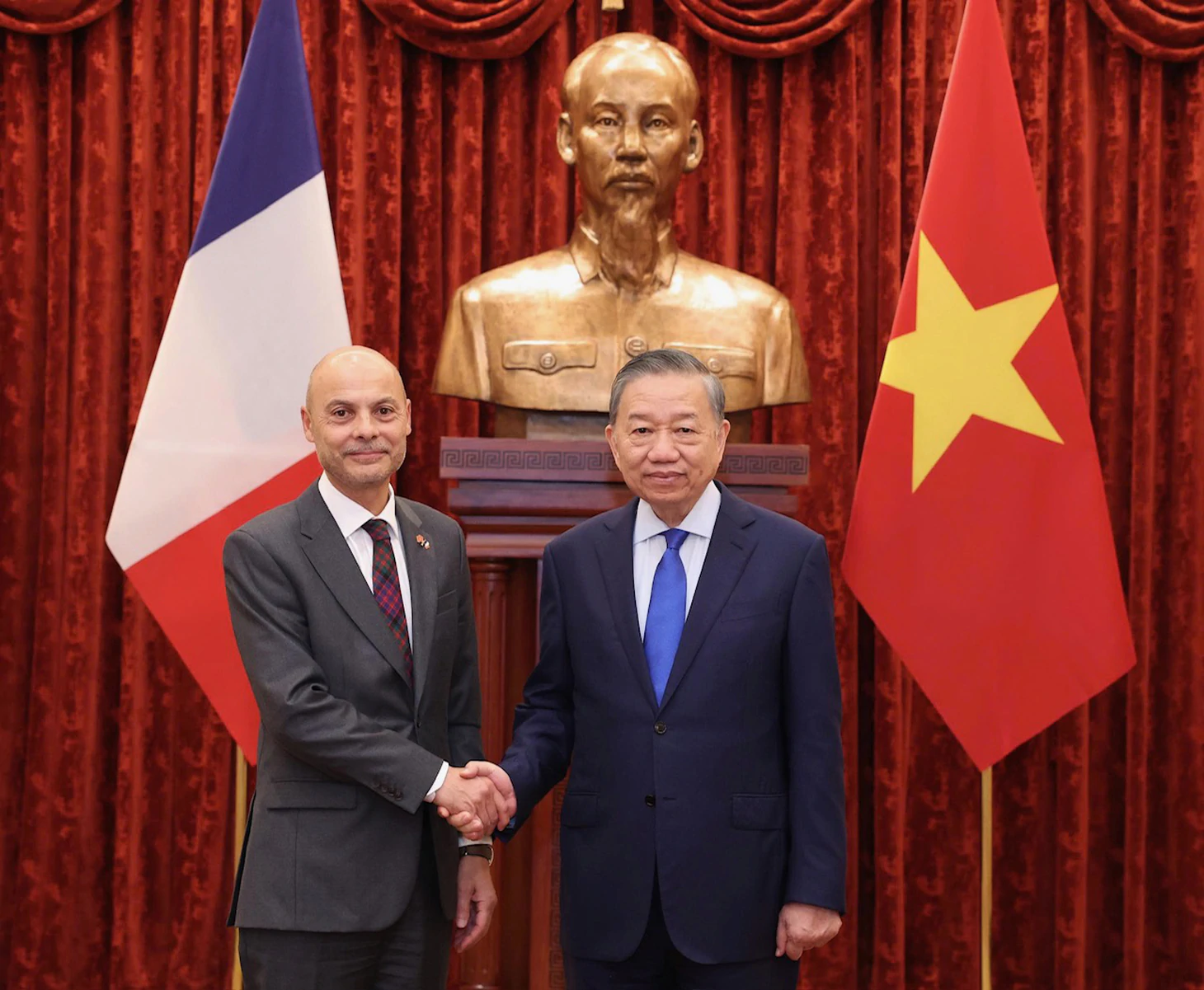
Ambassador Didier Le Bret: I am fortunate to have inherited a well-defined roadmap for cooperation that outlines key priorities for further strengthening bilateral relations between Viet Nam and France. At my credentials presentation ceremony, General Secretary and State President To Lam reaffirmed how much importance Viet Nam attaches to these priority areas of cooperation.
Above all, the Viet Nam–France partnership rests on an exceptionally strong foundation, underpinned by close people-to-people ties and significant achievements in education, science, and technology. These longstanding connections provide a solid basis for deepening our cooperation and advancing our shared ambitions.
During his official visit to France, General Secretary and State President To Lam visited leading scientific research institutions, including Paris-Saclay and the French Alternative Energies and Atomic Energy Commission (CEA). The two countries also signed numerous intergovernmental agreements and technical cooperation documents in science, technology, and training, providing momentum for deepening bilateral ties.
Educational cooperation remains an important pillar of our relationship. Currently, around 7,000 Vietnamese students are studying in France, with approximately 1,500 new students each year. Viet Nam also hosts several French–Vietnamese joint training institutions focused on fields aligned with the country’s development priorities, such as engineering, management, digital technology, and space science.
In scientific research, the two countries have established an extensive cooperation network, involving leading French research organizations such as the National Center for Scientific Research (CNRS), the French Agricultural Research Center for International Development (CIRAD), the Institute of Research for Development (IRD), and the Pasteur Institute. Joint research programs not only enhance Viet Nam’s scientific and technological capacity but also bring tangible benefits to both nations.
Beyond education and scientific research, transportation is another area with great cooperation potential. Over the past two decades, Airbus—a leading European aircraft manufacturer with major industrial operations in France—has supplied a significant portion of Viet Nam’s commercial fleet, supporting growth in the aviation sector.
French corporations are also expanding their presence in Viet Nam’s transportation sector. Notably, Alstom recently signed an agreement with a major Vietnamese conglomerate to supply 200 train sets, opening new prospects for cooperation in the railway sector.
On this basis, France seeks to further strengthen traditional pillars of cooperation while expanding into strategic areas, especially science and technology, transport infrastructure, and advanced industries. Our goal is to promote concrete, practical cooperation projects that align with Viet Nam’s needs and long-term development orientation.

Reporter: Viet Nam is increasing its investment in large-scale infrastructure projects. How can France contribute to this process, Ambassador?
Ambassador Didier Le Bret: Transportation and energy are the two sectors where France can make significant contributions to Viet Nam’s development.
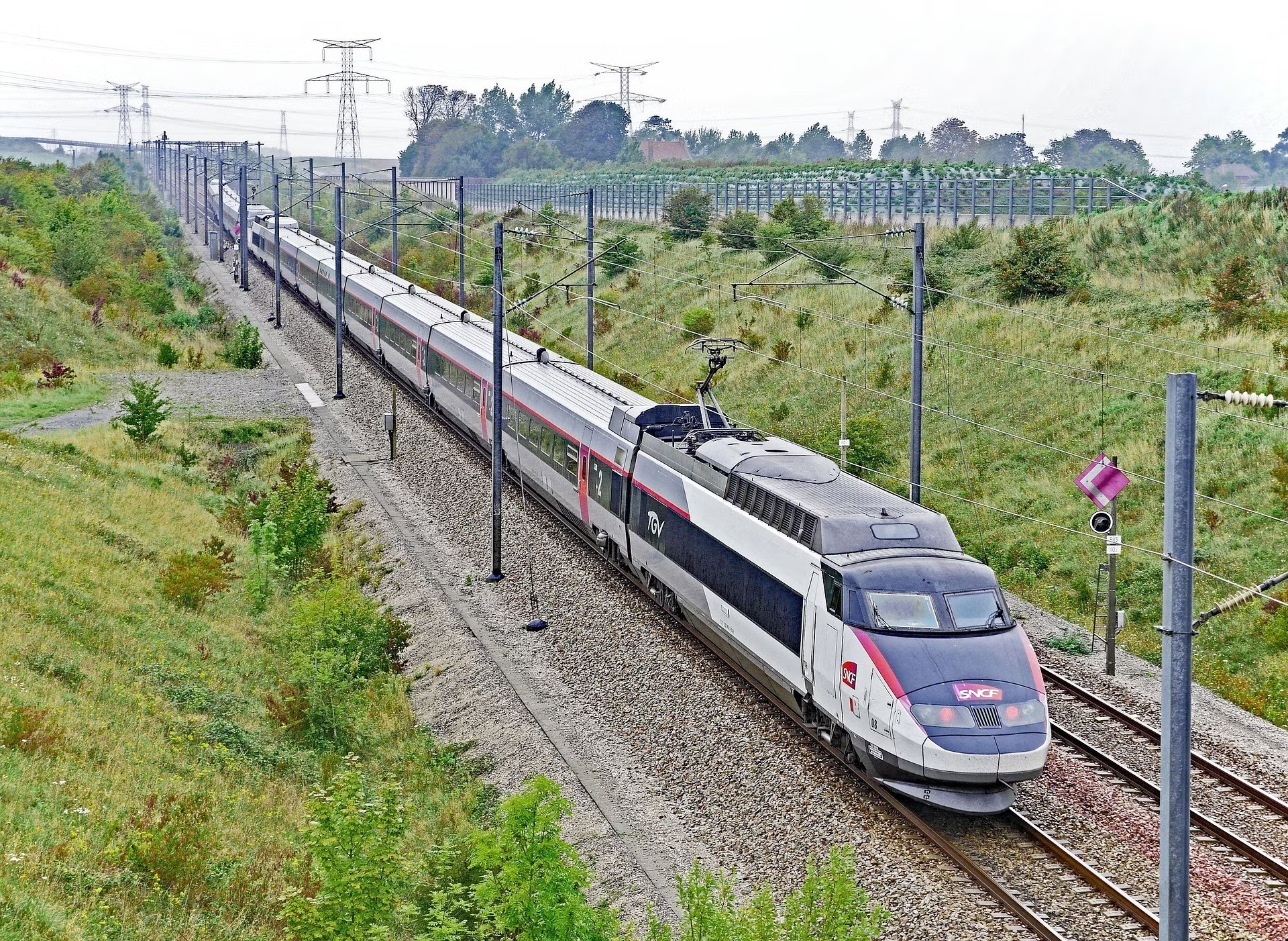
Viet Nam is preparing to launch one of the world’s longest high-speed rail lines, while also developing rail connections to major seaports in Hai Phong and Ho Chi Minh City.
As a pioneer in high-speed rail technology, France wants to support Viet Nam throughout the process—from design and manufacturing to operation, maintenance, and management.
In France, the high-speed rail network, developed since the 1980s, has transformed the economic landscape of many regions. I believe the North–South high-speed railway, connecting around 20 cities, will similarly drive growth and regional connectivity in Viet Nam.
Concerning the energy sector, France is committed to supporting Viet Nam’s transition to a sustainable energy system. Through the Just Energy Transition Partnership (JETP), around 500 million euros have been allocated for renewable energy projects.
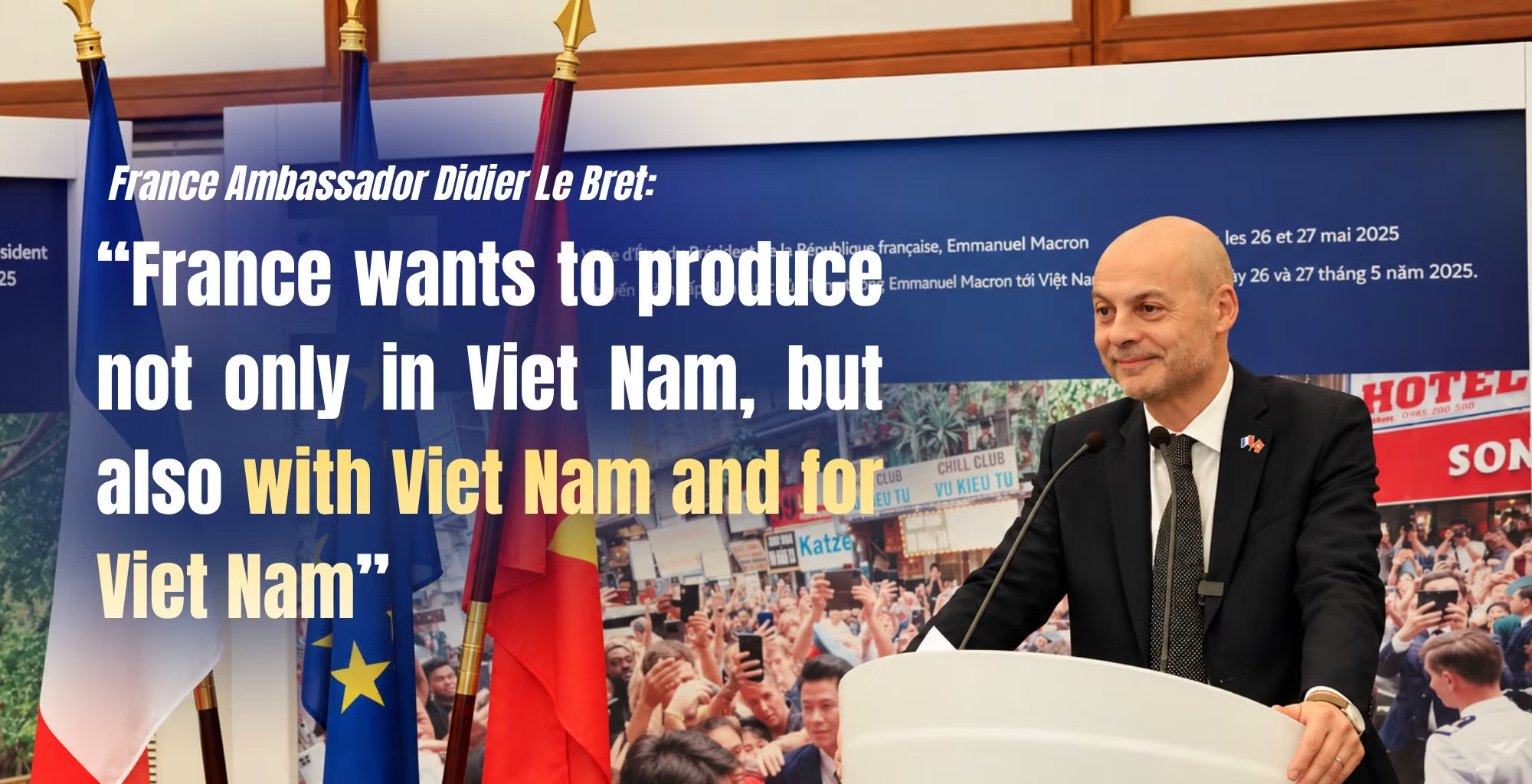
Our ambition is not only to produce in Viet Nam, but to produce together with Viet Nam, and for Viet Nam.

Reporter: France is increasingly emphasizing the strategic importance of the Indo-Pacific region. Why has France considered this region a priority, and what role does Viet Nam play in France’s regional cooperation strategy?
Ambassador Didier Le Bret: Geographically, many might think France is distant from the Indo-Pacific. However, France is also a maritime power, possessing the world’s second-largest exclusive economic zone.
Through its overseas territories such as New Caledonia, French Polynesia, and the Wallis and Futuna Islands, France maintains a regular and significant presence in the Pacific. Therefore, the Indo-Pacific is not a remote region for France, but one directly tied to our economic, security, and strategic interests.
Our presence aims to contribute to regional stability, ensure maritime security, and uphold freedom of navigation. Cooperation with Viet Nam is central to this commitment.
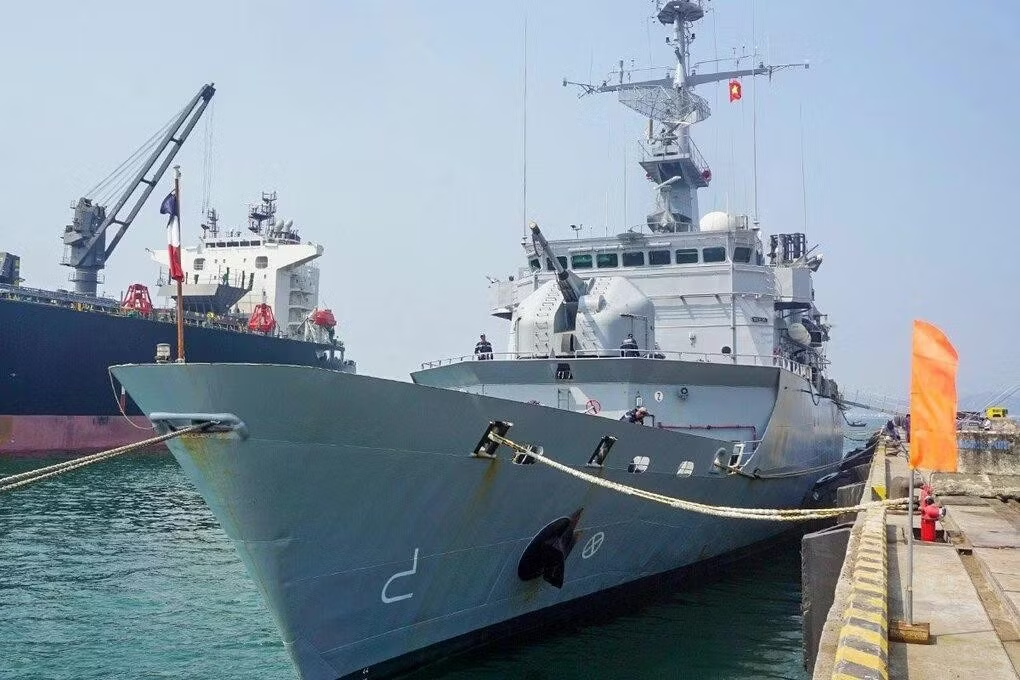
With the approval of Vietnamese authorities, I will have the opportunity to welcome the French Navy’s frigate Vendémiaire during its scheduled port call on November 12. The visit will also allow the two countries’ forces to conduct joint exercises at sea and strengthen professional exchanges.
These activities reflect France’s desire to be an active, reliable partner for Viet Nam, while contributing to maritime security and freedom of navigation.
Reporter: Viet Nam will host APEC 2027, bringing together many of the world’s leading economies. How do you assess Viet Nam’s role in the Asia-Pacific region?
Ambassador Didier Le Bret: APEC 2027 will be a major international event, gathering economies from one of the world’s most dynamic growth regions. It brings together partners with significant economic interests, even as political and diplomatic relations between some parties remain complex and sometimes divergent.
Although APEC is primarily an economic cooperation forum, expectations for the event are high. I believe Viet Nam is well positioned to play a leading role in fostering dialogue and building consensus.
Viet Nam has negotiated and signed an extensive network of free trade agreements and investment deals with most major economic partners worldwide. This reflects the country’s open policy, deep economic integration, and ability to maintain cooperative relations with a diverse range of international partners.
Ambassador Didier Le Bret began his term as French Ambassador to Viet Nam in early October 2026, with three priority directions: consolidating and promoting the traditional pillars of cooperation between the two countries in education, technology, innovation, and cultural exchange; supporting Viet Nam in enhancing technological self-reliance through concrete projects; and strengthening ties between the peoples of both nations.
Sharing his personal connection to Viet Nam, Ambassador Didier Le Bret revealed that his father was born in Viet Nam and his grandmother is from Hue. He sees his diplomatic posting not only as an opportunity to contribute to the development of Viet Nam–France relations, but also as a meaningful chance to deepen his understanding of and connection to his roots.