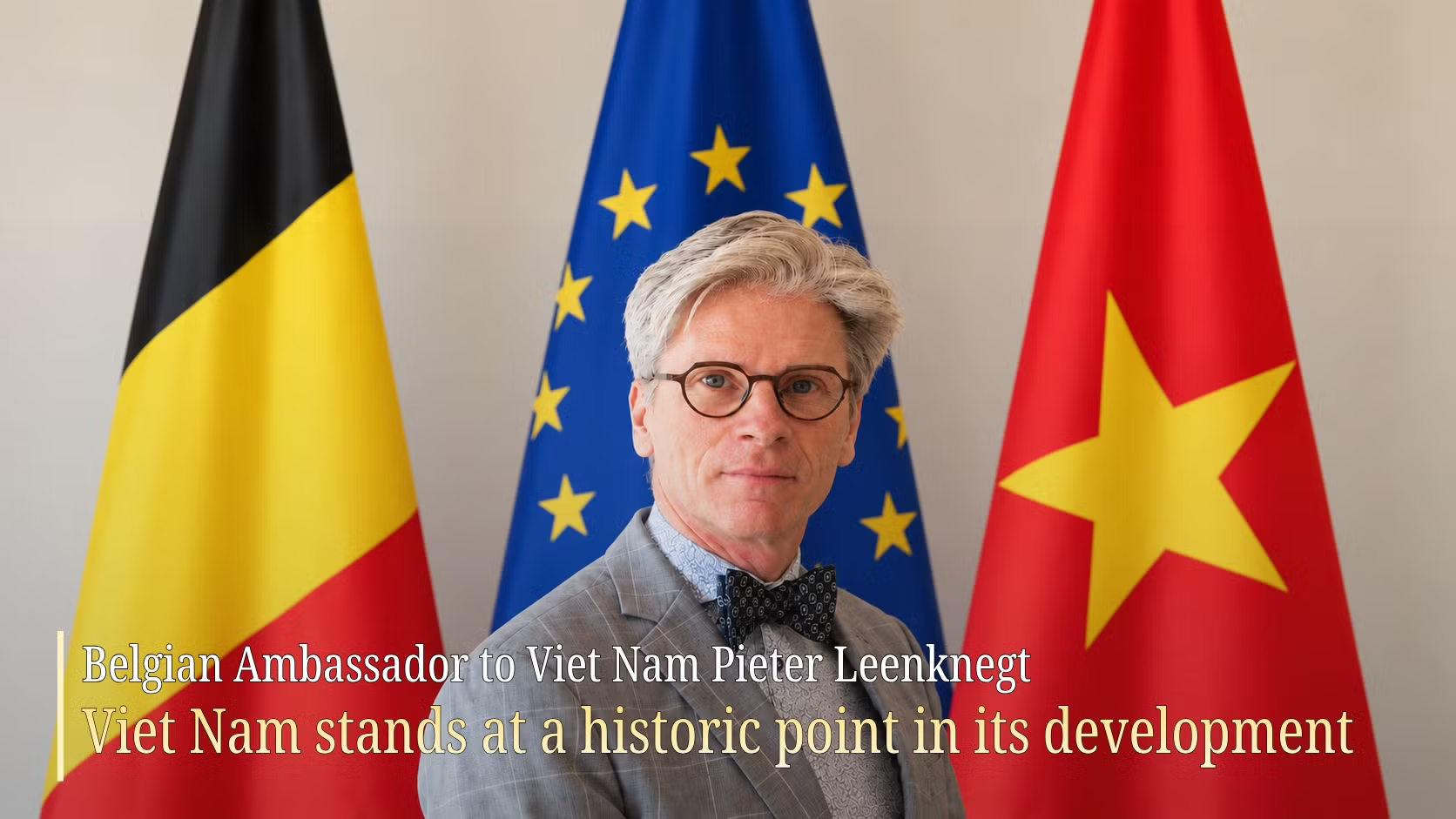

Reporter: General Secretary and State President To Lam's upcoming visit to Belgium comes at a time when Viet Nam-Belgium relations are developing positively, particularly after King Philippe and Queen Mathilde's 2025 State visit to Viet Nam. What do you think General Secretary and State President To Lam's visit means for Viet Nam-Belgium relations, and what is the most important message Belgium would like to convey to Viet Nam on this occasion?
Ambassador Pieter Leenknegt:
Following the Belgian Royal Family's State visit in April 2025, General Secretary and President To Lam's visit will mark a new chapter in diplomatic relations between Viet Nam and Belgium. In just over a year, Viet Nam and Belgium have had two important occasions when their leaders met and engaged with top politicians, CEOs, diasporas, and academia. These moments are rare and offer a holistic view of where the two nations stand.
Viet Nam is at a historic point in its development. As the country moves forward, continuing to seek credible, sincere and capable international partners will be key to accelerating its green and digital transitions. Belgium and the European Union (EU) stand ready to support Viet Nam on this journey!
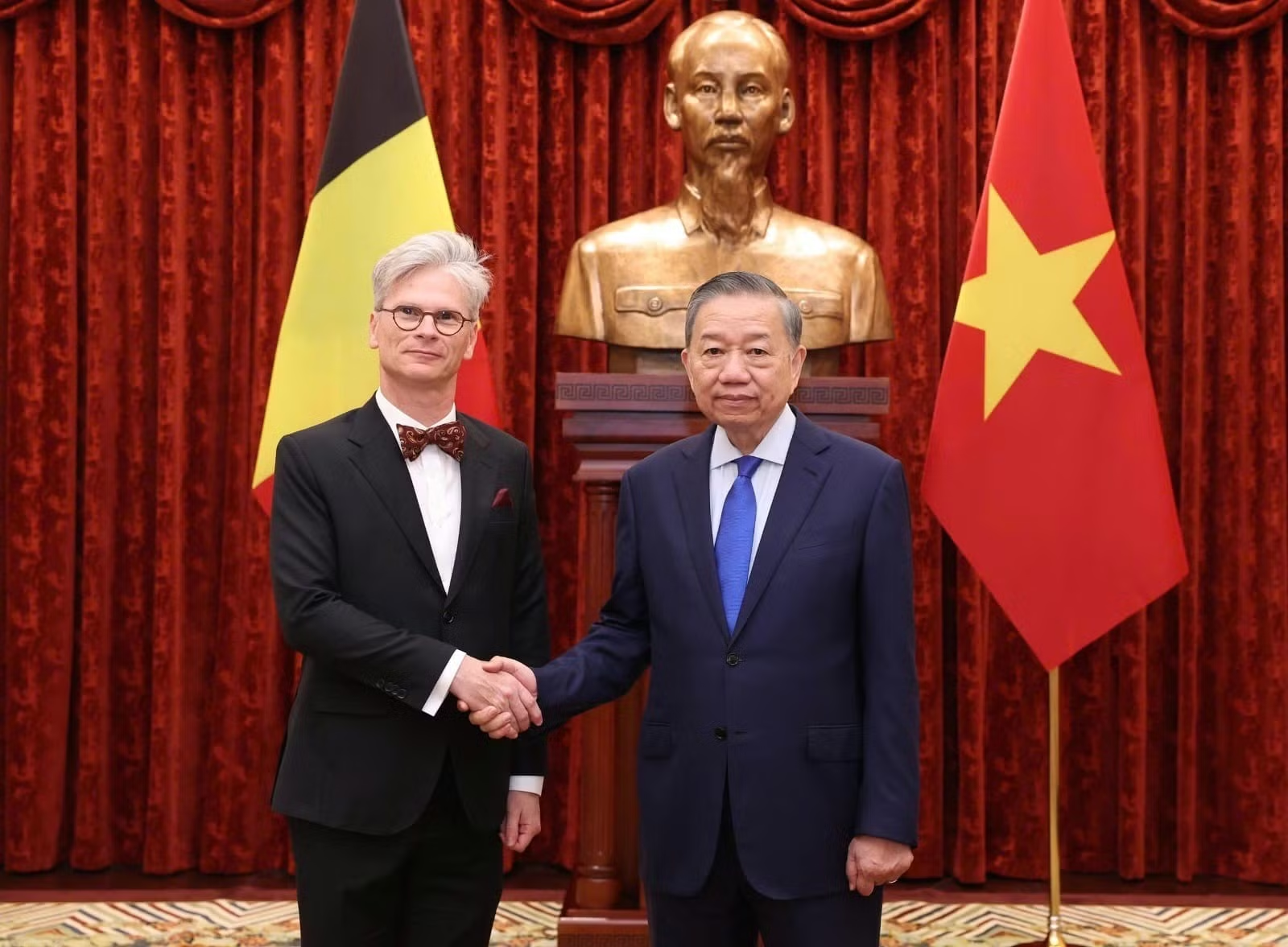
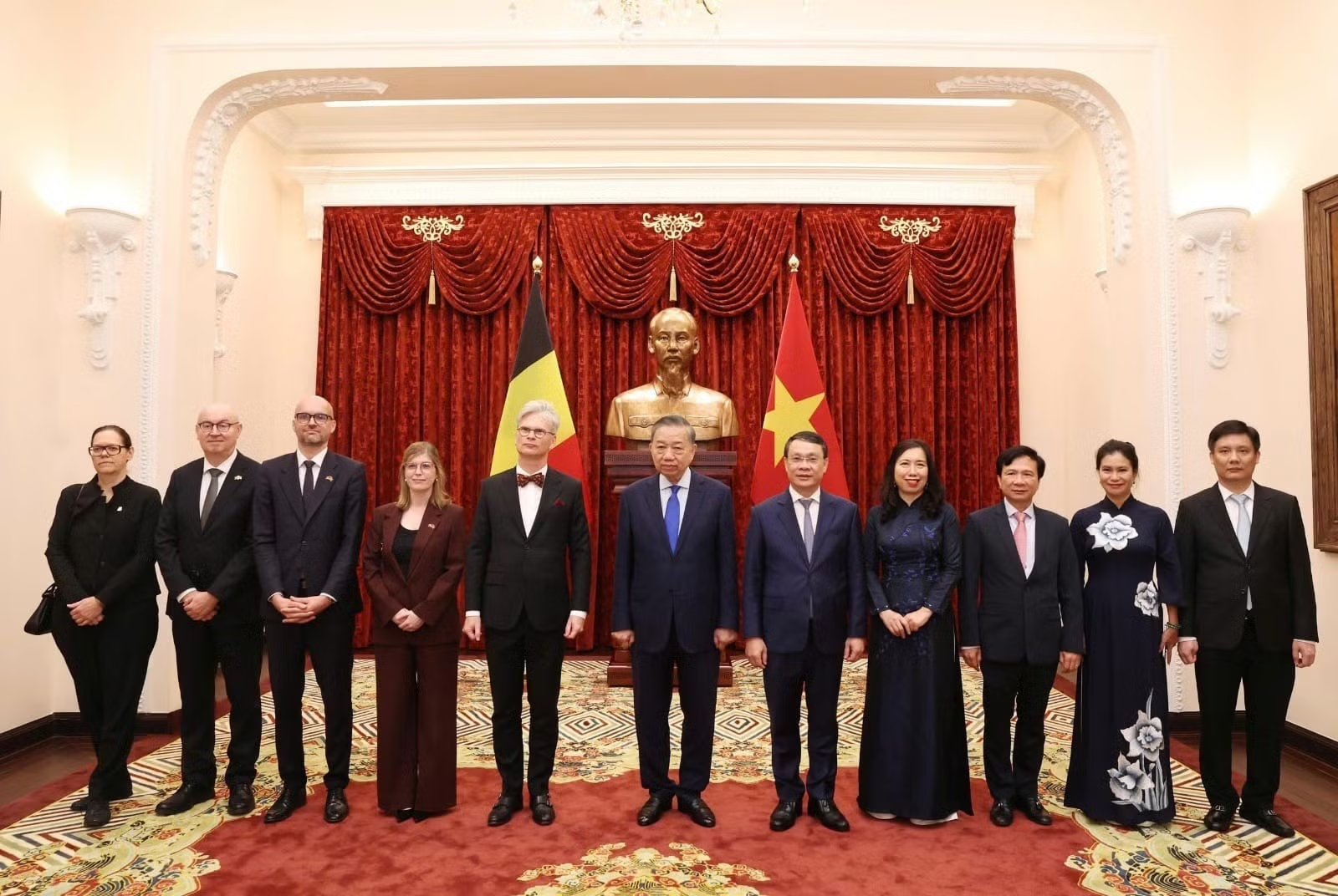
Photo: Embassy of Belgium in Viet Nam
Reporter: Viet Nam and Belgium established diplomatic relations in 1973 and are now entering a new phase of cooperation. In your view, what key driving forces are transforming the strong political and diplomatic foundations of Viet Nam-Belgium relations into an increasingly substantive and effective partnership?
Ambassador Pieter Leenknegt:
With Viet Nam's rapid economic growth and the continued expansion of bilateral trade, there is every reason to expect even more boom and bloom.
Viet Nam fully recognizes the potential for cooperation and the complementary strengths of our two economies. In particular, the green and digital transitions are creating practical opportunities for collaboration, notably in robotics, renewable energy development, energy storage, and integrating energy solutions into industrial production.
Wind power is a prime example. In 2023, Viet Nam surpassed Belgium in total annual wind power generation. Nevertheless, Belgium retains significant strengths in offshore wind energy, as well as technologies that integrate this power source into nearby industrial parks and factories.
The circular economy, waste management, and waste-to-energy technologies also offer considerable potential for cooperation. Many Belgian companies possess advanced expertise and technologies, while Viet Nam has substantial room for further development in these areas.
This presents an opportunity for both countries to combine Belgium’s technological strengths with Viet Nam’s development needs, thereby promoting sustainable growth and generating tangible benefits for both sides.
Over the past several decades, bilateral development cooperation has delivered positive results in food security. This foundation should be further strengthened to improve people’s livelihoods, from aquaculture and the development of agricultural raw materials to the application of advanced technologies in food processing.
Furthermore, the two countries’ seaport networks provide opportunities for deeper cooperation in maritime logistics and inland connectivity, establishing direct links from Zeebrugge to Hai Phong and from Antwerp to the Mekong Delta.
The rich cultural exchanges between our two countries, both within and beyond our shared membership in the Francophone community, can also be elevated through cultural and educational cooperation. From architecture, music, and literature to heritage conservation, existing exchanges, visits, and long-term engagement provide a strong foundation for lasting cooperation between Viet Nam and Belgium.
Reporter: In the coming period, Viet Nam is strongly promoting economic growth, a transformation of its development model, and advances in science, technology, and innovation. In your opinion, which areas have the greatest potential to become the “new pillars” of economic cooperation between Viet Nam and Belgium?
Ambassador Pieter Leenknegt:
I believe all the sectors mentioned above hold tremendous potential, with green technologies, logistics, smart agriculture, and smart aquaculture among the top priorities where cooperation can begin immediately.
The biggest difference from a few decades ago is Viet Nam’s stronger position and greater ability to take the initiative, thanks to its impressive economic achievements. As the economy scales up, the approaches and instruments of cooperation must inevitably evolve to reflect this new reality.
As official development assistance (ODA) worldwide increasingly shifts its focus toward least-developed countries and conflict-affected regions, the amount of concessional financing available to Viet Nam will naturally decline. This is an inevitable development that reflects the growing maturity of Viet Nam’s economy.
In Viet Nam–Belgium relations, some projects previously benefited from bilateral concessional loans or interest-rate subsidies. Although these funding sources are gradually diminishing, opportunities remain, provided beneficiaries consistently meet technical standards and effectively align Viet Nam’s national development priorities with the specialized expertise and capabilities of Belgian companies.
Reporter: Belgium holds a special position within the European Union and is home to the headquarters of many important EU institutions. How do you view Belgium’s role in promoting Viet Nam-EU relations, and in helping Viet Nam make better use of existing cooperation mechanisms and the opportunities offered by the EU-Viet Nam Free Trade Agreement (EVFTA)?
Ambassador Pieter Leenknegt:
Belgium is home to the headquarters of the European Union’s principal institutions, including the European Commission, the Council of Ministers, the General Secretariat of the Council of the European Union, and the European Parliament. It would therefore come as no surprise if General Secretary and State President To Lam’s visit to Belgium also included engagements with the EU in Brussels.
Beyond serving as a vital gateway for trade with Europe through its strong seaport network, Belgium is also an ideal testing ground for products seeking to enter the wider EU market. This distinctive competitive advantage positions Belgium as an important bridge between the EU and its global partners.
As for the EU–Viet Nam Free Trade Agreement (EVFTA), the results speak for themselves, offering compelling evidence of the agreement’s effectiveness without further advocacy. Since the EVFTA entered into force in 2020, bilateral trade between Viet Nam and the EU has increased by more than 40%!
Reporter: Both Viet Nam and Belgium play important roles in regional and global maritime and logistics networks. How do you assess the potential for cooperation between the two countries in seaports, logistics, and supply-chain connection, and how can this cooperation further enhance their respective roles as gateways connecting ASEAN and the EU?
Ambassador Pieter Leenknegt:
By deepening cooperation in port development, smart logistics, and green supply chains, the two countries can further solidify their roles as strategic gateways to their respective regions.
The political trust and strong multilateral ties between Viet Nam and Belgium provide a solid foundation for establishing an intercontinental logistics corridor. As a gateway to ASEAN, Viet Nam benefits from an extensive network of free trade agreements, particularly the Comprehensive and Progressive Agreement for Trans-Pacific Partnership (CPTPP) and various ASEAN agreements, which have helped position the country as a leading manufacturing hub. Its long coastline, along vital shipping routes in the East Sea (South China Sea), also enables Viet Nam to connect directly with the rapidly growing ASEAN market of more than 680 million consumers.
On the other hand, Belgium serves as a central logistics hub for the EU, thanks to its strategic geographical and economic position and well-developed multimodal transport infrastructure. Through an intricate network of rail, inland waterways and highways, goods arriving at Belgian ports can reach over 60% of Europe’s wealthiest consumers within 24 hours.
Reporter: Viet Nam and Belgium have a long-standing commitment to multilateralism and international cooperation. How do you envision Viet Nam and Belgium strengthening their coordination at multilateral forums, particularly at the United Nations and within ASEAN-EU relations?
Ambassador Pieter Leenknegt:
Viet Nam and Belgium could both be classified as what Canadian Prime Minister Mark Carney calls “middle powers.” In some respects, Viet Nam relies on ASEAN just as Belgium relies on the EU to fully assert that status.
As Belgium and Viet Nam consider upgrading their bilateral partnership, the EU and ASEAN are also exploring ways to elevate their relations, with an important meeting scheduled for next month and another milestone approaching in 2027, when they will celebrate 50 years of interregional relations.
In any case, our countries have understood that regionalism makes sense in its own right, but also as building blocks in a wider multilateral system where international law prevails.
This rules-based framework includes the United Nations Convention on the Law of the Sea (UNCLOS), which safeguards freedom of navigation; international biodiversity conventions, including the agreement on the conservation and sustainable use of marine biological diversity in areas beyond national jurisdiction, whose secretariat Belgium aspires to host; and the International Labor Organization’s (ILO) fundamental conventions, which establish core labor standards to prevent exploitation, protect collective bargaining rights, and help ensure a level playing field in global trade.
It also encompasses the international human rights conventions to which both countries are parties and whose principles they seek to uphold through their participation in the United Nations Human Rights Council, as demonstrated by Belgium’s membership from 2023 to 2025 and Viet Nam’s current membership.
Reporter: Thank you, Mr. Ambassador, for your time and support!