Hanoi (VNA) – More than five decades after establishing diplomatic relations in 1973, Vietnam and Belgium have continuously strengthened their friendship and expanded cooperation across various fields. As an active supporter of the EU-Vietnam Free Trade Agreement (EVFTA), Belgium remains an important partner in helping Vietnamese goods access the European market.
Against a backdrop of considerable untapped potential, the official visit to Belgium by General Secretary of the Communist Party of Vietnam Central Committee and President To Lam is expected to provide fresh impetus for cooperation in trade, investment, science and technology, innovation, high-quality human resources training, logistics and green growth.
Unlocking trade potential
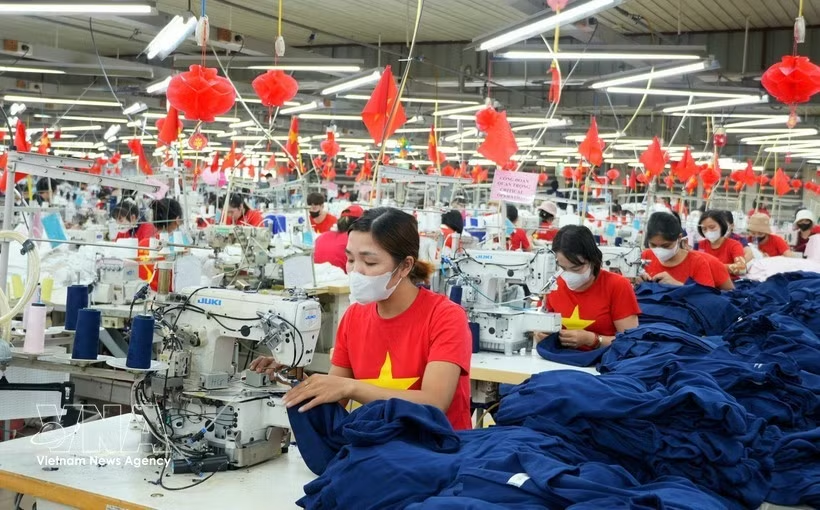
According to the Ministry of Industry and Trade, Belgium is Vietnam's sixth-largest trading partner, fifth-largest export market and seventh-largest import market within the European Union (EU). Vietnam, meanwhile, is Belgium's largest trading partner in ASEAN. Bilateral trade averaged 3.44 billion USD annually between 2015 and 2025.
In the first eight months of 2026, bilateral trade increased 4.7% year-on-year to 3.1 billion USD. Vietnam's exports reached 2.7 billion USD, up 10.4%, while imports fell 22.3% to 398.8 million USD.
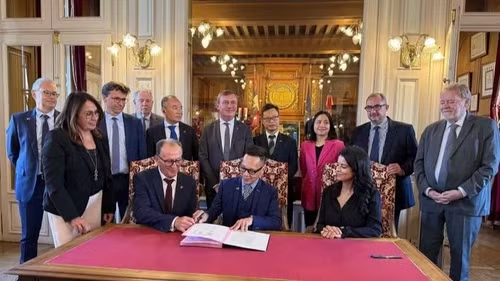
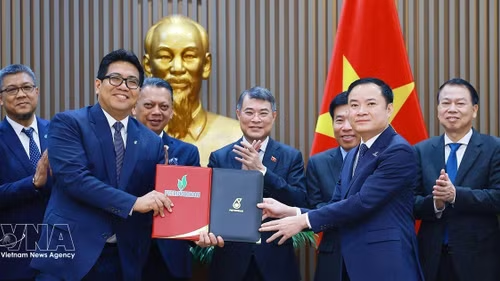
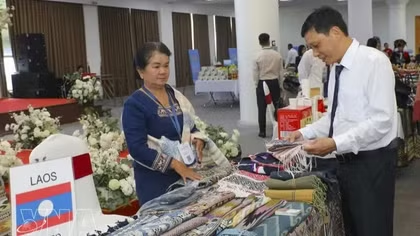
A memorandum of understanding signed in April 2025 between the Vietnam Trade Promotion Agency under the Ministry of Industry and Trade and Belgian regional trade and investment promotion bodies established a framework for closer cooperation. The agreement promotes information exchange, trade promotion events, business matchmaking, training and experience-sharing, while supporting women-owned businesses in international trade.
Expanding collaboration
Belgian Ambassador to Vietnam Pieter Leenknegt said bilateral ties will continue to grow alongside Vietnam's economic expansion and strong trade performance.
He identified green technology, logistics, smart agriculture and aquaculture as promising areas for collaboration, with digital transformation and green transition, robotics, renewable energy and energy storage offering particularly strong potential.
Offshore wind power is one example of complementary strengths. Vietnam has substantial wind energy potential along its coastline, while Belgium possesses advanced technology and experience in offshore wind development, energy storage and power integration into industrial production. Combining these strengths could create opportunities across the entire value chain.
The circular economy, waste management and waste-to-energy technologies also offer significant prospects, as Vietnam's industrialization and urbanization increase demand for efficient resource use and waste treatment.
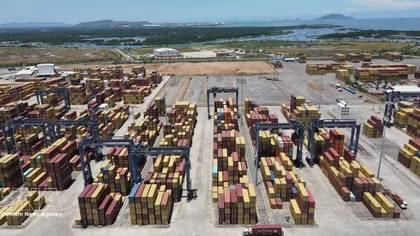
In logistics and maritime connectivity, Belgium's major ports and multimodal transport networks provide a gateway to Europe, while Vietnam occupies a strategic position in ASEAN. Cooperation linking ports such as Antwerp and Zeebrugge with Hai Phong and the Mekong Delta could strengthen trade connectivity and green supply chains.
The EVFTA, which took effect in 2020, has helped boost Vietnam-EU trade by more than 40%. The EU-Vietnam Investment Protection Agreement (EVIPA) is also expected to strengthen investor confidence through a more predictable legal framework.
Other promising areas include transport infrastructure, biotechnology, pharmaceuticals and food processing.
Pham Manh Hung, Chairman of the Vietnam-Belgium Friendship Association, stressed the importance of promoting the role of people-to-people diplomacy alongside trade promotion and state management channels. He called for long-term scientific and technical cooperation plans, economic forums and targeted business matchmaking, with concrete projects and commercial outcomes as the ultimate goals.
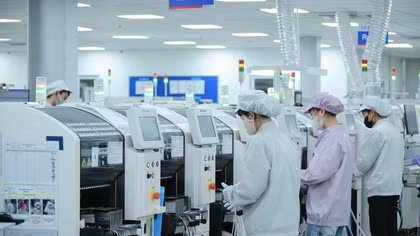
From November 14–22, the Vietnam Trade Promotion Agency will organize a trade and investment promotion delegation to Belgium and the Netherlands. The program aims to help Vietnamese businesses find partners, expand their EU market presence and integrate more deeply into high-tech supply chains, particularly in semiconductors, electronics, precision engineering, automation and supporting industries.
The initiative is expected to expand trade and investment opportunities, facilitate access to advanced technologies and strengthen Vietnamese businesses' links with Europe's industrial ecosystem, making more effective use of the EVFTA.