Vietnam, Laos seek to expand room for trade, investment cooperation

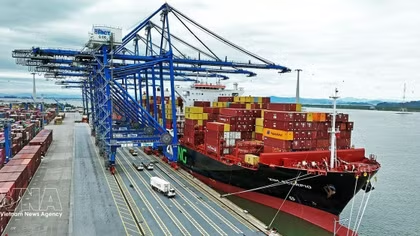
Vietnam and Laos aim to boost bilateral trade in 2026 towards the milestone of 10 billion USD by 2030, a target said to be challenging but feasible as both Governments work to remove trade barriers, improve border-trade mechanisms, and strengthen transport and logistics connectivity.

Bright spots

Economic and trade ties between Vietnam and Laos have maintained strong growth. Bilateral trade rose by more than 20% annually on average during 2021-2025, while the commodity structure has become increasingly complementary, with industrial products, chemicals, raw materials, machinery and equipment gaining a larger share.

The two countries have established various frameworks to facilitate trade, including the 2015 Vietnam-Laos Border Trade Agreement and the Vietnam-Laos Trade Agreement that was signed in April 2024 and came into effect in February 2025.
1-1725.jpg
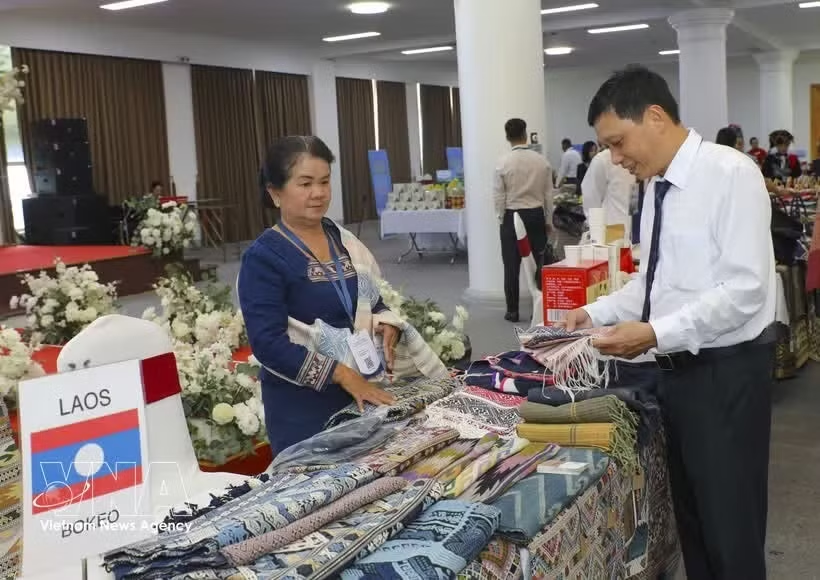
Lao products are promoted at a trade fair in Dien Bien province in September 2026. (Photo: VNA)

They have also implemented the 2007 Hanoi Agreement on facilitating the movement of people, vehicles and goods through four pairs of international border gates. In August 2026, the two Ministries of Industry and Trade agreed to propose amendments to the agreement, targeting completion in 2027.

Agreements on border trade infrastructure connectivity and market management, signed in 2024, have strengthened the foundation for advancing bilateral trade.

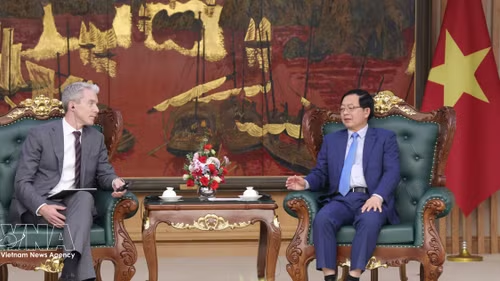
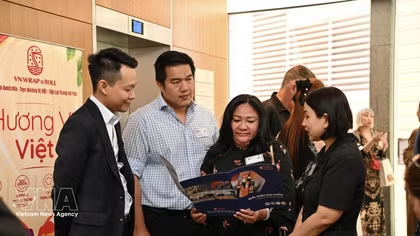
Speaking at the recent Vietnam-Laos Product Week, Deputy Minister of Industry and Trade Nguyen Viet Son said the two ministries have maintained close coordination, contributing to deeper economic and trade cooperation.

Lao Ambassador to Vietnam Khamphao Ernthavanh said the event helped bring products closer to consumers while creating opportunities for businesses to connect directly and translate high-level cooperation agreements into concrete outcomes.

Bilateral trade reached 2.9 billion USD in 2025 and exceeded 1.6 billion USD in the first nine months of 2026, according to Tran Thi Tu Anh, Trade Counsellor and head of the Vietnam Trade Office in Laos.

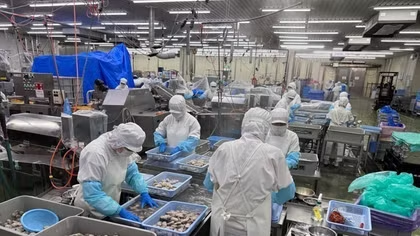
Vietnam exports petroleum, iron and steel, machinery, transport vehicles and consumer goods to Laos, while importing ores, coal, rubber, timber, maize, electricity and other agricultural products and raw materials.

Improved border infrastructure and customs mechanisms have helped shorten clearance times and reduce logistics costs. Meanwhile, business cooperation is expanding beyond goods trading to production, supply-chain linkages and distribution networks.

Towards ambitious targets

Vietnamese investment in Laos continues to expand in both scale and quality, focusing on energy, agriculture, services and export-oriented manufacturing. Vietnam ranks second among 53 countries and territories investing in Laos, with 435 projects and registered capital of about 8 billion USD.

The two countries aim to boost bilateral trade in 2026 towards the milestone of 10 billion USD by 2030, a target the Vietnam Trade Office in Laos said is challenging but feasible as both Governments work to remove trade barriers, improve border-trade mechanisms, and strengthen transport and logistics connectivity.

Large Vietnamese projects in energy, minerals and high-tech agriculture are expected to create additional supply for Vietnam and third markets once fully operational.

At a recent meeting with his Lao counterpart, Vietnamese Minister of Industry and Trade Le Manh Hung said the two sides should identify specific growth drivers by sector, product group and project to raise bilateral trade to 4 billion USD, then 5 billion USD and ultimately 10 billion USD.

The two ministries agreed to prioritise electricity, coal, petroleum, minerals, construction materials, machinery, chemicals, agricultural products and consumer goods, while strengthening trade promotion, business and supply-chain connectivity. Energy cooperation, especially electricity, and deeper processing of minerals will also receive greater attention.

According to Tu Anh, significant potential remains in infrastructure, energy, high-tech agriculture and services. Laos’ strategic location could help turn the landlocked country into a land-connected logistics hub, while stronger economic corridors, the Vientiane-Hanoi expressway and access to Vietnamese seaports such as Vung Ang could improve connectivity.

Counsellor and Head of the Economic and Trade Office at the Lao Embassy to Vietnam Somsay Nonglard said Laos hopes to increase exports to Vietnam while encouraging Vietnamese businesses to invest in agriculture, agro-processing, industry, energy, logistics, trade and services.

With Laos’ strengths in resources, agriculture, energy and connectivity complementing Vietnam’s manufacturing, processing, distribution and logistics capabilities, the two countries can deepen value-chain links and jointly expand into third markets, he added.
en.vietnamplus.vn

Other News

Vietnam-Japan trade machine has room to run

Vietnam-Japan trade machine has room to run

Economic, trade and investment cooperation remains the core pillar and the main engine of comprehensive, sustainable bilateral ties. General Secretary of the Communist Party of Vietnam Central Committee and President To Lam’s official visit to Japan is therefore a key moment to reinforce political trust, deepen the Comprehensive Strategic Partnership and open new cooperation opportunities in the next growth phase.

Vietnamese goods eye greater access to the Australian market

Vietnamese goods eye greater access to the Australian market

Participants at the Vietnam-Western Australia Business Forum 2026 in Perth on November 6 highlighted strong prospects for Vietnamese rice, agricultural produce and food products in the Australian market as local businesses seek to diversify supply chains.

WTO hails Vietnam's 20-year journey since accession

WTO hails Vietnam's 20-year journey since accession

Joining the World Trade Organisation (WTO) was a strategic choice for Vietnam, closely associated with its Doi Moi (Renewal) process, opening-up policy and international economic integration. Over the past two decades, international economic integration has become a driving force for institutional reforms, trade expansion, foreign investment attraction and enhancement of the country's international standing.

US to send largest-ever agricultural trade mission to Vietnam

US to send largest-ever agricultural trade mission to Vietnam

The USDA’s statistics show that Vietnam was the seventh-largest export market for American agricultural and related products in 2025, with import turnover of nearly 5.6 billion USD. The US’s 2025 agricultural exports to Vietnam increased 38% from 2024.

APEC 2027 seen as fresh impetus for Vietnam-Russia cooperation

APEC 2027 seen as fresh impetus for Vietnam-Russia cooperation

VOV.VN - Vietnam’s hosting of the Asia-Pacific Economic Cooperation (APEC) summit in 2027 is expected to create new momentum for cooperation between Vietnam and Russia, with opportunities to expand ties across a range of areas of mutual interest, according to Russian expert Tatyana Gorchakova.

Vietnam and Denmark expand cooperation in high-tech healthcare

Vietnam and Denmark expand cooperation in high-tech healthcare

Ambassador Nguyen Le Thanh called on Vietnamese and Danish partners to identify priority areas and promote research and training programmes, knowledge transfer and technology application in line with Politburo's Resolution No. 57-NQ/TW on breakthroughs in science – technology development, innovation and national digital transformation.

Improving FDI quality to strengthen growth momentum

Improving FDI quality to strengthen growth momentum

Rapid growth in registered capital is encouraging, but unless these commitments are promptly converted into implemented projects and productive capacity, their contribution to economic growth will remain constrained.

Vietnam well-positioned to attract high-quality European investment: insiders

Vietnam well-positioned to attract high-quality European investment: insiders

Vietnam has established a considerable manufacturing and export base, giving it an advantage in attracting investment from European corporations. However, amid the restructuring of global supply chains, the key objective is not merely to attract more investment, but also to enhance the quality of investment and the value it generates.

Vietnam needs 1,000 aircraft over next 20 years

Vietnam needs 1,000 aircraft over next 20 years

Air travel in Vietnam will grow at twice the global average, meaning the country will need to add 1,000 aircraft to its fleet over the next two decades, according to a recent forecast by Airbus.

Vietnam–EU forum to explore green economy, new value chains

Vietnam–EU forum to explore green economy, new value chains

By linking policy dialogue with businesses' practical needs, the forum is expected to help translate Vietnam–EU cooperation potential into concrete trade and investment opportunities. It will also provide an opportunity for both sides to make more effective use of the EVFTA, expand markets for Vietnamese goods and businesses, and tap into Europe's capital, technology and management expertise.

Viet Nam's trade surpasses 1 trillion USD in 10 months

Viet Nam's trade surpasses 1 trillion USD in 10 months

Viet Nam recorded a trade surplus of an estimated 6.8 billion USD in October, marking the second consecutive month of surplus and narrowing the cumulative trade deficit for the first 10 months to around 12.7 billion USD.