Beijing (VNA) - Strengthening cooperation between China and Vietnam and seizing opportunities offered by artificial intelligence (AI) are essential to reinforcing the Asia-Pacific’s role as a key driver of global growth, according to Liu Ying, a research fellow at the Chongyang Institute for Financial Studies, Renmin University of China.
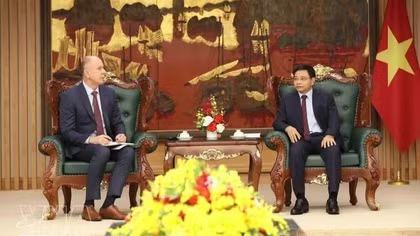
In an interview with Vietnam News Agency correspondents in China, Liu said that with China expected to maintain annual economic growth of around 5% over the next five years and Vietnam targeting growth of at least 10%, the two countries have considerable potential to deepen cooperation within the framework of the Asia-Pacific Economic Cooperation (APEC), particularly in industrial transformation, connectivity, trade and investment.
She noted that China is Vietnam’s largest trading partner, while Vietnam is China’s leading trading partner within ASEAN and is expected to soon become its second-largest partner globally. Reducing barriers to trade and investment, a key APEC objective, will directly benefit both economies.
Closer bilateral cooperation could also advance regional economic integration and contribute to the establishment of the Free Trade Area of the Asia-Pacific (FTAAP). Both countries play important roles in regional industrial, supply and value chains, while their large markets, innovation capacity and strategic geographical positions provide a strong foundation for regional economic integration.
Liu highlighted infrastructure connectivity as another major area of potential. With the APEC Connectivity Blueprint for 2015–2025 completed, a possible upgraded framework could create new opportunities for both countries. She stressed the need to strengthen physical infrastructure, harmonise regulations and standards, and promote people-to-people exchanges.
As neighbouring countries with close people-to-people ties, Vietnam and China have favourable conditions to expand transport, energy and digital infrastructure links. Accelerating railway connections, as well as cooperation in energy and computing infrastructure, will help attract investment, support industrial upgrading and generate new growth momentum, stated she.
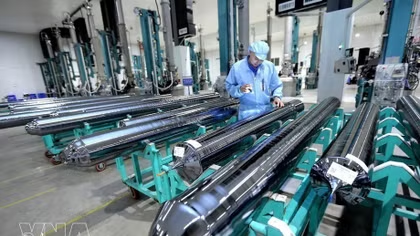
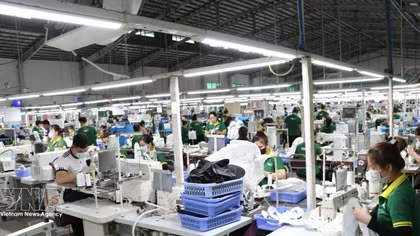
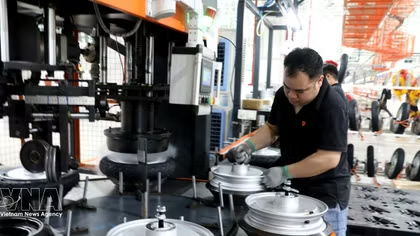
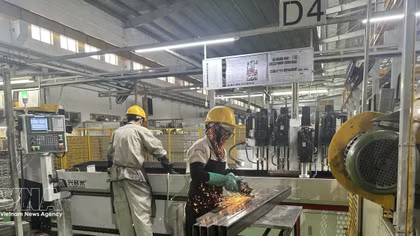
On industrial development, she said both countries should seize opportunities from the fourth Industrial Revolution, particularly AI, which is reshaping industrial structures and accelerating technological transformation. China has strengths in industrial robotics and large AI models, while Vietnam has established a strong position in sectors such as smartphone exports. Closer cooperation could help both economies enhance innovation and move up the industrial value chain.
She also called for stronger green growth cooperation, noting that affordable renewable energy would be crucial to meeting rising electricity demand from AI and data centres.
As computing capacity depends heavily on reliable power supplies, particularly clean energy, Liu said Vietnam-China cooperation in energy and technology could help both countries capitalise on the AI era and promote innovation-driven growth across the Asia-Pacific region.