Vietnam International Financial Centre faces urgent talent gap

The centre must staff up for launch and close Vietnam’s gap in expertise, skills and global professional standards to secure a long-term competitiveness base.

As the Vietnam International Financial Centre (VIFC) is building its machinery, recruiting members and preparing to trade, the binding constraint is talent.

The centre must staff up for launch and close Vietnam’s gap in expertise, skills and global professional standards to secure a long-term competitiveness base.

The talent crunch

Assoc. Prof. Dr Nguyen Huu Huan, Vice Chairman of the Executive Authority of the VIFC-Ho Chi Minh City (VIFC-HCMC), said the model is new to Vietnam and know-how on running an international financial centre is thin in the training system. Some universities have added relevant content, but specialised knowledge remains scarce.
1-2497.jpg
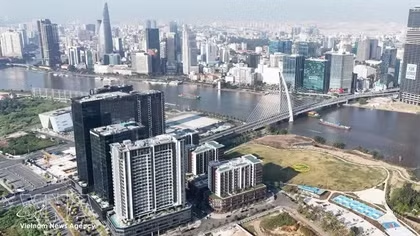
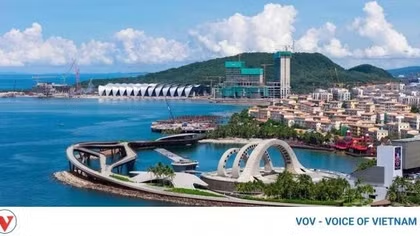
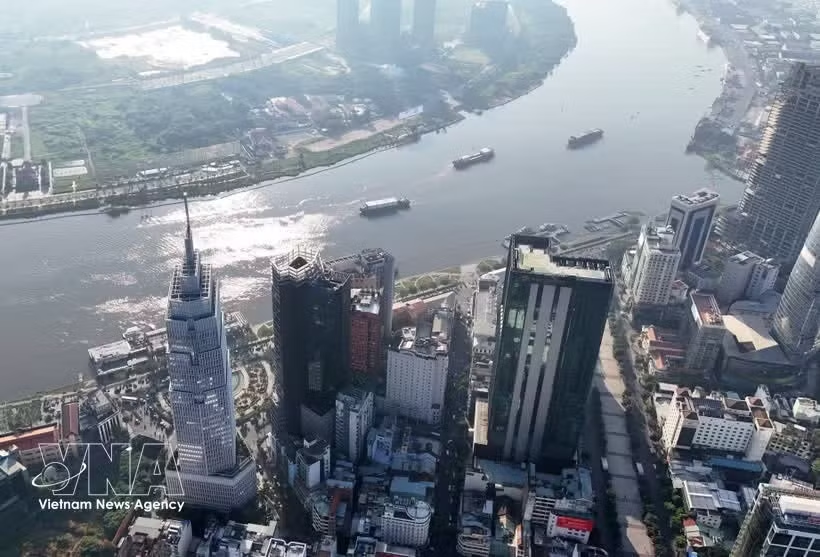
The VIFC-HCMC is positioned as a multi-functional international financial hub focusing on banking services, capital markets and international investment connectivity. (Photo: VNA)

International certificates are also in short supply. Recruitment work with major corporations and financial institutions shows few Vietnamese candidates fully meet professional and global standard requirements. The fix requires deeper ties with international professional bodies and more ACCA, CFA, CPA and ICAEW courses.

Fintech, AI and quantum technology raise the bar further as finance staff must also apply technology. That skill mix needs to be built into training, Huan said.

While quality labour supply is limited, demand is set to surge as the VIFC-HCMC pulls in financial institutions, global capability centres (GCCs) and innovation hubs.

Each GCC needs about 2,000–3,000 staff. With about 50 GCCs targeted, that alone implies demand for 100,000–150,000 workers. VIFC-HCMC membership is expected to jump over the next 5–10 years, adding more demand for specialised talent.

Alexandra Smith, British Consul General in Ho Chi Minh City, said quality manpower demand will track VIFC’s growth. The first corporate wave may cluster in infrastructure financing, asset management and fintech. Vietnamese workers need the right expertise, skills and certificates for those areas.

According to her, international standards are central to competitiveness. The pressure is not only on new graduates; existing workers need retraining and upskilling as the financial market shifts.

VIFC Academy and building workforce ecosystem

VIFC-HCMC last weekend launched VIFC Academy to link training establishments, professional organisations and businesses in building the talent pipeline.

Huan said the VIFC Academy is part of the centre’s 2026–2030 strategy. It is not an independent university, but a matchmaker between VIFC members’ hiring needs and the training and research capacity of universities, research institutes, businesses and international professional bodies.

Under the model, businesses and financial institutions define hiring needs by position, help build courses and send experts to mentor. Universities design modules, train and run practice. International professional bodies will develop professional courses and issue global standard certifications. Actual business demand sets training content and output standards.

Prof. Dr Nguyen Khac Quoc Bao, Deputy Director of the University of Economics Ho Chi Minh City (UEH), said the priority is a standard competency framework for the VIFC-HCMC, benchmarked against international financial centres. It must specify knowledge, skills and professional expertise for each job, then drive curriculum design.

In his view, courses should have flexible duration and track the professional requirements of each job group. That keeps training deep while letting workers keep updating skills on the job.

He also suggested a competency and orientation council with the participation of the VIFC’s executive agency, universities and authorities. It will set competency requirements, coordinate training courses and keep manpower supply aligned with actual demand.

Bao also said he wants the three-party model to be pushed harder, under which authorities, schools and businesses jointly build courses, run training and create practical experience. Financial institutions should work with universities during training so students get real-work exposure early.

UEH joined Ho Chi Minh City’s international financial workforce development scheme about four years ago and has trained three cohorts of full-time undergraduates. That gives the VIFC Academy an initial base to scale cooperation with financial institutions.

Dang Thi Mai Trang, Head of Vietnam for the Institute of Chartered Accountants in England and Wales (ICAEW), said training courses should focus on capital markets, risk management, sustainable finance and International Financial Reporting Standards (IFRS). International professional bodies will help learners meet global standards and the demands of financial institutions.
en.vietnamplus.vn

Other News

IMF sees positive growth prospects for Vietnam, urges cautious monetary policy

IMF sees positive growth prospects for Vietnam, urges cautious monetary policy

Martin Sommer, head of the IMF’s Article IV consultation mission team to Vietnam, noted that inflation risks in Vietnam remain under control, but several factors could add to price pressures. He therefore called for cautious monetary policy management and readiness to respond promptly if inflationary pressures increased.

Seven green-tech startups secure 770,000 USD at Net Zero Challenge 2026

Seven green-tech startups secure 770,000 USD at Net Zero Challenge 2026

In its fourth year, the competition attracted more than 1,100 applications from 80 countries and territories, making it the most competitive edition since its launch in 2023. Nine finalists presented solutions in three categories, namely renewable energy and carbon removal; food systems and sustainable agriculture; and circular economy and waste management.

Vietnam remains an attractive destination for Japanese businesses

Vietnam remains an attractive destination for Japanese businesses

Fukai Akihiko, President and Representative Director at Gunma Bank and head of a business delegation from Japan’s Gunma prefecture, said cooperation between Gunma and Vietnam has continued to expand in recent years. Around 15,000 Vietnamese people currently live in Gunma, forming the largest foreign community in the prefecture.

Vietnam and Sweden step up cooperation in telecom infrastructure, cybersecurity

Vietnam and Sweden step up cooperation in telecom infrastructure, cybersecurity

Vietnam is accelerating institutional reforms, improving its investment and business environment, developing infrastructure and enhancing human resources quality. The Government stands ready to cooperate with leading global corporations investing in sectors of strategic importance to the country's development.

Vietnam-Japan trade machine has room to run

Vietnam-Japan trade machine has room to run

Economic, trade and investment cooperation remains the core pillar and the main engine of comprehensive, sustainable bilateral ties. General Secretary of the Communist Party of Vietnam Central Committee and President To Lam’s official visit to Japan is therefore a key moment to reinforce political trust, deepen the Comprehensive Strategic Partnership and open new cooperation opportunities in the next growth phase.

Vietnamese goods eye greater access to the Australian market

Vietnamese goods eye greater access to the Australian market

Participants at the Vietnam-Western Australia Business Forum 2026 in Perth on November 6 highlighted strong prospects for Vietnamese rice, agricultural produce and food products in the Australian market as local businesses seek to diversify supply chains.

WTO hails Vietnam's 20-year journey since accession

WTO hails Vietnam's 20-year journey since accession

Joining the World Trade Organisation (WTO) was a strategic choice for Vietnam, closely associated with its Doi Moi (Renewal) process, opening-up policy and international economic integration. Over the past two decades, international economic integration has become a driving force for institutional reforms, trade expansion, foreign investment attraction and enhancement of the country's international standing.

US to send largest-ever agricultural trade mission to Vietnam

US to send largest-ever agricultural trade mission to Vietnam

The USDA’s statistics show that Vietnam was the seventh-largest export market for American agricultural and related products in 2025, with import turnover of nearly 5.6 billion USD. The US’s 2025 agricultural exports to Vietnam increased 38% from 2024.

APEC 2027 seen as fresh impetus for Vietnam-Russia cooperation

APEC 2027 seen as fresh impetus for Vietnam-Russia cooperation

VOV.VN - Vietnam’s hosting of the Asia-Pacific Economic Cooperation (APEC) summit in 2027 is expected to create new momentum for cooperation between Vietnam and Russia, with opportunities to expand ties across a range of areas of mutual interest, according to Russian expert Tatyana Gorchakova.

Vietnam and Denmark expand cooperation in high-tech healthcare

Vietnam and Denmark expand cooperation in high-tech healthcare

Ambassador Nguyen Le Thanh called on Vietnamese and Danish partners to identify priority areas and promote research and training programmes, knowledge transfer and technology application in line with Politburo's Resolution No. 57-NQ/TW on breakthroughs in science – technology development, innovation and national digital transformation.

Improving FDI quality to strengthen growth momentum

Improving FDI quality to strengthen growth momentum

Rapid growth in registered capital is encouraging, but unless these commitments are promptly converted into implemented projects and productive capacity, their contribution to economic growth will remain constrained.

Vietnam well-positioned to attract high-quality European investment: insiders

Vietnam well-positioned to attract high-quality European investment: insiders

Vietnam has established a considerable manufacturing and export base, giving it an advantage in attracting investment from European corporations. However, amid the restructuring of global supply chains, the key objective is not merely to attract more investment, but also to enhance the quality of investment and the value it generates.

Vietnam needs 1,000 aircraft over next 20 years

Vietnam needs 1,000 aircraft over next 20 years

Air travel in Vietnam will grow at twice the global average, meaning the country will need to add 1,000 aircraft to its fleet over the next two decades, according to a recent forecast by Airbus.

Vietnam–EU forum to explore green economy, new value chains

Vietnam–EU forum to explore green economy, new value chains

By linking policy dialogue with businesses' practical needs, the forum is expected to help translate Vietnam–EU cooperation potential into concrete trade and investment opportunities. It will also provide an opportunity for both sides to make more effective use of the EVFTA, expand markets for Vietnamese goods and businesses, and tap into Europe's capital, technology and management expertise.