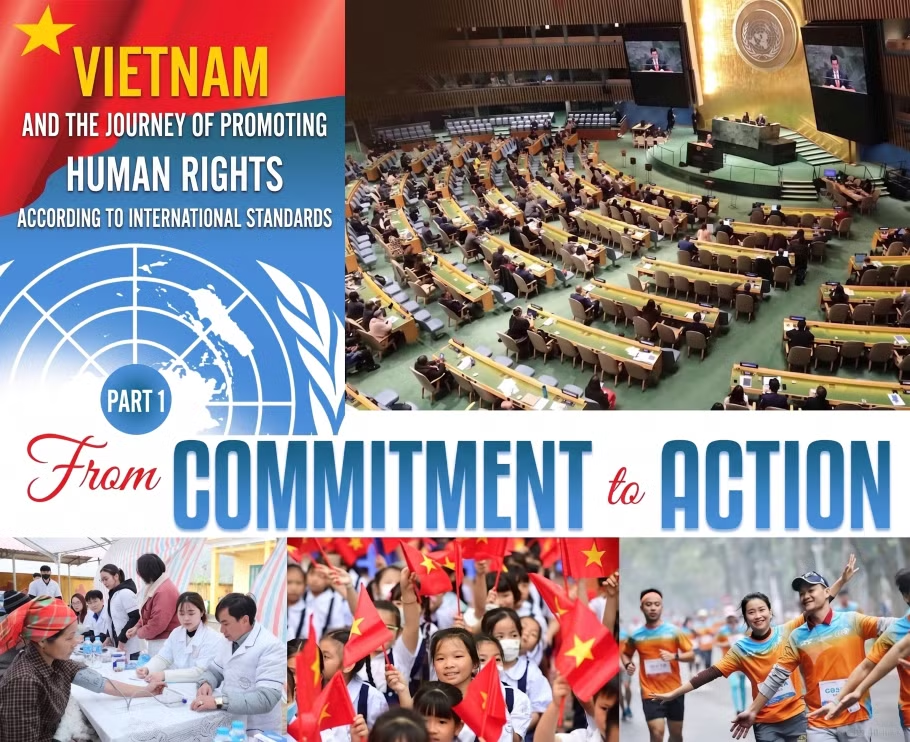
This milestone marks the international community's recognition of Vietnam's increasingly elevated role and stature on the global stage and reflects a relentless journey in over four decades. This journey stretches from Vietnam's initial accession to core international human rights conventions to the systematic refinement of its legal frameworks, policies, and enforcement mechanisms aimed at translating international commitments into reality.
People-centered development approach
Vietnam’s being elected to the UN Human Rights Council three times is the result of an extensive journey of more than four decades. During this time, Vietnam has progressively integrated into the international human rights legal system, persistently improved its domestic institutions, and engaged ever more deeply in multilateral dialogue and cooperation mechanisms.
It is this enduring process that has forged the international community's trust, simultaneously affirming the consistent stance of the Vietnamese Party and State: placing people at the center as both the ultimate goal and the driving force of development, ensuring that all citizens enjoy the fruits of reform and that no one is left behind.
In fact, since the early 1980s—despite having just emerged from decades of war and facing profound socio-economic and political challenges—Vietnam proactively acceded to vital international human rights treaties. To date, the country has become a state party to seven out of nine core international human rights instruments.
In addition, Vietnam is also a party to the Optional Protocols to the Convention on the Rights of the Child (CRC) on the involvement of children in armed conflict and on the sale of children, child prostitution and child pornography.
Vietnam is currently exploring the possibility of joining the International Convention for the Protection of All Persons from Enforced Disappearance (CPED) and the International Convention on the Protection of the Rights of All Migrant Workers and Members of Their Families (ICMW).
Additionally, since joining the International Labour Organization (ILO) in 1994, Vietnam has ratified 25 ILO conventions, including nine out of the ten core conventions pertaining to collective bargaining, anti-discrimination, child labor, and forced labor.
Most recently, in June 2020, Vietnam ratified ILO Abolition of Forced Labour Convention, 1957 (No. 105) and is actively studying the ratification of Freedom of Association and Protection of the Right to Organise Convention, 1948 (No. 87).
Internalizing International Standards
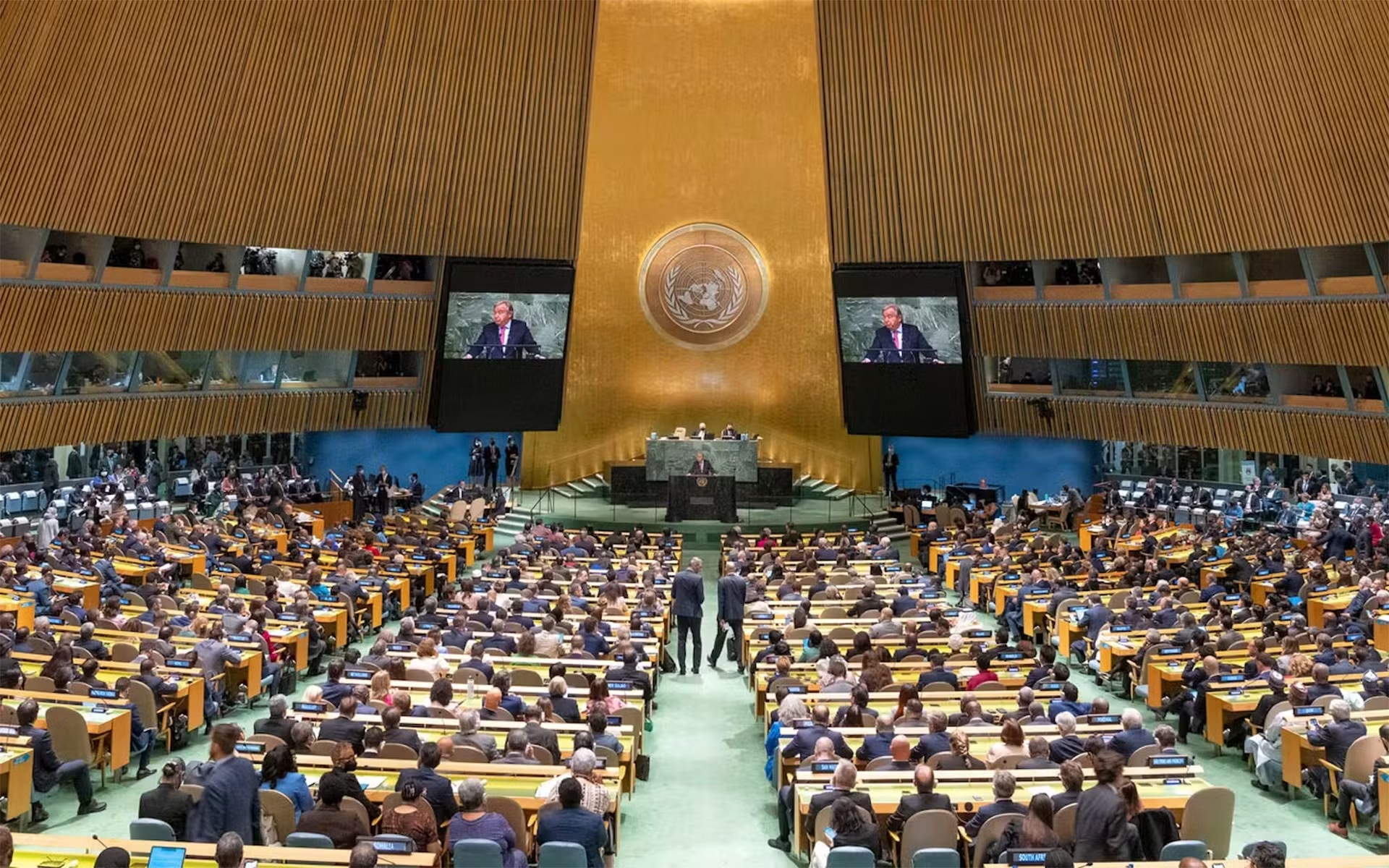
Remarkably, Vietnam views its participation in international human rights treaties not merely as fulfilling a member state's obligations, but as an integral part of perfecting its rule-of-law state, enhancing national governance, and better safeguarding the legitimate rights and interests of its people.
Consequently, the process of acceding to and implementing international human rights conventions has always been carried out proactively, consistently, and closely aligned with the imperative to refine domestic legal frameworks and institutions.
This exact approach has been widely recognized and highly commended by numerous countries during the Universal Periodic Review (UPR) sessions of the UN Human Rights Council. At the adoption of Vietnam's Third Cycle UPR Report in 2019, many nations lauded the country's advancements in poverty reduction, ensuring access to education and healthcare, promoting gender equality, and realizing economic, social, and cultural rights. They also acknowledged Vietnam's earnest implementation of accepted recommendations.
To date, Vietnam has been strictly fulfilling its obligations under the international human rights treaties to which it is a party. This includes the obligation of internalization—constructing national legal mechanisms aligned with treaty provisions; enacting legislative, executive, and judicial measures to guarantee human rights; disseminating and educating the public on treaty contents; drafting and submitting periodic national implementation reports; fostering international cooperation; and formulating national programs to deliver on international human rights commitments.
Notably, the 2025 Law Amending and Supplementing a Number of Articles of the Law on Treaties has strengthened the National Assembly's supervisory role in treaty implementation. It establishes provisions for urgent, unforeseen circumstances, ensuring timely adaptation to significant international trends and developments to serve national progress.
Currently, Vietnam has promulgated, reviewed, and amended thousands of laws and sub-law documents, in which fundamental human rights are stipulated with increasing specificity and comprehensiveness. A myriad of progressive principles from international law have been embedded within national legislative texts.
The civil, political, economic, cultural, and social rights enshrined in the international treaties to which Vietnam is a party are consistently integrated throughout the Constitution and various key legal documents. The principle of equality and non-discrimination serves as the foundational thread across Vietnam's legal texts, laying the groundwork for guaranteeing and advancing citizens' rights in every specific domain.
It is not only member states but also numerous international organizations that acknowledge Vietnam's development achievements. In various reports on human development and the realization of the Sustainable Development Goals (SDGs), the United Nations Development Programme (UNDP) has highlighted Vietnam as a nation making significant strides in poverty reduction and expanding access to education and healthcare, viewing this as a crucial foundation for securing basic human rights.
Meanwhile, UNICEF asserts that Vietnam's progress in reducing child mortality rates, expanding immunization coverage, and protecting vulnerable children stands as a bright spot and a national model both regionally and globally in realizing children's rights.
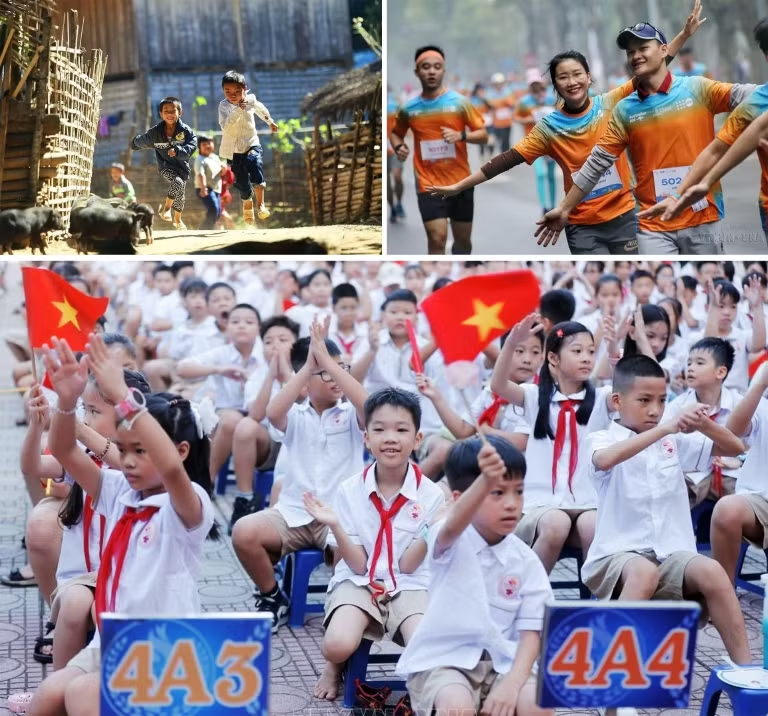
At the 50th-anniversary celebration of the partnership between Vietnam and UNICEF, which also marked the 35th anniversary of Vietnam's ratification of the UN Convention on the Rights of the Child in November 2025, Ms. Sophie Kiladze, Chair of the UN Committee on the Rights of the Child, clearly stated: "Thirty-five years ago, Vietnam made history by becoming the first country in Asia and the second in the world to ratify the UN Convention on the Rights of the Child. This milestone reflects not only Vietnam's profound commitment to children but also its vision for a future built on fully respecting the dignity of children and recognizing them as rights-holders."
Echoing this sentiment, Ms. June Kunugi, UNICEF Regional Director for East Asia and the Pacific, emphasized: "Fifty years ago, Vietnam had just emerged from war, but today, it has made highly impressive strides, becoming a country where children can live, learn, and thrive."