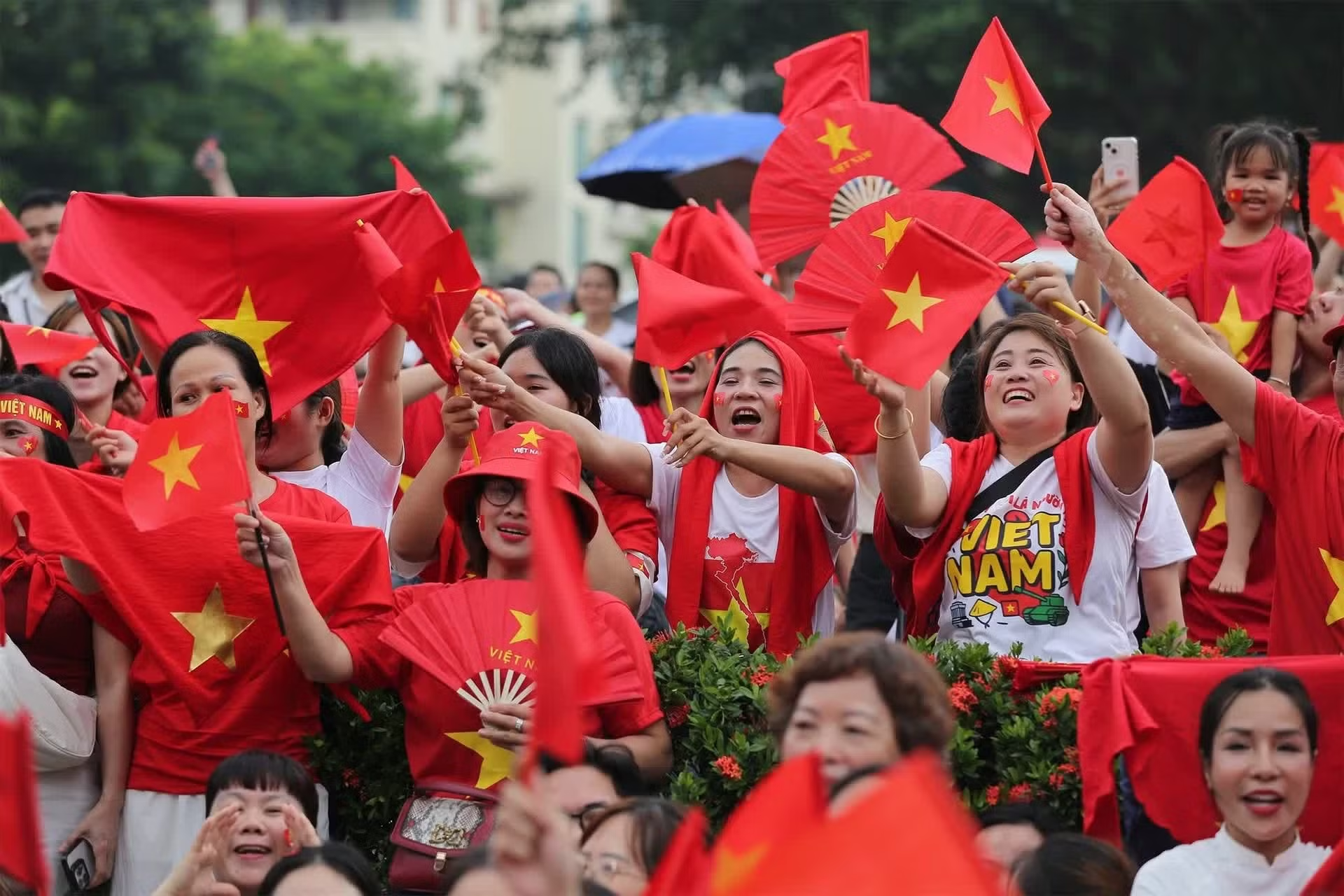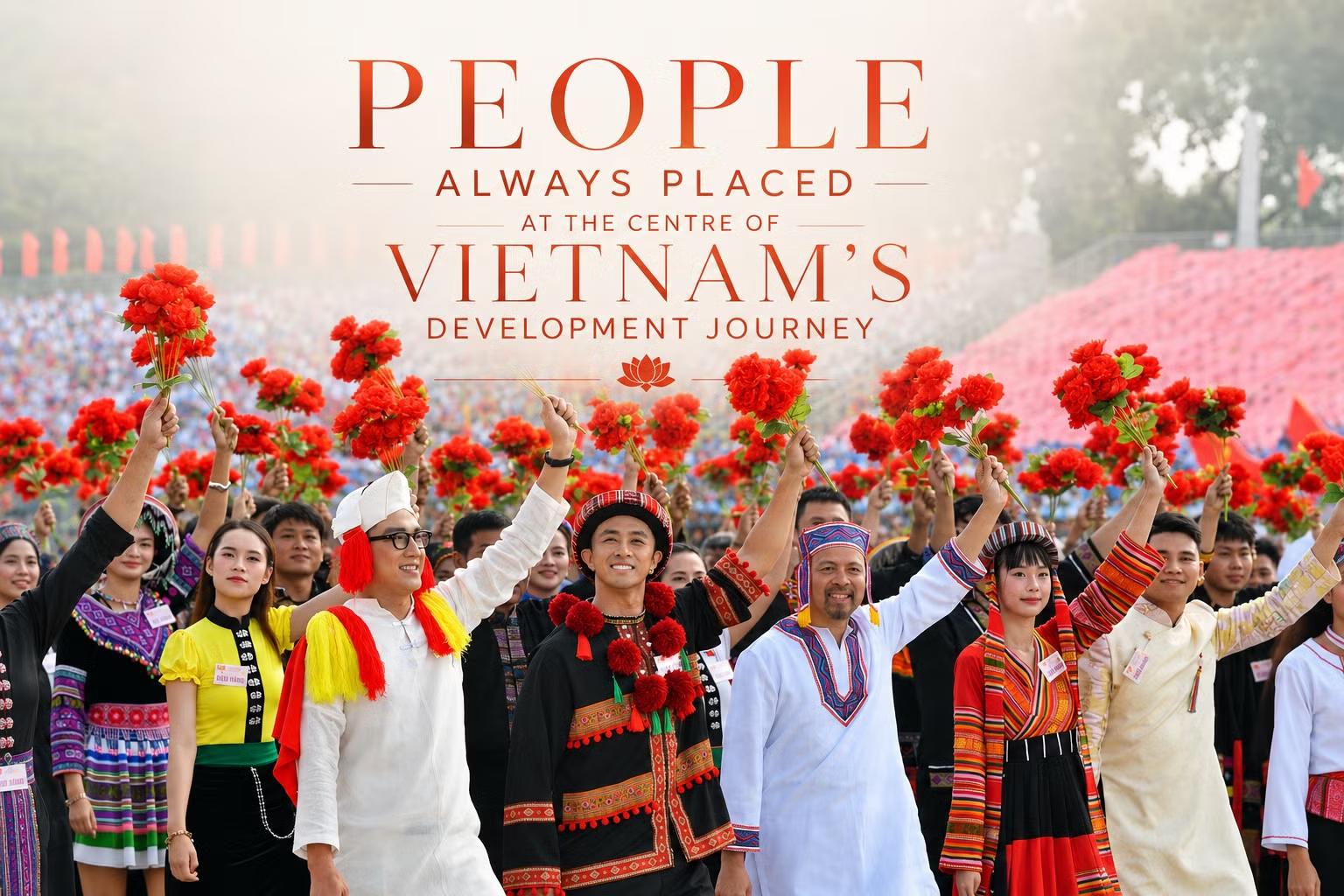
PSNews - The Declaration of Independence of September 2, 1945, not only gave birth to the Democratic Republic of Viet Nam — opening a new era of national independence and freedom, but also officially affirmed the sacred rights of every human being: the right to equality, the right to life, the right to liberty, and the right to the pursuit of happiness. Inspired by this noble spirit, the fundamental principle of “taking the people as the root” has been progressively broadened and institutionalized, ensuring that the people remain the subject, the center, the ultimate objective of all public policies, and the primary driving force of national development.

Turning back the clock to 1930, when Viet Nam was still shrouded in the darkness of colonial subjugation, the first Political Program of the Communist Party of Viet Nam clearly articulated its historic mission: to fight not merely to reclaim national sovereignty, but fundamentally to liberate oppressed lives from subjugation, exploitation, and injustice.
Fifteen years later, on September 2, 1945, at historic Ba Dinh Square, President Ho Chi Minh, on behalf of the Provisional Government, read the Declaration of Independence. He greatly invoked the universal values of human rights enshrined in the 1776 United States Declaration of Independence and the 1789 French Declaration of the Rights of Man and of the Citizen.
Yet he did not stop at affirming individual liberties; he elevated those universal values into the collective rights of an entire nation: the right to live in independence and freedom, and the right to self-determination.
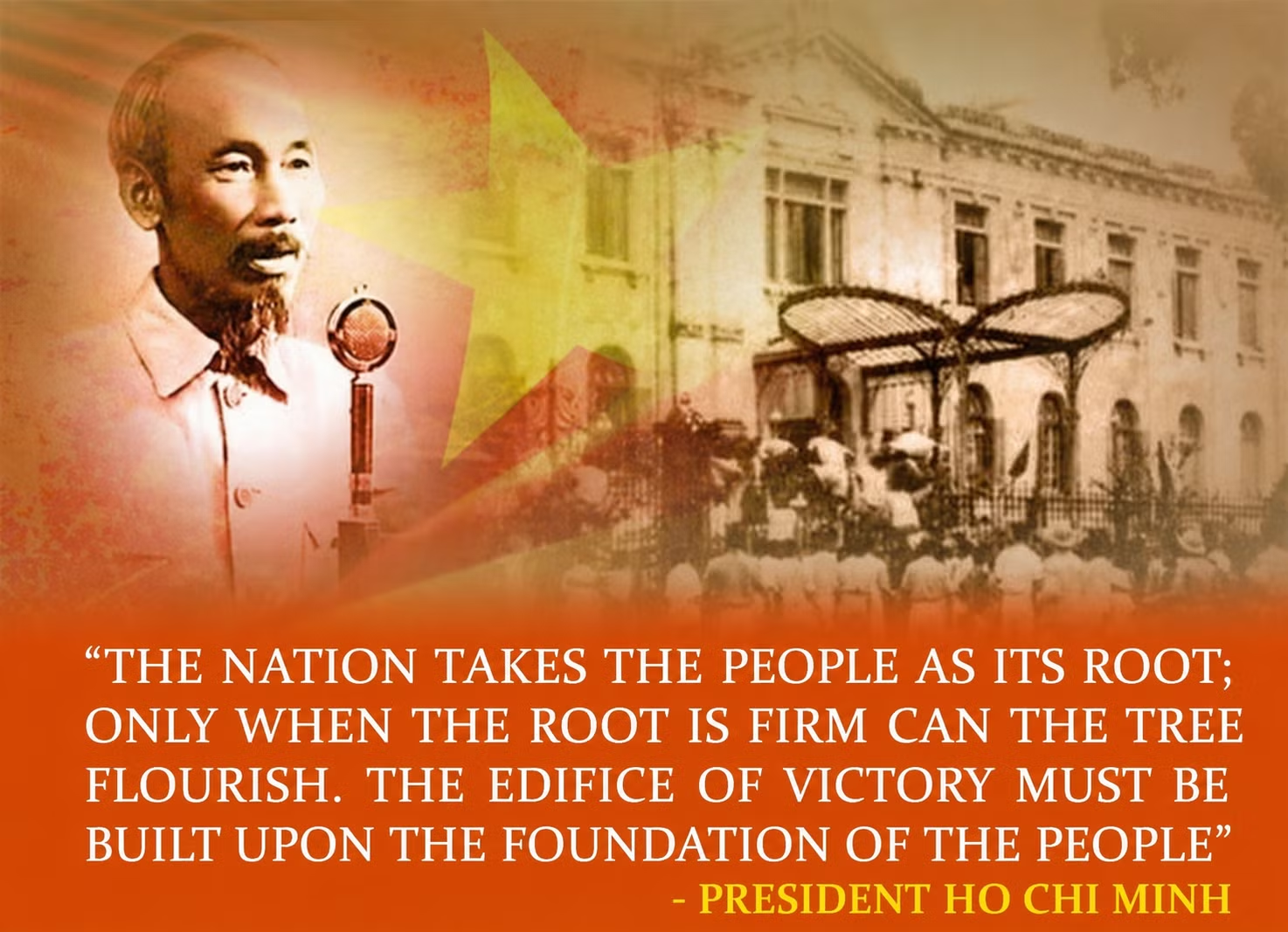
Following national reunification, this philosophical foundation was inherited and enriched throughout the process of Đổi Mới (Renovation). Reviewing the first decade of socialist construction, one of the four cardinal lessons drawn at the Sixth National Congress of the Communist Party of Viet Nam was that the entire Party must thoroughly grasp President Ho Chi Minh’s core principle of “taking the people as the root”.
Furthermore, the State’s duty to serve the people, alongside the nation's noble responsibility to respect and protect human rights, has consistently been reaffirmed across key Party documents, from the IX (2001) and X (2006) National Party Congresses to the Platform for National Construction in the Period of Transition to Socialism (supplemented and developed in 2011 at the XI National Party Congress).
All of these documents emphasize: "People are the center of the development strategy as well as the subjects of development. Human rights must be respected and protected, closely linking human rights with the national interest and the people's right to mastery".
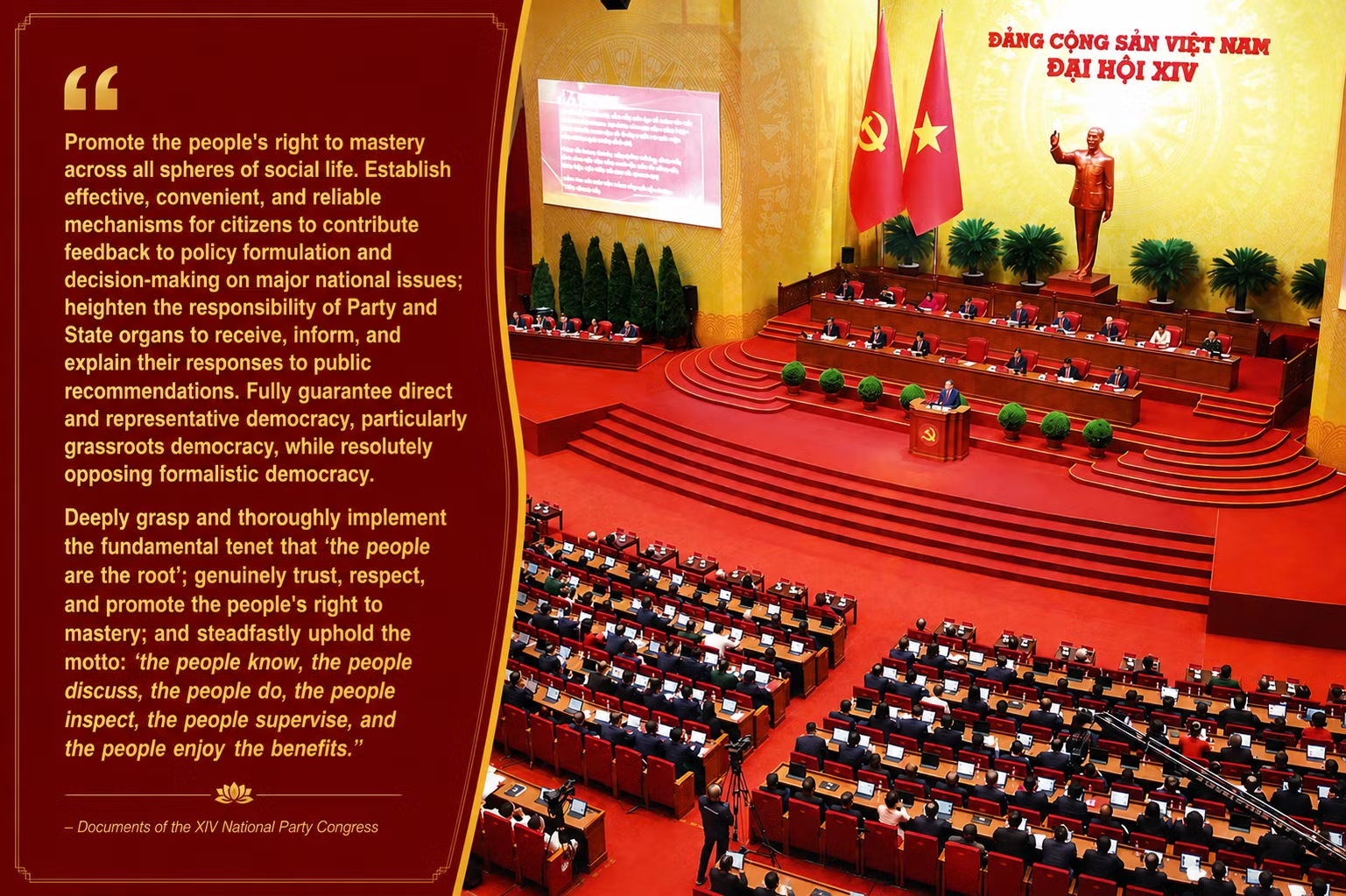

The XII National Party Congress (2016) subsequently integrated human rights into all Congress documents, tasking the entire political system with:
"Fulfilling human rights and the fundamental rights and obligations of citizens in accordance with the spirit of the 2013 Constitution... perfecting the legal system, and respecting, guaranteeing, and protecting human rights and citizenship rights".
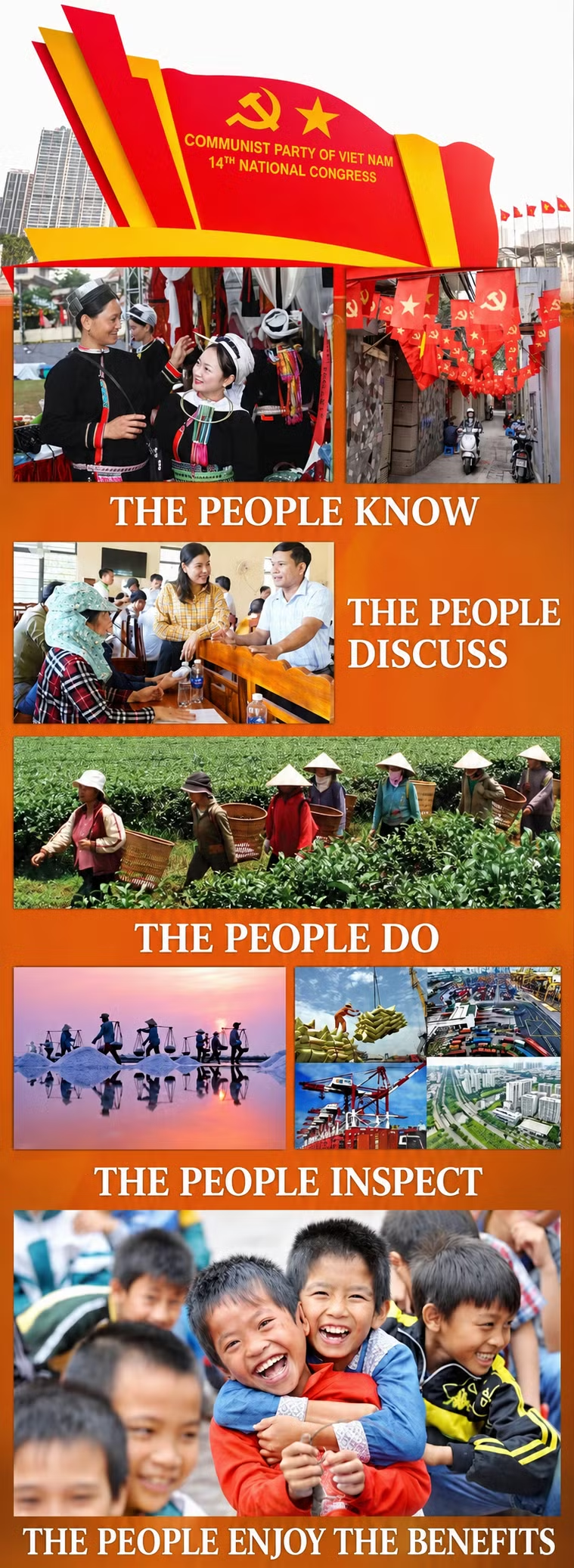
At the XIII (2021) and XIV (2026) National Party Congresses, these principles were further elevated into stronger, more humane political commitments than ever before. This is reflected across three main approaches:
Expanding democratic participation: Broadening the guideline from "the people know, the people discuss, the people do, the people inspect" to "the people know, the people discuss, the people do, the people inspect, and the people enjoy the benefits."
Institutional responsibility: Heightening the accountability of state and social institutions in respecting, guaranteeing, and protecting human rights.
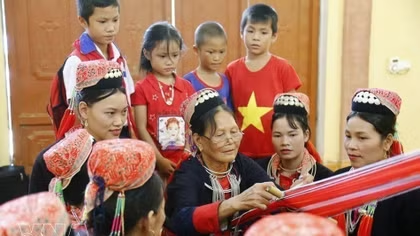
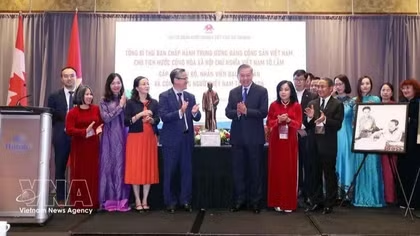
Protecting vulnerable groups: Prioritizing the protection of vulnerable social groups, including children, women, the elderly and ethnic minorities, while strengthening citizen protection overseas and policies for the Vietnamese diaspora.
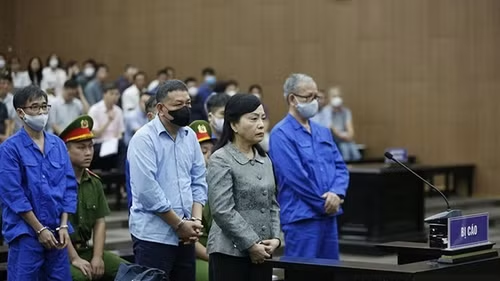
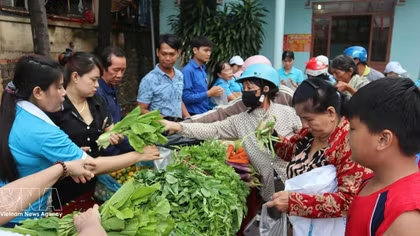
If Party documents establish the core guiding philosophy, the legal system and public policies serve as the arena where that philosophy is translated into daily reality. Human rights acquire true meaning only when citizens feel their impact through tangible social welfare policies, educational and employment opportunities, accessible healthcare, and equal protection under the law.
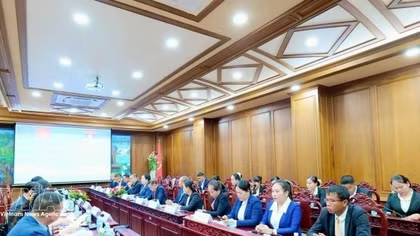
Between 2019 and 2025, a total of 145 laws were enacted or amended. Many directly pertain to human and civil rights, institutionalizing the provisions of the 2013 Constitution while ensuring full alignment with international human rights treaties to which Viet Nam is a state party.
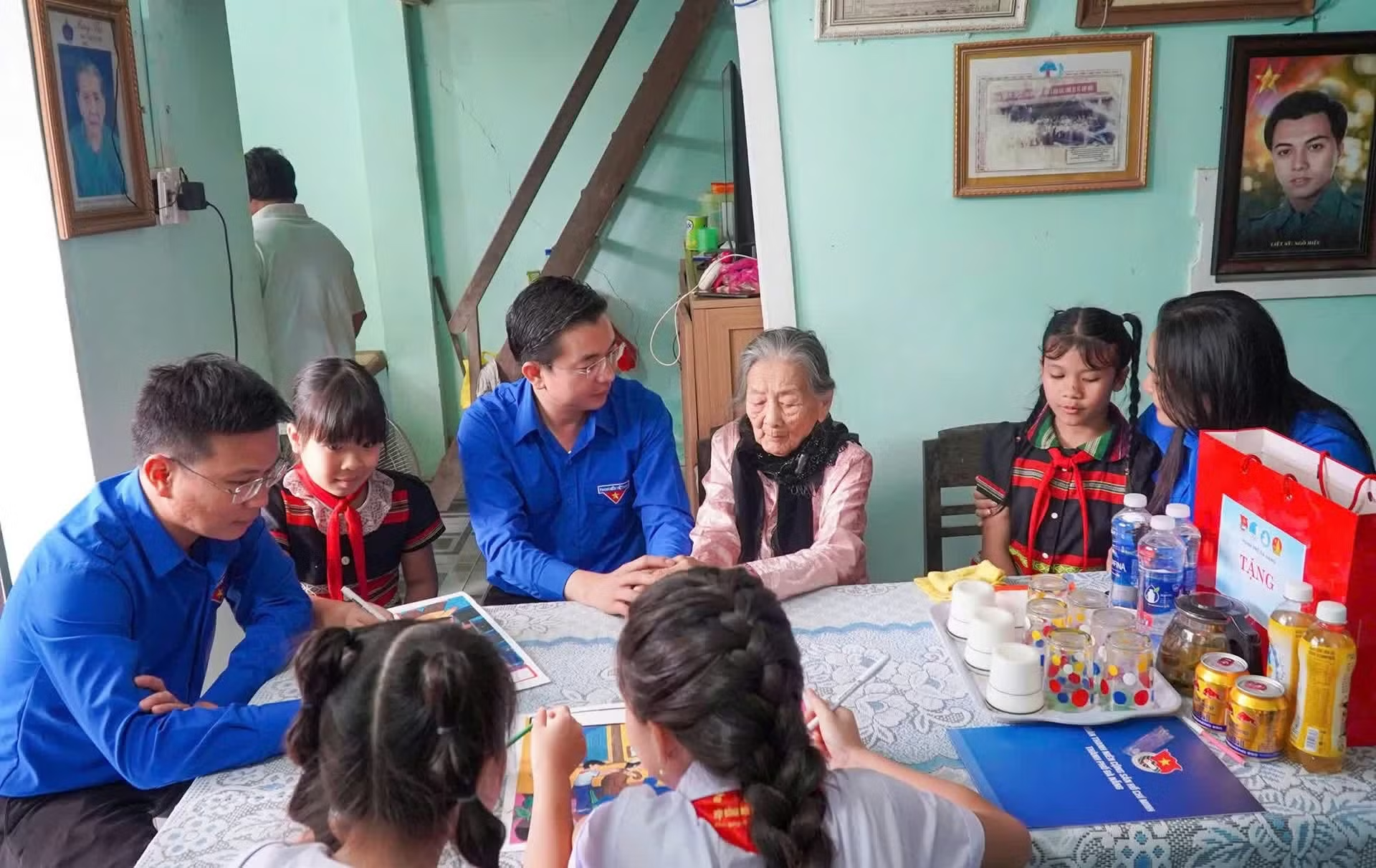
The care and support provided to people with meritorious service and their families have consistently remained a priority.
Progressive milestones include the 2019 Labor Code; the 2022 Law on Domestic Violence Prevention and Control, providing a protective shield for vulnerable family members; and the 2024 Land Law alongside the 2023 Law on Protection of Consumer Rights, which deliver maximum transparency and practical convenience to the public.
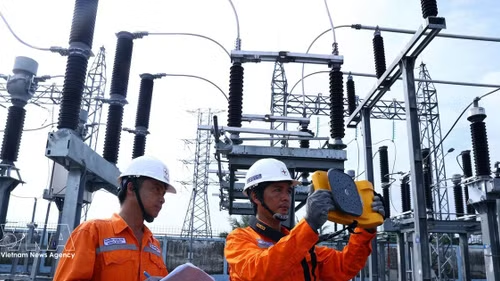
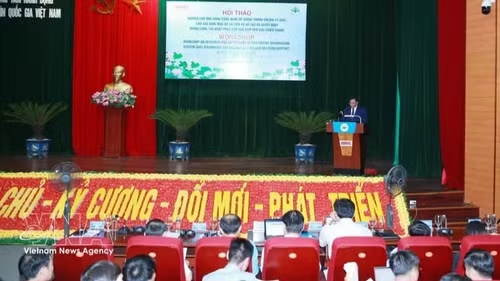
In addition, Resolution No. 66-NQ/TW (dated April 30, 2025) on reforming legislative drafting and law enforcement set out major reform directions. It introduced a comprehensive overhaul of legislative processes, providing strong impetus for development, selectively integrating international best practices, ensuring systemic coherence, unlocking resources, and transforming institutional frameworks into competitive advantages. This reform agenda lays a solid foundation to drive double-digit economic growth, accelerate digital transformation, and prioritize essential social welfare sectors to elevate living standards nationwide.

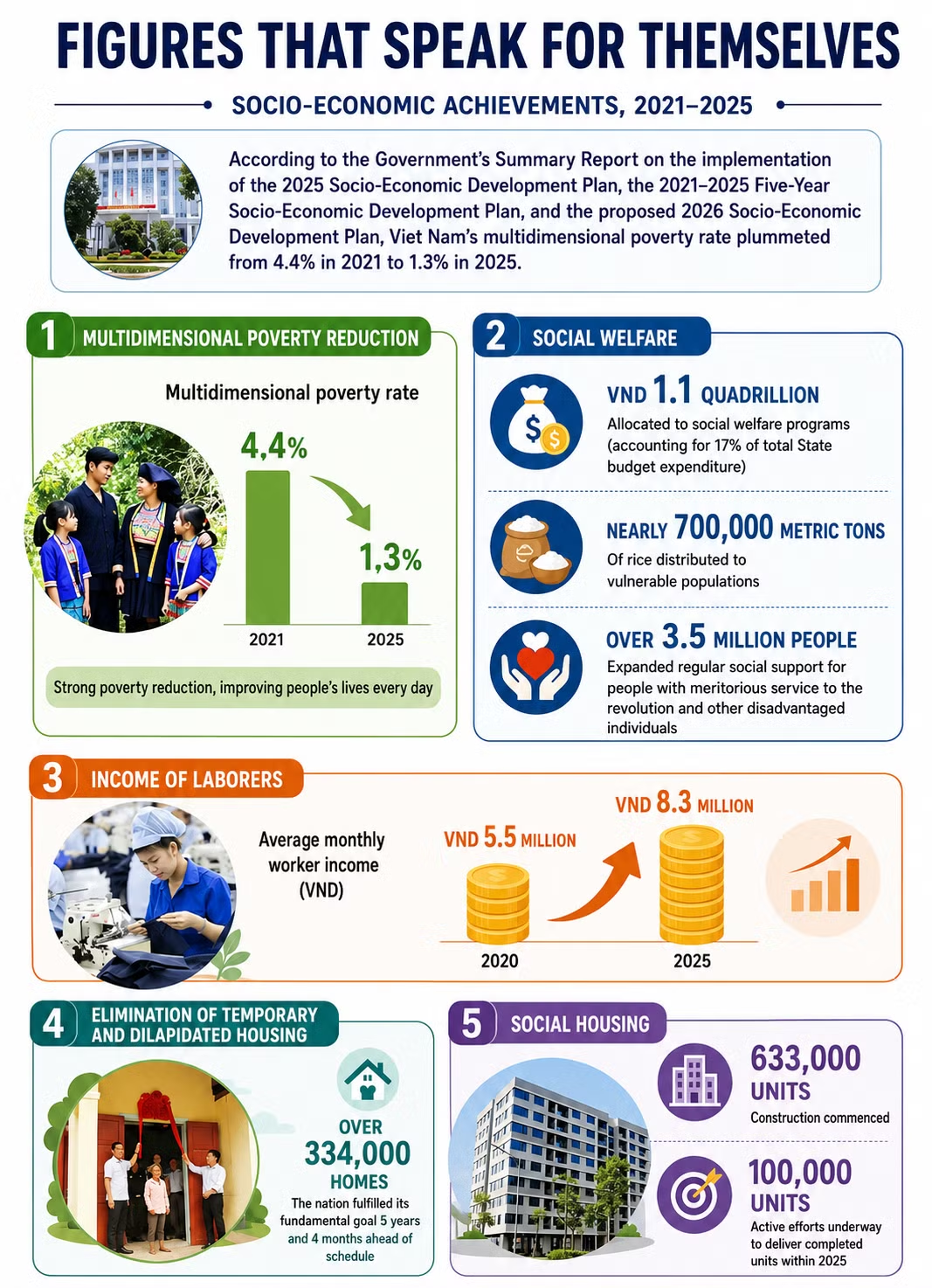
However progressive institutional frameworks may be, they must be sustained by a robust economy. The rights to education, healthcare, social security, and quality public services require tangible resources to be fully realized. Thus, economic development is not merely a growth target; it is an indispensable prerequisite for broadening the enjoyment of human rights.
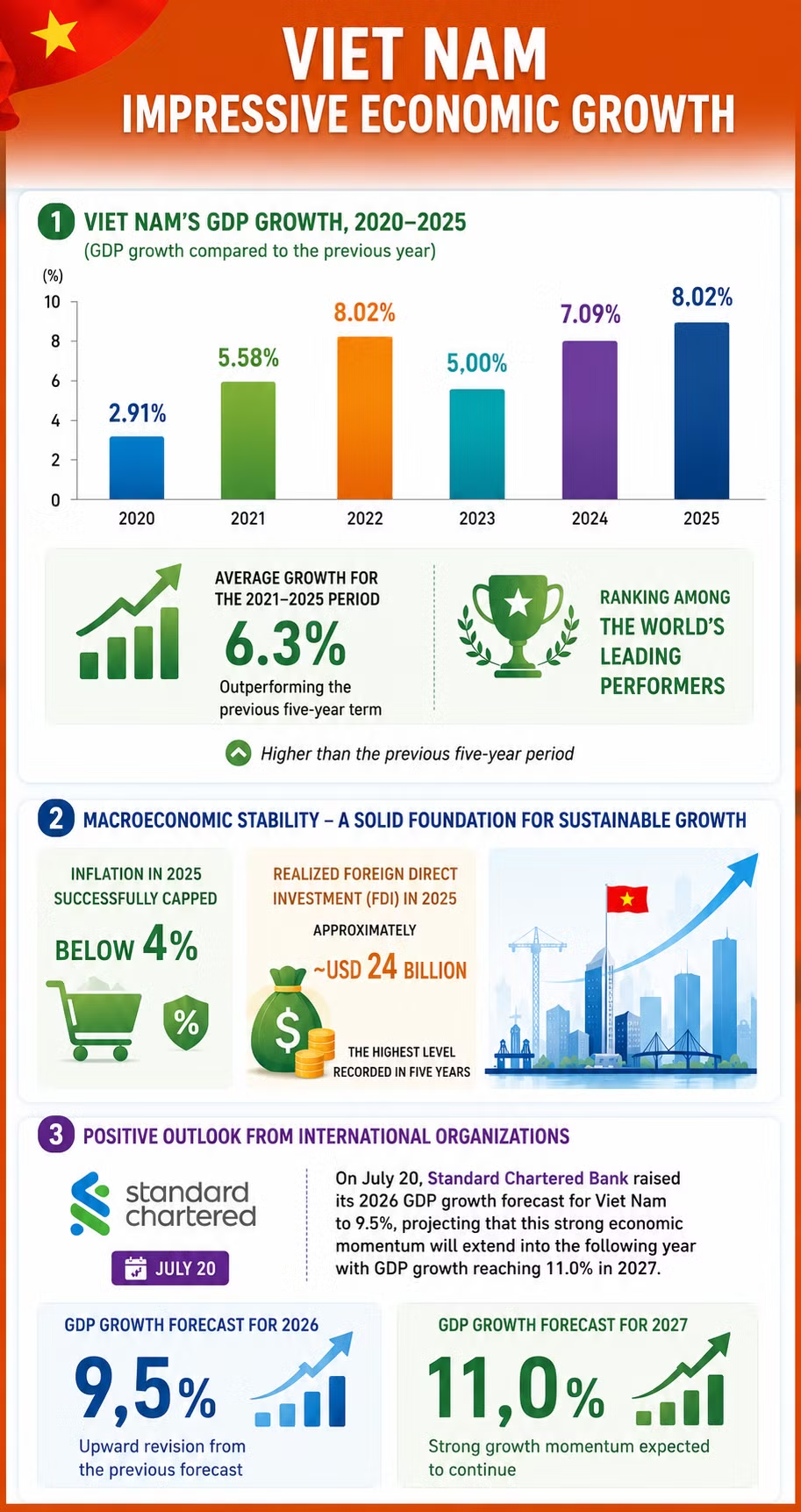
Looking back on the 2020–2025 period, the achievements realized amid unprecedented global volatility deserve special recognition. Facing a "double storm" of global geopolitical conflicts, natural disasters, epidemics, and severe supply chain disruptions, Viet Nam’s economic vessel navigated treacherous waters with remarkable resilience: GDP growth progressed from 2.91% in 2020 to 5.58% in 2021, 8.02% in 2022, 5.0% in 2023, 7.09% in 2024, and 8.02% in 2025—placing Viet Nam among the world’s top-performing economies.
These figures reflect the resilience, adaptability, and dynamism of the Vietnamese economy, generating vital resources to reinvest in education, healthcare, poverty reduction, social welfare, and human development programs.
The Organisation for Economic Co-operation and Development (OECD) highlighted 2025 as a milestone year demonstrating Viet Nam’s strong economic momentum and extraordinary developmental effort.
The World Bank (WB), in its Regional Economic Update, cited Viet Nam as a prime model of adaptability and capacity to turn challenges into opportunities for structural reform. The Bank praised Viet Nam’s expanded investments in infrastructure, education, and institutional quality, noting that targeted support policies delivered far more tangible outcomes than in many regional peers.
The International Monetary Fund (IMF), in its updated World Economic Outlook report, upgraded Viet Nam’s economic growth forecast for 2026 by 0.4 percentage points to 7.5%, standing out in a divergent global economic landscape.
Today, Viet Nam has emerged as the 5th-largest economy in ASEAN and the 35th-largest globally. The country has capitalized effectively on post-pandemic recovery momentum and economic restructuring to leverage the benefits of 17 Free Trade Agreements (FTAs), expanding international commerce while driving domestic institutional and legal reforms.
Steered by the strategic vision to become an upper-middle-income country by 2030 and a high-income developed nation by 2045, Viet Nam continues to affirm a fundamental truth: A strong nation is one in which every citizen is respected, enjoys freedom, and lives in happiness.
Viet Nam’s comprehensive achievements in socio-economic development and international integration provide a solid foundation to guarantee the full enjoyment of human rights, ensuring that national growth remains inclusive, equitable and sustainable.