Hanoi (VNA) – As digital transformation accelerates, equipping people with disabilities with the skills to use technology, apply artificial intelligence (AI), and spot fake news and online scams has become increasingly practical. Through a range of hands-on support initiatives, the Hanoi Association of People with Disabilities (DP Hanoi) is helping its members access and master technology, broadening their opportunities for education, employment and social inclusion.
Expanding initiatives to help people with disabilities master digital technology
The DP Hanoi currently has 46 member organisations and more than 18,000 individual members. Recognising digital technology as an important tool for promoting equality in access to information and development opportunities, the association has introduced various digital skills training programmes tailored to the needs of different groups of people with disabilities.
Notably, it has organised online scam prevention training courses for more than 1,000 young people with disabilities. In coordination with the Hanoi Police, it has also conducted awareness campaigns and provided guidance to members on identifying fraudulent schemes, protecting their accounts and personal data, and verifying information before sharing it on social media.
One notable initiative is the Happy IT digital hub, established through cooperation between the association and Remann Company. To date, the programme has trained more than 500 young people with disabilities in using digital tools. Through hands-on activities, participants have gained access to AI applications, graphic design, video production and digital content creation, helping them improve their professional skills and explore employment opportunities. In addition, member organizations regularly hold media skills training sessions, encouraging people with disabilities to create their own content, share their stories and promote positive images of their creativity and contributions to society.
According to DP Hanoi Vice Chairman Pham Quang Khoat, the use of AI and digital platforms must go hand in hand with user responsibility. People with disabilities need to be equipped with the skills to verify AI-generated information, identify fake news and manipulated images and videos, protect their personal data, and use technology safely and responsibly.
From digital skills to self-protection in cyberspace
At the grassroots level, some youth groups are directly helping people with disabilities access technology, particularly AI tools and skills to prevent online scams.
Ho Minh Quang, Vice Chairman of the Ba Dinh ward Association of the Blind in Hanoi, said the idea to launch projects providing digital skills training for people with disabilities took shape in 2023. The post-COVID-19 period also saw a sharp rise in online scams and fake information.
Recognizing that many members, mostly older people with visual impairments, struggled to use smart devices and spot fraudulent information, he and his colleagues developed a program that combined technology skills training with online scam prevention.
From those initial classes, the Starlight group, comprising around 15-16 members with and without disabilities, gradually expanded its activities. Building on the initial success of its “Digital Skills and Scam Prevention” project in 2025, the group went on to organize specialized courses on AI applications and launch the “Digital Empowerment” project, which teaches people with disabilities how to access information and use technology safely. Training activities have since been expanded to associations of the blind in Hoan Kiem, Tay Ho and Hoang Mai, as well as other areas across the city.
According to Quang, teaching people with visual impairments to use technology requires patience, particularly when it comes to distinguishing genuine information from fake content.
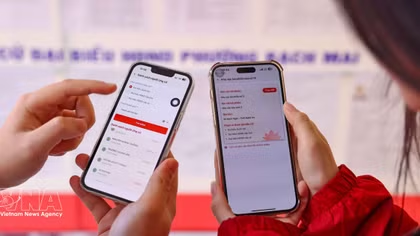
The classes have helped many people with disabilities improve their ability to protect themselves online. Hoang Thi Phuong, 22, a resident of Ba Dinh ward, said that after completing the course, she has learned how to identify fraudulent links, check information sources before sharing content, set up account passwords, and block harassing accounts and websites containing harmful material.
Sharing this view, Nguyen Huu Diep, a resident of Phu Thuong Ward, said digital skills clubs are practical for people with disabilities. He called on authorities to expand training programs on digital skills, AI applications and online scam prevention, while ensuring that government websites, online public services and warning channels are accessible to people with different types of disabilities.
Building on the initiatives and models already introduced, the DP Hanoi aims to help its members go beyond simply learning to use technology, enabling them to create, protect themselves and actively contribute to a safe and healthy online environment. In this way, technology can truly become a bridge to opportunity, enhance independence, and ensure that people with disabilities participate in social life on an equal footing.