From mountain looms to global markets: Mong women preserves heritage through brocade

Brightly coloured brocade fabrics are no longer just daily attire, they have become a bridge between cultural preservation and economic empowerment, reaching beyond remote villages to international markets.
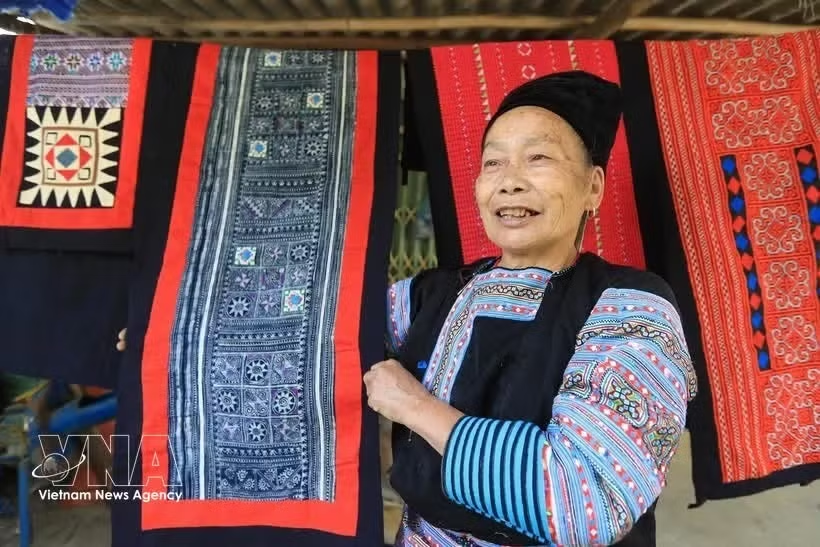
Amid the fast-paced changes of modern life, the traditional cultural heritage of the Mong ethnic community in the mountainous area of Pa Co, Phu Tho province, remains resiliently preserved through the skillful hands of local women.

Brightly coloured brocade fabrics crafted here are no longer just daily attire, they have become a bridge between cultural preservation and economic empowerment, reaching beyond remote villages to international markets.

1-1120.jpg
The Mong people of Pa Co commune, Phu Tho province, always take great pride in their traditional brocade products. (Photo: VNA)

In Pa Co commune, brocade weaving has long been an indispensable part of Mong people’s life. From early childhood, young girls learn how to spin thread, weave cloth, embroider, and draw beeswax patterns on linen.

Born into a multi-generational weaving family, Giang Thi Mua grew up with the daily clatter of the loom.

“Seeing my mother weave regularly since I was little inspired me to learn,” Mua shared. "After getting married, my mother-in-law further guided me in embroidery and beeswax painting techniques. To me, traditional craft not only generates additional income but also helps preserve the cultural identity of the Mong people.”
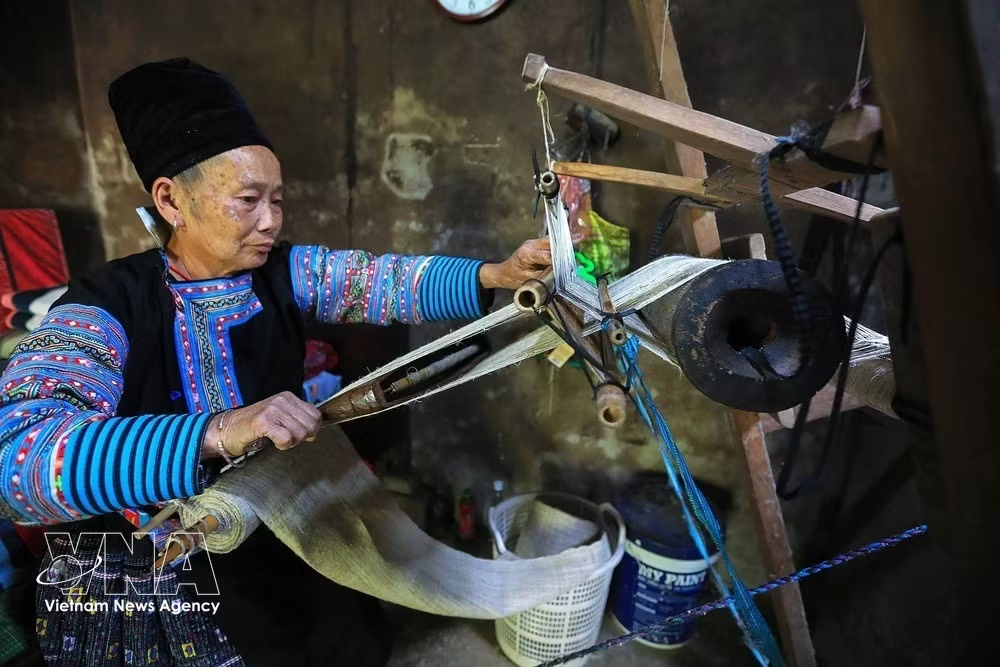
A Mong woman in Pa Co commune works diligently at her loom, weaving durable and beautiful brocade fabrics. (Photo: VNA)

Crafting a complete traditional garment requires immense patience and meticulousness. Flax harvested from hillside fields is stripped, dried, and spun into fine threads before being set on looms. The woven cloth is beaten soft, washed, and ironed before intricate patterns are added – a stage that best highlights the creativity of Mong women.

A defining element of Mong textiles is the technique of beeswax drawing on linen. Using a small copper pen dipped in molten beeswax, women skillfully trace intricate patterns onto white linen. The fabric is then repeatedly dyed in indigo vats. Once the wax layer is removed, striking white motifs emerge against a deep indigo background, creating a harmonious aesthetic rich in ethnic identity.

Patterns on Mong brocade typically depict nature, mountains, and daily life, carrying deep cultural narratives within every stroke beyond their aesthetic value.

Sung Y Thanh, a local resident, said mastering needlework is an essential milestone for Mong women, who sew clothes for their entire families.

Today, Thanh noted, many traditional crafts face the risk of fading as young people move to urban areas. However, in Pa Co, brocade weaving is maintained thanks to community awareness and support from local women’s unions.

Beyond heritage preservation, brocade weaving has opened up sustainable livelihoods. Traditional garments, handbags, scarves, and handcrafted souvenirs are increasingly sought after by tourists for their uniqueness and authentic craftsmanship.
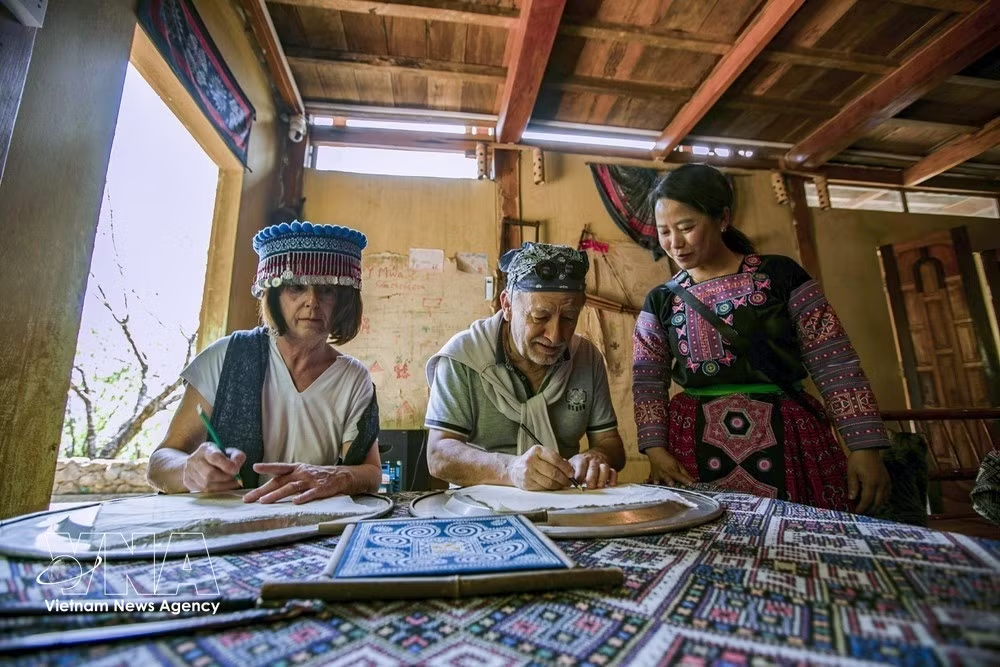
French tourists experience the art of beeswax drawing on Mong traditional textiles at Y Mua Homestay in Hang Kia commune, Phu Tho province. (Photo: VNA)

Hang Y Tenh, head of the Pa Co commune Women's Union, highlighted that active weaving groups in Pa Co 1 and Cha Day hamlets cater to both local needs and commercial demand.

Many brocade products made by local Mong women have been introduced to domestic and international visitors, even reaching markets in Laos, Thailand, and the US, Tenh said.

Thanks to this, many women have earned a stable income, averaging 70 to 80 million VND (2,700–3,000 USD) annually, she added.

Amid modern shifts, the image of Mong women quietly working beside their looms remains a serene symbol of highland culture. Each flax thread and needle stitch not only weaves vibrant fabrics but also bridges the past with the present, safeguarding the cultural soul of their ethnic group for generations to come.

en.vietnamplus.vn

Other News

UNESCO expects Vietnam to lead cultural cooperation initiatives

UNESCO expects Vietnam to lead cultural cooperation initiatives

Lidia Brito, UNESCO Assistant Director-General for Priority Africa and External Relations, praised Vietnam’s contributions to education, science, culture and information, describing the 50-year partnership between Vietnam and UNESCO as a sustained and increasingly substantive journey.

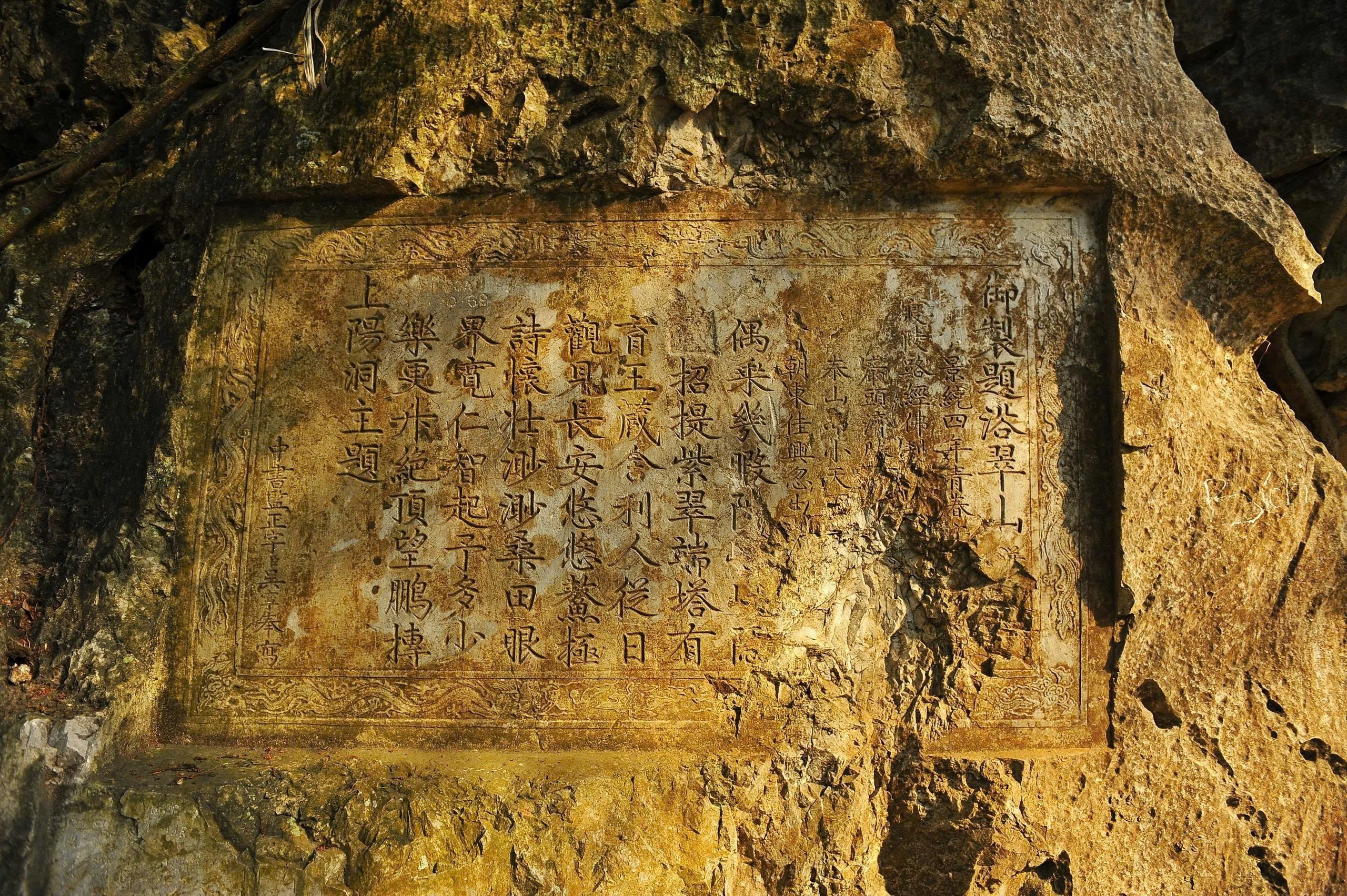
UNESCO recognizes 'Pho Hien Steles' and 'Ma Nhai Inscriptions on Non Nuoc Mountain'

UNESCO recognizes 'Pho Hien Steles' and 'Ma Nhai Inscriptions on Non Nuoc Mountain'

On the afternoon of November 5, at the 11th Session held in Jakarta, Indonesia, the Memory of the World Committee for Asia and the Pacific (MOWCAP) under UNESCO approved the inscription of the "Pho Hien Steles" from Hung Yen Province and the "Ma Nhai Inscriptions on Non Nuoc Mountain" from Ninh Binh Province into the Asia-Pacific Regional Register of Documentary Heritage.

Vietnamese community in the UK preserves cultural identity

Vietnamese community in the UK preserves cultural identity

In February 2027, Tet culture and the Vietnamese language are expected to feature for the first time as the main focus on the central stage of the annual Lunar New Year event at the National Maritime Museum in the UK, part of the Maritime Greenwich World Heritage Site. The 2027 London Ao Dai Week is also expected to go ahead.

Da Nang named among Lonely Planet's 'Best in Travel 2027' list

Da Nang named among Lonely Planet's 'Best in Travel 2027' list

Located in central Vietnam, Da Nang is “blessed with mountains, a long city beach and a cool vibe”. The Son Tra Peninsula offers peaceful natural surroundings and panoramic sea views, while the city’s beaches provide opportunities for swimming, relaxation and outdoor activities.

Foreign diplomats experience tea picking in Thai Nguyen

Foreign diplomats experience tea picking in Thai Nguyen

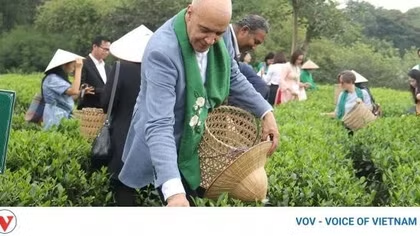
VOV.VN - Foreign diplomats in Vietnam have tried their hand at picking and pan-firing tea leaves in Vietnam’s northern Thai Nguyen province, gaining first-hand insight into the traditional craft behind the distinctive flavour of Tan Cuong tea.

Localities work to enrich vitality of Vietnamese culture

Localities work to enrich vitality of Vietnamese culture

Guided by the Politburo's Resolution No. 80-NQ/TW on Vietnamese cultural development, a range of cultural activities held nationwide over the past week have highlighted efforts to preserve and promote national identity while encouraging creativity and expanding public access to culture.

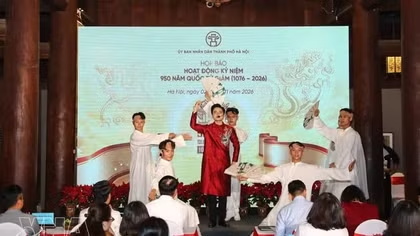
Hanoi to stage special arts programme for Vietnam Culture Day

Hanoi to stage special arts programme for Vietnam Culture Day

Through the programme, Hanoi seeks to recreate the continuous flow of Vietnamese culture from its origins to the present and future, connecting traditional heritage with contemporary creativity and combining traditional arts with modern stage technology to create a distinctive artistic space with intellectual depth and broad social resonance.

Ho Chi Minh City builds global tourism brand as megacity

Ho Chi Minh City builds global tourism brand as megacity

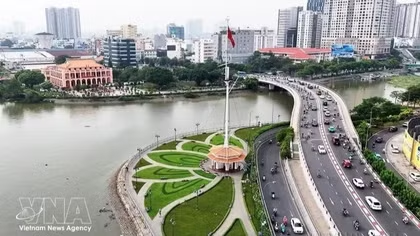
The city’s Resolution No. 62/2025/NQ-HDND on support policies for MICE tourism has provided an important framework for attracting business events through 2030. Ho Chi Minh City is targeting conferences, exhibitions and events in priority sectors such as finance, technology, innovation, logistics, healthcare, education, industry and the marine economy.