Ninh Binh awakens archaeological heritage through new tourism product

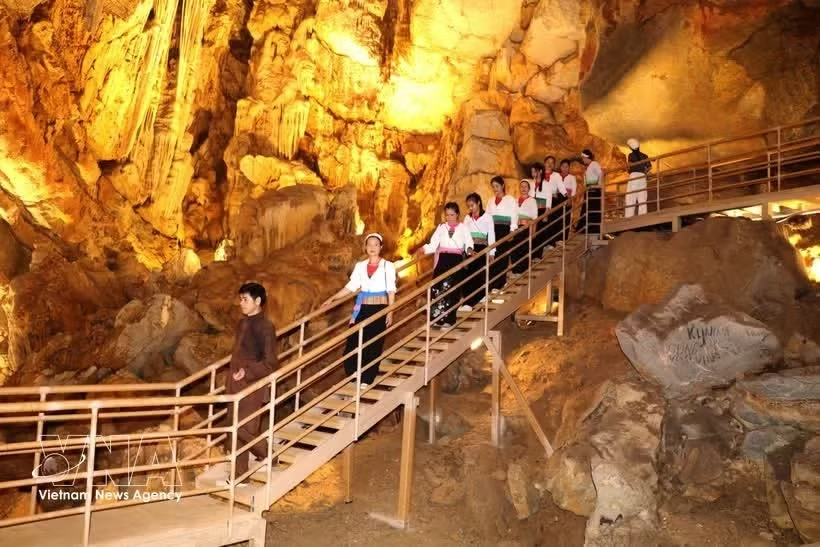
Visitors must walk about one kilometre from the Thung Ui forest entrance, climbing stone steps to an elevation of over 100 metres. The cave extends approximately 60–70 metres and features stalactites and stalagmites formed over millions of years.

The opening of Hang Boi (Boi Cave) archaeological site to visitors at the Thung Ui Cultural Tourism Area in Tay Hoa Lu ward has introduced a new approach to promoting archaeological heritage alongside tourism development in the northern province of Ninh Binh.

The initiative diversifies visitor experiences while highlighting the historical and cultural values of the ancient capital region.
1-5711.jpg
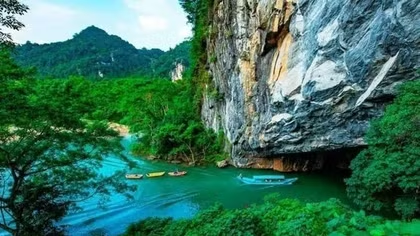
Hang Boi extends approximately 60–70 metres and features stalactites and stalagmites formed over millions of years. (Photo: VNA)

Bringing archaeological values to life

Located in the Trang An Landscape Complex, Hang Boi preserves traces of prehistoric human habitation dating back more than 12,000 years.

Visitors must walk about one kilometre from the Thung Ui forest entrance, climbing stone steps to an elevation of over 100 metres. The cave extends approximately 60–70 metres and features stalactites and stalagmites formed over millions of years.

Beyond its natural beauty, the site holds archaeological evidence, including mollusc shells near the entrance, offering insights into how prehistoric inhabitants obtained food and adapted to their environment.

Bui Thi Thuy, a visitor from Ninh Binh province's Yen Son ward, said the experience allowed her to explore the natural landscape while learning about prehistoric settlement and daily life through tour guides' explanations.

Nguyen Hoa Man, a tour guide at the Thung Ui Cultural Tourism Area, said guides have studied historical documents and archaeological materials to provide visitors with a better understanding of the site's significance.

Developing heritage tourism sustainably

Vietnamese and international scientists have conducted research at Hang Boi since 2007, uncovering evidence that has contributed to understanding prehistoric life in Ninh Binh's limestone mountains.
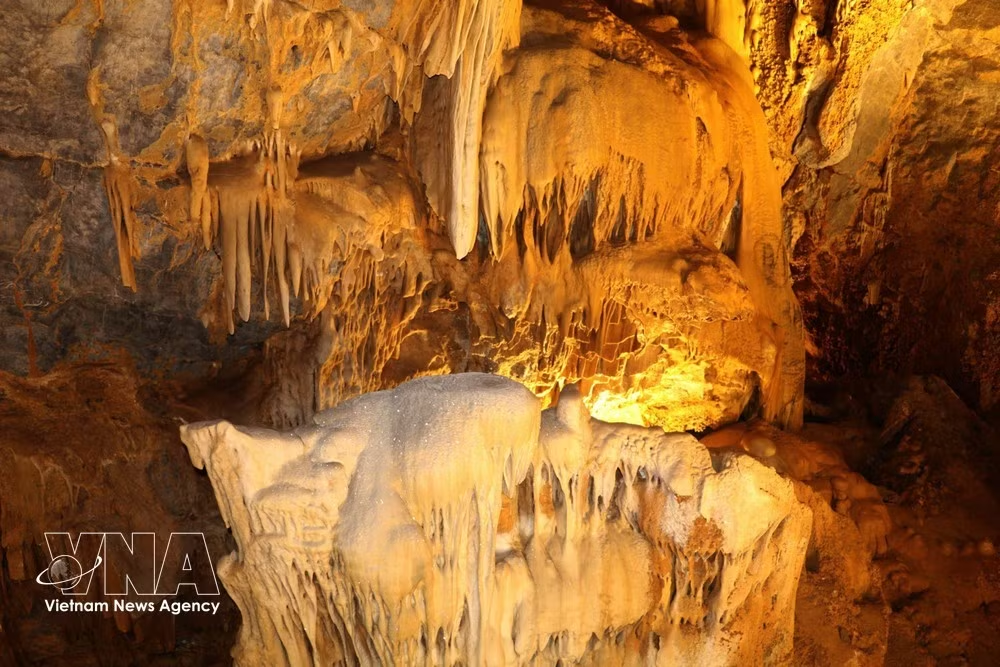
Hang Boi features stalactites and stalagmites formed over millions of years. (Photo: VNA)

Opening the site to visitors creates opportunities to connect archaeological research with education and tourism. However, development must be accompanied by appropriate conservation measures, careful visitor management and accurate interpretation. Access routes and sightseeing activities must minimise impacts on cave floors, sediment layers and archaeological remains.

Phung The Quynh, operation director of the Thung Ui Cultural Tourism Area, said the unit has prepared the necessary conditions to ensure visitor safety and protect heritage and the natural environment.

The area plans to survey nearby caves and develop additional tourism products based on their archaeological, historical and cultural values.

Nguyen Cao Tan, Deputy Director of the Ninh Binh Department of Tourism, said the Trang An Landscape Complex preserves not only distinctive landscapes but also caves bearing traces of prehistoric habitation. Opening suitable sites to visitors helps communicate the heritage's outstanding universal value while creating new opportunities for archaeological tourism.

The development of Hang Boi as a tourism destination offers a new way to explore prehistoric heritage in Trang An. Its success will depend on combining scientific research, effective interpretation and tourism development with the long-term preservation of archaeological remains.

en.vietnamplus.vn

Other News

Quang Tri to host week-long culture and tourism festival

Quang Tri to host week-long culture and tourism festival

The opening ceremony and an art programme under the same theme will take place on November 24 at Phong Nha-Ke Bang National Park in Phong Nha commune, highlighting the UNESCO-listed natural heritage site and promoting cave exploration tours.

Vietnam ranks among world's top 10 favourite countries in 2026

Vietnam ranks among world's top 10 favourite countries in 2026

Vietnam’s inclusion in the top 10 favourite countries in the 2026 Readers’ Choice Awards adds another important milestone to the country’s international tourism brand. The result not only underscores the destination’s appeal but also reflects growing international appreciation for Vietnam’s natural beauty, cultural heritage, cuisine and people.

ASIAD 20 prompts Vietnam to sharpen focus on key sports

ASIAD 20 prompts Vietnam to sharpen focus on key sports

Vietnam’s gold medals came from karate and sepak takraw, reaffirming its strengths in sports with established traditions and focused investment. Meanwhile, bronze medals in canoeing and teqball showed potential in events where Vietnamese athletes are gaining international experience.

International friends impressed by Vietnamese culture

International friends impressed by Vietnamese culture

As part of the second Cultures of the World Festival in Hanoi 2026, the Hanoi Department of Culture, Sports and Tourism, in coordination with the festival organising committee, on October 2 hosted an international delegation on a tour of the Vietnam National Village for Ethnic Culture and Tourism in Doai Phuong commune.

Ta Xua named Asia's leading emerging tourism destination 2026

Ta Xua named Asia's leading emerging tourism destination 2026

In recent years, Ta Xua, dubbed "the paradise of clouds", has emerged as one of the mountainous destinations attracting strong interest from young travellers, particularly for its spectacular sea of clouds stretching across the mountains in the northwestern region.

Digital transformation key to preserving, promoting ethnic cultural values

Digital transformation key to preserving, promoting ethnic cultural values

Training local young people in filming, audio recording, digital storytelling, data preservation and responsible use of AI can help build a new generation of cultural custodians. This, in turn, can help transform cultural heritage into a resource for economic development while contributing to the country’s broader development.

Indigenous culture becomes tourism asset in northern highlands

Indigenous culture becomes tourism asset in northern highlands

With growing recognition of indigenous knowledge, customs and cultural values as unique assets, ethnic communities in the northern mountainous region are shifting from simply providing tourism services to becoming creators and owners of tourism products, confidently telling their own cultural stories

UNESCO ready to work with Vietnam to implement International Decade of Culture for Sustainable Development initiative: Representative

UNESCO ready to work with Vietnam to implement International Decade of Culture for Sustainable Development initiative: Representative

Jonathan Wallace Baker, UNESCO Representative to Vietnam, noted that the official proclamation of the 2027–2036 period as the "International Decade of Culture for Sustainable Development" comes at a particularly important moment. As the international community works to accelerate progress towards the 2030 Agenda while beginning to consider what comes after 2030, the Decade provides a ten-year framework to strengthen the place of culture in development.

Traditional culture finds new life in contemporary Vietnam

Traditional culture finds new life in contemporary Vietnam

Under Resolution 80-NQ/TW, dated January 7, 2026, November 24 was designated Vietnam Culture Day, to be observed annually. The occasion aims to give the public opportunities to participate in, create and enjoy cultural activities, helping spread positive values and foster pride in Vietnamese culture.