ASIAD 20 prompts Vietnam to sharpen focus on key sports

Vietnam’s gold medals came from karate and sepak takraw, reaffirming its strengths in sports with established traditions and focused investment. Meanwhile, bronze medals in canoeing and teqball showed potential in events where Vietnamese athletes are gaining international experience.

Hanoi (VNA) – The results at the 20th Asian Games (ASIAD 20) in 2026 spotlight the need for Vietnam to focus resources on key sports, improve training quality and develop a stronger next generation of athletes.
5.jpg
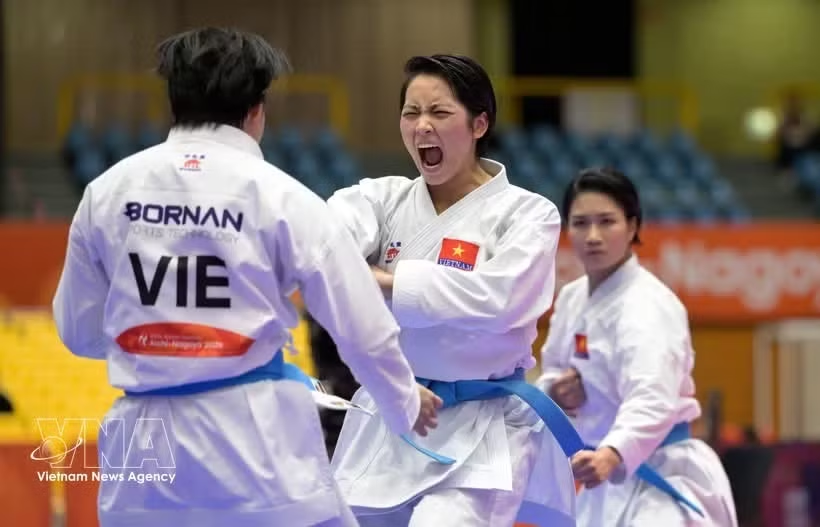
Vietnamese athletes compete against Iran in the women’s team kata final in karate at ASIAD 2026 on September 22. (Photo: Xinhua/VNA)

At ASIAD 20 in Aichi-Nagoya, Japan, Vietnam finished 20th overall with 25 medals, including three gold, three silver and 19 bronze. The result met the delegation’s target for overall ranking but fell short of its goal of winning at least four gold medals.

Vietnam’s gold medals came from karate and sepak takraw, reaffirming its strengths in sports with established traditions and focused investment. Meanwhile, bronze medals in canoeing and teqball showed potential in events where Vietnamese athletes are gaining international experience.

The results also highlight the need to assess competitiveness beyond medal counts, including the quality of coaching, nutrition, sports medicine, equipment, international competition experience and the ability to develop successors.

Decision No. 816/QD-TTg, issued by the Prime Minister on May 7, 2026, on developing key sports for ASIAD and Olympic Games for 2026-2045, focuses on developing athletes, improving training conditions and applying science and technology to enhance performance.
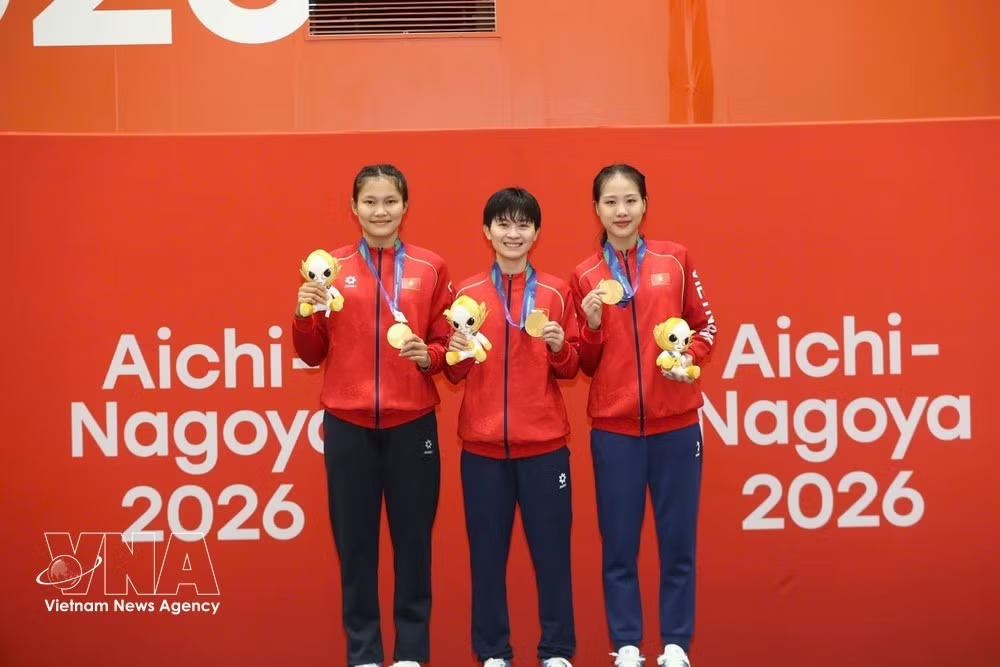
The Vietnamese women’s sepak takraw team win the second gold medal for the Vietnamese sports delegation at ASIAD 20 (Photo: VNA)

Nine key sports have been identified, including shooting, archery, weightlifting, cycling, rowing, athletics, swimming, karate and sepak takraw. Selecting sports with strong medal prospects provides a basis for concentrating resources amid limited funding and training conditions. However, the effectiveness of this orientation depends on identifying the right areas for investment, developing cyclical plans, and evaluating results against specific indicators.

The programme also calls for the selection and development of around 35-40 additional athletes and events with potential to compete for medals at the ASIAD and Olympics.

The Strategy for Development of Vietnam’s Physical Training and Sports through 2030, with a vision to 2045, aims to keep Vietnam among the top three at the Southeast Asian Games and the top 20 at the ASIAD by 2030. It targets five to seven gold medals at each ASIAD edition, as well as medals at the Olympic and Paralympic Games. By 2045, Vietnam aims to rank among the top 15 at the ASIAD and top 50 at the Olympics.

Maintaining achievements across multiple cycles requires a continuous system to identify and develop young athletes, from grassroots talent detection to specialised training, international competition and advancement to national teams. Athlete welfare, including nutrition, medical care and training conditions, also needs attention.

Science and technology should be further applied through performance data analysis, workload monitoring, fitness assessment and tailored nutrition, alongside qualified experts and coordination between training centres and research institutions.

After ASIAD 20, the sports sector needs to translate strategic goals into specific plans for each sport, event and athlete group, assessing not only medals but also performance at Asian and world championships, the development of young athletes and the strength of the next generation.

The Aichi-Nagoya results show that Vietnam has established strengths but still faces challenges in turning potential into continental-level achievements. To pursue higher goals at future ASIAD and Olympic Games, the country needs to focus resources on key areas, improve training quality and build a sustainable athlete development system./.
en.vietnamplus.vn

Other News

UNESCO expects Vietnam to lead cultural cooperation initiatives

UNESCO expects Vietnam to lead cultural cooperation initiatives

Lidia Brito, UNESCO Assistant Director-General for Priority Africa and External Relations, praised Vietnam’s contributions to education, science, culture and information, describing the 50-year partnership between Vietnam and UNESCO as a sustained and increasingly substantive journey.

UNESCO recognizes 'Pho Hien Steles' and 'Ma Nhai Inscriptions on Non Nuoc Mountain'

UNESCO recognizes 'Pho Hien Steles' and 'Ma Nhai Inscriptions on Non Nuoc Mountain'

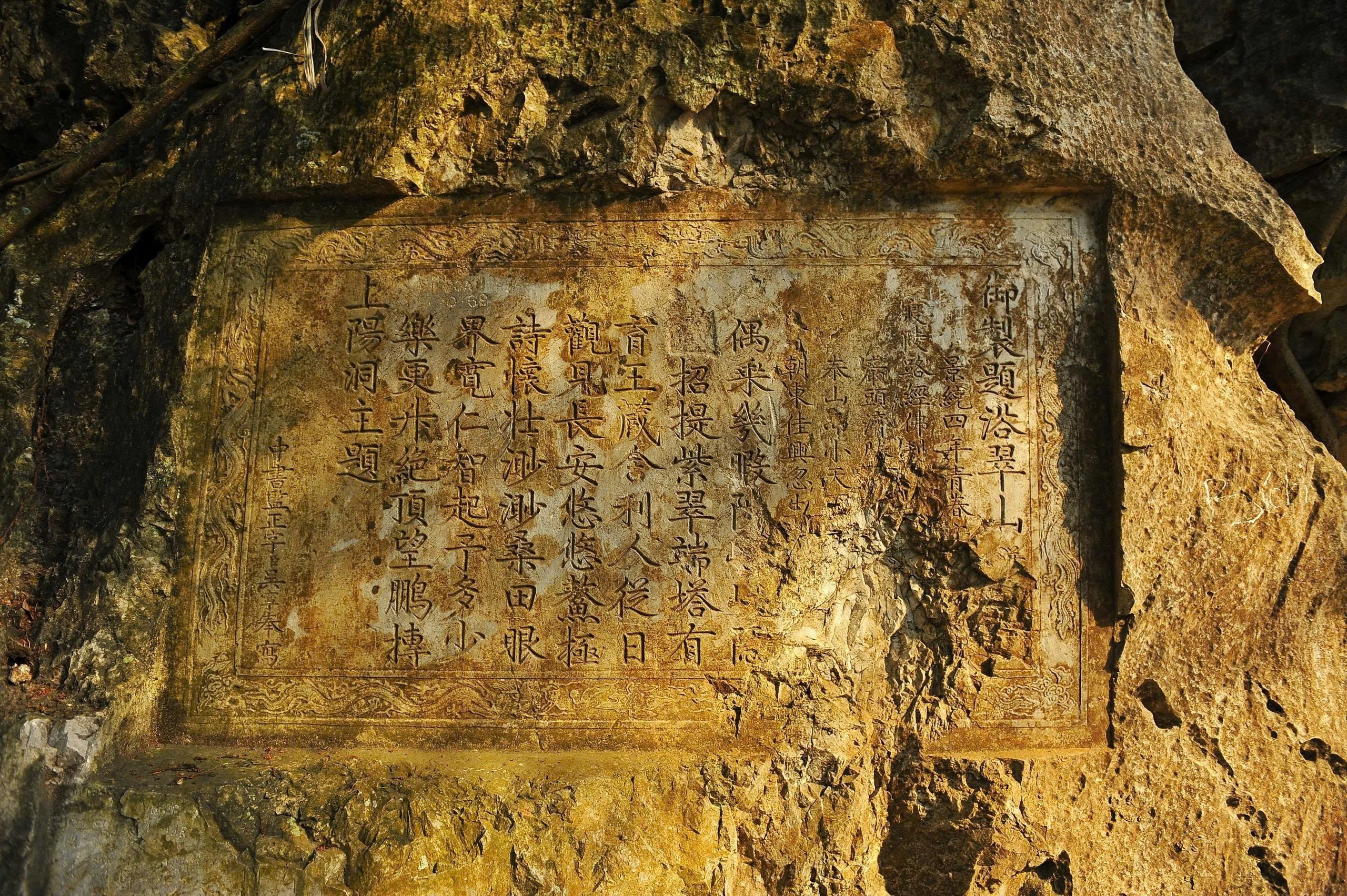
On the afternoon of November 5, at the 11th Session held in Jakarta, Indonesia, the Memory of the World Committee for Asia and the Pacific (MOWCAP) under UNESCO approved the inscription of the "Pho Hien Steles" from Hung Yen Province and the "Ma Nhai Inscriptions on Non Nuoc Mountain" from Ninh Binh Province into the Asia-Pacific Regional Register of Documentary Heritage.

Vietnamese community in the UK preserves cultural identity

Vietnamese community in the UK preserves cultural identity

In February 2027, Tet culture and the Vietnamese language are expected to feature for the first time as the main focus on the central stage of the annual Lunar New Year event at the National Maritime Museum in the UK, part of the Maritime Greenwich World Heritage Site. The 2027 London Ao Dai Week is also expected to go ahead.

Da Nang named among Lonely Planet's 'Best in Travel 2027' list

Da Nang named among Lonely Planet's 'Best in Travel 2027' list

Located in central Vietnam, Da Nang is “blessed with mountains, a long city beach and a cool vibe”. The Son Tra Peninsula offers peaceful natural surroundings and panoramic sea views, while the city’s beaches provide opportunities for swimming, relaxation and outdoor activities.

Foreign diplomats experience tea picking in Thai Nguyen

Foreign diplomats experience tea picking in Thai Nguyen

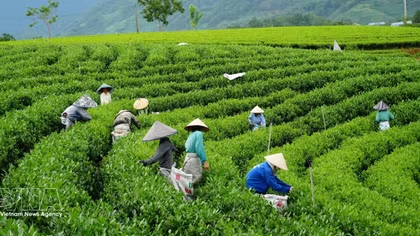
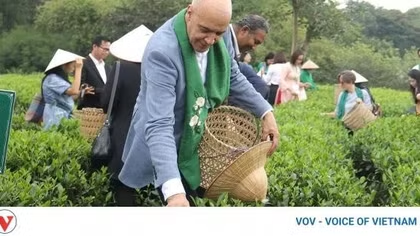
VOV.VN - Foreign diplomats in Vietnam have tried their hand at picking and pan-firing tea leaves in Vietnam’s northern Thai Nguyen province, gaining first-hand insight into the traditional craft behind the distinctive flavour of Tan Cuong tea.

Localities work to enrich vitality of Vietnamese culture

Localities work to enrich vitality of Vietnamese culture

Guided by the Politburo's Resolution No. 80-NQ/TW on Vietnamese cultural development, a range of cultural activities held nationwide over the past week have highlighted efforts to preserve and promote national identity while encouraging creativity and expanding public access to culture.

Hanoi to stage special arts programme for Vietnam Culture Day

Hanoi to stage special arts programme for Vietnam Culture Day

Through the programme, Hanoi seeks to recreate the continuous flow of Vietnamese culture from its origins to the present and future, connecting traditional heritage with contemporary creativity and combining traditional arts with modern stage technology to create a distinctive artistic space with intellectual depth and broad social resonance.

Ho Chi Minh City builds global tourism brand as megacity

Ho Chi Minh City builds global tourism brand as megacity

The city’s Resolution No. 62/2025/NQ-HDND on support policies for MICE tourism has provided an important framework for attracting business events through 2030. Ho Chi Minh City is targeting conferences, exhibitions and events in priority sectors such as finance, technology, innovation, logistics, healthcare, education, industry and the marine economy.