Mong women turn traditional craft into destination appeal

Alongside local cuisine, traditional attire, and folk games, linen weaving has become a crucial asset in enhancing Lung Tam commune's tourism appeal, creating new livelihood opportunities, and inspiring locals to preserve their heritage.

From flax fabrics woven by the skilled hands of Mong ethnic women, Lung Tam commune in the northern mountainous province of Tuyen Quang is forging a path to connect its traditional craft with immersive cultural experiences and product sales.

Alongside local cuisine, traditional attire, and folk games, linen weaving has become a crucial asset in enhancing the region's tourism appeal, creating new livelihood opportunities, and inspiring locals to preserve their heritage.

vnanet-mong-women-turn-traditional-craft-into-destination-appeal-5167.jpg
With their skillful hands and innovative thinking, Mong women have transformed traditional flax fiber into a "cultural ambassador". (Photo: VNA)

This transformation is tied to the persistent journey of artisan Vang Thi Mai, Director of the Lung Tam Linen Cooperative.

In 2001, she spearheaded the establishment of the cooperative with just over 10 members. In those early days, the concept of women working in a collective environment was unfamiliar to many Mong families. Mai patiently advocated, helping households recognise that when women secure employment and income, they directly lighten the economic burdens on their families.

From those humble beginnings, the cooperative has gradually introduced its linen products to domestic and international markets while consistently passing down skills to learners.

Mai’s journey demonstrates a practical approach to cultural preservation rooted in daily life – empowering skilled artisans to remain in their craft, ensuring products find buyers, and offering women greater financial independence.
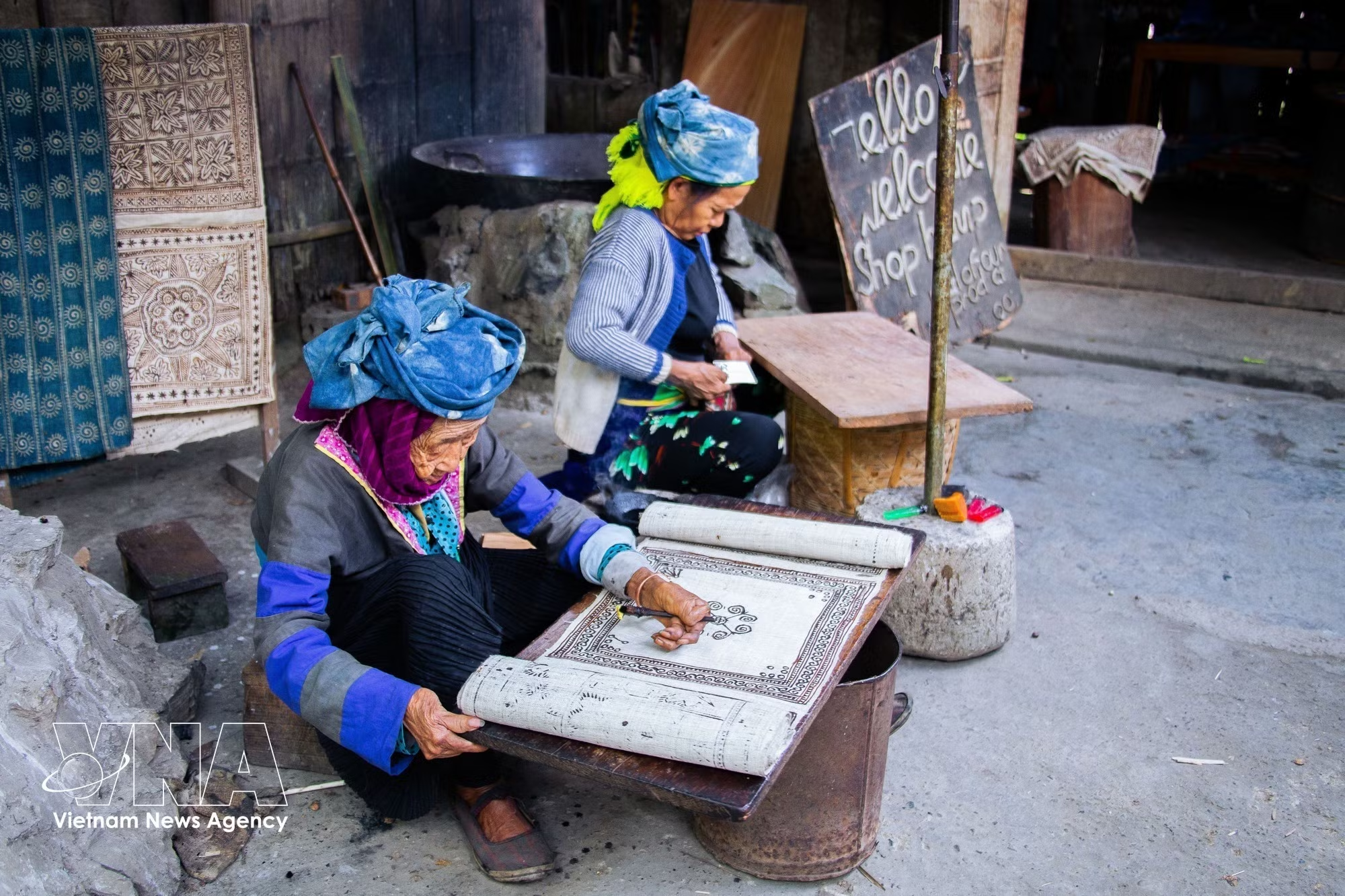
Mong women in Lung Tam applies beeswax patterns onto linen fabric before the indigo-dyeing process. (Photo: VNA)

She said sustaining the traditional flax-weaving craft requires a new generation of successors and viable distribution channels, adding that welcoming visitors to the craft village directly links heritage preservation with the community's livelihoods.

Through observing and trying each step, from weaving and beeswax painting to intricate embroidery, tourists can gain insight into the artisans' dedication and craftsmanship, and purchase these Mong cultural pieces as souvenirs, Mai noted.

The charm of Mong people’s linen weaving lies in a laborious process that demands immense patience and meticulous skill. Each handbag, wallet, scarf, or traditional garment bearing heritage patterns encapsulates both hard labour and cultural knowledge passed down through generations.

For travellers, watching artisans at work, learning about raw materials, and trying their hand at the craft under expert guidance adds profound depth to their trip.

When a product is presented alongside its story, crafting technique, and the symbolic meanings of its patterns, buyers better appreciate the value of what they take home. Simultaneously, artisans gain direct feedback on visitor preferences, helping them refine designs, storytelling, and product packaging.

Showcasing the step-by-step production process in the same space as product displays allows tourists to visualise the complete journey from flax plant to finished creation. Everyday skills once taken for granted by locals have become engaging cultural exchanges.

This environment also enables younger generations to connect with the craft, honour the toil of their mothers and grandmothers, and appreciate their ethnic roots.
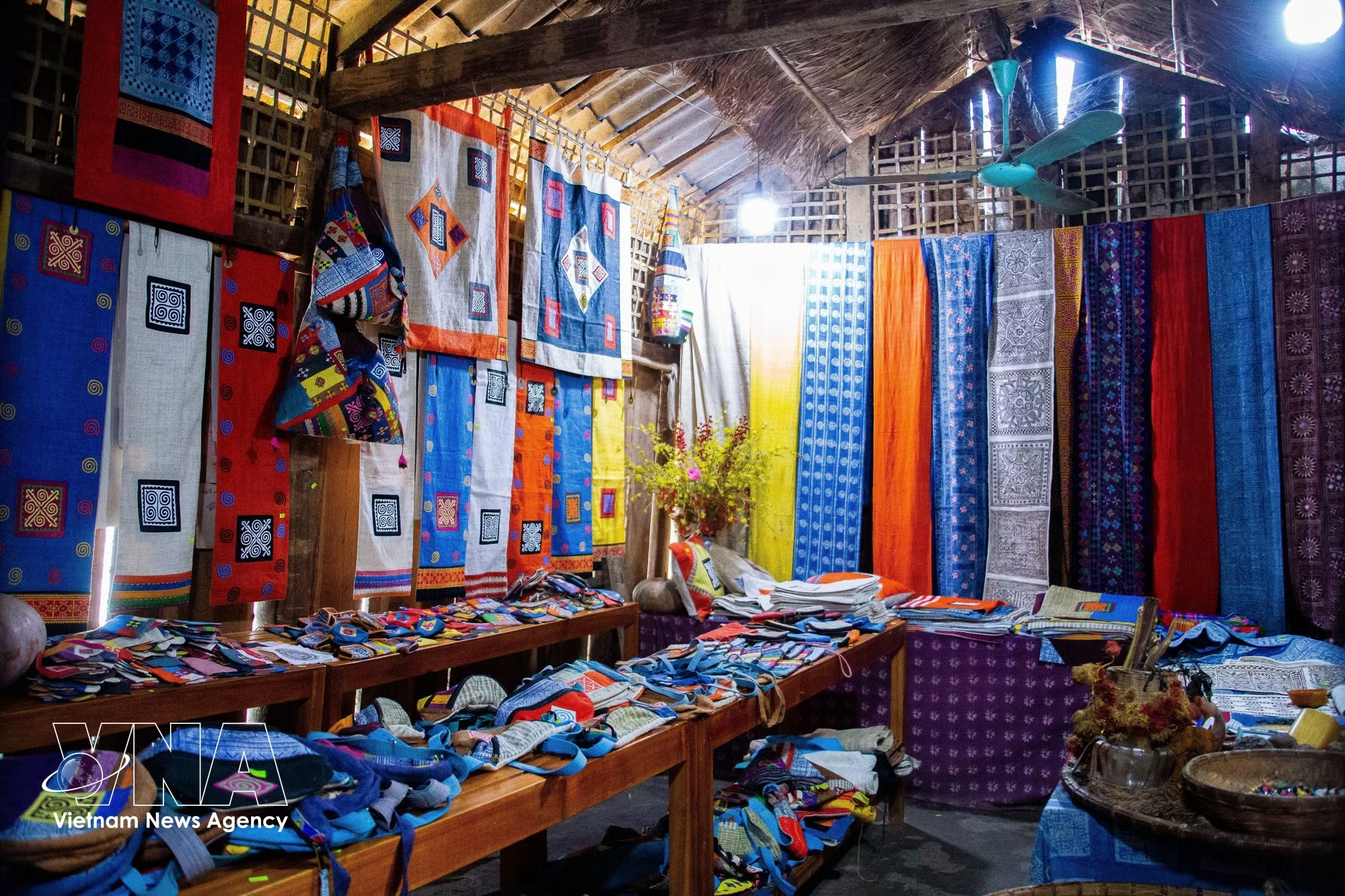
Handicrafts made from linen such as clothing, bags, wallets, and scarves are on display, helping to bring this traditional craft closer to visitors. (Photo: VNA)

Ha Van Chung, Secretary of the Party Committee and Chairman of the People’s Council of Lung Tam commune, emphasised that cultural preservation must begin by rekindling local pride and a sense of responsibility toward ancestral values.

Local authorities aim to create optimal conditions for artisans, craftspeople, and village communities to directly showcase their identity, while encouraging the youth to learn and carry on the tradition, he said, adding that when locals realise the tangible value of their heritage and see opportunities to improve their quality of life, cultural preservation gains sustainable momentum.

Beyond linen weaving, Lung Tam boasts a rich tapestry of culinary traditions, distinctive costumes, and vibrant community customs waiting to be explored.

The story of Mai and other Mong women illustrates that cultural values truly endure when tied to meaningful employment, steady income, and community empowerment. The growth of tourism opens new horizons for traditional crafts to shine, connects products with appreciation, and gives younger generations a compelling reason to keep their heritage alive.

en.vietnamplus.vn

Other News

Traditional attire reflects Cham Muslim cultural identity

Traditional attire reflects Cham Muslim cultural identity

The Cham, one of Vietnam’s 54 ethnic groups, have a rich cultural heritage, with Muslim communities concentrated in An Giang province and other southern localities. Their traditional clothing, distinguished by diverse styles, colours and fabrics, reflects Islamic beliefs, modesty and aesthetics while preserving a cultural identity passed down through generations.

UNESCO expects Vietnam to lead cultural cooperation initiatives

UNESCO expects Vietnam to lead cultural cooperation initiatives

Lidia Brito, UNESCO Assistant Director-General for Priority Africa and External Relations, praised Vietnam’s contributions to education, science, culture and information, describing the 50-year partnership between Vietnam and UNESCO as a sustained and increasingly substantive journey.

UNESCO recognizes 'Pho Hien Steles' and 'Ma Nhai Inscriptions on Non Nuoc Mountain'

UNESCO recognizes 'Pho Hien Steles' and 'Ma Nhai Inscriptions on Non Nuoc Mountain'

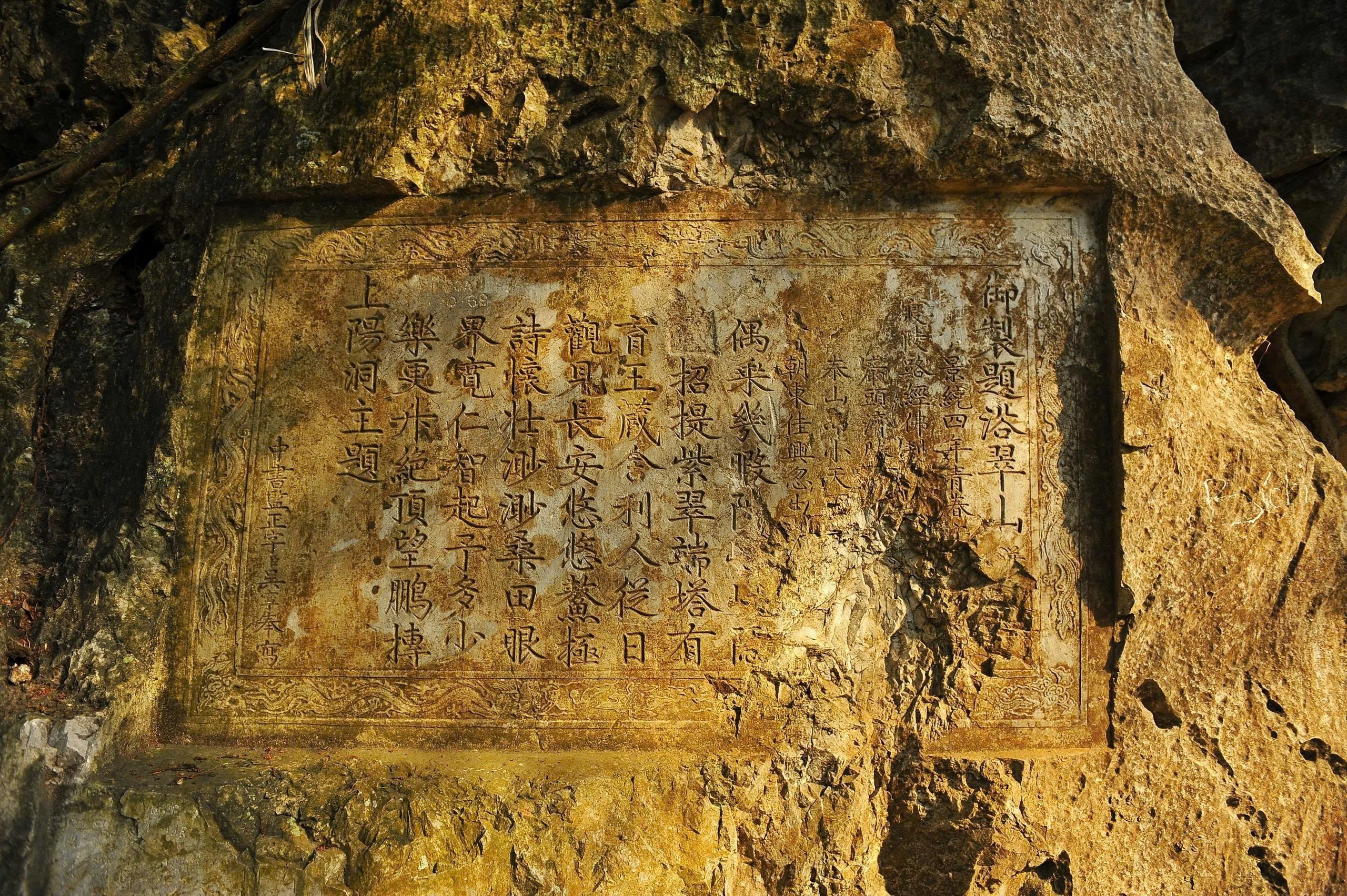
On the afternoon of November 5, at the 11th Session held in Jakarta, Indonesia, the Memory of the World Committee for Asia and the Pacific (MOWCAP) under UNESCO approved the inscription of the "Pho Hien Steles" from Hung Yen Province and the "Ma Nhai Inscriptions on Non Nuoc Mountain" from Ninh Binh Province into the Asia-Pacific Regional Register of Documentary Heritage.

Vietnamese community in the UK preserves cultural identity

Vietnamese community in the UK preserves cultural identity

In February 2027, Tet culture and the Vietnamese language are expected to feature for the first time as the main focus on the central stage of the annual Lunar New Year event at the National Maritime Museum in the UK, part of the Maritime Greenwich World Heritage Site. The 2027 London Ao Dai Week is also expected to go ahead.

Da Nang named among Lonely Planet's 'Best in Travel 2027' list

Da Nang named among Lonely Planet's 'Best in Travel 2027' list

Located in central Vietnam, Da Nang is “blessed with mountains, a long city beach and a cool vibe”. The Son Tra Peninsula offers peaceful natural surroundings and panoramic sea views, while the city’s beaches provide opportunities for swimming, relaxation and outdoor activities.

Foreign diplomats experience tea picking in Thai Nguyen

Foreign diplomats experience tea picking in Thai Nguyen

VOV.VN - Foreign diplomats in Vietnam have tried their hand at picking and pan-firing tea leaves in Vietnam’s northern Thai Nguyen province, gaining first-hand insight into the traditional craft behind the distinctive flavour of Tan Cuong tea.

Localities work to enrich vitality of Vietnamese culture

Localities work to enrich vitality of Vietnamese culture

Guided by the Politburo's Resolution No. 80-NQ/TW on Vietnamese cultural development, a range of cultural activities held nationwide over the past week have highlighted efforts to preserve and promote national identity while encouraging creativity and expanding public access to culture.

Hanoi to stage special arts programme for Vietnam Culture Day

Hanoi to stage special arts programme for Vietnam Culture Day

Through the programme, Hanoi seeks to recreate the continuous flow of Vietnamese culture from its origins to the present and future, connecting traditional heritage with contemporary creativity and combining traditional arts with modern stage technology to create a distinctive artistic space with intellectual depth and broad social resonance.

Ho Chi Minh City builds global tourism brand as megacity

Ho Chi Minh City builds global tourism brand as megacity

The city’s Resolution No. 62/2025/NQ-HDND on support policies for MICE tourism has provided an important framework for attracting business events through 2030. Ho Chi Minh City is targeting conferences, exhibitions and events in priority sectors such as finance, technology, innovation, logistics, healthcare, education, industry and the marine economy.