Hanoi (VNA) – Spanning 950 years since its establishment, Van Mieu – Quoc Tu Giam (Temple of Literature – Imperial Academy) in Hanoi preserves crucial milestones of Vietnam’s educational and cultural heritage, from the traditions of studiousness and respect for teachers to the philosophy of valuing talent.

These enduring values continue to inspire contemporary calls for educational reform and the development of a capable, socially responsible intellectual workforce.
Upholding the ideology of meritocracy
Assoc. Prof. Dr Vo Xuan Vinh, Director of the Institute of History under the Vietnam Academy of Social Sciences, said Quoc Tu Giam was founded in 1076 under the Ly Dynasty. It stood as Vietnam's first public university and the highest-ranking educational centre of the feudal era, playing an important role in training intellectuals who achieved high academic honours to serve in state administration, education, and culture.
Historical records in “Dai Viet su ky toan thu” (Complete Annals of Dai Viet) note that in April 1076, King Ly Nhan Tong ordered the selection of officials and literate individuals for Quoc Tu Giam. “Kham dinh Viet su thong giam cuong muc” (The Imperially Ordered Annotated Text Completely Reflecting Vietnamese History) also details the academy's establishment and recruitment of educated scholars.
Throughout the Ly, Tran, Le, and Nguyen dynasties, Quoc Tu Giam endured hand-in-hand with the evolution of Vietnamese education and academic examination system. Many historical figures contributed significantly to the nation's scholarship and culture.
Talking about the traditions of studiousness, respect for educators, and meritocracy, Vinh emphasised that these values are cultivated through family upbringing, dynastic educational policies, and the exemplary deeds of historical figures.
The selection and employment of talent were traditionally conducted through the imperial examination system. Over successive eras, learning and testing opportunities were progressively expanded, enabling capable individuals to participate in national governance, he noted.
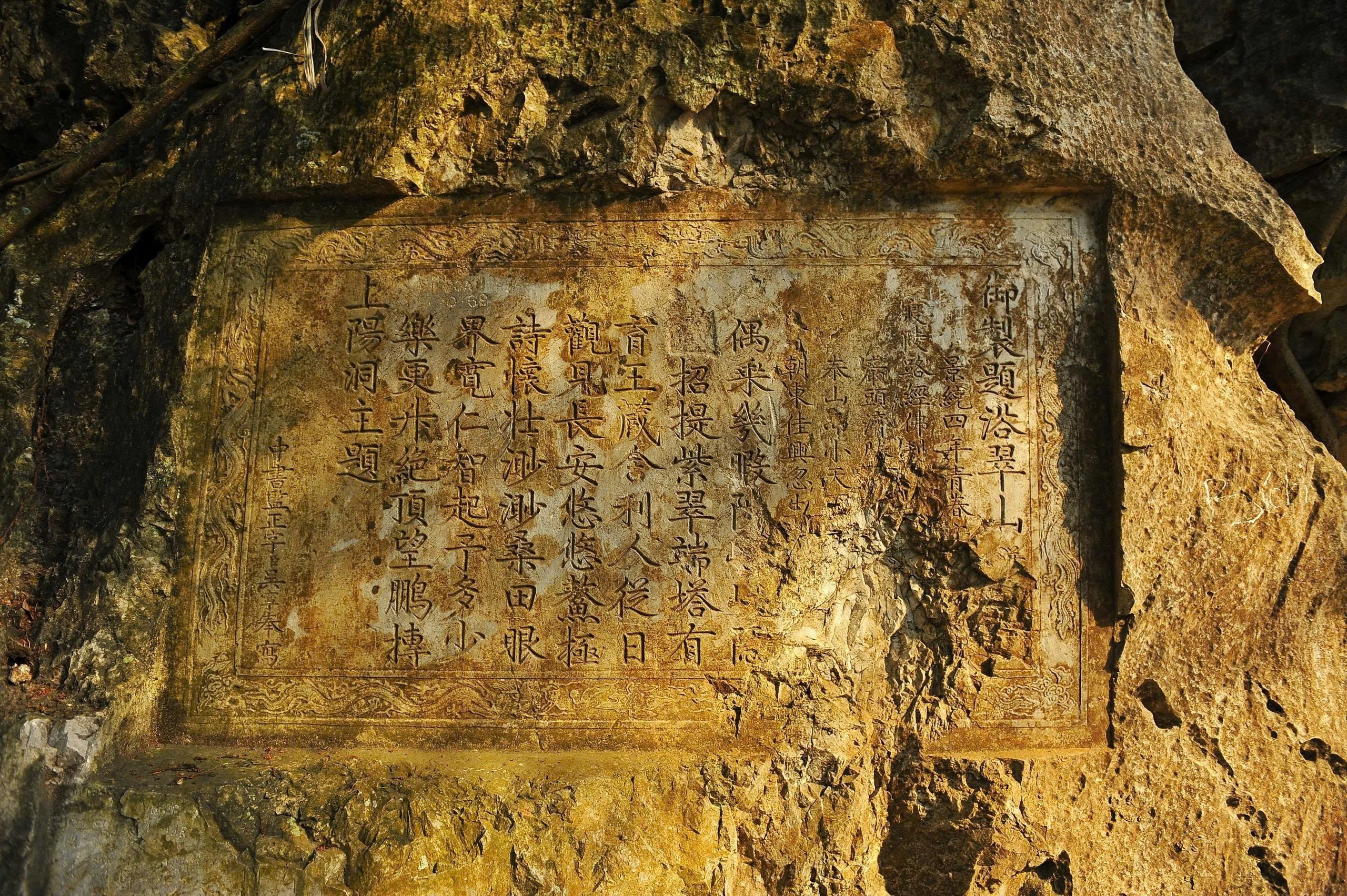
The philosophy of valuing talent is vividly encapsulated in the stele inscription dedicated to the scholars who passed the imperial examination in 1442, authored by Than Nhan Trung. Erected in 1484 under King Le Thanh Tong, the stele honours successful candidates, encourages academic pursuits, and reminds accomplished individuals to uphold integrity, moral standing, and public service. They also serve as ethical guidelines for officials, incentivise moral virtue, and provide posterity with criteria to evaluate scholars across generations.
The collection of 82 stone steles at Van Mieu – Quoc Tu Giam was inscribed on UNESCO’s Memory of the World Asia-Pacific Regional Register in 2010 and the Memory of the World International Register in 2011. They earned officially recognition as national treasures on January 14, 2015.
Vinh said this tradition of learning is currently being sustained through nationwide movements promoting a learning society, lifelong learning, and education promotion networks spanning from the central government down to clans and rural villages.
That students and examinees visit Van Mieu – Quoc Tu Giam prior to examinations to pay homage to predecessors further reflects this living heritage, he said, adding that the stellar achievements of Vietnamese students at international Olympiads in mathematics, physics, and informatics also serve as clear manifestations of the relentless pursuit of knowledge.
Drawing from the tradition of honouring talent, the scholar argued that education must undergo comprehensive and fundamental reforms – shifting away from rote memorisation and exam-oriented learning toward the cultivation of creative capabilities and critical thinking.
Expanding access to digital learning resources and libraries is critical to empower learners to proactively acquire knowledge. Alongside educational reforms, policies governing talent attraction, remuneration, and recruitment must be grounded in genuine competency and substantive contributions.
Meanwhile, a transparent and equitable working environment is essential to allow capable professionals to maximise their potential, propose innovations, and implement new ideas, thereby helping to curb brain drain.
In turn, youth must proactively study, master technology, maintain a global mindset, and tie their education to the responsibility of serving the nation, according to Vinh.
From educational heritage to the responsibilities of intellectuals
Prof. Dr Pham Hong Tung, Chairman of the Science and Training Council at the Institute of Vietnamese Studies and Development Science under Vietnam National University, Hanoi, noted that the legacy of Van Mieu – Quoc Tu Giam highlights a deep-seated respect for learning – treating education as an investment in the future – and an open-minded studiousness ready to absorb humanity's finest intellectual achievements.
Discussing meritocracy, he observed that this philosophy extends beyond the examination system into folklore and community life. Legends such as Saint Giong, Son Tinh – Thuy Tinh, and Lang Lieu, alongside traditional village contests, demonstrate that Vietnamese society has long celebrated talent, wisdom, and craftsmanship.
Beyond formal exams, previous generations also knew how to discover and employ talent outside traditional academic pathways.
In 1428, after expelling the Ming invaders, King Le Loi issued an imperial edict appealing for talented individuals from every corner of the realm to assist in national reconstruction. In modern times, President Ho Chi Minh carried forward this ethos through his seminal article "Finding persons of virtue and talent".
Drawing from the values of the Quoc Tu Giam heritage, Tung outlined three lessons for national development today.
First, building a nation of time-honoured culture must go hand in hand with robust institutions and a talented workforce. It requires institutionalised regulations and standards regarding law, ethics, and conduct, supported by gifted individuals who apply their intellect to drive national development and elevate the country's global standing.
The second is to awaken a sense of commitment among intellectuals, he went on, elaborating that capable and educated individuals must deploy their knowledge to serve the country. In an era of globalisation, state-sponsored talent development must target national development and be linked with the recipients’ responsibility toward their homeland.
The third is to connect knowledge with practice. Tung stressed that contemporary scientific research must align with realities. In particular, social sciences and humanities should actively engage in policy consultation to resolve developmental challenges. Meanwhile, intellectuals should be evaluated not merely by academic titles or degrees, but primarily by their research capability and tangible contributions to society, thereby fulfilling their duty to serve the people and advance the nation./.