Vietnam has an opportunity to transform coastal tourism from a volume-driven model into a high-value, experience-based economy by turning its natural landscapes and marine resources into distinctive products that generate greater economic returns and sustainable livelihoods for local communities.
In 2025, Vietnam welcomed nearly 21.2 million international visitors, up 20.4% year-on-year and surpassing the pre-pandemic level in 2019. Domestic tourist arrivals reached around 137 million, while tourism revenue totalled approximately 1 quadrillion VND (38.7 billion USD).
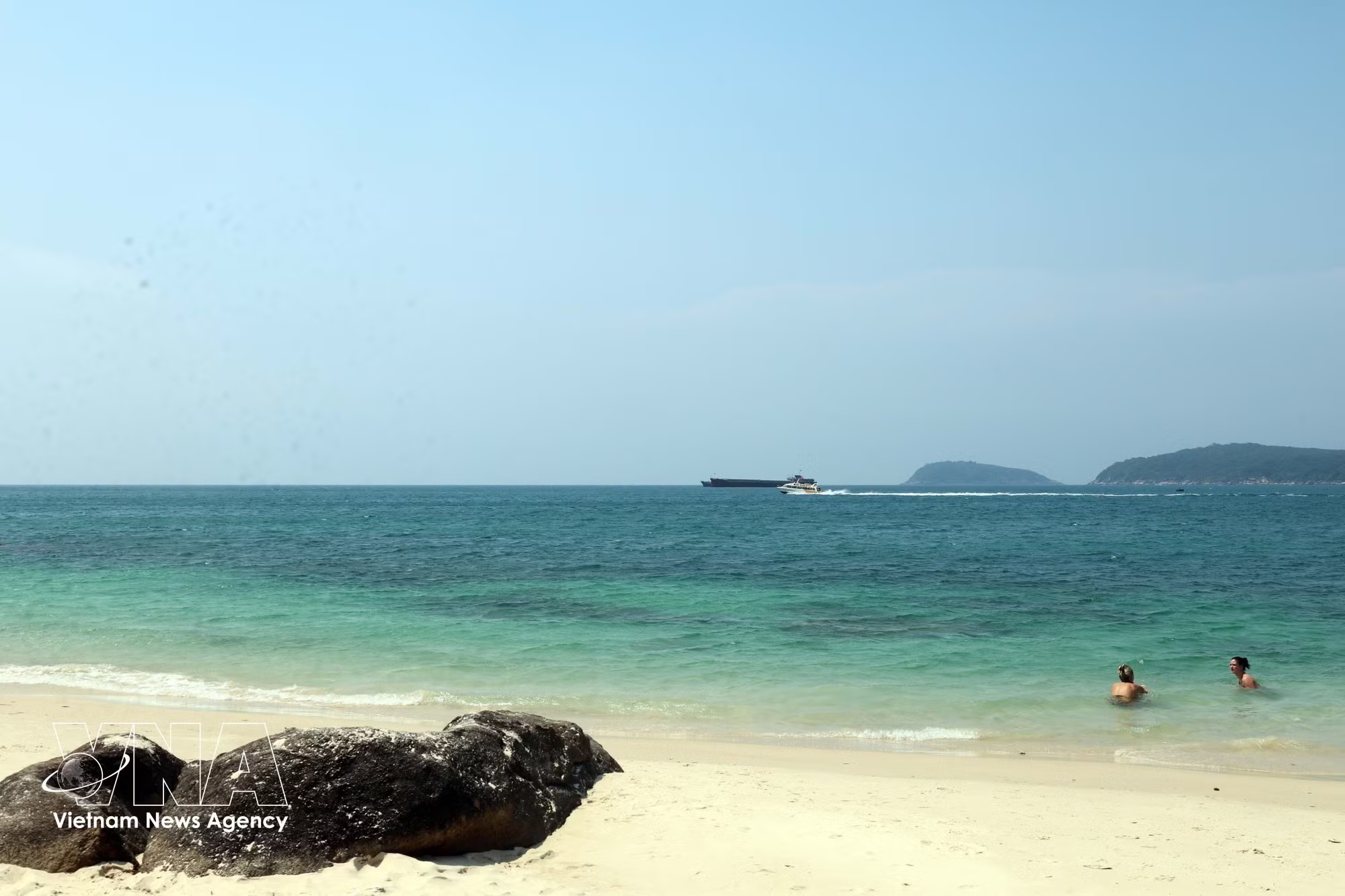
The stunning white-sand beaches on Da Nang city's Cu Lao Cham Island attract tourists (Photo: VNA)
While these figures reflect the country's growing appeal, they also raise a key question: should Vietnam continue competing on visitor numbers or focus on the value generated by each tourist?
The challenge is particularly evident in coastal destinations, where beautiful beaches attract visitors but do not necessarily encourage longer stays. Expanding hotel capacity alone cannot guarantee higher returns without attractive nightlife, convenient transport, distinctive experiences and a healthy environment, according to eMagazine VnEconomy.
Politburo Resolution No. 26-NQ/TW, dated August 22, 2026, on developing tourism into a spearhead economic sector in the new era, calls for a shift from quantity to quality, with cultural identity and experience quality serving as competitive advantages.
Turning marine assets into value
According to the World Travel & Tourism Council (WTTC), marine and coastal tourism contributed around 1.5 trillion USD directly to global GDP in 2023 and supported 52 million jobs, accounting for approximately half of global tourism expenditure.
The sector extends beyond accommodation and transport to include cuisine, retail, entertainment, water sports, wellness, cultural industries and digital services. Competitiveness therefore depends not only on natural attractions but also on the diversity and quality of experiences.
Vietnam needs to complement visitor numbers with indicators such as length of stay, spending, repeat visits and the share of revenue retained by local communities. Fewer tourists staying longer and using higher-value services could generate greater benefits than mass tourism that strains infrastructure and the environment.
The country received around 273,900 international visitors by sea in 2025, accounting for 1.3% of total foreign arrivals. This highlights potential for cruise tourism and marine experiences, provided Vietnam develops passenger ports, marinas, supporting services and appealing shore excursions.
Experiences rooted in marine culture
Many coastal destinations still rely heavily on beach holidays and swimming. As these offerings become increasingly similar, destinations need distinctive experiences that are difficult to replicate.
Potential products include cruises, yachting, diving, marine wildlife observation, island exploration, ecotourism, wellness services, seafood cuisine, festivals, cultural performances and nightlife.
Vietnam's maritime heritage offers a valuable foundation. Fishing villages, traditional boatbuilding, fish sauce production, seafood processing, fishing festivals and coastal customs can enrich visitor experiences and strengthen destination brands.
Tourists could join fishermen hauling nets, learn to make fish sauce, prepare seafood, travel in traditional basket boats or participate in coral reef restoration and mangrove planting. Such activities would turn local traditions into tourism products while creating opportunities for community participation and income generation.
Protecting the environment
Coastal tourism's long-term competitiveness depends on destinations' ecological carrying capacity. Overcrowding, marine pollution, coral reef degradation, freshwater shortages and untreated wastewater can undermine the attractions that draw visitors.
WTTC research highlights the sector's vulnerability to climate change and the need for investment in emissions reduction and adaptation, estimated at around 65 billion USD annually for marine and coastal tourism.
Environmental protection should therefore be integrated into tourism business models. Resolution No. 26 also highlights the use of artificial intelligence, the Internet of Things and sensor systems to monitor energy and water consumption, environmental quality and destination carrying capacity.
A strategy towards 2045
Vietnam should develop interconnected coastal tourism clusters rather than isolated destinations. Northern routes could link Ha Long, Cat Ba, Hai Phong, Van Don and Yen Tu, while central Vietnam could connect Hue, Da Nang, Hoi An, Cu Lao Cham and Ly Son.
Investment should prioritise passenger ports, marinas and supporting infrastructure linking visitors with accommodation, dining, shopping, sports and cultural activities. Data-driven systems could help manage visitor flows, transport, water resources and waste.
Green infrastructure, renewable energy, water conservation, wastewater treatment and reduced use of single-use plastics will become increasingly important. Workforce development and stronger local participation are also essential to ensure communities benefit from tourism growth.
By 2045, Vietnam aims to become one of Asia's leading destinations for diverse, high-quality, environmentally sustainable and culturally distinctive marine experiences.
Achieving this ambition requires integrating coastal tourism into the broader marine economy, linking it with ports, logistics, coastal cities, creative industries, science and technology, the digital economy and marine conservation.
The goal is to move beyond attracting visitors towards creating lasting value, turning Vietnam's coastline, islands and marine ecosystems into sources of sustainable economic competitiveness.