Deputy Prime Minister Pham Thi Thanh Tra has signed Decision No. 2033/QD-TTg approving the national strategy on child development for 2026–2035, with a vision to 2045, setting targets for children’s comprehensive development, protection and equitable access to essential services.
The strategy aims to ensure that by 2030, all children live in safe, healthy and happy environments, enjoy their full rights and have equitable access to quality healthcare, education, protection and other services. It also seeks to promote their comprehensive development, life skills, digital skills and creativity, particularly among disadvantaged children and those in difficult areas, helping improve the future workforce and support sustainable national development and international integration.

By 2045, all Vietnamese children are set to fully enjoy their rights and gain equitable access to high-quality healthcare, education, culture, sports, social welfare and other essential services. They are also expected to develop comprehensively, adapt to digital society and international integration, and contribute to national prosperity and happiness as a high-quality workforce.
Childhood vaccination coverage to exceed 95% by 2030
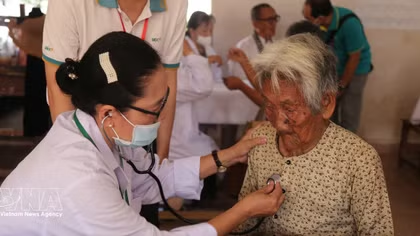
To ensure safe births, good health, nutrition and physical development, the strategy targets an infant mortality rate of below 10 deaths per 1,000 live births by 2030 and below eight by 2035. Vaccination coverage among children under the expanded immunisation programme is expected to exceed 95% by 2030 and remain above that level through 2035.
To promote equitable access to quality education and develop knowledge, qualities, skills and adaptability in the digital age, the strategy aims to raise preschool enrolment to 97% by 2030 and maintain at least that rate through 2035. By 2035, 95% of students are expected to receive life-skills and digital-skills training.
Child abuse and sexual abuse rates to fall by at least 5% annually
To protect children from violence, abuse, exploitation, accidents and injuries, and provide support for those in special circumstances, the strategy targets an annual reduction of at least 5% in child violence and sexual abuse through 2030, followed by a 3% annual decline during 2031–2035.
The child labour rate among those aged 5–17 is to fall to below 1.1% by 2030 and remain below that level through 2035. Child deaths from accidents and injuries are targeted to decline to fewer than 12 per 100,000 children by 2030 and fewer than 11 by 2035.
All children in special circumstances are to receive appropriate support, intervention and services meeting their basic needs by 2030, with this coverage maintained through 2035.
The strategy also seeks to expand access to cultural, sporting, recreational and entertainment activities, with 85% of communes, wards and special zones expected to have facilities for children's activities by 2030, rising to 90% by 2035.
All commune-level administrative units to assign personnel to child-related work by 2027
The strategy aims to strengthen family capacity and child protection networks, improve intersectoral coordination and accelerate digital transformation.
By 2030, systems for collecting, standardising, updating, connecting and sharing child-related data will be completed, covering abused children, those at risk of violence, exploitation or abandonment, and children in special circumstances, in line with the national programme on child protection and child labour prevention and reduction for 2026–2030.
The proportion of parents and caregivers equipped with parenting knowledge and skills to support children's comprehensive development at different life stages is targeted at 85% by 2030 and 95% by 2035.
By 2027, all communes, wards and special zones must assign personnel to handle child affairs and establish channels for receiving, connecting and handling child protection information, ensuring access to the National Child Protection Hotline 111 and emergency response mechanisms through 2035.
To achieve these goals, the strategy outlines key tasks and solutions, focusing on improving policies and governance; strengthening healthcare, nutrition and physical development; enhancing education quality and future workforce skills; protecting children and ensuring safe, healthy and friendly environments; promoting children's participation in cultural, sporting and recreational activities; advancing digital transformation and child-related data management, monitoring and evaluation; raising awareness and skills regarding children's rights and comprehensive development; and mobilising lawful resources and expanding international cooperation.