The central province of Nghe An is focusing on addressing challenges in fisheries surveillance infrastructure and vessels to increase its capacity to monitor and control fishing activities and combat illegal, unreported, and unregulated (IUU) fishing.
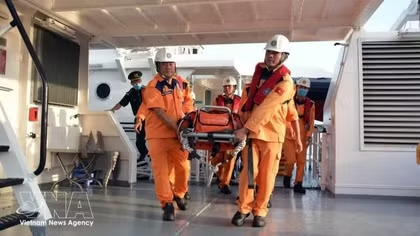
Nghe An’s fisheries surveillance force currently has only two patrol vessels and two workboats, many of which have been in service for 20-30 years. Deteriorating machinery and navigation equipment, with limited operating speeds, are hampering mobility, offshore operations, and safety in assigned duties.
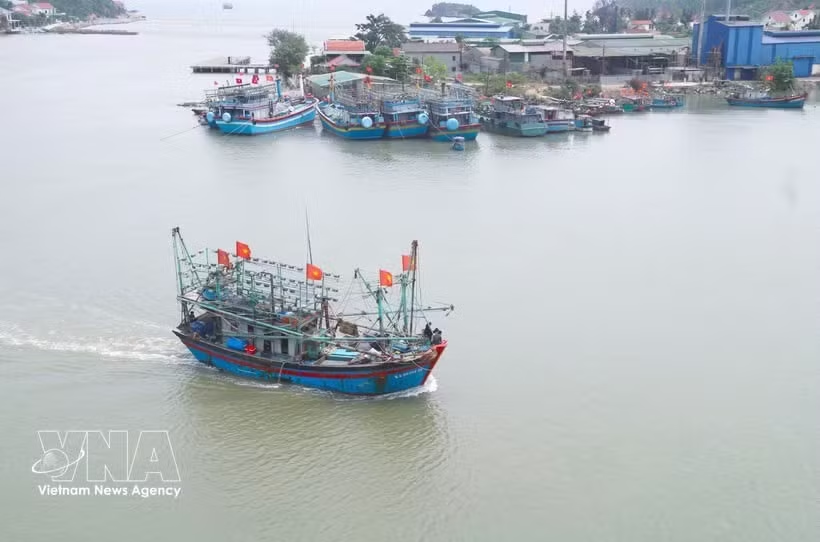
According to Tran Chau Thanh, head of the Fisheries Surveillance Division under the Nghe An Fisheries and Fisheries Surveillance Sub-Department, lacking proper equipment isn’t just a technical problem. The vessel’s capabilities play a big role in detecting targets, communicating with other ships, receiving information from shore, and working with other forces.
This situation highlights a growing speed gap between fisheries patrol boats and fishing vessels. When vessels being inspected can travel faster than those tasked with enforcement, it can limit authorities’ ability to maintain effective control, particularly when a rapid response is required at sea.
Another pressing issue is the lack of a dedicated mooring facility in Nghe An for fisheries surveillance vessels. The vessels are currently moored at fishing ports, where the heavy flow of fishing boats increases the risk of collisions and damage.
Repairing individual components helps keep them operational in the short term but does not fundamentally address the age of the vessels or the need for integrated equipment. As vessels age, maintenance and repair costs rise, while the risk of unexpected breakdowns during operations remains.
Thanh said a comprehensive assessment of each vessel’s condition, covering the hull, main engines, generators, communications systems, radar, positioning systems, and other navigation equipment, is necessary.
For equipment still in good condition, maintenance should follow a planned schedule, focusing on thorough repairs instead of waiting for breakdowns. Deteriorated vessels should be replaced, and the fisheries surveillance fleet should be upgraded to meet operational needs in the new situation.
Developing specific regulations on technical standards, service life, maintenance and repair requirements for locally managed fisheries surveillance vessels and workboats would provide a basis for local authorities to take a more proactive approach to asset management, investment planning and budget allocation.
In response, the Nghe An Fisheries and Fisheries Surveillance Sub-Department has drawn up a plan to replace its vessels to meet operational requirements and ensure the safety of fisheries surveillance personnel performing duties at sea.