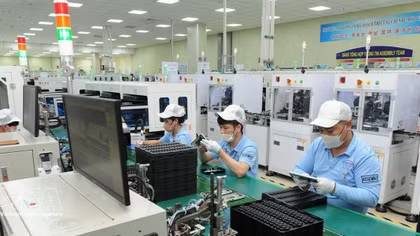
Hanoi (VNA) – Resolution 10-NQ/TW of the Politburo on developing the foreign-invested economic sector sets out the goal of attracting next-generation FDI, with high technology, innovation and infrastructure as key pillars. In the first eight months of 2026, realised FDI reached 17.25 billion USD, the highest level for the same period in five years, signalling that Vietnam’s appeal to foreign investors is increasingly underpinned by new competitive advantages.
Policy, infrastructure strengthen Vietnam's appeal
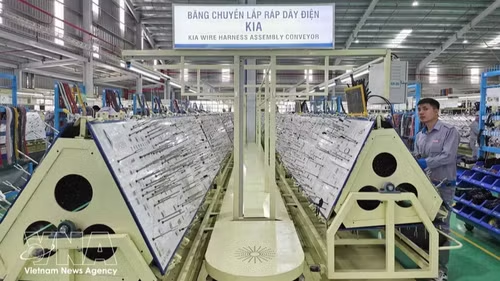
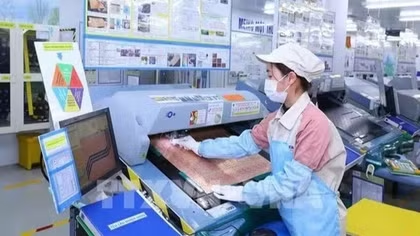
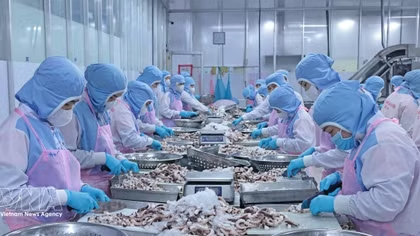
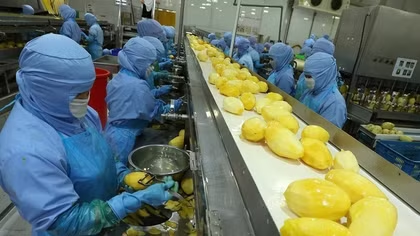
According to the National Statistics Office, realised FDI in the first eight months of 2026 rose 12% year-on-year. Manufacturing and processing continued to dominate, attracting 14.24 billion USD, or 82.6% of the total.
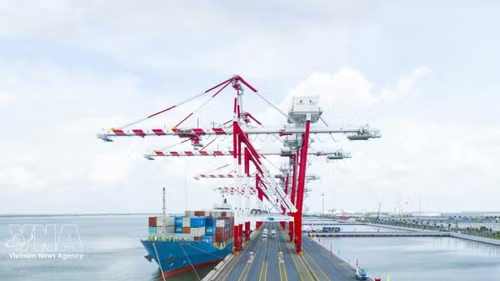
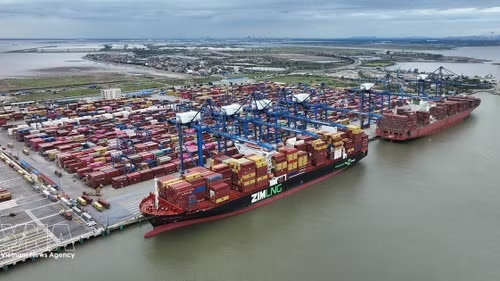
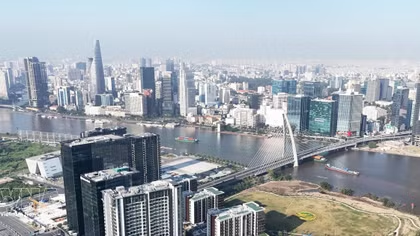
Alongside institutional improvements, Vietnam is developing transport and logistics infrastructure to strengthen inter-regional connectivity.
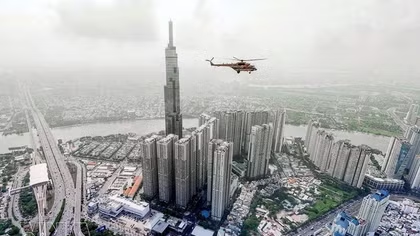
In the south, Ho Chi Minh City is collecting public feedback on its master plan for 2025-2050 with a 100-year vision. The plan identifies transport as a key pillar for expanding urban space and strengthening regional links, with expressways, ring roads, railways, seaports, inland ports and logistics centres connected with industrial parks, airports and major trade hubs.
In the north, Dong Anh, Me Linh and Soc Son are being positioned as growth poles for international integration, with services, trade, logistics and high-tech industries developing around Noi Bai International Airport. Key metro lines, Ring Road 4 and plans to expand and upgrade Noi Bai are expected to strengthen links between production centres, logistics hubs and commercial centres.
For manufacturers, transport infrastructure affects not only access to factories but also the time required to move raw materials and finished products and, ultimately, logistics costs. Improving inter-regional connectivity is therefore becoming an increasingly important competitive factor for localities seeking to attract FDI.
Industrial real estate evolves with new investment flows
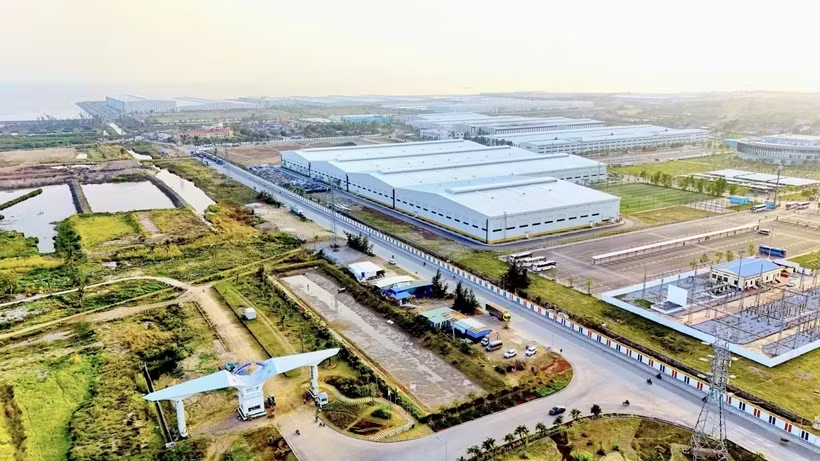
Improvements in policy and infrastructure are unfolding alongside an expansion of industrial real estate supply.
In the north, the cumulative industrial land stock exceeded 25,200 hectares by the second quarter of 2026, up 15.7% year-on-year. More than 1,200 hectares of new supply was added in the first six months from six industrial parks that began construction in Hai Phong, Bac Ninh and Ninh Binh.
Ready-built factory supply reached about 5.8 million sq.m, up 16.9% year-on-year, while ready-built warehouses stood at around 3.6 million sq.m. Bac Ninh, Hai Phong and Hung Yen led in supply.
In the south, no new industrial land projects were recorded in the second quarter as Ho Chi Minh City, Dong Nai and Tay Ninh were completing planning and investment procedures following administrative boundary adjustments. Nevertheless, the total industrial land stock rose 4.6% year-on-year, supported by projects already in operation.
Ready-built warehouse supply increased by another 56,000 sq.m in Tay Ninh, bringing the region’s total to about 6.85 million sq.m.
As land availability in some key markets becomes increasingly constrained, multi-storey factories and warehouses are emerging as a way to improve land-use efficiency.
According to Nguyen Phuoc Thuan, Director of Industrial and Office Leasing at Cushman & Wakefield Vietnam, the trend reflects a shift from attracting capital on the basis of cost advantages towards projects with higher technological content, greater added value and more sophisticated operational requirements.
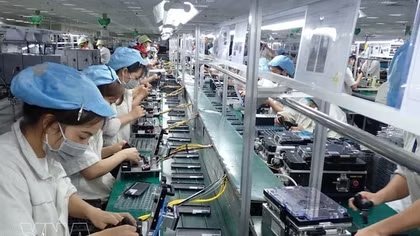
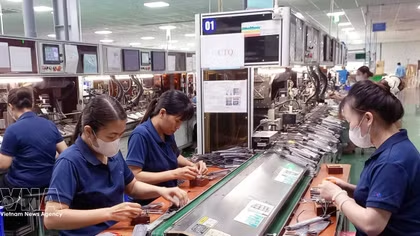
Multi-storey factories are particularly suited to electronics, semiconductors, medical equipment and research and development, while multi-storey warehouses can meet growing demand for logistics, e-commerce and cold storage near consumer centres or major transport hubs.
In the long term, the development of multi-storey warehouses and factories will not only address land constraints but also help improve the quality of Vietnam’s industrial supply, Thuan said.
Rather than simply expanding existing industrial parks, many of which have been operating for 20-30 years, new supply is increasingly emerging in localities positioned to benefit from new infrastructure and investment flows. This points to considerable room for further growth in Vietnam’s industrial real estate market.
However, multi-storey facilities also require higher design and operational standards, including greater floor-loading capacity, adequate clear height, vertical goods-handling systems, large column spans to optimise floor space, and well-integrated supporting infrastructure.
As FDI increasingly shifts towards electronics, semiconductors and other high-tech industries, industrial real estate is no longer competing simply on land availability or rental prices. The quality of factories, logistics connectivity, technical infrastructure and the policy environment are becoming increasingly decisive in investors’ site-selection decisions.
From policy and infrastructure to industrial real estate, Vietnam’s FDI advantages are broadening towards a more integrated production ecosystem, offering investors a stronger combination of conditions for high-value, technology-intensive and long-term projects./.