Vietnamese culture connects generations in Canada

Beyond language skills, children learn about Vietnamese history, stories of filial devotion and national heroes, and the importance of respecting parents and teachers. Weekend classes begin with the national anthem, while festivals and traditional holidays offer opportunities to make greeting cards, prepare traditional cakes and learn to wrap 'banh chung' (square sticky rice cakes).

In response to the Vietnam Culture – Great National Unity Week from November 18–24, initiatives by the Canada Vietnam Cultural & Educational Council (CVCEC) demonstrate how preserving cultural identity helps strengthen community bonds and nurture affection for the homeland.

Speaking to a Vietnam News Agency correspondent in Canada, CVCEC Chairwoman Phan Thi Quynh Trang said the Vietnamese language, filial piety, family values and the tradition of remembering one's roots are key elements connecting generations of Vietnamese people in Canada. Although grandparents, parents and children may speak different languages in daily life, they share common values in family relationships, conduct and cultural heritage.
1.jpg
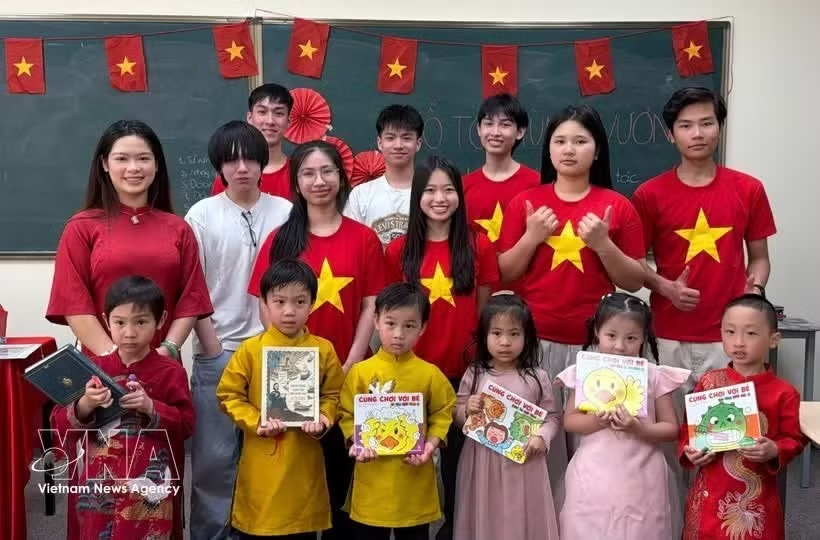
The Viet Youth Readiness Hub of the Canada Vietnam Council for Culture & Education (CVCEC) during a Vietnamese language lesson for Vietnamese-Canadian children in Toronto, Canada. (Photo: VNA)

She cited Vietnamese language classes on Prince Edward Island (PEI), eastern Canada, where children have few opportunities to use their mother tongue outside their families. Initiated by teacher Hoang Minh Ha, with contributions from teachers Nguyen Thi Thanh Binh and Ngo Nguyen Ngoc Dieu Anh, the programme has expanded to three classes with 30 students.

Beyond language skills, children learn about Vietnamese history, stories of filial devotion and national heroes, and the importance of respecting parents and teachers. Weekend classes begin with the national anthem, while festivals and traditional holidays offer opportunities to make greeting cards, prepare traditional cakes and learn to wrap 'banh chung' (square sticky rice cakes).

These activities bring cultural values into children's everyday lives, allowing them to better understand traditions familiar to their grandparents and parents.

At the closing ceremony in June, parents and students honoured the teachers and recognised students' achievements before joining a food festival organised by the parents' committee, highlighting the importance of cooperation between families and classrooms in preserving cultural heritage.

Trang also stressed the need to empower young people by entrusting them with meaningful responsibilities, enabling them to become storytellers of Vietnam rather than merely listeners.

The Viet Youth Readiness Hub (VYRH) reflects this approach. In April, its members independently organised a Hung Kings' Commemoration Day celebration, while launching a Vietnamese-language book collection and hybrid classes for young children.

During Asian Heritage Month in May, VYRH members joined CVCEC in introducing the traditional five-panel 'ao ngu than' tunic to Toronto's mayor. They also promoted Vietnamese coffee at the Asialicious Carnival 2026 and contributed ideas to improve Vietnamese-language learning applications for children.

As part of the November 18–24 programme, the group plans to introduce 'ao dai' (Vietnamese traditional long dress) and 'banh mi' (Vietnamese baguette) to international students at Vega Academy and the International Business University in Toronto on November 18. CVCEC language classes will also mark Vietnamese Teachers' Day on November 20, while the council plans to launch its first online Vietnamese-language exchange class for foreigners in Toronto.

Drawing on its experience, Trang said community cohesion requires regular activities and proactive coordination among associations to encourage greater participation by families and young people.

In line with the Politburo's Resolution No. 23-NQ/TW on overseas Vietnamese affairs, she proposed establishing a shared cultural calendar among local associations to coordinate schedules, mobilise resources and avoid overlapping activities. Each organisation could retain its signature event while aligning activities with major occasions such as Tet (Lunar New Year), the Hung Kings' Commemoration Day, National Day and Vietnam Culture Day.

Such cooperation would preserve each association's identity while building a joint annual programme around the Vietnamese language, national culture and children's needs.

Through maintaining their mother tongue, empowering young people and working together, Vietnamese communities in Canada are passing national cultural values on to future generations, helping sustain their connection with the homeland.

en.vietnamplus.vn

Other News

Young generation helps strengthen Vietnam–RoK friendship

Young generation helps strengthen Vietnam–RoK friendship

Through the seminar and bilingual contest, VESAMO aimed to provide a platform for young people to share knowledge, pursue their aspirations and contribute to closer friendship and comprehensive cooperation between the two nations.

Vietnamese community in Japan is encouraged to further contribute to national development

Vietnamese community in Japan is encouraged to further contribute to national development

Welcoming the Vietnamese community's efforts and contributions, the General Secretary and President affirmed that the Party and State will continue improving institutions and policies to create favorable conditions for overseas Vietnamese to engage more deeply in the country's socio-economic development and play a proactive role as partners and co-creators in nation-building.

Ho Chi Minh City pushes English as a second language in schools

Ho Chi Minh City pushes English as a second language in schools

In 2027-2028, Ho Chi Minh City targets 20-30% of managers, teachers and staff in English proficiency training, 30% of establishments providing training in English/STEM/STEAM teaching methods, at least 30% of educational establishments with a complete English-speaking environment, and at least 15% of educational establishments teaching subjects in English.

Empowering people with disabilities to be immune to online scams

Empowering people with disabilities to be immune to online scams

Notably, it has organized online scam prevention training courses for more than 1,000 young people with disabilities. In coordination with the Hanoi Police, it has also run awareness campaigns and guided members on identifying fraudulent schemes, protecting their accounts and personal data, and verifying information before sharing it on social media.

New plan aims to empower people with disabilities, promote social inclusion

New plan aims to empower people with disabilities, promote social inclusion

By 2030, Vietnam aims to ensure social security and improve the quality of life of people with disabilities, with priority given to those facing hardship or unable to support themselves. It also aims to ensure their appropriate participation in elected bodies and enable them to benefit from the country's development achievements.

Vietnam advances towards high-quality, specialised healthcare

Vietnam advances towards high-quality, specialised healthcare

Recent developments in Hanoi and other localities highlight efforts to develop specialised treatment, standardise professional practices and apply artificial intelligence (AI) and advanced medical techniques, towards a more modern healthcare system.

Vietnam, US step up technology cooperation in search for war martyrs' remains

Vietnam, US step up technology cooperation in search for war martyrs' remains

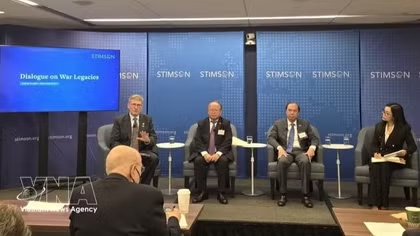
Addressing a dialogue on war legacies in Southeast Asia organised by the Stimson Centre in Washington, D.C on October 21, Vietnamese Ambassador to the US Nguyen Quoc Dung briefed representatives of US government agencies, non-governmental organisations and experts on Vietnam’s efforts to address war consequences, while calling for international support and cooperation in urgent humanitarian work.

Awards ceremony convened for sixth Party ideology writing contest

Awards ceremony convened for sixth Party ideology writing contest

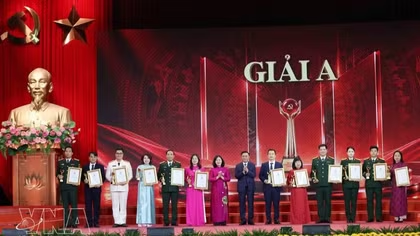
Standing Member of the Party Central Committee’s Secretariat Tran Cam Tu and Secretary of the Party Committee of the Vietnam Fatherland Front (VFF) and central mass organisations and President of the VFF Central Committee Bui Thi Minh Hoai presented 12 first A prizes to individual authors and author groups.