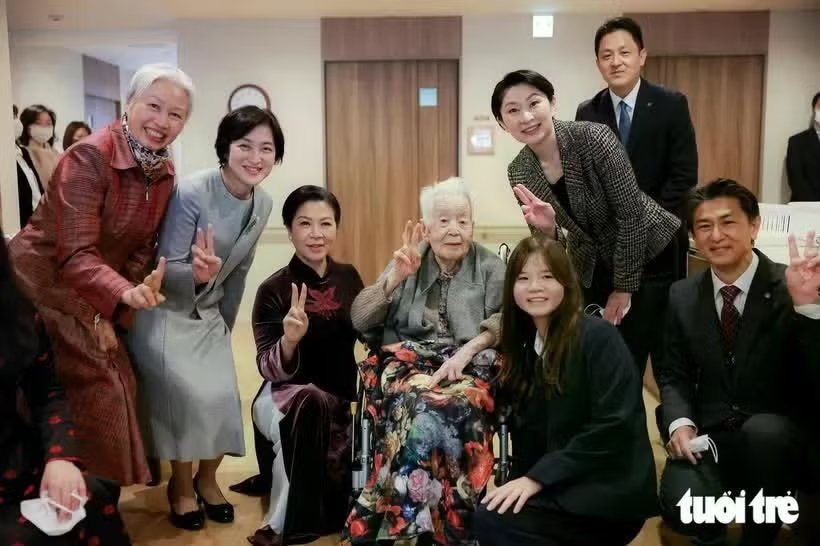
During the official visit to Japan by General Secretary of the Communist Party of Vietnam Central Committee and President To Lam, his spouse Ngo Phuong Ly visited the Meguro Chuo no Ie elderly care facility, run by the Hoyukai Social Welfare Corporation, in Tokyo on November 11.
She was accompanied by Obuchi Yuko, Chairwoman of the Japan–Vietnam Parliamentary Friendship Alliance, and Ito Yuki, spouse of the Japanese Ambassador to Vietnam.
Katori Hiroshi, Chairman of Hoyukai, briefed the delegation on Japan’s social welfare system for the elderly and the organisation’s activities, noting that of the 529 foreign employees of Hoyukai, 82 are Vietnamese. Operating since July 2019, Meguro Chuo no Ie is designed to provide residents with a home-like environment, with 84 single rooms arranged into seven living units.
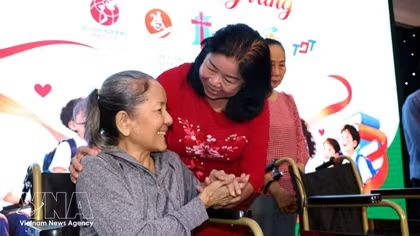
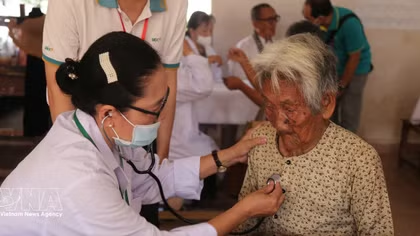
During her visit, Ly met elderly residents and presented them with gifts, extending her wishes for their good health and peace.
She stressed that caring for older people is not only a social responsibility but also an expression of gratitude to generations who have helped shape today's society.
After touring the facility, she spoke highly of its care model, under which each living unit has a communal room with a small kitchen and a dedicated team of caregivers. This arrangement enables staff to understand each resident's habits and personality. She said the model is particularly valuable as maintaining older people's mental well-being is just as important as meeting their needs for medical and physical support.
Appreciating the dedication of the facility's staff, including Vietnamese caregivers, she stressed that elderly care is demanding work requiring professional knowledge, patience, sensitivity and compassion.
Meeting with Vietnamese employees working for Hoyukai, Ly enquired about their work and life away from home. She encouraged them to continue learning and deepening their professional expertise to demonstrate Vietnamese workers' capabilities in the field.
Working in Japan offers them opportunities to develop themselves and acquire experience and modern care skills while contributing to people-to-people exchanges between the two countries, the lady noted, adding that the knowledge and experience they gain can benefit not only Japanese society but also Vietnam in the future.
As Japan has made earlier progress and achieved certain results in coping with population ageing, its experience can provide valuable lessons for Vietnam through cooperation in this humanitarian field, Ly remarked.
Representatives of the Vietnamese staff pledged to continue studying, improving their professional knowledge, working diligently, staying united and assisting others to integrate well into the local workplace and society.
For his part, Katori said Hoyukai hopes to gradually develop elderly care services in Vietnam. It will study the matter and consult local authorities and partners to develop a model suited to Vietnamese culture and daily living practices.
Ly thanked the Japanese side for its trust in and acceptance of Vietnamese caregivers, expressing her hope that the facility and relevant organisations will continue providing them with favourable working conditions and dedicated guidance. She voiced her wish for the two countries to expand cooperation in elderly care.