PSNews - Some transformations cannot be measured by time alone, but rather by shifts in mindset, in a person’s eyes, words and actions. Visiting Vinh Quang Prison on a sweltering day in April, what caught our attention was not the strict access control points or the heavy walls topped with barbed wire, but the sight of Vietnamese inmates operating sewing machines with practiced ease, and foreign prisoners speaking fluent Vietnamese, respectfully addressing correctional officers as "teachers" and holding back tears as they expressed their gratitude.
Awakening internal goodness through simple acts
Located in Dao Tru Commune, Phu Tho Province (formerly part of Vinh Phuc Province), Vinh Quang Prison currently holds over 5,000 inmates. Among them are more than 500 foreign nationals representing over 30 countries, alongside members of ethnic minority groups, which requires significant management and poses operational challenges. Meanwhile, for inmates transferred to Vinh Quang from temporary detention centers, the greatest hurdles stem from severed ties with loved ones, alongside psychological, cultural, and linguistic barriers.
For this reason, according to the Prison Directorate of Vinh Quang Prison, the path of rehabilitation here always begins with care and companionship under the principle of the rule of law. Inmates, whether Vietnamese, ethnic minorities, or foreign nationals, are all treated equally.
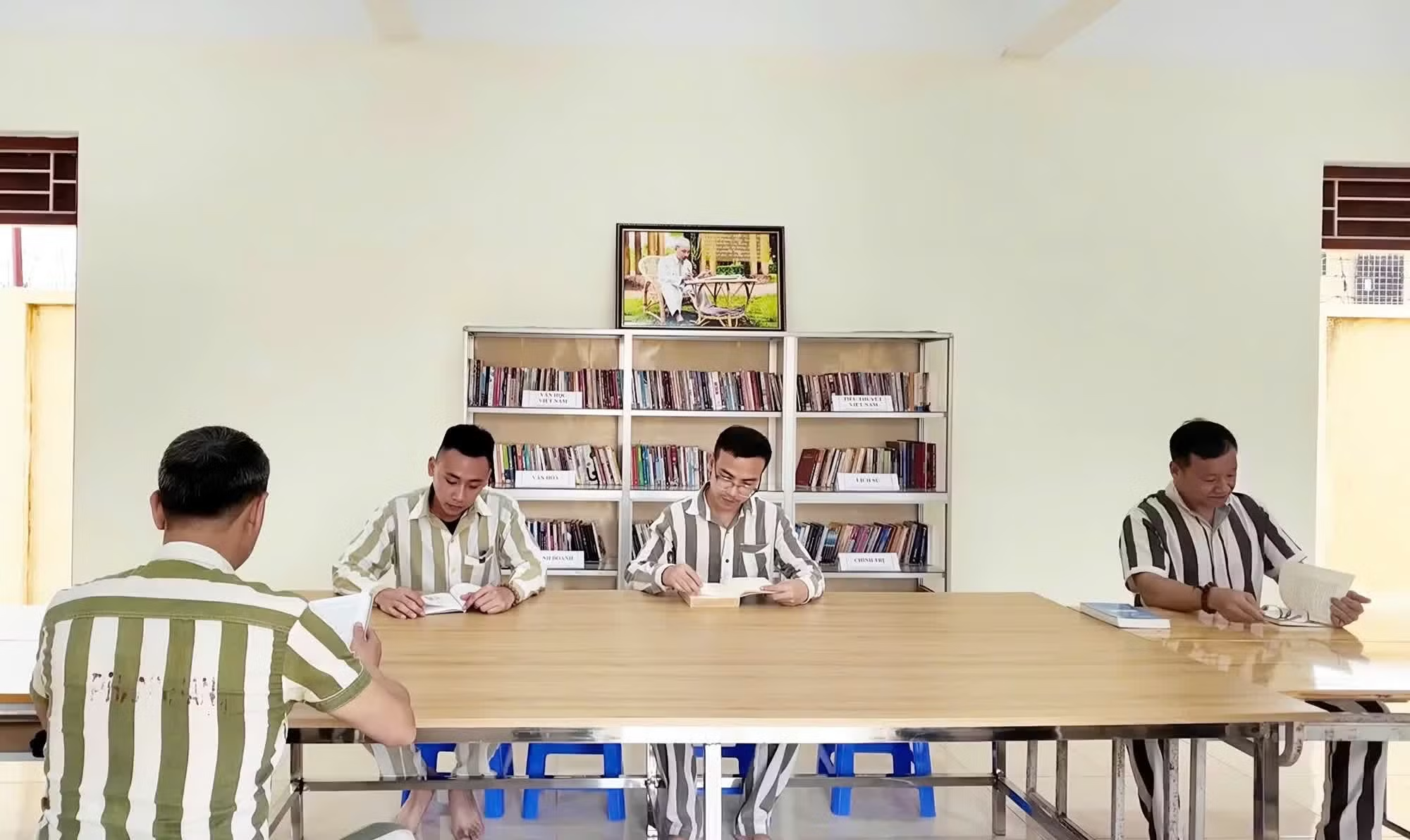
For newly admitted foreign or ethnic minority inmates, the Prison Directorate identified breaking down language barriers as a prerequisite for establishing discipline. Officers proficient in foreign languages or ethnic minority dialects are directly assigned to communicate with them, or active, well-rehabilitated inmates of the same nationality or ethnic background are enlisted to assist in interpretation.
This connection extends beyond mere linguistic assistance; more importantly, it ensures clear and accurate dissemination of inmate rights and obligations under Vietnam’s Law on Execution of Criminal Judgments. A correct and thorough understanding of regulations serves as the foundation for inmates to comprehend their situation, voice their thoughts, and smoothly integrate.
The management of policy regimes and entitlements follows the same principle. According to Senior Colonel Truong Duy Tuan, Warden of Vinh Quang Prison, the facility conducts strict background reviews to ensure respect for the cultural and religious characteristics of inmates within the framework of the law.
Correctional officers closely monitor each inmate to arrange appropriate meal plans. Inmates whose religious customs prohibit pork or beef, or who practice vegetarianism, are provided with alternative food substitutes. Portion allowances are also flexibly adjusted based on physical condition, ensuring that every inmate has sufficient energy for daily living, labor, and rehabilitation.
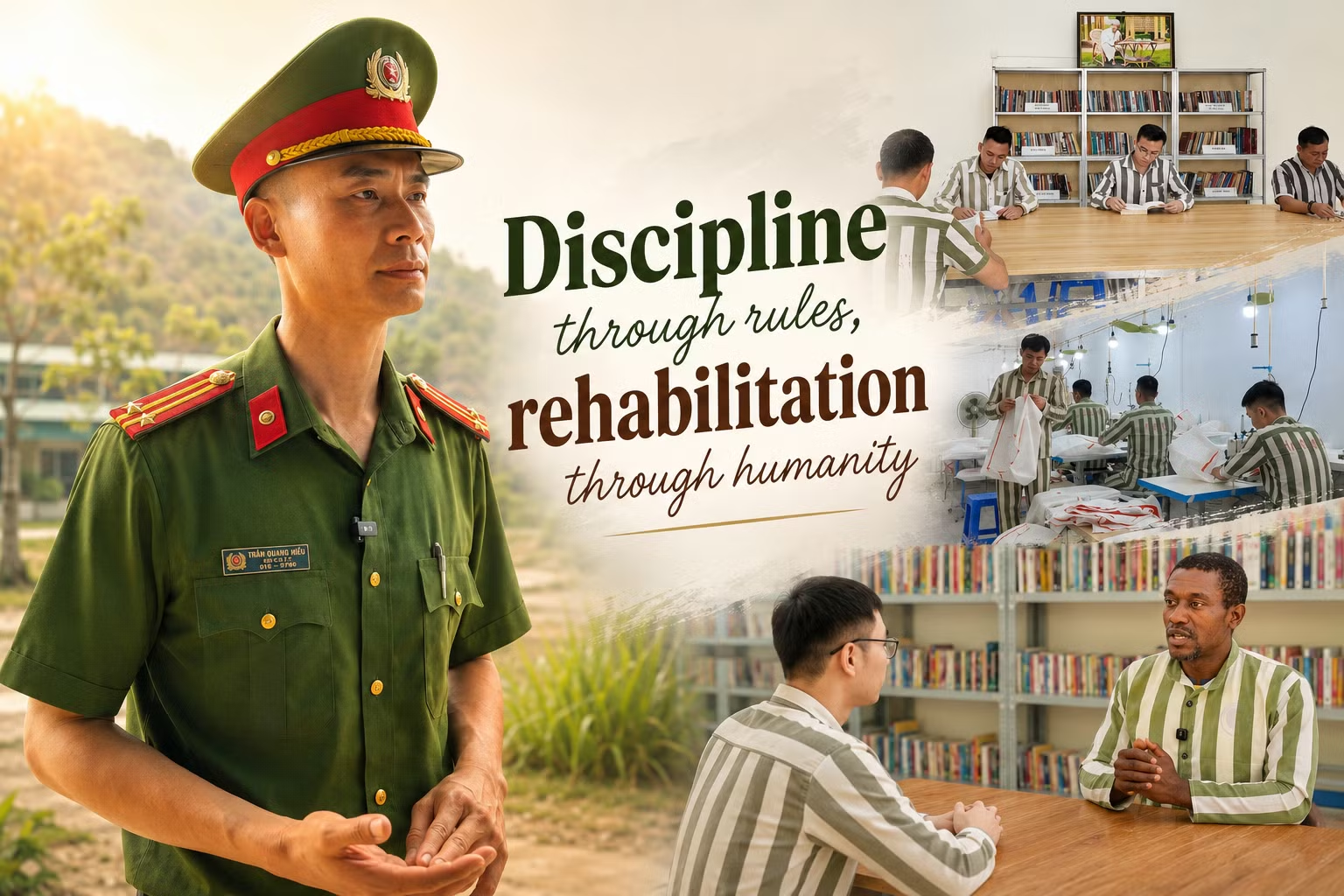
Vinh Quang Prison also focuses on enriching inmates' spiritual and cultural lives as an integral part of the rehabilitation process. The prison library has been stocked with additional titles ranging from religion, belief, and law to culture, life skills, and business. Reading helps reshape perception, evoke positive thinking, and guide inmates toward goodness. From this perspective, rehabilitation is not merely serving a sentence, but a process that helps individuals recognize their mistakes and make amends.
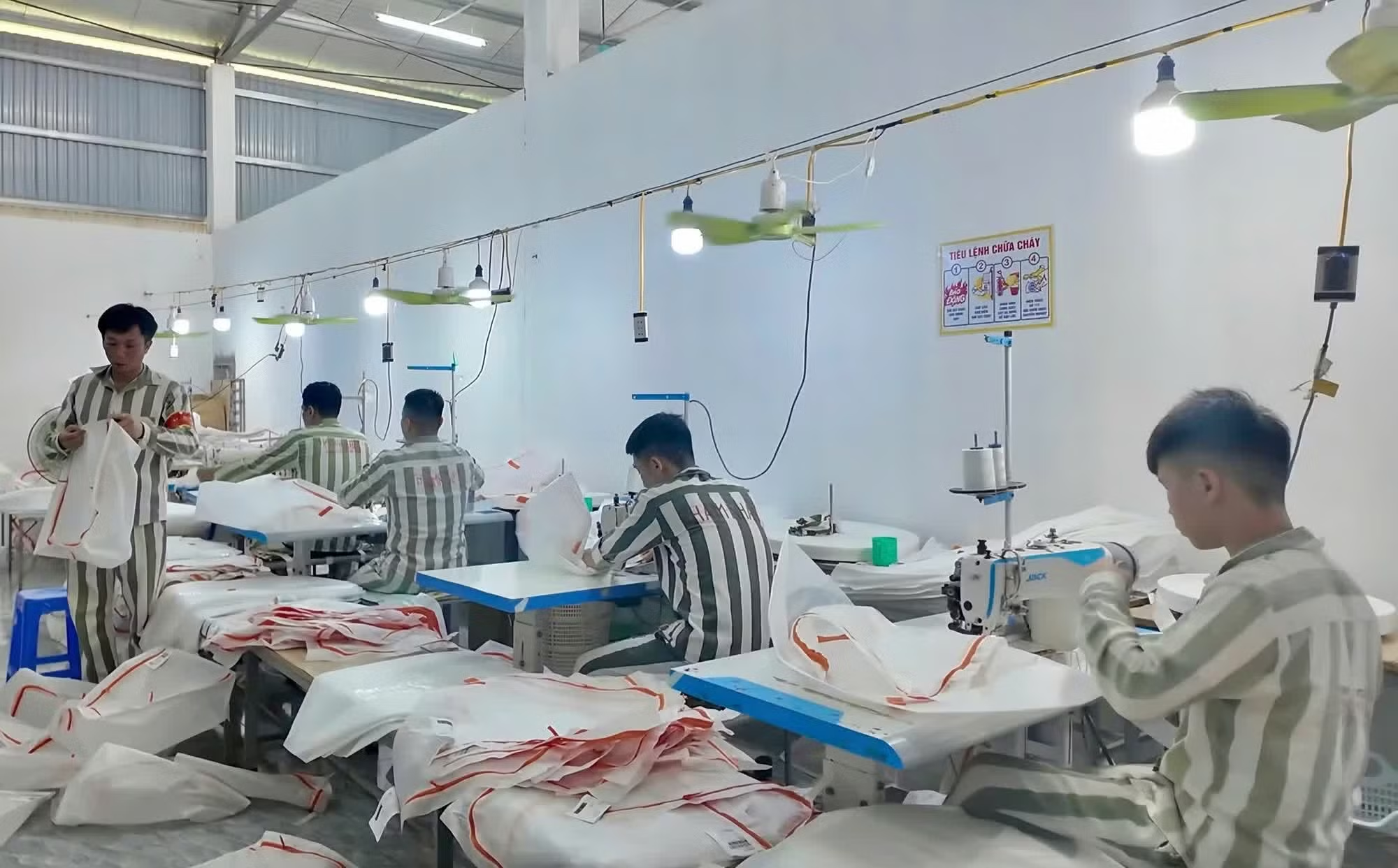
In parallel, vocational training is systematically organized in line with each inmate's actual conditions. Vocational assignments are not made mechanically, but based on health, age, and capability. Vinh Quang Prison is currently conducting training in approximately 14 trades, such as sewing, weaving, and handicrafts. These seemingly simple tasks carry practical significance, helping inmates build labor skills and a strong sense of discipline.
Alongside strict discipline, regular attention to essential needs such as meals and emotional well-being is key to eliminating negative mindsets, reassuring inmates as they reform, and strengthening their faith in the humane and lenient policies of the Party and State, thereby inspiring them to strive for an early return to their families and society.
Firsthand witness to positive transformations
Among the over 500 foreign inmates at Vinh Quang, Chimechidike Ben (born in 1976, Nigerian nationality) is a special case. Formerly an English teacher in Ho Chi Minh City before becoming involved in a drug trafficking ring, Ben was arrested in 2009 and sentenced to life imprisonment.
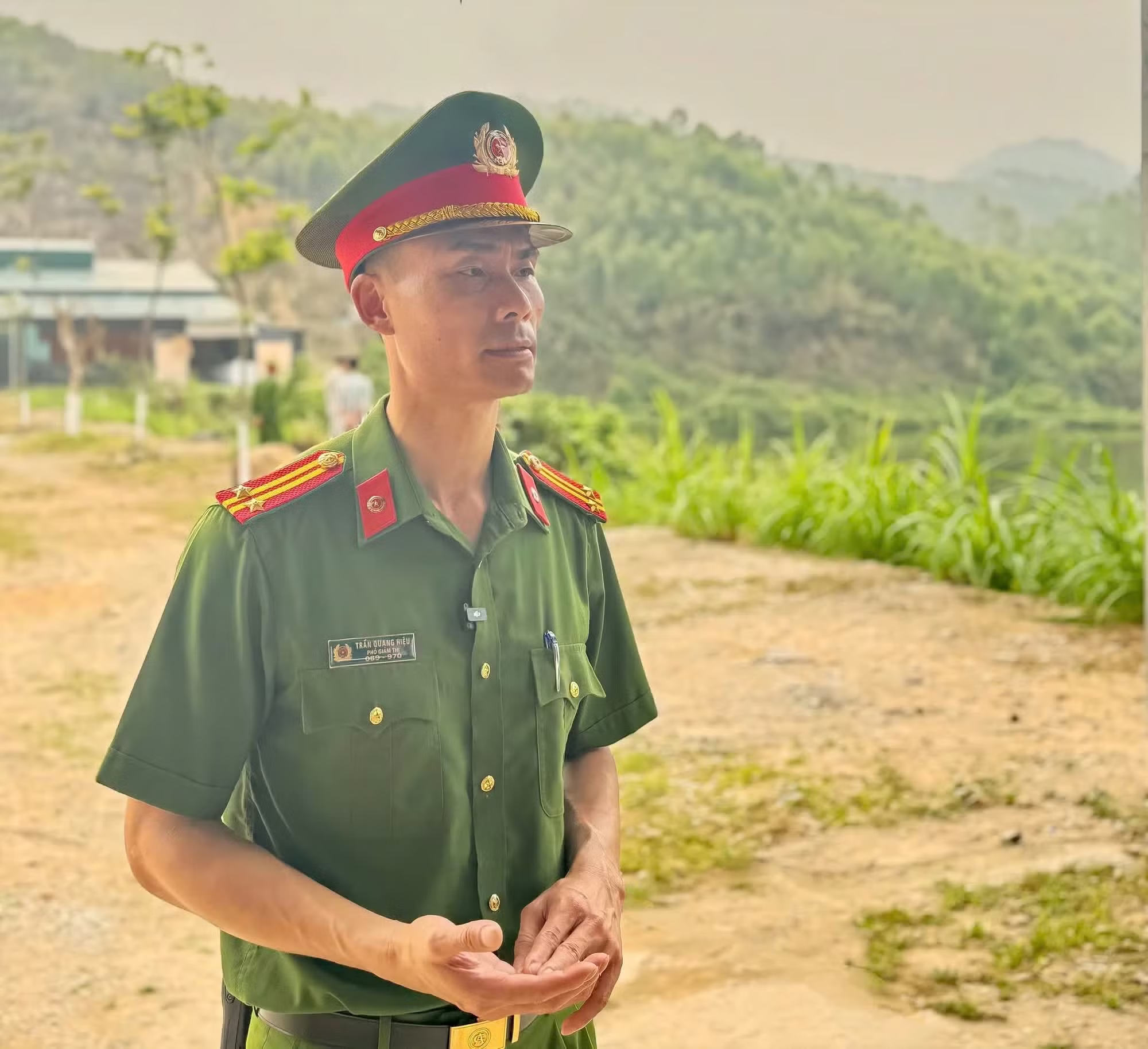
Recalling those early days, Lieutenant Colonel Tran Quang Hieu, Deputy Warden of Vinh Quang Prison, noted that Ben was an extremely stubborn inmate who frequently caused disruptions, harbored defiant attitudes, and faced disciplinary actions. However, the persistent approach and guidance of the Prison Directorate and the Council of Officers gradually transformed his mindset. Ben now speaks fluent Vietnamese and possesses a deep understanding of Vietnamese culture.
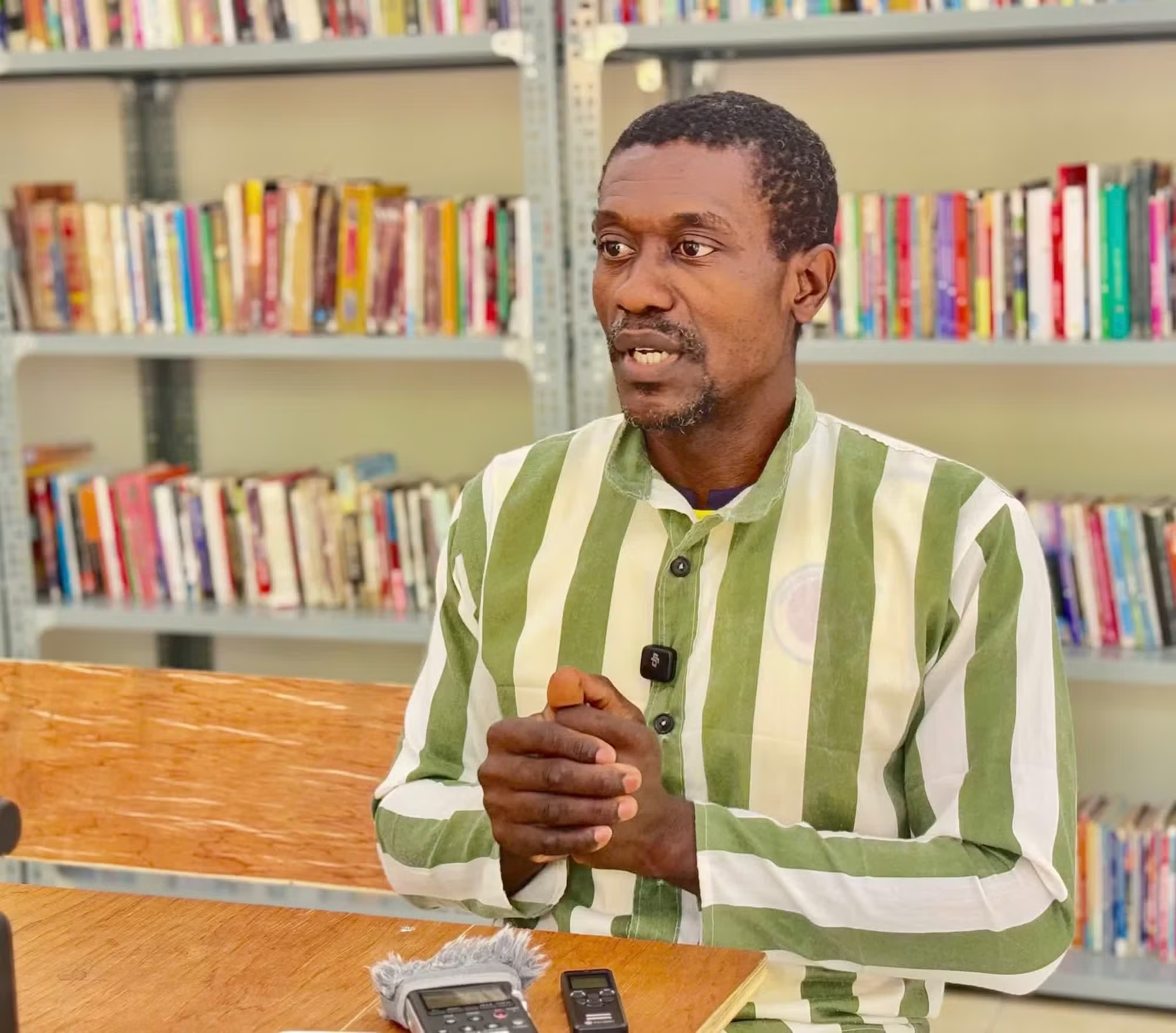
Sharing his journey of change, Ben candidly stated: "Here, memorizing the rules and regulations is mandatory. We study them regularly to know the boundaries of what is allowed and what is not.
As a Christian, I am given conditions to practice my faith and read the Bible at appropriate times. Thanks to good rehabilitation efforts, my sentence was commuted from life imprisonment to 30 years, and I am continuing to try my best."
Beyond personal progress, Ben’s transformation has made him an extended arm for correctional officers. Utilizing his language skills, Ben actively assists with translation, helping newly arrived inmates, especially foreigners, quickly integrate. This is clearly not a coincidental act of volunteering, but a distinct change in mindset.
Such positive transformations are not isolated cases at Vinh Quang Prison. Many other foreign inmates are also changing step by step, adapting, and proactively reforming. Qian Youcheng (Chinese national), arrested in 2020 for fraud and sentenced to 11 years in prison, is another example.
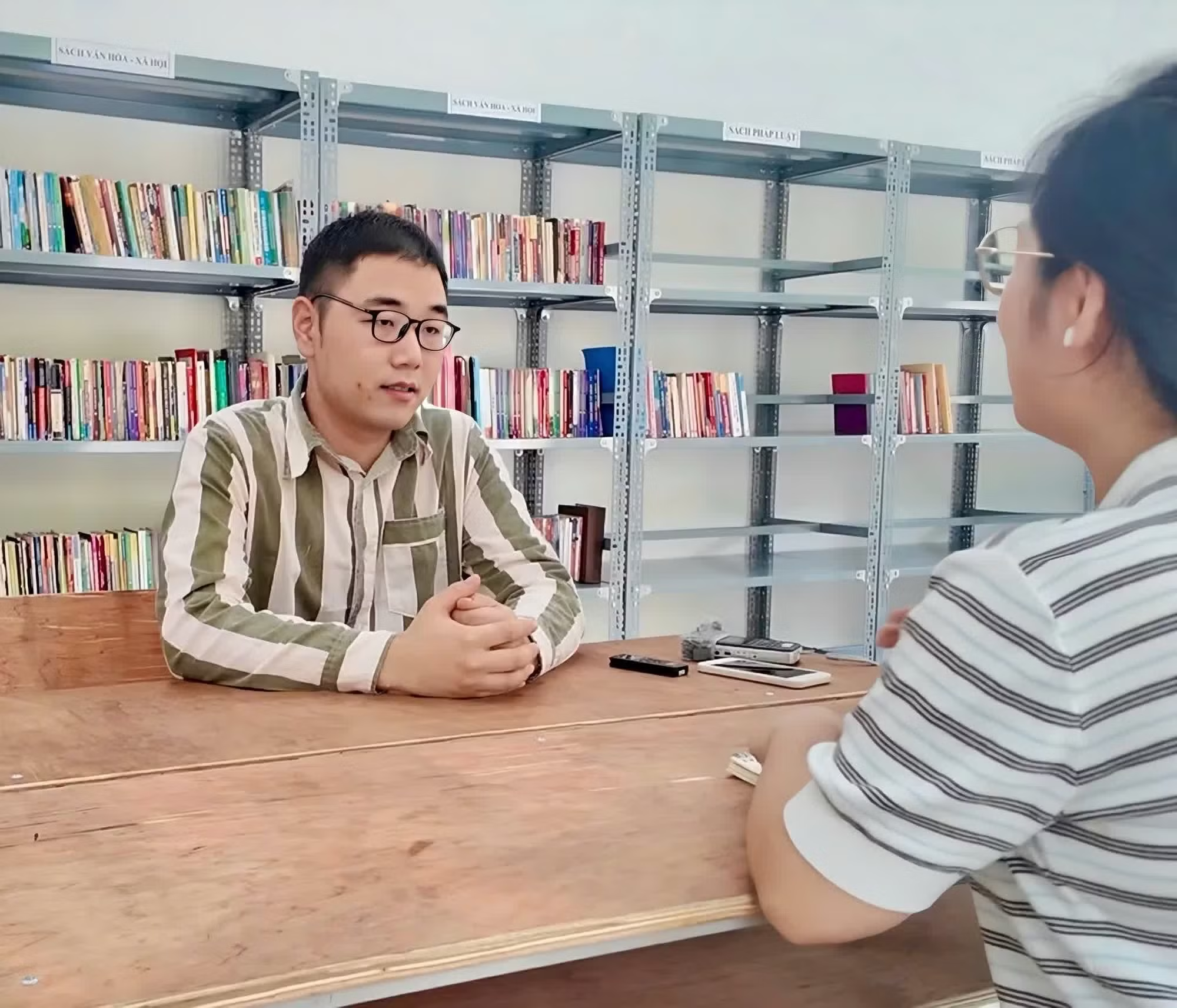
Confidently sharing his story in fluent Vietnamese, he noted: "I gradually recognized my wrongdoings and set clear goals to reform and redeem myself. Cultural and lifestyle similarities between Vietnam and China also helped me integrate quickly. Whenever my mother visits, she encourages me to work hard at reforming and to ask the officers if anything is unclear. That gives me even greater determination. I also plan to stay in Vietnam after serving my sentence and strive to become a useful citizen".
In addition to shifts in perception, Qian actively participates in labor and vocational training, such as stitching supermarket bags and sewing sports balls. Furthermore, communal activities like sports and creating wall newspapers foster positive interaction. Speaking of having passed more than half of his sentence, Qian could not hide his emotion, his eyes welling with tears. He stood up and bowed to express his gratitude to the Prison Directorate, Council of Officers, and the correctional officers at Vinh Quang Prison.
Even among the Vietnamese and ethnic minority inmates we spoke with, there is a shared belief that the only path to returning home early is through good rehabilitation, using self-improvement as the drive to endure time away from family. Engaging in arts or sports after working hours serves as a necessary break to restore labor energy and maintain mental balance.
Rehabilitation at Vinh Quang is not measured solely by sentence reductions or commendations for good conduct. The greatest achievement lies in individuals walking out of the prison gates with a transformed outlook. In practice, many former inmates, through the resilience developed during incarceration, have gone on to become successful entrepreneurs and productive citizens. Even more meaningfully, some voluntarily return to the prison for special exchange programs, using their own real stories of falling and rising to inspire others.
Modernizing from practical reality: Leaving no one behind
Amid ongoing digital transformation, modernizing prison management has become more urgent than ever. According to representatives from the Police Department for Management of Prisons, Mandatory Educational Establishments and Reformatories (Ministry of Public Security), public feedback is currently being gathered on a draft circular regulating inmate visitation, receipt of gifts, and communication, expected to be issued in May.
Specifically, existing regulations have encountered operational bottlenecks: rapid growth in inmate numbers puts pressure on infrastructure, forged documents have appeared for visits and gift delivery, and current communication equipment has failed to meet actual demand, affecting connection between inmates and their families.
Addressing these realities, the draft circular aims to resolve shortcomings while ensuring consistency across regulations. A key highlight is the proposed addition of video calls (audio and visual communication) to replace traditional fixed landlines. This step aligns with digitization trends, improving management efficiency while helping inmates maintain family ties—a vital factor in rehabilitation.
To guarantee security, these video calls will be strictly monitored through a dedicated information system managed by the Ministry of Public Security. Inmates will not have unrestricted internet or external communication access. Relatives must register online and undergo identity verification.
Under the draft, eligible inmates may make one free 10-minute video call per month. Those with exemplary conduct may receive additional calls, and emergency contact permissions may be granted when necessary.
The practical reality at Vinh Quang Prison, alongside the proposed circular, reflects a consistent execution philosophy: strict law enforcement and humanity go hand in hand. Restricting freedom establishes order, but securing fundamental human rights and expanding family contact provides the essential foundation for redemption. When commands go hand in hand with humanity, goodness takes root behind barbed-wire walls, opening the path home for those who once strayed.