Top leader calls for shift from service development to building national logistics capacity

General Secretary and President To Lam stressed that logistics is not merely a sectoral economic issue, but concerns the entire economy's capacity to organise, connect and operate. It is directly linked to national competitiveness, economic self-reliance, resilience and national defence and security.

Hanoi (VNA) – General Secretary of the Communist Party of Vietnam Central Committee and President To Lam on November 2 called for a fundamental shift in the approach to logistics development, from expanding services to building national logistics capacity, describing it as a strategic factor in strengthening Vietnam's competitiveness, economic autonomy and resilience.
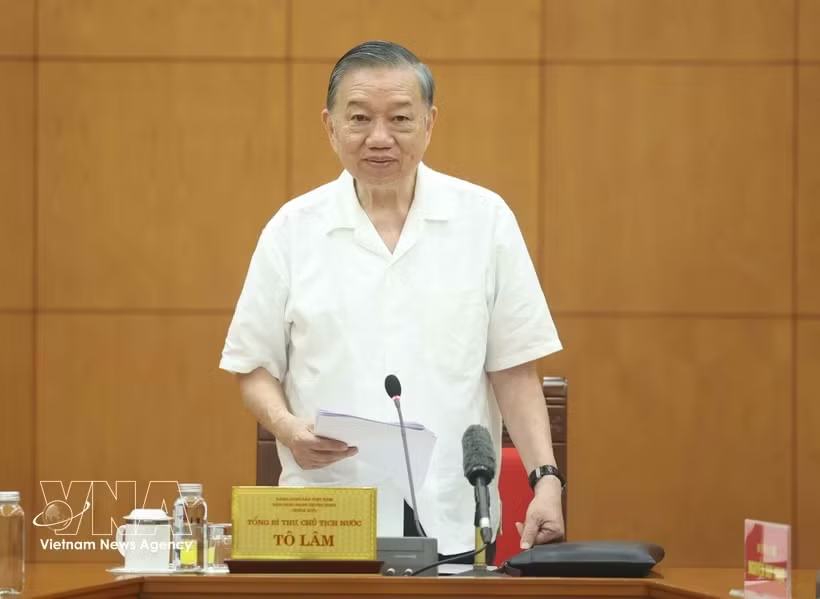
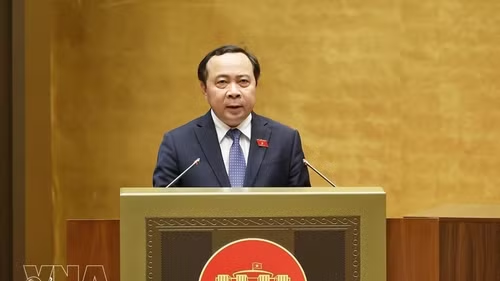
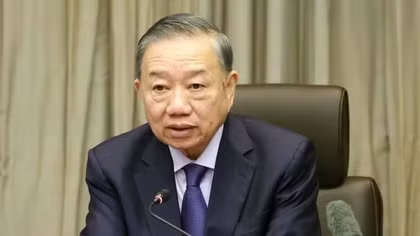
vnanet-tong-bi-thu-chu-tich-nuoc-to-lam-phat-bieu-anh-ttxvn.png
General Secretary of the Communist Party of Vietnam Central Committee and President To Lam speaks at the working session with the Government's Party Committee and relevant agencies to discuss orientations for developing national logistics and infrastructure on November 2. (Photo: VNA)

He made the statement while chairing a working session with the Government's Party Committee and relevant agencies to discuss orientations for developing national logistics and infrastructure.

General Secretary and President Lam stressed that logistics is not merely a sectoral economic issue, but concerns the entire economy's capacity to organise, connect and operate. It is directly linked to national competitiveness, economic self-reliance, resilience and national defence and security.

Amid the country's ambition to achieve double-digit growth, logistics must become a genuine growth driver by improving productivity, reducing costs, expanding development space and generating new sources of growth, he said.

The top leader emphasised that logistics development must be integrated into the country's overall development strategy, under unified Government-level direction and coordination, rather than being assigned separately to individual ministries, sectors or localities.

He stressed the need for the ambition to make Vietnam an important regional and global logistics, transit and goods distribution hub. The country should proactively attract international cargo flows for transit, storage, distribution and value-added services; gradually deepen its participation in organising and coordinating regional and global supply chains; and turn its geographical advantages into competitive strengths, development resources and greater international economic standing. This vision must be translated into competitive logistics hubs, trade gateways and international transport corridors with clear roadmaps.

The General Secretary and President also highlighted the need to establish a unified, synchronised and modern national logistics network aligned with economic spatial planning and international connectivity. Investment should overcome fragmentation and administrative-boundary-based planning while maximising the strengths of individual regions and localities.

Science and technology, innovation, digital transformation and green development must serve as breakthroughs in modernising the sector, with digital and green logistics becoming new competitive advantages for Vietnam.

He stressed the importance of developing strong Vietnamese logistics enterprises capable of mastering high-value segments of international supply chains. Policies should encourage the emergence of large domestic companies with the capacity to organise supply chains, international transport, transit and distribution; and strengthen links between logistics firms, manufacturers, exporters, trading companies and international logistics groups.

Regarding key tasks, the top leader called for improvements to institutions and national coordination mechanisms, alongside a review of logistics network planning based on a multi-centre and multimodal model. Logistics hubs must be planned according to cargo sources, connectivity, production areas, markets, land availability and investment efficiency, avoiding development driven by movements without clearly identified demand.

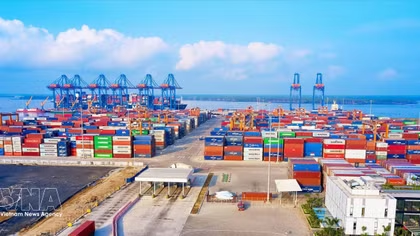
He urged better infrastructure connectivity along economic corridors, particularly between seaports, airports, freight stations and border gates and industrial parks, production areas and consumption centres.
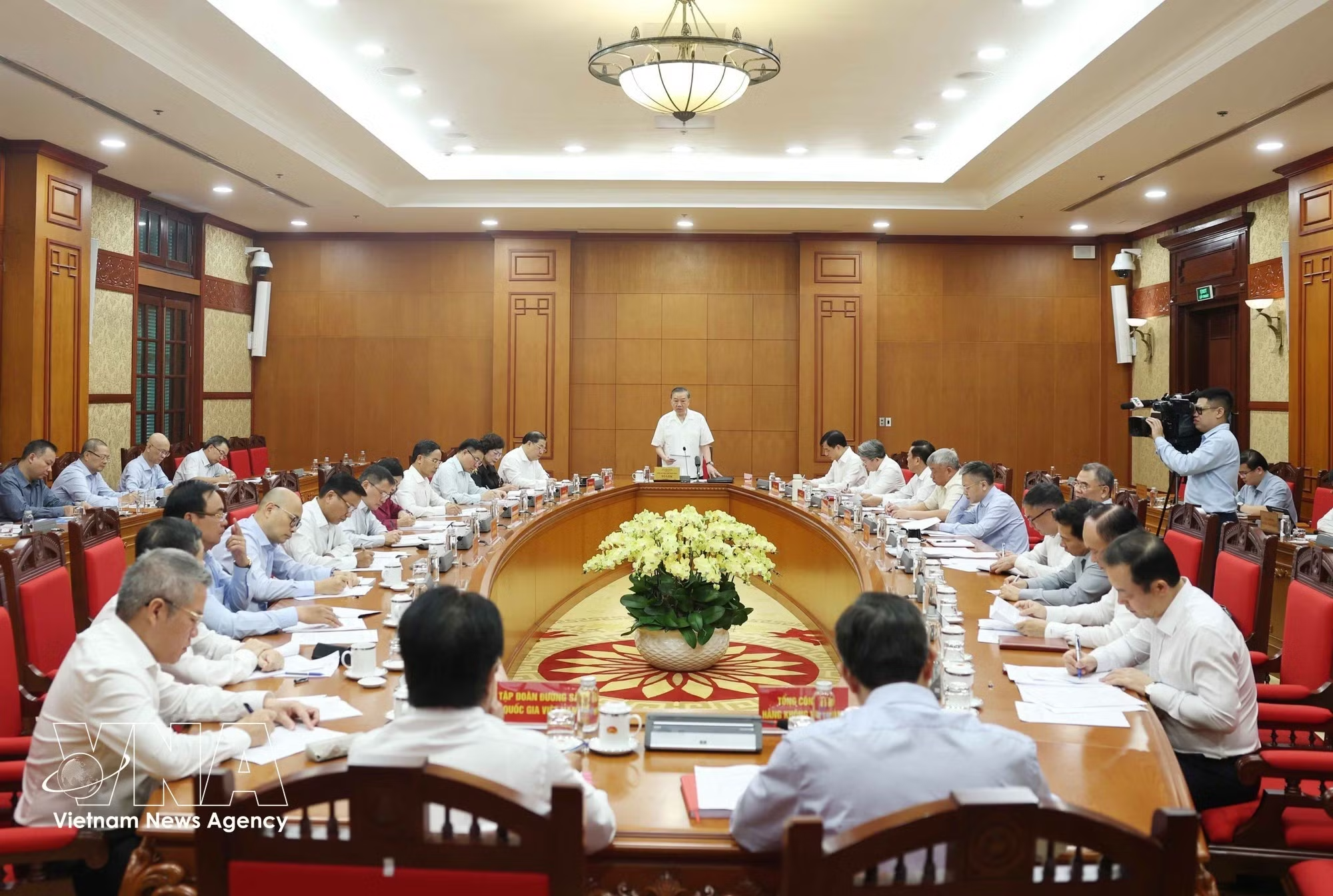
General Secretary of the Communist Party of Vietnam Central Committee and President To Lam speaks at the working session with the Government's Party Committee and relevant agencies to discuss orientations for developing national logistics and infrastructure on November 2. (Photo: VNA)

Digital transformation should be accelerated through standardised data, electronic documents and interconnected systems linking businesses with customs authorities, ports, warehouses and transport operators. Green transport, energy-efficient warehouses and low-emission vehicles should be encouraged to strengthen supply-chain resilience and economic security.

As immediate priorities, General Secretary and President Lam requested an urgent review and upgrading of Vietnam's logistics development strategy, the establishment of a national coordination mechanism, identification of major bottlenecks requiring resolution before 2027, and a programme to develop key international logistics gateways and hubs.

He also urged ministries, sectors and localities to assign clear responsibilities and deadlines, prioritising infrastructure connectivity, specialised inspections, logistics hub planning and data sharing.

The goal is to gradually bring Vietnam's logistics costs closer to regional and global averages, improve service quality, increase domestic value added and enhance the country's role in regional logistics networks, he added./.
VNA
en.vietnamplus.vn

Other News

Vietnam aims to promote ASEAN unity, resilience and practical cooperation: Deputy FM

Vietnam aims to promote ASEAN unity, resilience and practical cooperation: Deputy FM

Prime Minister Le Minh Hung's attendance at the 49th ASEAN Summit and related summits in Manila, the Philippines, from November 14-17 aims to concretise Vietnam's foreign policy of independence, self-reliance, resilience, multilateralisation and diversification, and reaffirm ASEAN's position as Vietnam's foremost strategic priority in its foreign policy.

Vietnam's development inspires Francophone community: OIF Representative

Vietnam's development inspires Francophone community: OIF Representative

The IOF official recalled that the Francophonie Summit in Hanoi in 1997 marked a turning point for the organisation, with leaders establishing the position of OIF Secretary-General and placing economic cooperation at the centre of its agenda. Nearly three decades later, the Francophonie Summit is returning to Asia, with Phnom Penh hosting the summit under the theme “Reinvesting in Peace for Shared Prosperity and Lasting Stability”.

PM to attend 49th ASEAN Summit and related meetings in Philippines

PM to attend 49th ASEAN Summit and related meetings in Philippines

Prime Minister Le Minh Hung will lead a high-level Vietnamese delegation to attend the 49th ASEAN Summit and related meetings in Manila, the Philippines, from November 14 – 17 at the invitation of President Ferdinand Romualdez Marcos Jr. of the Philippines, the Chair of ASEAN in 2026.

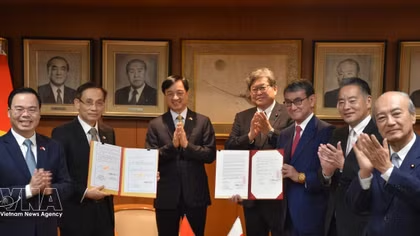
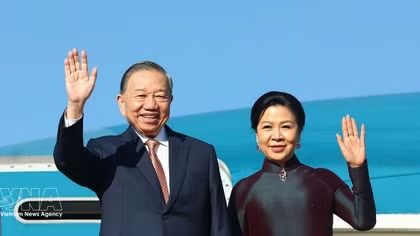
Vietnam's top leader concludes official visit to Japan

Vietnam's top leader concludes official visit to Japan

At their talks, General Secretary and President Lam and Japanese Prime Minister Takaichi Sanae reaffirmed that Vietnam and Japan are each other's leading and long-term important partners, sharing many common interests, with the development of one country creating favourable conditions for the groth of the other. Vietnam is a priority partner in Japan's foreign policy and the implementation of its New Growth Strategy.

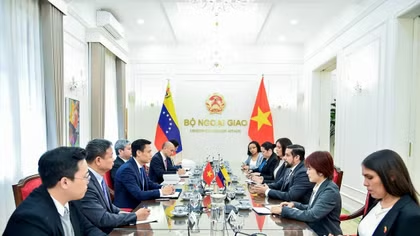
Vietnamese, Venezuelan foreign ministries hold 11th political consultation

Vietnamese, Venezuelan foreign ministries hold 11th political consultation

To further strengthen the Vietnam-Venezuela Comprehensive Partnership and make it more effective, Giang proposed both sides make full use of existing cooperation mechanisms, promptly address difficulties and seize new opportunities to expand cooperation in areas with potential, including oil and gas, telecommunications, agriculture, education and training, and tourism.

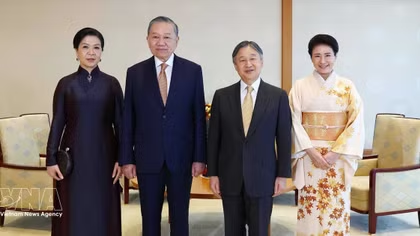
Top Vietnamese leader, his spouse meet with Japanese Emperor, Empress

Top Vietnamese leader, his spouse meet with Japanese Emperor, Empress

In a warm and friendly atmosphere, Emperor Naruhito and Empress Masako expressed their pleasure at the positive, substantive and comprehensive development of Vietnam-Japan relations, as well as increasingly vibrant exchanges between the two countries’ leaders and people.

Lawmakers to discuss amendments to Law on Food Safety on November 11

Lawmakers to discuss amendments to Law on Food Safety on November 11

The draft law adds provisions on the principles governing its application in cases of legal conflicts between the Law on Food Safety and other laws. It sets out additional obligations for businesses operating through e-commerce, provides for a food safety information and data system, and requires food businesses to meet good hygiene practices and apply advanced food management systems.

Top Vietnamese leader meets leading Japanese financial institutions in Tokyo

Top Vietnamese leader meets leading Japanese financial institutions in Tokyo

General Secretary of the Communist Party of Vietnam Central Committee and President To Lam expressed his wish for bilateral financial cooperation to move beyond a traditional provider-recipient relationship towards a development partnership in which the two sides jointly develop financial markets, design effective capital mobilisation solutions and invest in projects and sectors that build long-term competitiveness.