Minister addresses concerns about biotech development, disaster prevention funding

While the conditions regarding institutional frameworks, facilities, personnel, and technology are basically sufficient, the fundamental challenge now lies in rigorous implementation, said Minister of Agriculture and Environment Trinh Viet Hung when talking about biotechnology development.

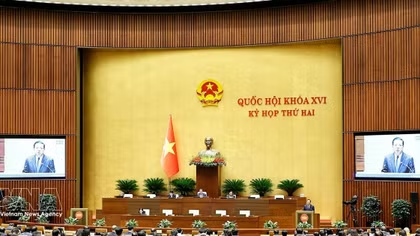
Minister of Agriculture and Environment Trinh Viet Hung addressed several parliamentary concerns, ranging from biotechnology development to funding shortfalls in climate adaptation infrastructure, on October 31 as part of the ongoing second session of the 16th National Assembly.

Bridging policy and execution in biotechnology

Responding to opinions raised by deputy Nguyen Thi Lan of Hanoi regarding synthetic biotechnology, Hung noted that in line with the Politburo’s Resolutions No. 57-NQ/TW and No. 36-NQ/TW, alongside the Prime Minister’s Directive No. 13/CT-TTg, his ministry has proposed key regulatory frameworks. Notable among these are the Prime Minister’s Decision No. 1639/QD-TTg, approving the bio-industry development scheme in environmental protection through 2030, and Decision No. 1466/QD-TTg, targeting the agricultural sector.
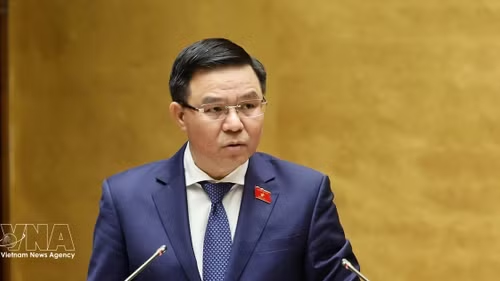
1-9164.jpg
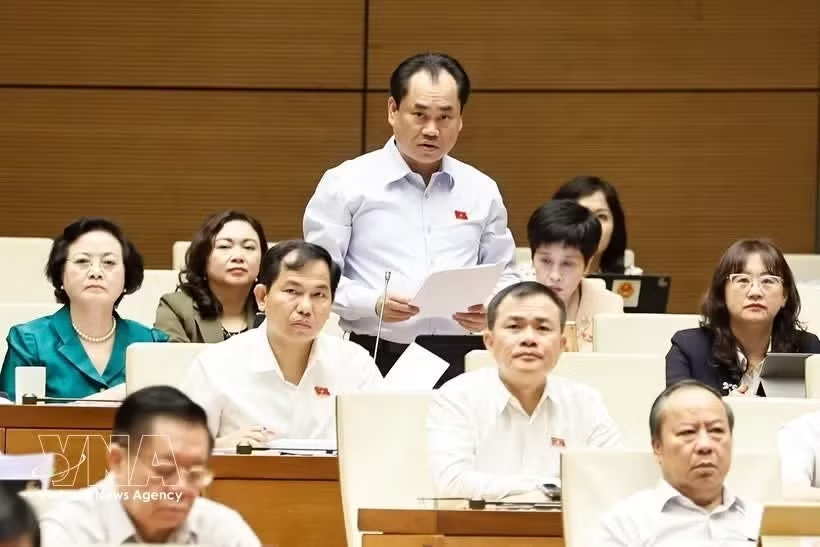
Minister of Agriculture and Environment Trinh Viet Hung speaks at the October 31 plenary discussion of the 16th National Assembly's second session. (Photo: VNA)

While the conditions regarding institutional frameworks, facilities, personnel, and technology are basically sufficient, the fundamental challenge now lies in rigorous implementation, he emphasised.

Over the past six months, the ministry has commissioned the Vietnam National University of Agriculture to execute two scientific and technological tasks with bio-technological components. Simultaneously, research tasks, including those in biotechnology, have been assigned to scientists, institutes, universities, and research centres nationwide.

Moving forward, the ministry will continue to coordinate with agencies, sectors, localities, institutes, and universities to advance this field, he added.

Substantial capital shortfalls in disaster prevention

Fielding queries on natural disaster prevention, climate change adaptation, and agricultural infrastructure investment to mitigate disaster impacts, the minister noted that for the Mekong Delta, central authorities allocated approximately 40 trillion VND (1.5 billion USD) for the 2021–2025 period. For 2026–2031, total funding has reached 23.5 trillion VND, comprising 15 trillion VND from the Prime Minister’s allocation and 8.5 trillion VND in official development assistance (ODA).

This represents a major financial resource earmarked for the Mekong Delta to execute tasks combating erosion, land subsidence, flooding, drought, and saltwater intrusion through 2035, as directed under the Politburo’s Conclusion No. 26-KL/TW.

However, Hung acknowledged that capital supply for disaster prevention works still falls short of actual demand. Nationwide capital demand for disaster prevention and control, including erosion, subsidence, drought, and saltwater intrusion in the Mekong Delta, as well as heavy rains and flash floods in the North, is estimated at approximately 210 trillion VND, whereas the central budget capacity can currently cover only half of this requirement, at about 105 trillion VND.

With regard to specific concerns raised by deputy Ha Sy Huan of Thai Nguyen province following the severe impacts of Storms Bualoi and Matmo in the North, including Thai Nguyen, last year, the minister clarified the status of the Cau River flood control project.

It was initially approved as three urgent projects, with construction commencing only several months later in early 2026. Consequently, for the 2026–2031 period, funds designated for urgent projects can no longer be used for these works; instead, funding must follow the standard medium-term public investment planning process.

Furthermore, he went on, under the Law on Public Investment, for projects where investment policies are approved at the provincial level, capital allocation falls under the authority of the Ministry of Finance rather than the Ministry of Agriculture and Environment.

Meanwhile, key structural works, including the Cau River dyke, Cha dyke, and Thac Huong dam, have already secured medium-term funding allocations in compliance with statutory provisions, Hung added.
en.vietnamplus.vn

Other News

Vietnam aims to promote ASEAN unity, resilience and practical cooperation: Deputy FM

Vietnam aims to promote ASEAN unity, resilience and practical cooperation: Deputy FM

Prime Minister Le Minh Hung's attendance at the 49th ASEAN Summit and related summits in Manila, the Philippines, from November 14-17 aims to concretise Vietnam's foreign policy of independence, self-reliance, resilience, multilateralisation and diversification, and reaffirm ASEAN's position as Vietnam's foremost strategic priority in its foreign policy.

Vietnam's development inspires Francophone community: OIF Representative

Vietnam's development inspires Francophone community: OIF Representative

The IOF official recalled that the Francophonie Summit in Hanoi in 1997 marked a turning point for the organisation, with leaders establishing the position of OIF Secretary-General and placing economic cooperation at the centre of its agenda. Nearly three decades later, the Francophonie Summit is returning to Asia, with Phnom Penh hosting the summit under the theme “Reinvesting in Peace for Shared Prosperity and Lasting Stability”.

PM to attend 49th ASEAN Summit and related meetings in Philippines

PM to attend 49th ASEAN Summit and related meetings in Philippines

Prime Minister Le Minh Hung will lead a high-level Vietnamese delegation to attend the 49th ASEAN Summit and related meetings in Manila, the Philippines, from November 14 – 17 at the invitation of President Ferdinand Romualdez Marcos Jr. of the Philippines, the Chair of ASEAN in 2026.

Vietnam's top leader concludes official visit to Japan

Vietnam's top leader concludes official visit to Japan

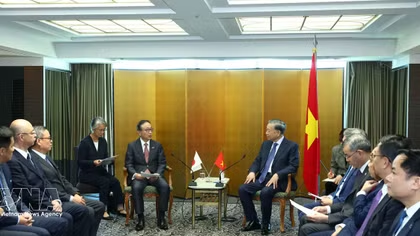
At their talks, General Secretary and President Lam and Japanese Prime Minister Takaichi Sanae reaffirmed that Vietnam and Japan are each other's leading and long-term important partners, sharing many common interests, with the development of one country creating favourable conditions for the groth of the other. Vietnam is a priority partner in Japan's foreign policy and the implementation of its New Growth Strategy.

Vietnamese, Venezuelan foreign ministries hold 11th political consultation

Vietnamese, Venezuelan foreign ministries hold 11th political consultation

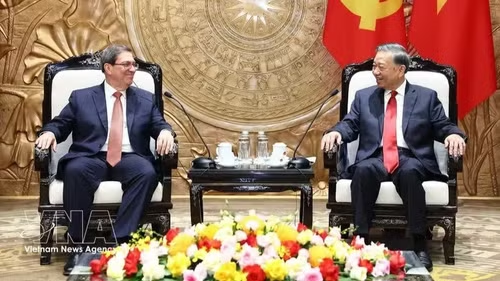
To further strengthen the Vietnam-Venezuela Comprehensive Partnership and make it more effective, Giang proposed both sides make full use of existing cooperation mechanisms, promptly address difficulties and seize new opportunities to expand cooperation in areas with potential, including oil and gas, telecommunications, agriculture, education and training, and tourism.

Top Vietnamese leader, his spouse meet with Japanese Emperor, Empress

Top Vietnamese leader, his spouse meet with Japanese Emperor, Empress

In a warm and friendly atmosphere, Emperor Naruhito and Empress Masako expressed their pleasure at the positive, substantive and comprehensive development of Vietnam-Japan relations, as well as increasingly vibrant exchanges between the two countries’ leaders and people.

Lawmakers to discuss amendments to Law on Food Safety on November 11

Lawmakers to discuss amendments to Law on Food Safety on November 11

The draft law adds provisions on the principles governing its application in cases of legal conflicts between the Law on Food Safety and other laws. It sets out additional obligations for businesses operating through e-commerce, provides for a food safety information and data system, and requires food businesses to meet good hygiene practices and apply advanced food management systems.

Top Vietnamese leader meets leading Japanese financial institutions in Tokyo

Top Vietnamese leader meets leading Japanese financial institutions in Tokyo

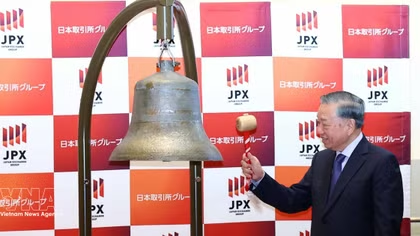
General Secretary of the Communist Party of Vietnam Central Committee and President To Lam expressed his wish for bilateral financial cooperation to move beyond a traditional provider-recipient relationship towards a development partnership in which the two sides jointly develop financial markets, design effective capital mobilisation solutions and invest in projects and sectors that build long-term competitiveness.