French Prime Minister Édouard Philippe’s official visit to Vietnam from November 2-4 is expected to help bolster the bilateral strategic partnership.

Vietnam and France set up diplomatic ties on April 12, 1973 and signed a joint declaration on the Strategic Partnership 40 years later (2013). Vietnam always attaches importance to its traditional friendship and cooperation with France and exerts its efforts to deepen the bilateral strategic partnership.
In the past years, both sides have maintained the exchange of high-level delegations and bilateral cooperation mechanisms such as a strategic dialogue on defence-security between the two countries’ Foreign and Defence Ministries, and an annual high-level dialogue on economic affairs.
In the field of defence-security, France was the first Western nation to appoint a defence attaché in Vietnam in 1991. The relationship in this field has developed well, reflected through regular delegation exchanges. In recent visits by the two Defence Ministers, both sides agreed on a bilateral strategic partnership in the defence field.
Vietnam imported US$1.27 billion worth of aviation equipment, industrial machines, pharmaceutical and agricultural products, food, and cosmetics.
Bilateral trade in the first six months of this year came to US$2.3 billion.
Last year, France ranked third among European nations and 16th out of 114 nations and territories investing in Vietnam, with 512 valid investments projects worth US$2.8 billion. The country’s direct investments in Vietnam focus on information and communications, and manufacturing and processing, and are spread in 36 localities. To date, Vietnamese investors have run nine projects in France with a total registered capital of US$3.04 million.
France is Vietnam’s leading ODA provider in Europe and Vietnam ranks second among the recipients of France’s ODA in Asia, with a total US$18.4 billion committed from 1993. The Southeast Asian country is also among a few nations receiving assistance from all three financial aid channels of France: namely ODA, preferential loans of the French Development Agency (AFD) and those of the Priority Solidarity Fund (FSP). To date, France has provided Vietnam with 2.2 billion EUR (US$2.49 billion) in aid and preferential loans.
Cooperation in education and training between the two countries has formed and developed since 1980s. France always considers education and training a priority in its cooperation activities in Vietnam, with the focus on the teaching of French language and human resources training in the fields of economic management, banking, finance, law and new technology.
Every year, France provides 80 scholarships for Vietnamese students in order to help Vietnam train high-quality human resources. Over the past decade, the number of Vietnamese students in France has risen by around 40 percent. France ranks third in receiving Vietnamese students, with over 7,000 students.
The two countries’ cultural exchange has been thriving as well. The French Government provides about 5 million EUR (US$5.6 million) for cultural cooperation activities with Vietnam each year. The European nation also ranks seventh among the countries and territories investing in Vietnam’s tourism, with 14 projects worth US$188 million.
Meanwhile, bilateral collaboration in science and technology has been implemented through projects funded by the Priority Solidarity Fund. The two Governments signed an agreement on science and technology cooperation in March 2007, thus creating favourable conditions for experts, offices, and organisations to intensify cooperation.
In November 2009, both sides inked a cooperation agreement on using nuclear energy for peaceful purposes.
Moreover, cooperation between localities has become a typical feature in the Vietnam-France relations. At present, 38 French localities have set up partnership with 18 Vietnamese provinces and cities.
In the field of health, the two countries have 30 cooperation projects with the priority given to training.
Currently, there are around 300,000 Vietnamese people living in France.
The Vietnam visit by PM Édouard Philippe takes place at a time when the two countries are celebrating the 45th anniversary of diplomatic ties and 5th anniversary of Strategic Partnership.
It is expected to boost political and diplomatic ties, expand economic and trade cooperation, and step up collaboration in security defence, education, training, science technology, and energy between Vietnam and France.
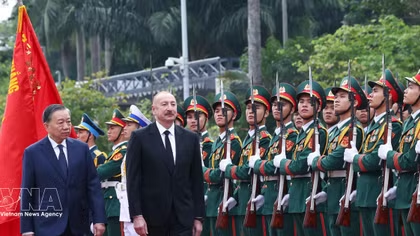
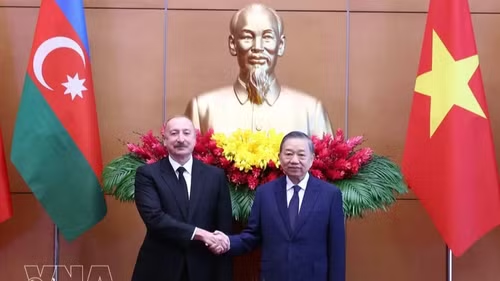
The two leaders walked along the red carpet to the ceremonial podium as military bands performed the national anthems of Azerbaijan and Vietnam. They then reviewed the Guard of Honour of the Vietnam People's Army and introduced members of their respective high-level delegations.
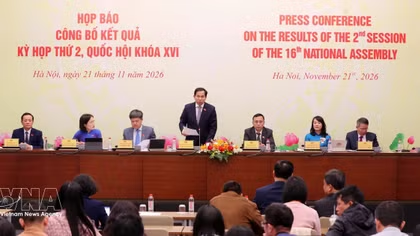
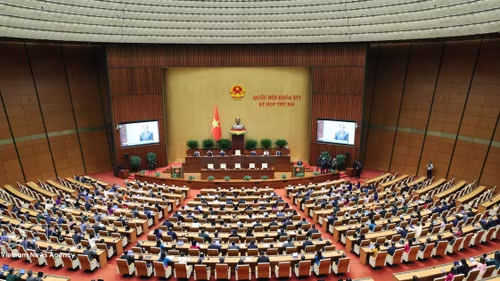
According to NA Secretary-General and Chairman of the NA Office Le Quang Manh, the outcomes reflect the legislature’s strong determination and commitment to reform in response to the country’s development requirements.
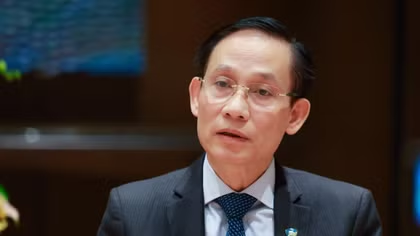
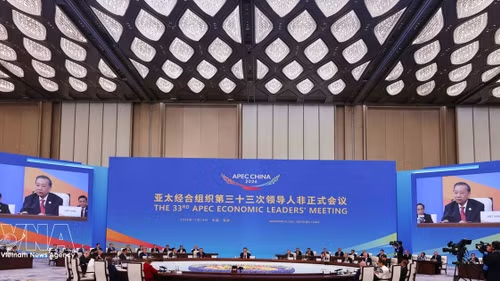
Vietnam participated in APEC 2026 not only as an active and proactive member but also with the responsibility of the host of APEC 2027. Its engagement reflects the country's consistent foreign policy, ambitious and sustainable development goals in the new era, and desire to make greater contributions to the common future of the Asia-Pacific region.
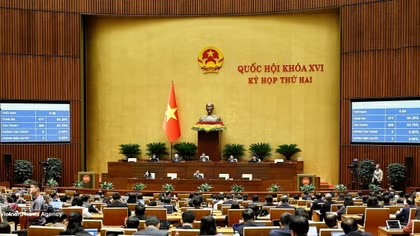
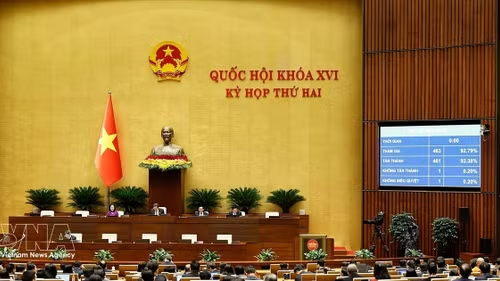
With 463 of the 472 NA deputies present voting in favour, the National Assembly (NA) passed the revised Penal Code, which consists of 25 chapters and 417 articles.
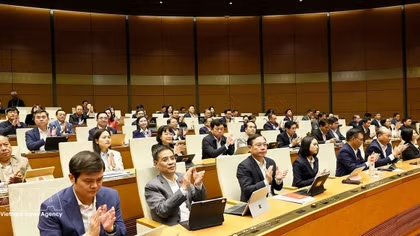
On November 20, the 16th National Assembly (NA) voted to approve the amended Law on International Agreements and the amended Law on the Implementation of Democracy at the Grassroots Level. Both laws are set to take effect on March 1, 2027.
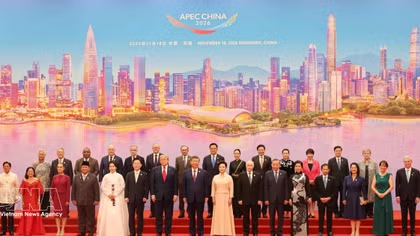
General Secretary of the Communist Party of Vietnam Central Committee and President To Lam’s working trip to China for the 33rd APEC Economic Leaders’ Week and bilateral engagements from November 17–20 has been a success.
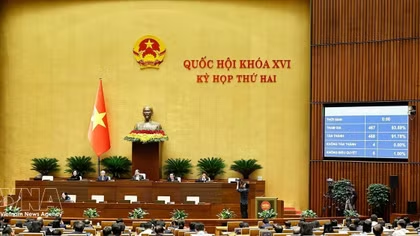
The Law on Protection of Important Works related to National Security passed with 473 of the 473 deputies in favour and will take effect on July 1, 2027.
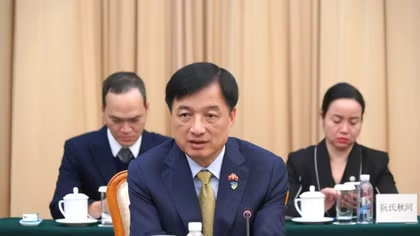
Vietnam treats human capital, science - technology, innovation and digital transformation as drivers of national development, prompting new demands for personnel affairs, including the need for officials with technical expertise and stronger leadership capabilities across Party committees, Head of the Communist Party of Vietnam (CPV) Central Committee’s Organisation Commission Nguyen Duy Ngoc said, adding that Vietnam wants to draw on Yunnan’s experience in this regard.
The Law amending and supplementing several articles of the Law on Corporate Income Tax, the Law on Non-Agricultural Land Use Tax, and the Law on Personal Income Tax was passed with 475 of the 477 NA deputies present voting in favour.
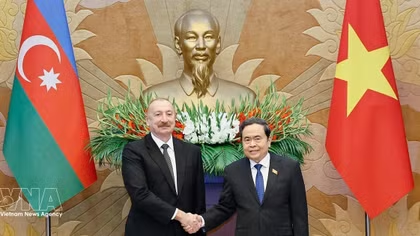
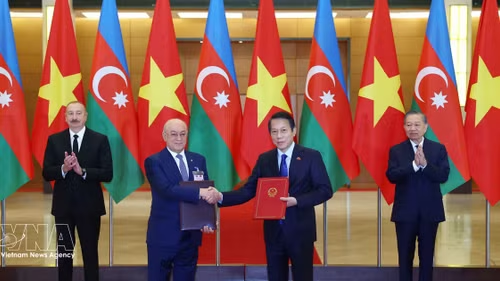
The two sides vowed to expand parliamentary cooperation, education - training, culture, tourism and people-to-people exchanges, and ease travel and cooperation for their citizens and companies, for the two peoples’ interests and for peace, stability and development.
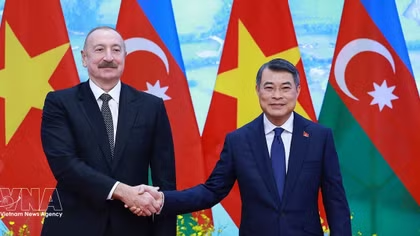
Vietnam is one of Azerbaijan’s important partners in Southeast Asia, Azerbaijani President Ilham Aliyev said, expressing his desire to further develop bilateral cooperation across fields in line with their traditional friendship and established strategic partnership.
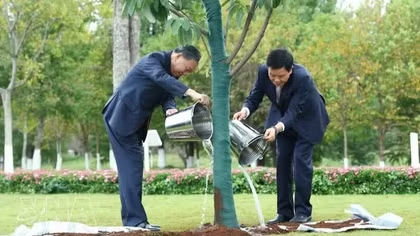
The leader, together with Mo Gaoyi, Secretary of the Communist Party of China Committee of Yunnan province, jointly planted a magnolia tree in the presence of officials from both countries.
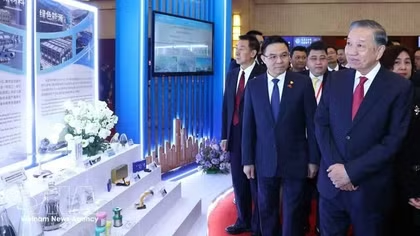
Southwest China has a vast market and increasingly strong industrial and innovation capabilities, while Vietnam boasts a dynamic economy, extensive international integration and seaports connecting it to major global shipping routes. By bringing into full play these advantages, the two sides can create shared development opportunities, linking inland areas with the sea, China with Southeast Asia and both with global markets.
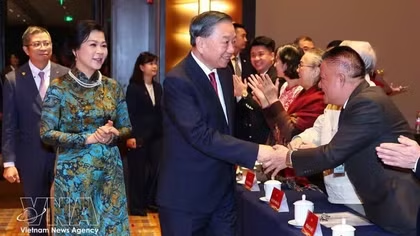
General Secretary and President To Lam called on diplomatic missions and the Vietnamese community to seriously implement the Resolution of the 14th National Party Congress, along with the Party and State’s guidelines on external relations.
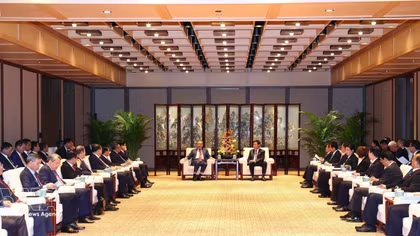
The Vietnamese leader proposed the two sides leverage strategic strengths and geographical proximity to make substantive progress in four connectivity axes of policy, seamless infrastructure, trade and investment, and people-to-people links.
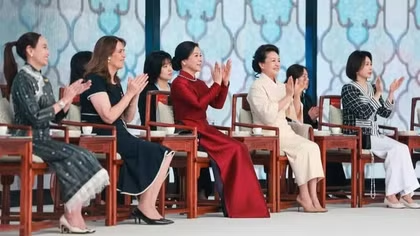
Madame Ngo Phuong Ly, spouse of General Secretary of the Communist Party of Vietnam Central Committee and President To Lam, attended a gathering of spouses of leaders and representatives of APEC economies in Shenzhen on November 19, using the occasion to spread Vietnam’s image on the sidelines of the APEC 2026 Economic Leaders’ Week.
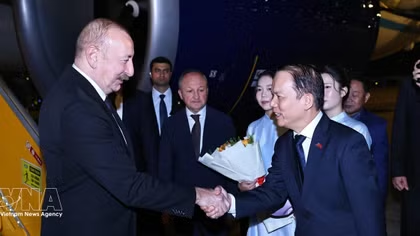
President of Azerbaijan Ilham Aliyev’s visit carries particular significance. It offers high-ranking leaders a chance to reinforce political trust, review the full range of relationship-building directions and set concrete steps to realise the Strategic Partnership, adding new momentum across politics, diplomacy, economy, trade, investment, energy, education, science-technology, and people-to-people exchanges.
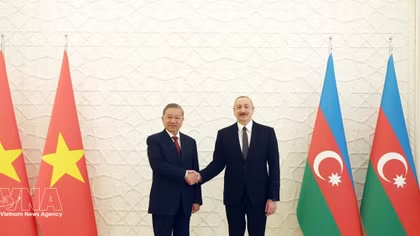
This time's visit will not only mark an important milestone in political and diplomatic ties but also open up tangible cooperation opportunities and deliver practical benefits to the peoples and businesses of both countries.
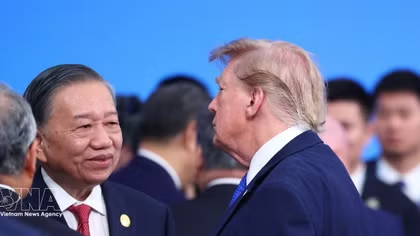
Vietnam considers the US one of its partners of strategic importance and wishes for further efforts to promote stable, balanced, sustainable and mutually beneficial economic, trade and investment ties.
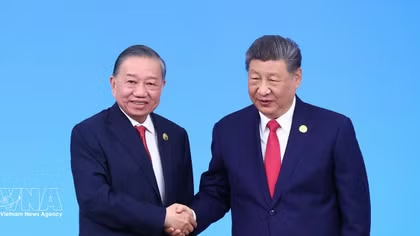
The top Vietnamese leader noted that hosting APEC for the third time marks an important milestone in Vietnam’s integration and development. The country pledges to be a dedicated host, listening to build consensus and connecting members to expand cooperation and deliver lasting results.