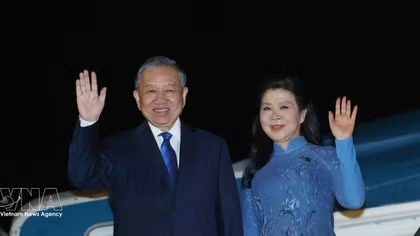
Hanoi (VNA) – Vietnam and the European Union (EU) have steadily expanded cooperation in various fields from politics and diplomacy to trade, investment, science and technology, and sustainable development over more than 35 years of diplomatic relations.
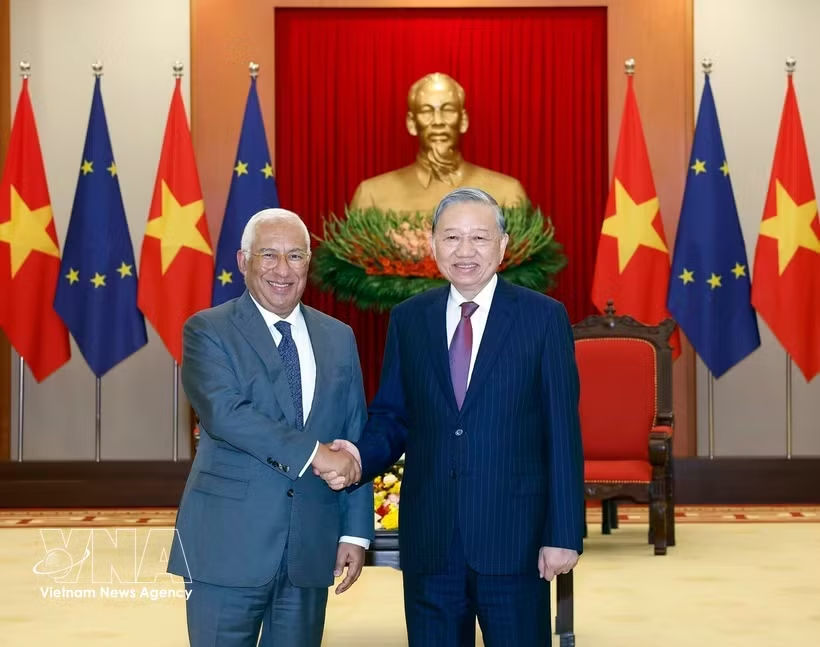
The EU-Vietnam Free Trade Agreement (EVFTA) has played an important role in boosting trade, improving market access and strengthening business links. The elevation of bilateral ties to a Comprehensive Strategic Partnership in January 2026 has expanded cooperation, creating a stronger foundation for both sides to tap their complementary strengths.
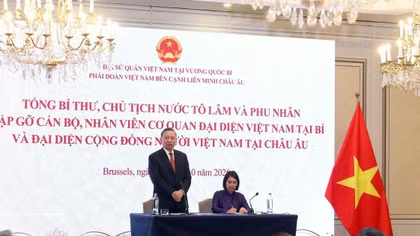
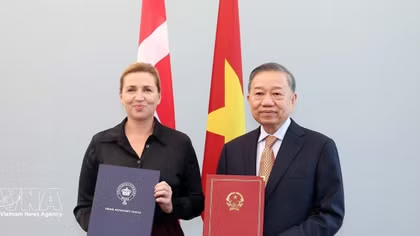
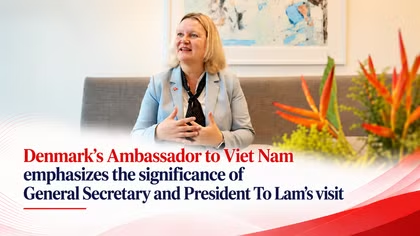
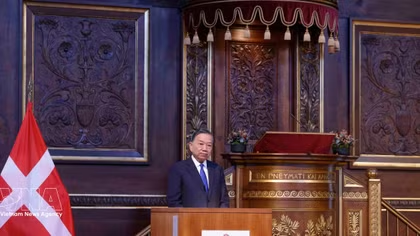
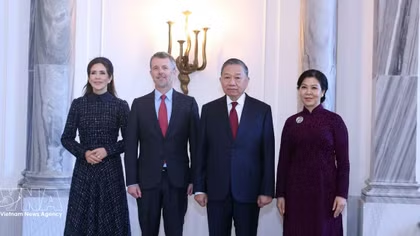
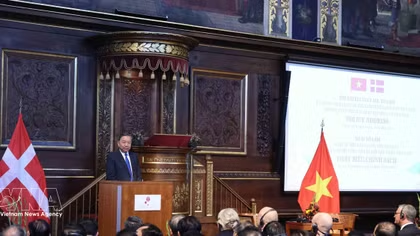
Against this backdrop, the ongoing official visit to the EU by General Secretary of the Communist Party of Vietnam Central Committee and President To Lam is expected to provide fresh impetus for deeper and more substantive economic and trade cooperation.
Broadening economic cooperation
Since establishing diplomatic relations on November 28, 1990, Vietnam and the EU have developed increasingly close ties. The upgrade to the Comprehensive Strategic Partnership during President of the European Council António Costa's visit to Vietnam in January 2026 marked a historic milestone, making Vietnam the first ASEAN member state to establish the highest-level partnership framework with the EU.
With gross domestic product (GDP) of 19.4 trillion USD, the EU is the world's third-largest economy and accounts for around 14% of global trade.
According to the Ministry of Industry and Trade, six years of implementing the EVFTA have delivered significant results, making Vietnam the EU's largest trading partner in the Association of Southeast Asian Nations (ASEAN).
The Netherlands, Germany, France, Italy, Belgium and Spain are Vietnam's main export markets in the bloc, accounting for more than 70% of its total exports to the EU. Vietnamese businesses are also expanding into smaller and niche markets in Northern, Eastern and Southern Europe.
Major Vietnamese exports to the EU include telephones and components, computers and electronic products, footwear, textiles and garments, as well as agricultural, forestry and fishery products.
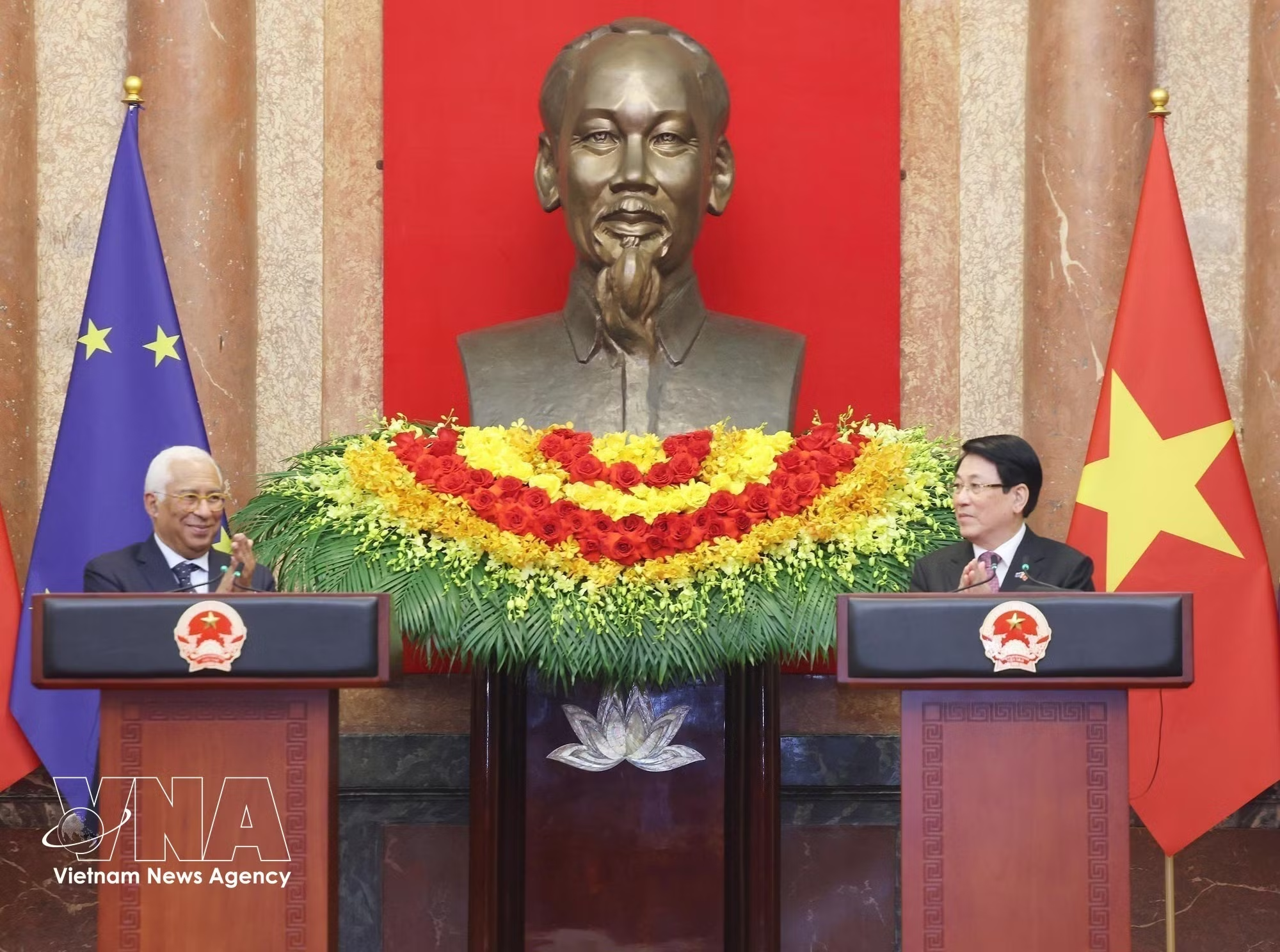
Figures from Vietnam's Department of Customs cited by the ministry show that bilateral trade averaged 64.03 billion USD annually from the EVFTA's entry into force in August 2020 through 2025, with average annual growth of 8.5%. Exports to the EU averaged 47.71 billion USD a year, growing by around 10.2% annually, while imports averaged 16.32 billion USD, rising by approximately 4.2%.
In 2025, two-way trade reached 73.81 billion USD, up 7.79% from 2024 and accounting for 7.9% of Vietnam's total trade. Vietnam's exports stood at 56.18 billion USD, up 8.56% and representing 11.8% of the country's total exports. Its imports from the EU rose 5.39% to 17.64 billion USD, accounting for 3.9% of total imports. Vietnam recorded a trade surplus of 38.54 billion USD with the bloc, up from 35 billion USD in 2024.
The positive trend continued in the first eight months of 2026, when bilateral trade totalled 57.16 billion USD, up 18% year on year. Vietnam's exports reached 44.26 billion USD, an increase of 19.66%, while its imports rose 12.75% to 12.91 billion USD.
These figures highlight the EVFTA's role in helping Vietnamese businesses access the European market. However, experts note that fully benefiting from the agreement requires more than tariff reductions. Businesses must also comply with rules of origin, technical standards, traceability requirements and increasingly stringent environmental regulations.
Significant room for further growth
According to the European Chamber of Commerce in Vietnam (EuroCham), 55% of European businesses surveyed in its second-quarter 2026 Business Confidence Index considered Vietnam a core operating base or an important growth destination. Another 22% viewed the country as a significant part of their regional operations network.
Among European companies engaged in bilateral trade, half reported directly benefiting from EVFTA tariff preferences, while two-thirds of this group recorded measurable financial savings.
Marking the agreement's sixth anniversary on August 1, 2026, EuroCham Chairman Bruno Jaspaert said nearly half of the total trade between the EU and Vietnam over the past three decades has been conducted under the EVFTA framework. This demonstrated how quickly trade integration had advanced once market-access barriers were removed.
He noted that the agreement had reshaped trade flows, strengthened business confidence and established Vietnam as an important economic anchor for Europe in Asia.
Tran Ngoc Quan, Trade Counsellor and Head of the Vietnam Trade Office in Belgium and the EU, said the EVFTA has not only boosted trade but also strengthened the broader partnership, opening up opportunities in green development, energy transition, circular economy and sustainability.
The complementary nature of the two economies provides favourable conditions for further cooperation. With more than 90% of goods already enjoying tariff-free access under the agreement, the EU is scheduled to eliminate almost all remaining tariffs on Vietnamese goods by 2027, giving Vietnamese exporters a potential three-to-five-year advantage over competitors, according to the trade office.
Many Vietnamese companies have also become familiar with European market practices and regulations and established stable business networks, providing a valuable foundation for future expansion. The trade office will continue helping domestic firms find partners, expand markets and address trade-related issues to protect their legitimate rights and interests.
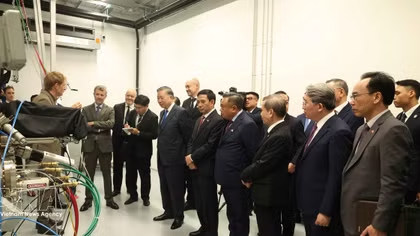
Cooperation is also extending to strategic raw materials. At a meeting with a delegation of experts from the EU's Critical Raw Materials Facility (CRMF), Do Nam Binh, Deputy Director of the Industry Agency under the Ministry of Industry and Trade, discussed Vietnam's industrial development priorities, the role of raw materials in manufacturing and processing, and opportunities for bilateral cooperation.
The discussions focused on developing industrial value chains, improving technological capacity, increasing domestic processing value and strengthening Vietnam's participation in international production networks.
Cooperation in strategic raw materials is expected to go beyond extraction and resource use to encompass deeper processing, technology transfer, research and development, and high-tech value chains. These efforts could help Vietnam increase domestic value addition, use resources more efficiently and strengthen industrial self-reliance.
The meeting gave the EU delegation a foundation to evaluate the potential for bilateral critical raw material supply chains and pinpoint key areas for future collaboration.
With the global economy shifting toward green transition and digital transformation and supply chains being reorganised, stronger collaboration on strategic raw materials could expand Vietnam-EU economic connections, enhance Vietnam's role in global value chains, and foster the growth of a more independent, modern, and sustainable industrial sector./.