Vietnam remains ASEAN growth leader in 2026 despite global headwinds: WB

Vietnam is expected to remain one of ASEAN’s fastest-growing economies in 2026, supported by resilient exports, strong investment inflows and an ambitious reform agenda, despite mounting global uncertainties, according to the World Bank’s latest Vietnam Economic Update released on May 15.

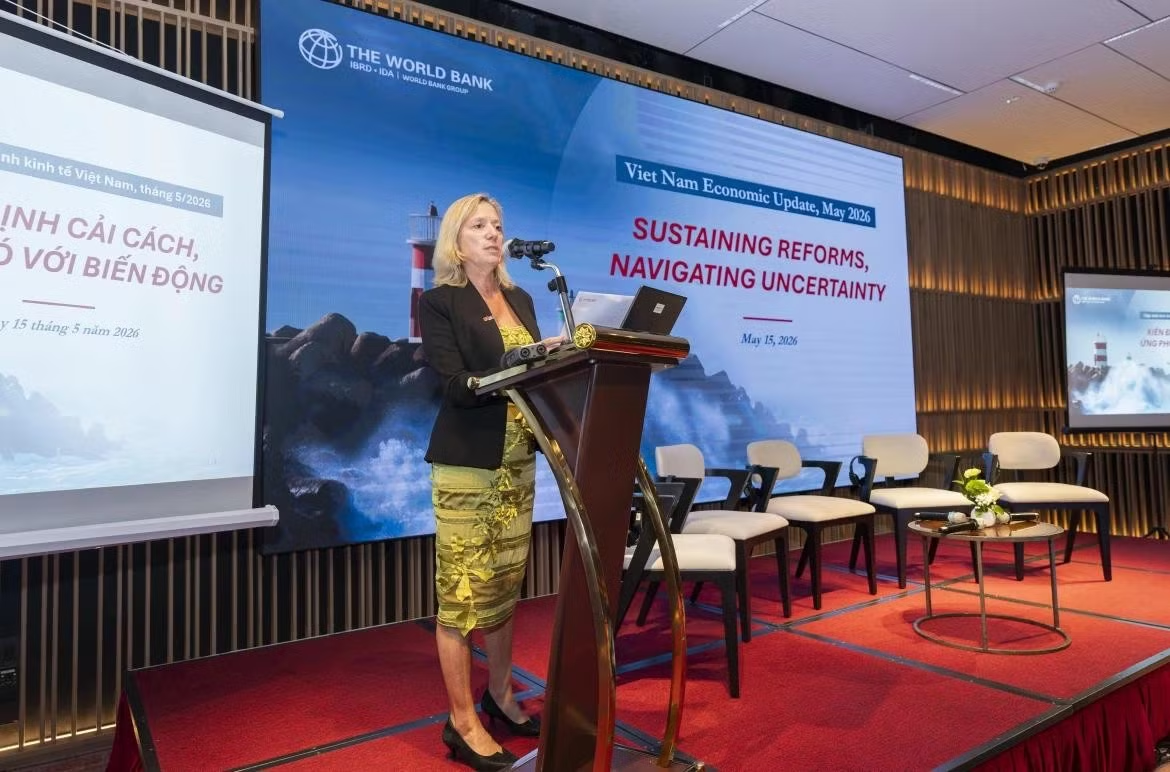
Mariam J. Sherman, World Bank Division Director for Vietnam, Cambodia, and Laos points to exports, investment and reforms as key drivers of Vietnam’s growth at the press briefing on May 15

According to the report, Vietnam’s GDP expanded 8% in 2025, the highest growth rate in ASEAN, while the economy grew 7.8% in the first quarter of 2026, marking its strongest quarterly performance in nearly a decade.

Speaking at a press briefing, Mariam J. Sherman, World Bank Division Director for Vietnam, Cambodia, and Lao PDR., emphasised that the country's growth momentum continues to be driven by robust exports, investment and a resilient domestic economy, alongside broad institutional reforms and major administrative restructuring.

However, she cautioned that softer global growth and rising geopolitical tensions are creating a more challenging external environment for Vietnam.

“This calls for further strengthening macroeconomic management while accelerating reforms,” Sherman said, adding that climate-related risks, demographic shifts, rapid technological changes and rising infrastructure demands are reshaping the foundations of long-term growth.

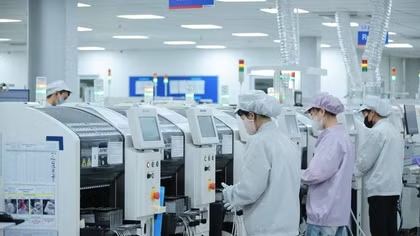
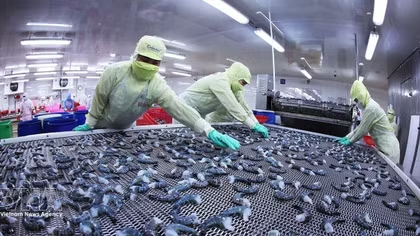
The report noted exports of electronics and high-tech products to the United States surged in 2025 as businesses accelerated shipments ahead of new tariff measures and benefited from the ongoing restructuring of global technology supply chains.

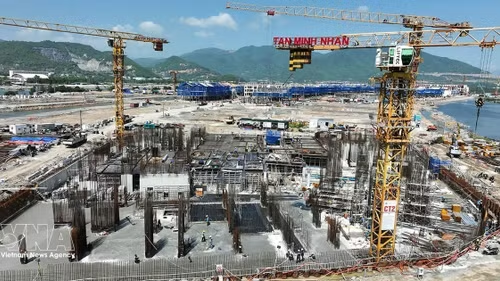
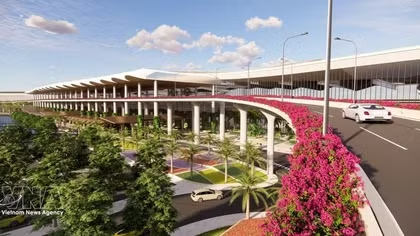
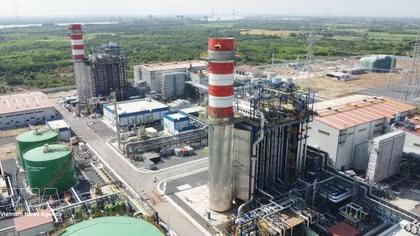
Public investment has also emerged as a key growth driver. Vietnam is implementing an infrastructure investment programme worth approximately US$320 billion over the next five years, alongside wide-ranging institutional reforms aimed at improving administrative efficiency and the business environment.

The World Bank said Vietnam’s medium-term outlook stays positive, with manufacturing and exports expected to continue serving as major growth engines. At the same time, the report emphasised the need to increase domestic value-added, strengthen linkages between foreign-invested and local enterprises, and improve labour productivity to sustain long-term growth.
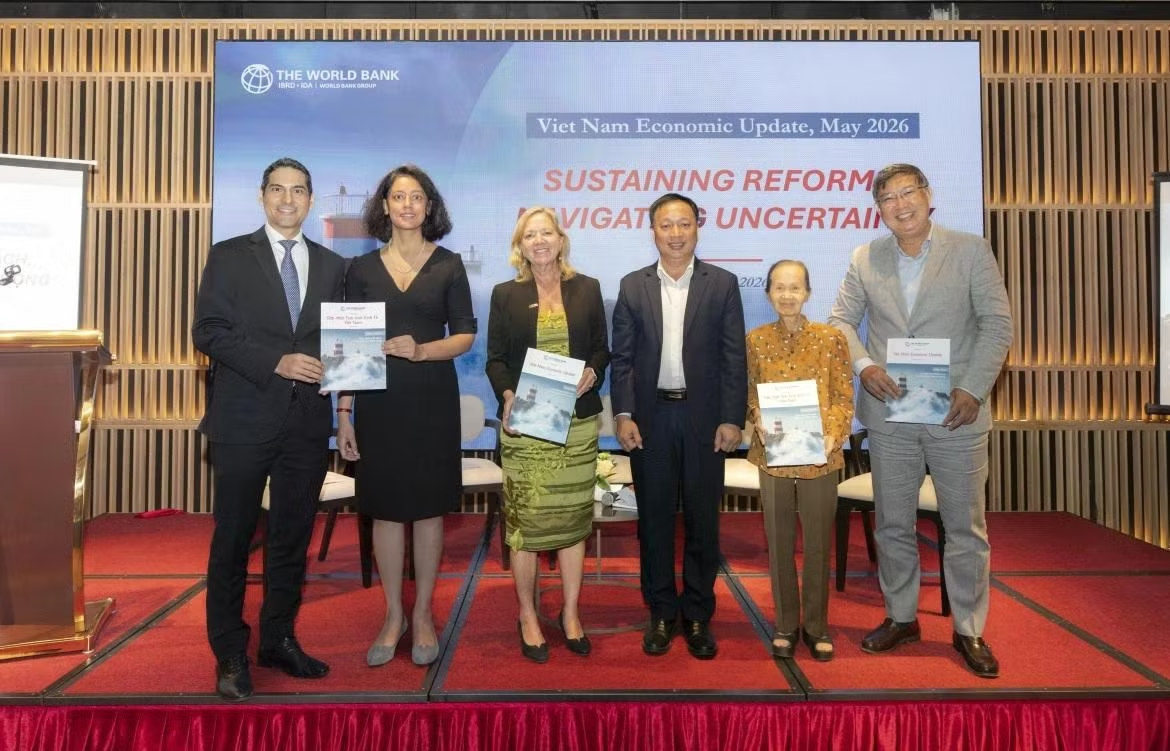
At the launching event of the World Bank’s latest Vietnam Economic Update

Meanwhile, Tehmina S. Khan, the World Bank’s Lead Economist, said Vietnam is benefiting from the global artificial intelligence investment boom, with AI-related exports now accounting for nearly 30% of GDP, among the highest ratios globally.

Khan noted Vietnam is entering a “Doi Moi 2.0” phase, referring to a new wave of institutional and administrative reforms aimed at fostering private-sector development and improving economic competitiveness.

From 2025 through April 2026, Vietnam enacted more than 86 laws and around 300 decrees aimed at removing legal bottlenecks, improving the business environment and promoting private-sector growth.

Despite the positive medium-term outlook, the bank warned that the external environment is becoming increasingly volatile and unpredictable.

The report said conflict in the Middle East has triggered what the World Bank described as a major global oil shock, pushing energy prices up by more than 50% as of late April 2026 and creating additional pressures for oil-importing economies in East Asia.

For Vietnam, rising energy prices could place pressure on inflation, exchange rates, production costs and domestic consumption.

In this context, Sharma suggested that Vietnam continue strengthening macroeconomic management while accelerating reforms, saying the core challenge lies in effective implementation, ensuring sufficient resources, and sustaining the reform agenda, alongside managing external risks and domestic vulnerabilities.

The World Bank forecast Vietnam’s GDP growth to moderate to 6.8% in 2026 before recovering in 2027–2028 as external pressures gradually ease and domestic growth drivers strengthen.

To sustain long-term growth momentum, the bank recommended that Vietnam deepen capital market development, improve the efficiency of public investment and attract higher-quality FDI linked to technology transfer, innovation and stronger connections with domestic enterprises.
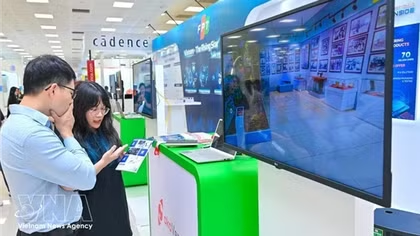

english.vov.vn

Other News

SBV raises short-term capital lending cap to 40%

SBV raises short-term capital lending cap to 40%

The new circular will help credit institutions have more room to provide capital to businesses and investment projects to support high economic growth in the next few years, while increasing flexibility in the SBV’s monetary policy management.

Business confidence in Vietnam rebounds strongly: UOB

Business confidence in Vietnam rebounds strongly: UOB

The study found that 85% of Vietnamese enterprises reported positive business sentiment, a sharp increase from 48% in 2025, when business confidence was weighed down by uncertainties surrounding US tariff policies and related trade developments.

Bac Ninh seeks high-quality foreign investment for sustainable growth

Bac Ninh seeks high-quality foreign investment for sustainable growth

According to Vice Chairman of the provincial People’s Committee Pham Van Thinh, the province aims to maintain stable and sustainable growth, improve the competitiveness of both the economy and local businesses, and make better use of free trade agreements (FTAs) to expand and diversify export markets.

Green building trend flourishes in Ho Chi Minh City's real estate landscape

Green building trend flourishes in Ho Chi Minh City's real estate landscape

The International Finance Corporation (IFC) highlighted the city's dominance in green-certified building floor space in Vietnam, reflecting the rapid expansion of the green building market with 780 completed green buildings encompassing over 18.69 million sq.m by 2025, predominantly certified by EDGE and LEED.

UK supports Vietnam in wind power and green finance development

UK supports Vietnam in wind power and green finance development

The United Kingdom officially announced two new climate cooperation initiatives to support Vietnam in its energy transition and green growth journey. These programs focus on offshore wind power development and the creation of a sustainable green financial ecosystem.

Ample room remains for Vietnam–India logistics cooperation

Ample room remains for Vietnam–India logistics cooperation

The GTTCI expert noted that alongside logistics and integrated warehousing, e-commerce is expected to be a particularly high-growth sector in the coming years. He described it as a multi-billion-dollar market with significant untapped opportunities for cooperation between Vietnam and India.

Exports gain momentum from high-tech growth drivers

Exports gain momentum from high-tech growth drivers

According to the Ministry of Industry and Trade, Vietnam’s exports reached 215.66 billion USD in the first five months of 2026, up 19.5% year-on-year. Twenty-six export items generated more than 1 billion USD in revenue each, including seven with turnover exceeding 10 billion USD.

Vietnam–China crossings see spike in ASEAN fresh produce

Vietnam–China crossings see spike in ASEAN fresh produce

Since the start of the summer harvest season, China's two major border gates with Vietnam, Youyi Guan in Pingxiang and Beilun 2 Bridge in Dongxing, have entered their peak period for handling imports of fresh agricultural and seafood products from member states of the Association of Southeast Asian Nations (ASEAN).

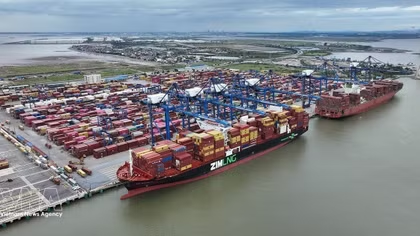
Cargo handling operations at Berths 3 and 4 of the Hai Phong International Gateway Port. (Photo: VNA)

AI reshapes logistics, raising bar for workforce skills

According to the Vietnam Logistics Business Association (VLA), the logistics sector will require around 2.2 million workers by 2030, including 1.6 million employees for logistics service providers and nearly 600,000 personnel supporting logistics operations in manufacturing and trading enterprises.
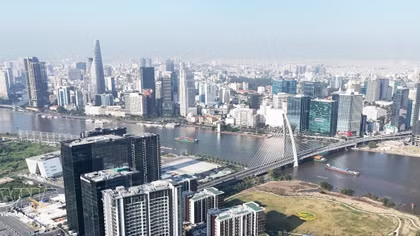
Robust dispute resolution framework key to Vietnam's IFC ambitions

Robust dispute resolution framework key to Vietnam's IFC ambitions

The development strategy for VIFC-HCMC envisions a comprehensive financial ecosystem encompassing green finance, carbon credits, financial technology (fintech), blockchain technology, digital assets, digital banking and other innovative business models. These highly internationalised sectors involve complex cross-border transactions and sophisticated legal structures.