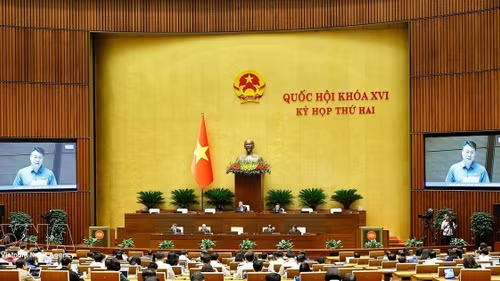
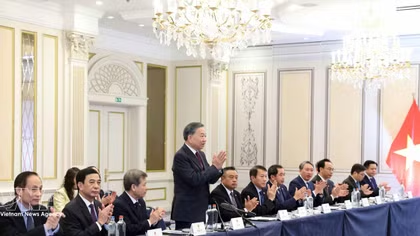
Hanoi (VNA) – The 16th National Assembly (NA) wrapped up its first extraordinary session in Hanoi on August 24 afternoon.
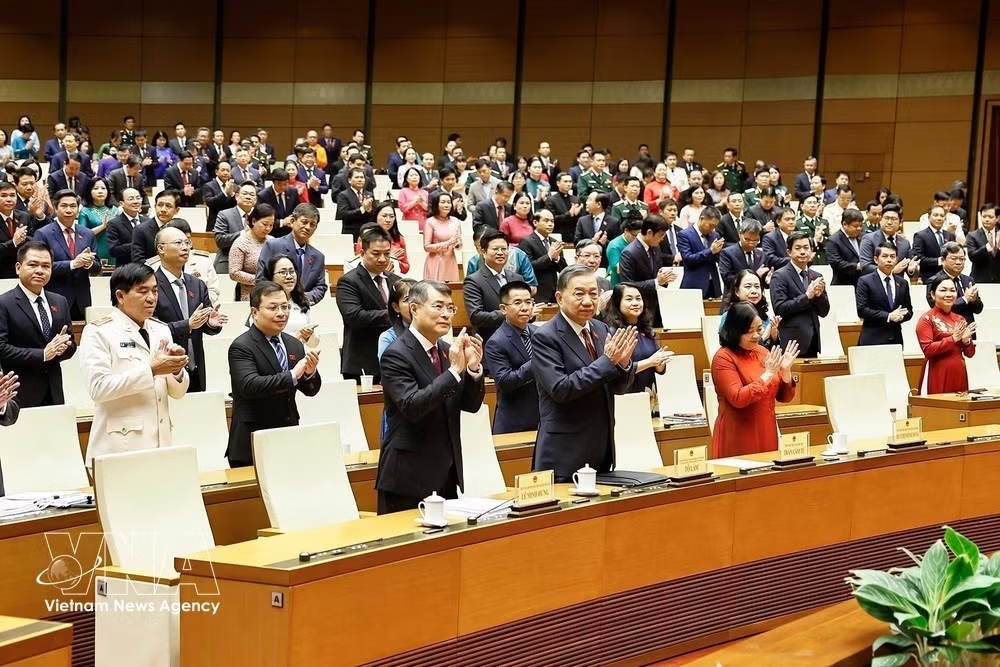
Attending the closing sitting were General Secretary of the Communist Party of Vietnam Central Committee and President To Lam, Prime Minister Le Minh Hung, President of the Vietnam Fatherland Front (VFF) Central Committee Bui Thi Minh Hoai; and other Party, State and VFF leaders.
Flexible – Swift – Decisive – Accompanying
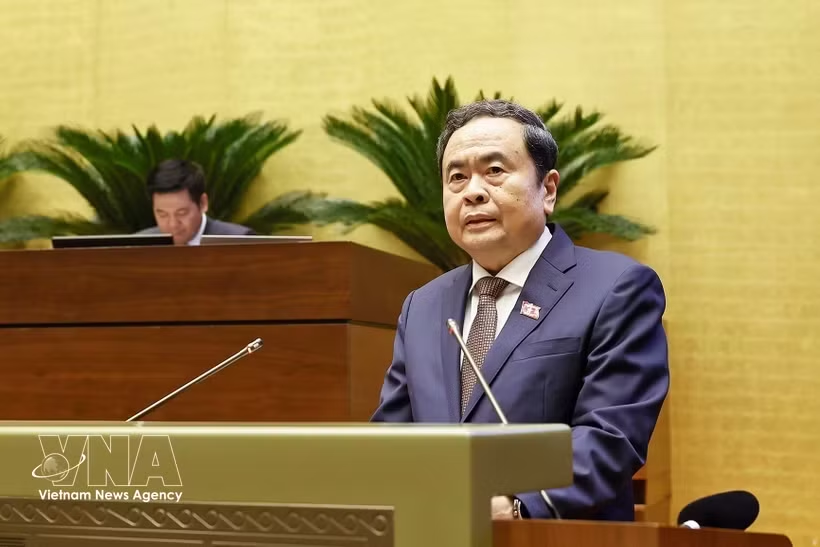
In his closing speech, NA President Tran Thanh Man said the session cleared its full agenda after 17 days of intensive, urgent, serious, democratic and highly responsible work.
Lawmakers passed 15 laws and six legal resolutions and gave first-round consideration to seven other draft laws. The session was aimed at clearing bottlenecks, fine-tuning the legal and institutional framework, accelerating decentralisation and delegation of authority, cutting administrative procedures, clearing barriers, unlocking resources, creating favourable conditions for citizens and businesses, and improving the effectiveness and efficiency of state management.
The legislature also approved seven resolutions of strategic significance to national development, opening up new development space, driving infrastructure connectivity, ensuring energy security, developing urban areas, improving the efficiency of development resource use and pursuing double-digit economic growth. It also handled personnel matters within its authority.
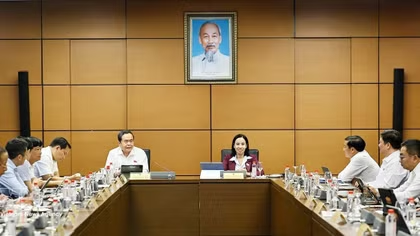
Legislators raised 2,680 opinions in group discussions and 535 in the plenary hall. The comments were frank and substantive, grounded in practical realities and closely aligned with the Party’s leadership, and fully considered by drafting and examination agencies.
The result was a high degree of consensus on all agenda items. He said it reflected a “flexible, swift, decisive and accompanying” spirit among the NA, Government and relevant agencies to build a legal framework responsive to practical requirements, all for the country’s rapid and sustainable development.
According to him, the NA lauded the Government, drafting agencies and NA bodies for their proactive, positive and highly responsible approach, including early coordination, research during drafting and reviews arranged as soon as relevant documents were submitted.
Synchronous, urgent and methodical action
The NA President asked the Government, ministries, agencies and localities to proactively issue all documents within their respective authority and prepare the necessary conditions to enforce the laws and resolutions as soon as they take effect.
He called for continued innovation in thinking, working methods and practices, stressing that matters under the authority of a particular level must be proactively decided and handled by that level, without waiting for or shifting responsibility to others, and that citizens and businesses must not be left waiting.
The leader also urged overhaul in legal communication and dissemination under the recently passed Law on Legal Dissemination and Education, using science and technology, digital platforms and new communication methods to make laws accessible to citizens and businesses as quickly, clearly and conveniently as possible.
The Government, parliamentary bodies, ministries and agencies should continue to accelerate the comprehensive review of the legal and regulatory system according to plan. NA agencies, delegations and deputies should proactively conduct oversight and make proposals to the NA and its Standing Committee on emerging problems, he said.
On Quang Ninh and Bac Ninh, he urged thorough preparations to ensure their political systems and new urban administrative apparatuses operate effectively as soon as the resolutions establishing the two cities take effect.
Less than two months remain before the 16th NA convenes its second regular session, which is expected to consider and pass an exceptionally large volume of legislation, he urged the Government, parliamentary agencies and relevant bodies to build on proven experience and effective practices while preparing submissions well in advance to ensure quality, progress and proper procedures.
As the country is entering a period of “acceleration and breakthrough”, the decisions adopted at this session will provide an important legal basis for the Government, ministries, agencies and localities to carry out their tasks in the final months of 2026, strive for double-digit growth and realise development goals for 2026-2030, he said.
Earlier at the closing sitting, with 474 of the 476 participating deputies voting in favour, the legislature passed the Law amending and supplementing several articles of the Law on Investment, which takes effect March 1, 2027.
It also passed a resolution establishing Quang Ninh city, with all 478 deputies present voting in favour, and a resolution establishing Bac Ninh city, with all 480 deputies voting yes.
Under the resolution, Quang Ninh will be established from the entire natural area and population of Quang Ninh province. The resolution will take effect on September 1, 2026.
Bac Ninh city will be established from the entire natural area and population of Bac Ninh province. The resolution will take effect on September 20, 2026./.