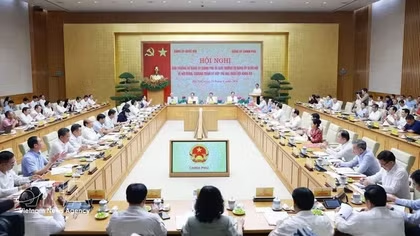
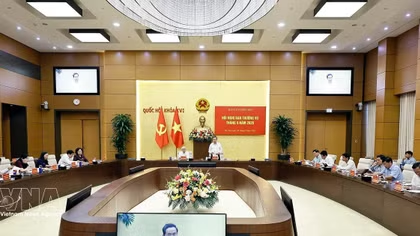
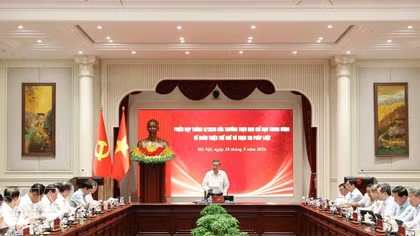
Hanoi (VNA) – The Government has proposed a 30% reduction in personal and corporate income taxes for small-scale business households, individuals and enterprises in 2026 and 2027, as part of measures to ease business difficulties and support economic growth.
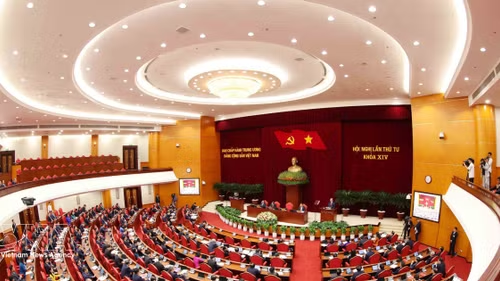
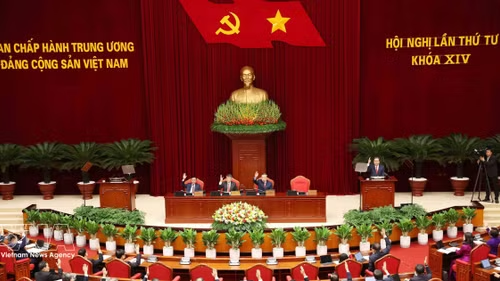
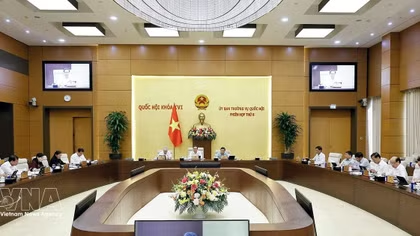
The proposal was presented to the 16th National Assembly at its first extraordinary session on August 21.
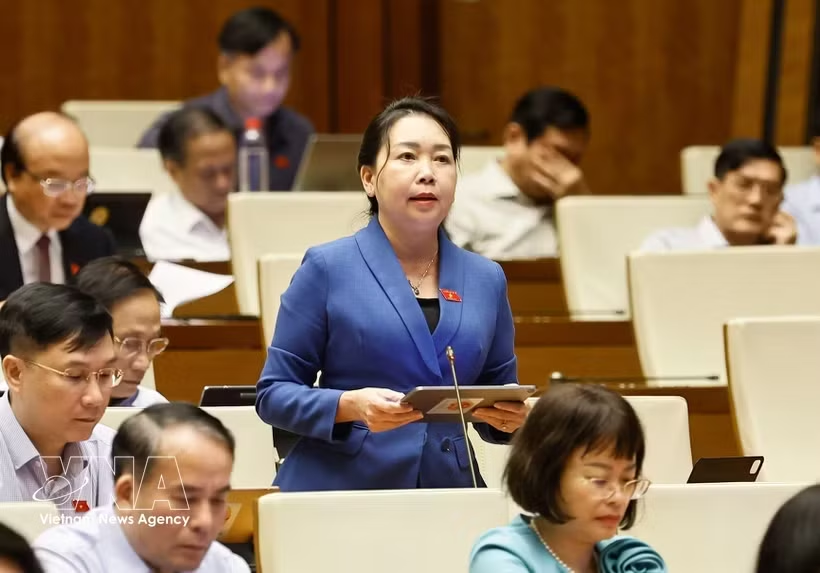
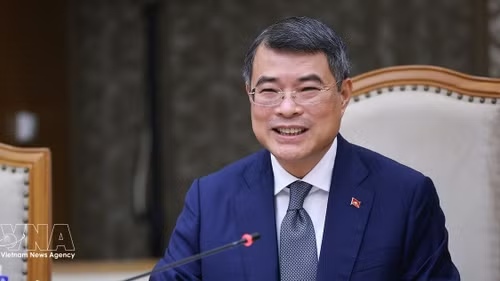
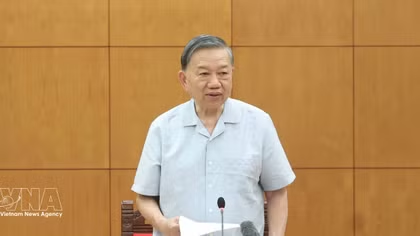
Presenting the Government’s proposal, Minister of Finance Ngo Van Tuan said the personal income tax payable for the 2026 and 2027 tax years is proposed to be reduced by 30% for resident individuals earning income from business activities, provided their annual revenue does not exceed 10 billion VND (about 383,600 USD).
A similar 30% reduction in corporate income tax would apply in 2026 and 2027 to enterprises and organisations established under Vietnamese law with annual revenue of no more than 10 billion VND.
For businesses already eligible for tax incentives under the Corporate Income Tax Law or other laws and National Assembly resolutions, the 30% reduction would be calculated based on the corporate income tax payable after existing incentives have been deducted.
According to Tuan, the proposed tax cuts would help ease difficulties, stabilise production and business activities and provide timely support for business households, individuals and enterprises. They would also help control inflation, maintain macroeconomic stability and contribute to the country’s economic growth targets.
The measure is estimated to reduce State budget revenue by about 3.19 trillion VND in 2026 and 3.51 trillion VND in 2027.
The minister acknowledged that the policy could reduce state budget revenue in the short term, but stronger growth among businesses and individuals would eventually generate additional revenue through taxes on their consumption and income.
Deputy Chairwoman of the National Assembly’s Committee for Economic and Financial Affairs Pham Thi Phu Ha said the committee basically agreed on the need to issue the resolution as proposed by the Government, saying it would provide timely support and help remove difficulties facing small-scale businesses.
However, the committee asked the Government to further assess difficulties and concerns raised by voters, businesses and business associations so that policies can provide practical and substantive solutions.
Most committee members supported the proposed 30% tax reduction for businesses and individuals with annual revenue of no more than 10 billion VND in 2026 and 2027.
The committee also urged the Government to prevent businesses from artificially splitting or transferring revenue to qualify for the tax cut. It called for clarification of the basis for applying the 10-billion-VND threshold across sectors, how revenue would be calculated, and how the policy would apply to businesses with non-calendar fiscal years, newly established companies and businesses undergoing division, separation, consolidation or merger.
Sea reclamation projects to expand development space
Also on August 21 morning, the National Assembly heard a proposal on mechanisms and policies for sea reclamation urban development projects to be incorporated into the draft Urban Development Law.
The proposed framework aims to translate the Party’s policy on developing the marine economy into law, create a stable legal framework for the development and operation of reclaimed-land urban areas, mobilise non-State resources and create new growth centres.
It also seeks to promote environmental protection, climate change adaptation and sustainable socio-economic development.
The proposal calls for greater decentralisation and delegation of authority to local governments while maintaining oversight by the National Assembly, Government and provincial-level People’s Councils.
Chairman of the National Assembly’s Committee for Legal and Judicial Affairs Phan Chi Hieu said the committee agreed on the need for special mechanisms for sea reclamation urban projects to expand development space, tap the potential of the marine economy and mobilise resources outside the State budget.
The committee urged the drafting agency to ensure that regulations are consistent with laws on land, seas and islands, while meeting requirements on national defence and security, sovereignty, maritime safety, environmental protection and marine ecosystems.
It also stressed that only truly necessary and specific provisions should be included in the law, avoiding duplication of regulations already covered by specialised legislation./.