As Hanoi continues its trajectory of growth, culture is steadily asserting its role as a spiritual foundation, an intrinsic resource, and a key driver of economic development.
From community art spaces to large-scale international events, and from policy direction to concrete action, the capital is shaping a vibrant cultural industries ecosystem. This effort is helping to define the image of a creative, globally integrated, and sustainable city in the new era.
Creative spaces usher in new cultural life
Guided by the Politburo’s Resolution No. 80-NQ/TW issued on January 7 by on the development of Vietnamese culture, alongside an action programme serving the resolution implementation introduced by the Standing Board of the municipal Party Committee on March 17, culture has been placed at the heart of both the capital’s and the nation’s development strategy.
No longer confined to preservation, it is increasingly being mobilised as an intrinsic resource, gradually transformed into tangible products, services, and economic value.
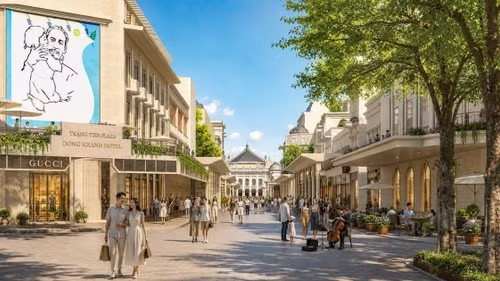
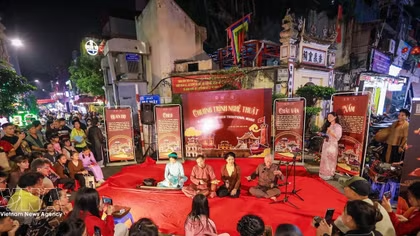
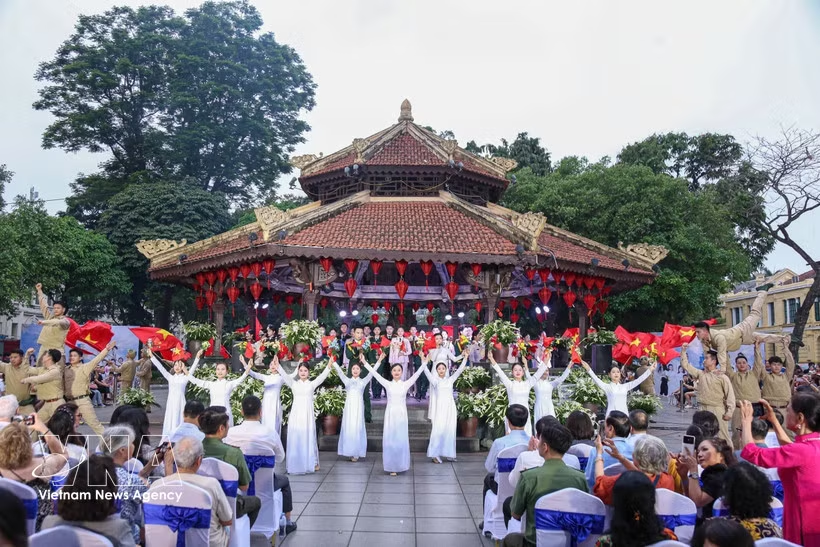
A clear illustration of this shift is the expansion of art into public spaces. A weekend music programme at the octagonal pavilion, within the pedestrian zone around Hoan Kiem Lake, has become a regular cultural fixture. Featuring high-quality performances every Sunday afternoon, it is attracting both residents and visitors alike.
According to Tan Minh, Director of the Thang Long Song and Dance Theatre, the programme was launched under the city’s directive to develop cultural and artistic activities in the lake area. Maintaining weekly performances helps embed art into everyday life while creating a cultural highlight in the capital’s central space.
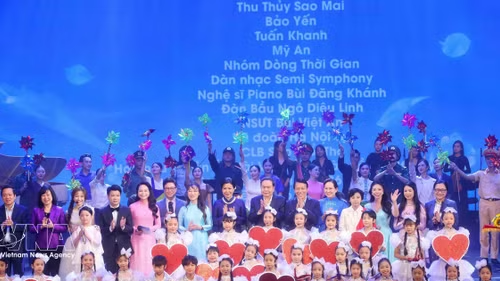
Building on this momentum, Hanoi has also recently hosted a live concert at the same venue, bringing together renowned performers and more than 100 artists.
Beyond community events, the city is expanding into a broader creative ecosystem. The Hanoi Creative Design Festival 2026, themed “creative economy”, marks a significant step in shaping the cultural industries sector. By connecting fields such as design, technology, education, and start-ups, the festival creates a multidimensional interactive space that draws in the creative community and young people.
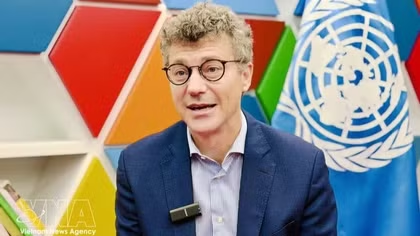
UNESCO Representative to Vietnam Jonathan Baker praised Hanoi’s proactive approach in launching the festival early and sustaining activities throughout the year. He described this as evidence of its strong commitment as a creative city, helping to unlock creative resources and gradually convert them into economic value, thereby laying the groundwork for sustainable development.
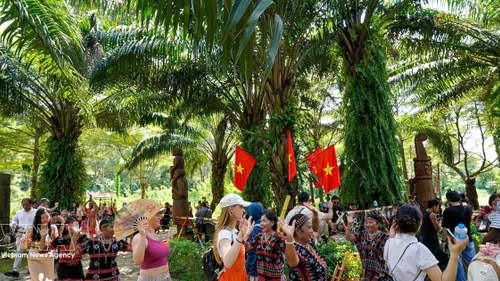
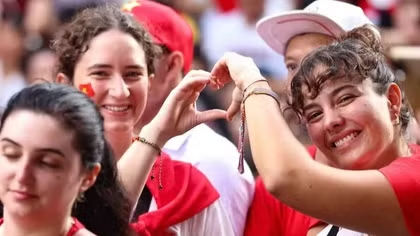
At the same time, Hanoi is increasingly reinforcing its position as a destination for international cultural exchange. The Cultures of the World Festival in the capital last October, with participation from 48 countries, created a vibrant and diverse tapestry of cultural interaction.
Cultural industries – a spearhead for economic growth
In the current context, cultural industries are viewed as a strategic pathway for culture to make a more visible contribution to economic growth.
Associate Professor Dr Bui Hoai Son, a standing member of the National Assembly’s Committee for Cultural and Social Affairs and a Hanoi deputy, believes the capital holds significant advantages to become a leading force in the development of such industries. However, he cautioned against the dispersion of resources, advocating instead for a focused approach on key sectors with strong spillover potential.
According to Son, every street, heritage site, and symbol of Hanoi carries stories of considerable value. The city’s cuisine is also a notable strength. Events like international film festivals help connect Hanoi with the global creative industry while generating positive spillover effects across other economic sectors. In fashion, the city has already established a foundation through international events and growing design capabilities.
Meanwhile, emerging industries such as software, gaming, and creative products derived from traditional craft villages are opening up new opportunities. When combined with technology and innovative thinking, these sectors can produce high-value cultural products.
He stressed that effectively leveraging these unique advantages would enable Hanoi to maximise its cultural resources. In doing so, cultural industries would not only represent a field of development but also become a key driver of sustainable economic growth.
From a governance perspective, Pham Tuan Long, Director of the municipal Department of Culture and Sports, said the presence of leading management and research institutions offers a further advantage. This facilitates stronger links between research and practice, allowing policies and research outcomes to be swiftly implemented with tangible results.
He underscored that the March 17 action programme represents an important step in clearly defining Hanoi’s role and responsibilities in cultural development, supported by coordinated efforts across the entire political system.
Long added that when cultural values are translated into concrete products within the cultural industries through modern and accessible storytelling, culture can move beyond latent potential to become a genuine and powerful resource for development.