Hanoi brings new life to suburban tourism villages

Hanoi has long been known for the heritage cachet of a thousand-year-old capital. Hoan Kiem Lake, the Old Quarter, the Temple of Literature, the Thang Long Imperial Citadel and a network of craft villages have given the city a singular pull.
Hanoi is redrawing its tourism map, pushing beyond the postcard mainstays of Hoan Kiem Lake and the Old Quarter to woo travellers with a slate of community-based destinations in suburban areas, betting that herbal baths, stilt-house stays and rice-field cycling can turn a day-trip capital into a multi-night experience.

Winning visitors over with cultural identity

Hanoi has long been known for the heritage cachet of a thousand-year-old capital. Hoan Kiem Lake, the Old Quarter, the Temple of Literature, the Thang Long Imperial Citadel and a network of craft villages have given the city a singular pull.

o.jpg
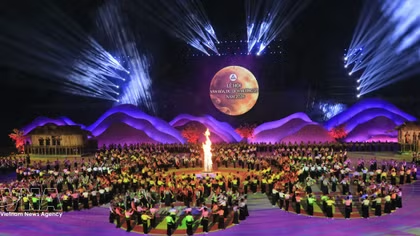
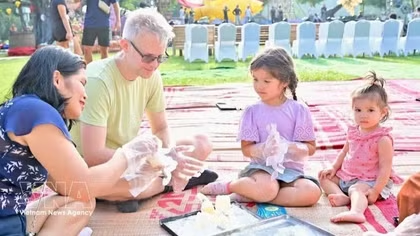
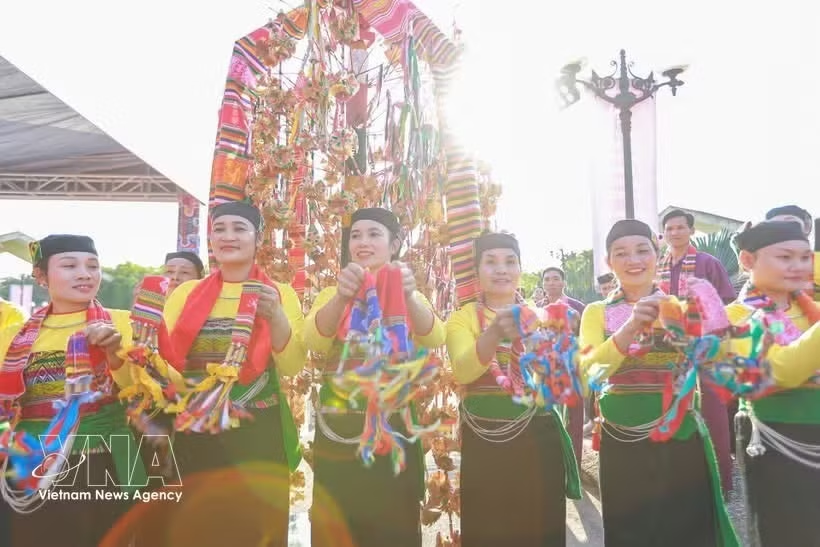
An ethnic festival at the Vietnam National Village for Ethnic Culture and Tourism (Photo: VNA)

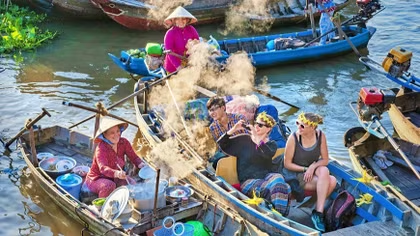
But as global travel pivots sharply from ticking off landmarks to immersive experiences, Hanoi is finding a new edge in community-based tourism, where culture isn’t staged but lives in the homes, meals and daily rhythms of residents.

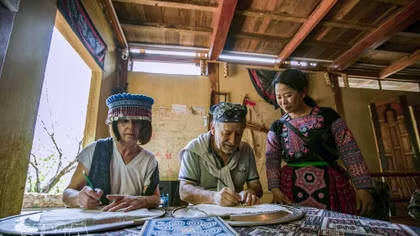
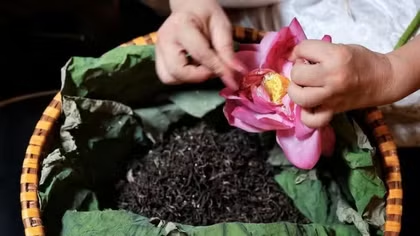
Nestled at the foot of Ba Vi mountain, Ban Mien has carved out a reputation for the Dao ethnic group’s herbal medicine, rituals and folk arts. Visitors there go beyond passive sightseeing, plunging into local life with Dao herbal baths, traditional cooking and lessons in medicinal plant lore.

The capital’s newest community-tourism bet is Muong Coc in My Duc commune. In early July, the municipal Department of Tourism and local authorities launched “Muong Coc – Touching Peace”, minting a new product on Hanoi’s tourism map.

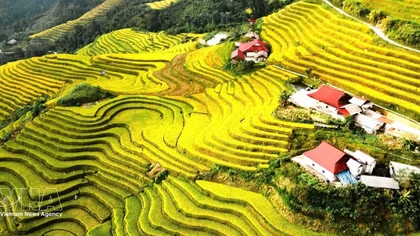
About 60 kilometers from central Hanoi, Muong Coc serves up semi-mountainous scenery of rocky hills, lakes and rice paddies dotted with Muong ethnic villages. The draw isn’t concrete polish but the unvarnished simplicity of local existence. Visitors can stay in stilt houses, cycle through paddies, trek low slopes and sample dishes rich in Muong culinary tradition.

Further afield, the Vietnam National Village for Ethnic Culture and Tourism in Dong Mo offers a larger-scale proposition. Transferred to Hanoi’s control on July 1, the site is being positioned as a cultural, tourism and creative-industry hub, and a new growth pole for the city’s western part.

Far from a static museum, the village functions as a living stage where ethnic communities hold festivals, demonstrate crafts, serve traditional food and practice rituals year-round. In a single trip, tourists can roam cultural spaces from Central Highlands communal houses and Ede longhouses to Tay and Muong stilt homes and the traditional dwellings of Khmer and Cham groups.

Turning “tourism villages” into Hanoi brand

Taken together, these destinations remain in their infancy. Scale is limited, product diversity is thin, links between sites are weak, and overnight stays are short. To turn these villages into signature offerings, Hanoi needs a long-term, coordinated strategy that puts local communities at its centre.

Nguyen Tien Dat, Vice Chairman of the Hanoi Tourism Association, said operators must stop thinking in isolated attractions and start building an integrated community-tourism network. Localities are mining their own strengths in different ways, missing the connections that would forge a compelling product chain. Given that distances are modest, Dat argued, two-to-three-day experiential itineraries are well within reach.

Phung Quang Thang, Chairman of the Vietnam Green Tourism Association, said each village needs a distinct story. Muong Coc should be pitched as a Muong cultural immersion set against a semi-mountainous landscape and the unhurried pace of local life. Ban Mien should double down on Dao heritage, herbal medicine, wellness and resort-style stays. The national ethnic-culture village, meanwhile, ought to become a hub for cultural festivals, art events, craft showcases and large-scale experiential activities, spreading year-round visitor traffic, not just festival dates.

Vu Van Tuyen, Director of Travelogy, flagged the scarcity of accommodation as a critical weakness. To lengthen stays and deepen immersion, local authorities need to channel investment into quality lodgings and homestays.

Tuyen said as digital transformation accelerates, Hanoi could build a dedicated digital map for community-based tourism destinations, layering accommodation and tour bookings, online payments and multilingual interpretation onto a single platform.
en.vietnamplus.vn

Other News

Hanoi works to unlock heritage resources

Hanoi works to unlock heritage resources

When innovation deepens understanding of traditional values rather than replacing them, heritage becomes not only something to preserve but also a resource for sustainable tourism, economic development and reinforcement of Hanoi’s position as a UNESCO Creative City.

Asian Para Games 2026: Vietnam wins swimming gold

Asian Para Games 2026: Vietnam wins swimming gold

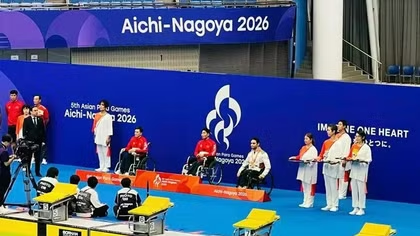
Vietnamese swimmer Do Thanh Hai clinched gold with a time of 1 minute 33.91 seconds, ahead of compatriot Le Tien Dat, who secured silver in 1 minute 36.63 seconds. Iran’s Rashidabadi Ali rounded out the podium, taking bronze in 1 minute 47.78 seconds.

Sydney hosts first Vietnamese Ao dai street parade

Sydney hosts first Vietnamese Ao dai street parade

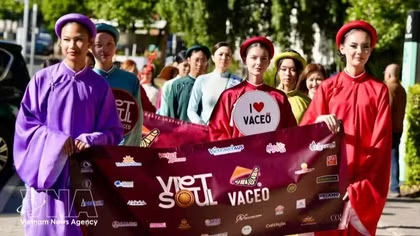
Colourful traditional Vietnamese Ao dai (traditional long dresses) brought a festive touch to the streets of Bankstown, Sydney, on October 17, as more than 20 Vietnamese people from different generations took part in an Ao dai street parade held as part of the Viet Soul 3 Festival.

Spouses of Vietnamese, Swiss leaders visit Hanoi University of Pharmacy

Spouses of Vietnamese, Swiss leaders visit Hanoi University of Pharmacy

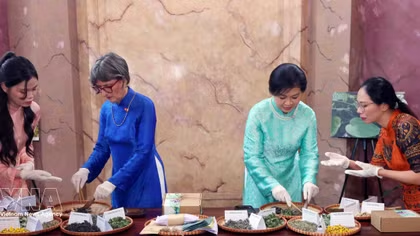
Hanoi University of Pharmacy holds special significance in bilateral relations as it is closely associated with Alexandre Yersin, a French scientist of Swiss origin born in 1863 in the canton of Vaud, the homeland of President Parmelin. Yersin was the first principal of the Indochina Medical College, the predecessor of today’s Hanoi University of Pharmacy and Hanoi Medical University. He also made important contributions to the development of medicine in Vietnam.

Muong Lo Festival 2026 opens with grand Xoe dance performance

Muong Lo Festival 2026 opens with grand Xoe dance performance

Chairman of the Lao Cai provincial People’s Committee Nguyen Tuan Anh said the province regards culture as the spiritual foundation, an endogenous resource and a driving force for sustainable development, with people at the centre of cultural creation, preservation and enjoyment.

Viet Nam Days in France scheduled for October 24–30

Viet Nam Days in France scheduled for October 24–30

Viet Nam Days in France 2026 aim to showcase Viet Nam's distinctive culture, country and people to French and international audiences as well as the Vietnamese community in France, promoting an image of an identity-rich, dynamic, creative and internationally integrated Viet Nam.

Vietnamese in Australia keep heritage alive

Vietnamese in Australia keep heritage alive

Vietnamese dance and traditional music classes organised by the Viet-Aus Culture Exchange Organisation (VACEO) have been held every Saturday afternoon in Bankstown, Sydney.

Quang Tri to host week-long culture and tourism festival

Quang Tri to host week-long culture and tourism festival

The opening ceremony and an art programme under the same theme will take place on November 24 at Phong Nha-Ke Bang National Park in Phong Nha commune, highlighting the UNESCO-listed natural heritage site and promoting cave exploration tours.

Vietnam ranks among world's top 10 favourite countries in 2026

Vietnam ranks among world's top 10 favourite countries in 2026

Vietnam’s inclusion in the top 10 favourite countries in the 2026 Readers’ Choice Awards adds another important milestone to the country’s international tourism brand. The result not only underscores the destination’s appeal but also reflects growing international appreciation for Vietnam’s natural beauty, cultural heritage, cuisine and people.

ASIAD 20 prompts Vietnam to sharpen focus on key sports

ASIAD 20 prompts Vietnam to sharpen focus on key sports

Vietnam’s gold medals came from karate and sepak takraw, reaffirming its strengths in sports with established traditions and focused investment. Meanwhile, bronze medals in canoeing and teqball showed potential in events where Vietnamese athletes are gaining international experience.