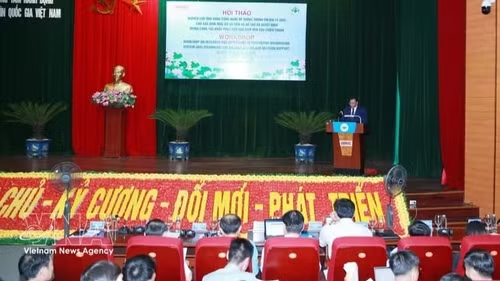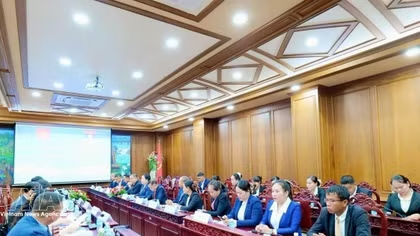
Deputy Prime Minister Ho Quoc Dung has signed the Prime Minister's Directive No. 19/CT-TTg, calling for stronger implementation of the Ethnic Affairs Strategy by 2030, with a vision toward 2045.
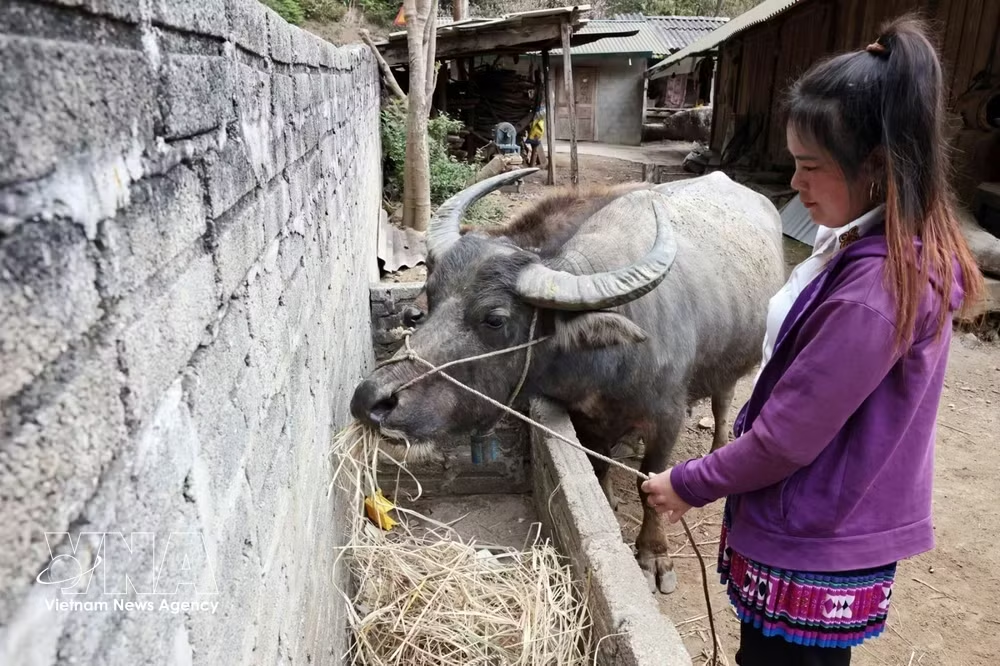
The directive underscores that in recent years, the Party and State have introduced and implemented a wide range of ethnic affairs-related policies and development programmes, including the Ethnic Affairs Strategy for the 2021-2030 period, with a vision to 2045, promulgated under Government Resolution No. 10/NQ-CP in January 2022. These efforts have contributed significantly to improving living conditions in ethnic minority and mountainous areas.
Both the material and spiritual well-being of ethnic minority communities have improved markedly, with poverty reduction in these regions outpacing the national average. Equality, solidarity, mutual respect and cooperation among ethnic groups have continued to be strengthened, contributing to greater public confidence in the leadership of the Party and the State as well as to political stability and social order nationwide.
Despite these achievements, the Government acknowledged that socio-economic development in many ethnic minority and mountainous areas remains slow, with infrastructure still falling short of development needs. Educational quality and human resources capacity remain limited, while the training, recruitment and employment of ethnic minority officials in some localities have yet to receive adequate attention. Certain areas also continue to face latent risks related to political security and social order, alongside unsolved issues concerning housing land, production land, access to clean water and residential planning.
The directive noted that in addition to objective challenges, shortcomings also stem from inconsistent awareness and implementation among some ministries, sectors and local authorities. Several assigned projects under the action programme on the implementation of the strategy have not been completed on schedule, while institutional structures for ethnic affairs management remain insufficiently synchronised.
To accelerate the implementation of the strategy, the Prime Minister requested ministries, agencies and local authorities to continue thoroughly carrying out the Party and State’s policies on ethnic affairs, enhancing the effectiveness of State management and strengthening oversight of policy implementation.
The directive also stressed the need to expedite programmes and projects in ethnic minority and mountainous regions through more effective mobilisation and integration of resources, particularly in disadvantaged and border areas and among very small ethnic minority groups.
Particular emphasis will be placed on linking socio-economic development with environmental protection, sustainable management of natural resources, national defence and social security, thereby contributing to sustainable development and strengthening the great national unity bloc.
Under the directive, ministries were assigned specific responsibilities. The Ministry of Ethnic and Religious Affairs was tasked with coordinating implementation and prioritising the resolution of urgent issues such as housing, residential land, production land, electricity, clean water and essential infrastructure to stabilise livelihoods in ethnic minority communities.
Meanwhile, the Ministry of Finance will work with relevant ministries, agencies, and localities to secure State budget allocations and mobilise lawful funding sources for ethnic minority and mountainous regions. The Ministry of Agriculture and Environment will continue developing policies on stable settlement planning and rural infrastructure while promoting livelihoods associated with forest protection and sustainable income generation.
The Ministry of Education and Training was instructed to improve educational quality and expand high school networks in ethnic minority and border areas, and implement programmes to train high-quality ethnic minority human resources in key sectors through 2035, with orientations toward 2045.
The Ministry of Industry and Trade was tasked with accelerating electricity infrastructure development, aiming for all households in these areas gaining access to electricity by 2030.
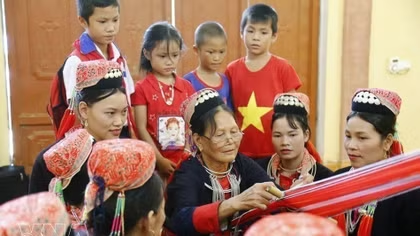
The directive also highlighted the importance of preserving and promoting traditional cultural values of ethnic minority groups, especially those at risk of fading, while promoting sustainable cultural and community-based tourism with the participation of local ethnic communities.
Provincial and municipal authorities were requested to complete plans for training, fostering and employing ethnic minority officials within the political system, and strengthen inspection and evaluation of the implementation of ethnic affairs-related policies.
The Prime Minister also called on the Vietnam Fatherland Front to intensify public mobilisation campaigns, promote self-reliance among ethnic minority communities and further consolidate national solidarity.