Politburo's Resolution 57-NQ/TW powers new growth momentum

NSO Director Nguyen Thi Huong said alongside foreign investment and the green economy, science – technology, innovation, the digital economy and digital transformation are the new drivers that can can pack a serious second-half punch.

Hanoi (VNA) – With traditional growth engines running out of room, Vietnam has pinned its hopes on science – technology, innovation and digital transformation to lift productivity, unlock new momentum and chase double-digit economic expansion.
2-5300.jpg
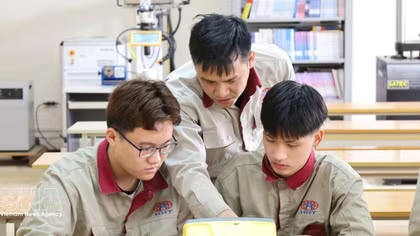
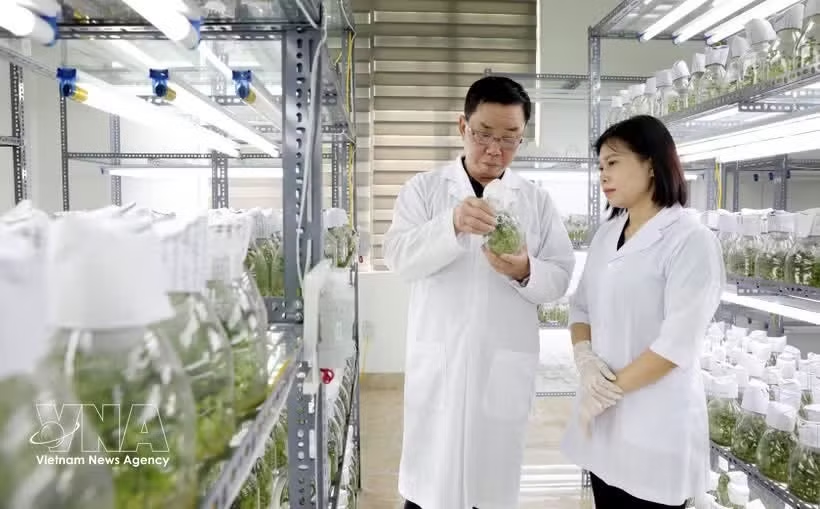
Thai Binh Seed Group JSC is one of Vietnam’s leading crop seed producers, holding rights for 30 varieties and operating three globally certified plants. (Photo: VNA)

The strategic pivot is enshrined in the Politburo’s Resolution 57-NQ/TW, a blueprint to smash bottlenecks with breakthroughs in science – technology development, innovation and national digitalisation and light the way to fast, lasting growth.

According to the Ministry of Finance’s National Statistics Office (NSO), gross domestic product (GDP) must rocket 11.7% in the second half to hit a double-digit pace for the year. That demands an 11.16% jump in the third quarter, pushing the nine-month expansion to 9.19%, before accelerating to 12.09% in the final three months.

The target is exceptionally steep, requiring growth engines to be fired strongly at once and deliver more tangible results in the second half. Yet, traditional drivers such as investment, exports, cheap labour and natural resources are approaching their limits.

NSO Director Nguyen Thi Huong said alongside foreign investment and the green economy, science – technology, innovation, the digital economy and digital transformation are the new drivers that can can pack a serious second-half punch.

Leaning harder into digital technology, artificial intelligence (AI), big data, cloud computing, the Internet of Things and automation production, trade and management will boost labour productivity, slash costs, optimise supply chains and fundamentally retool growth models, she added.

Assoc. Prof. Dr Nguyen Truc Le, Rector of the University of Economics and Business under Vietnam National University, Hanoi, noted that the world’s biggest success stories over the past half-century all put science, technology and innovation right at the heart of their playbooks.

The lesson from abroad is clear: science – technology can help a country bust through the limits of resources, workforce and market size. When productivity and innovation capacity climb, the same old pool of capital, workers and raw materials can generate a whole lot more value, he said.

Dr Nguyen Duc Hien, Vice Chairman of the Party Central Committee’s Commission for Policies and Strategies, warned that the 2026 double-digit growth target piles on massive pressure. Against that backdrop, shifting to a growth model powered by science, technology, innovation and digital transformation is an imperative.

Pham Anh Tuan, Deputy Director of the Institute of Vietnam and World Economy, said after more than a year of turning Resolution 57-NQ/TW into action, enterprises have a much sharper sense of just how much science, technology and innovation matter.

That lightbulb moment is a crucial first step because companies are the ones who actually take research breakthroughs and technology solutions from the lab to the factory floor and the marketplace. But a gap still yawns between what people now understand and what’s actually happening on the ground, especially among small and medium-sized enterprises, he added.

The NSO reported that technology adoption at many firms is still stuck in low gear while spending on R&D, digital infrastructure and top-tier talent remains too inadequate. So in the second half, the payoff from science and technology will mostly show up by fine-tuning what the economy already does rather than igniting an immediate growth spurt.

To stay on a double-digit track, Vietnam must shift from a capital- and labour-intensive model to one driven by productivity, science, technology, digital transformation and corporate innovation. That requires science and technology to move beyond paper and research labs. They have to seep onto factory floors, into corporate boardrooms and through public services. Research findings only pay off when they turn into highly practical products, processes or business models.

Harnessing AI, big data, cloud computing, IoT and automation can help companies shorten processes, cut costs, improve product quality, optimise supply chains and reach new markets. Technology can also support analysis of customer demand, inventory management and quality control, enabling faster and sharper decisions.

That’s why Tuan insisted that science, technology, innovation and digital transformation must be deeply woven into day-to-day business operations to improve efficiency, create new products, and slowly but surely lift Vietnam’s place in the market./.

en.vietnamplus.vn

Other News

Vietnamese culture connects generations in Canada

Vietnamese culture connects generations in Canada

Beyond language skills, children learn about Vietnamese history, stories of filial devotion and national heroes, and the importance of respecting parents and teachers. Weekend classes begin with the national anthem, while festivals and traditional holidays offer opportunities to make greeting cards, prepare traditional cakes and learn to wrap 'banh chung' (square sticky rice cakes).

Vietnam Studies Centre opens in northeastern Thailand

Vietnam Studies Centre opens in northeastern Thailand

The centre would serve as a valuable academic hub for teaching and promoting Vietnamese language, culture and history, while fostering people-to-people exchanges and connecting younger generations of the two countries.

950 years of Quoc Tu Giam: A milestone in Vietnam's educational and cultural history

950 years of Quoc Tu Giam: A milestone in Vietnam's educational and cultural history

Russia’s senior researcher in Oriental studies Dr. Anatoly Sokolov said that although founded nearly a millennium ago, Quoc Tu Giam remains far more than a historical monument. It has continued to pass on the tradition of learning to successive generations and remained an integral part of Vietnam’s cultural and educational life.

Vietnam plans to go green by expanding ASEAN eco-schools model

Vietnam plans to go green by expanding ASEAN eco-schools model

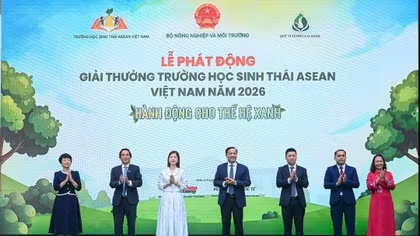
At the launch ceremony, Deputy Minister of Agriculture and Environment Le Trong Yen said schools play an important role in shaping young people's knowledge, character, and habits. Daily practices such as saving electricity and water, sorting waste and caring for trees could help students understand the value of natural resources and their responsibility towards the environment, while spreading positive habits to families and communities.

Young generation helps strengthen Vietnam–RoK friendship

Young generation helps strengthen Vietnam–RoK friendship

Through the seminar and bilingual contest, VESAMO aimed to provide a platform for young people to share knowledge, pursue their aspirations and contribute to closer friendship and comprehensive cooperation between the two nations.

Vietnamese community in Japan is encouraged to further contribute to national development

Vietnamese community in Japan is encouraged to further contribute to national development

Welcoming the Vietnamese community's efforts and contributions, the General Secretary and President affirmed that the Party and State will continue improving institutions and policies to create favorable conditions for overseas Vietnamese to engage more deeply in the country's socio-economic development and play a proactive role as partners and co-creators in nation-building.

Ho Chi Minh City pushes English as a second language in schools

Ho Chi Minh City pushes English as a second language in schools

In 2027-2028, Ho Chi Minh City targets 20-30% of managers, teachers and staff in English proficiency training, 30% of establishments providing training in English/STEM/STEAM teaching methods, at least 30% of educational establishments with a complete English-speaking environment, and at least 15% of educational establishments teaching subjects in English.

Empowering people with disabilities to be immune to online scams

Empowering people with disabilities to be immune to online scams

Notably, it has organized online scam prevention training courses for more than 1,000 young people with disabilities. In coordination with the Hanoi Police, it has also run awareness campaigns and guided members on identifying fraudulent schemes, protecting their accounts and personal data, and verifying information before sharing it on social media.

New plan aims to empower people with disabilities, promote social inclusion

New plan aims to empower people with disabilities, promote social inclusion

By 2030, Vietnam aims to ensure social security and improve the quality of life of people with disabilities, with priority given to those facing hardship or unable to support themselves. It also aims to ensure their appropriate participation in elected bodies and enable them to benefit from the country's development achievements.

Vietnam advances towards high-quality, specialised healthcare

Vietnam advances towards high-quality, specialised healthcare

Recent developments in Hanoi and other localities highlight efforts to develop specialised treatment, standardise professional practices and apply artificial intelligence (AI) and advanced medical techniques, towards a more modern healthcare system.

Vietnam, US step up technology cooperation in search for war martyrs' remains

Vietnam, US step up technology cooperation in search for war martyrs' remains

Addressing a dialogue on war legacies in Southeast Asia organised by the Stimson Centre in Washington, D.C on October 21, Vietnamese Ambassador to the US Nguyen Quoc Dung briefed representatives of US government agencies, non-governmental organisations and experts on Vietnam’s efforts to address war consequences, while calling for international support and cooperation in urgent humanitarian work.