Hanoi (VNA) – As its population ages and birth rates decline, Hanoi is seeking to turn the demographic challenge into an opportunity by developing a “silver economy” that both meets the needs of older people and taps their knowledge, experience and purchasing power as resources for sustainable growth.
Older people – an endogenous resource
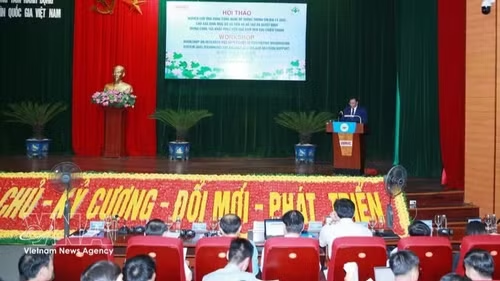
Assoc. Prof. Dr Bui Thi An, Chairwoman of the Hanoi Female Intellectual Association, said developing the “silver economy” should be treated as an important task as population ageing accelerates. It should go beyond health care and social welfare to make effective use of the intellectual resources and experience of older people, particularly older women – who make up a considerable share of the older population.
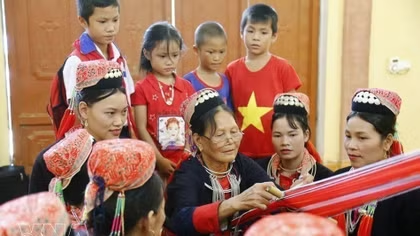
The elderly have already been contributing to many areas, from science and the arts to traditional crafts, production, business and social activities. Their contributions should therefore be viewed as an important development resource rather than measured simply by age, An said.
“In a period when Hanoi is undergoing digital transformation and promoting innovation, failing to tap the knowledge and experience of older people would be a major waste of resources,” she opined.
Assoc. Prof. Dr Tran Viet Luu, Deputy Chief of the Central Office of the Vietnam Association of the Elderly (VAE), said older people, despite no longer holding positions in state agencies or social organisations, retain valuable experience, prestige, knowledge and, especially, a strong desire to contribute.
Data from the VAE’s Hanoi chapter show that the capital city is currently home to more than 290,000 retired former officials, civil servants and public employees. Of these, around 70,000–100,000 are intellectuals, scientists, teachers, artists, successful entrepreneurs and craft artisans, representing a valuable pool of knowledge.
From care to empowerment
Hanoi, a major urban centre that attracts a large number of young workers, is also facing persistently low birth rates. In the first six months of 2026, 37,629 babies were born, down 2,873 from the same period last year, making the goal of restoring fertility to the replacement level challenging.
Meanwhile, the growing elderly population is creating greater demand for healthcare and social welfare services while also generating a new market for health care, rehabilitation, tourism, entertainment, housing, financial services and technology.
This provides a foundation for Hanoi to gradually develop a “silver economy” in a humane and sustainable manner, meeting the needs of an ageing society and effectively harnessing local endogenous resources.
An said Hanoi should develop long-term policies placing older people at the centre of planning and service provision. The city needs an ecosystem that ensures social welfare and healthy living while enabling older people to continue working, contributing and passing on their knowledge and experience.
An integrated ecosystem should be formed, connecting elderly care models, clubs, community centres, cultural and sports facilities, and age-friendly living models. The goal is not only to provide better care for older people, but also to enable them to maintain social connections, continue participating in community life, and reduce the risk of loneliness and social isolation.
Nguyen The Toan, Chairman of the VAE’s Hanoi chapter, said municipal authorities have introduced practical policies to better protect, care for, and promote the role of older people, including free public transport and health insurance for those aged 70 and above.
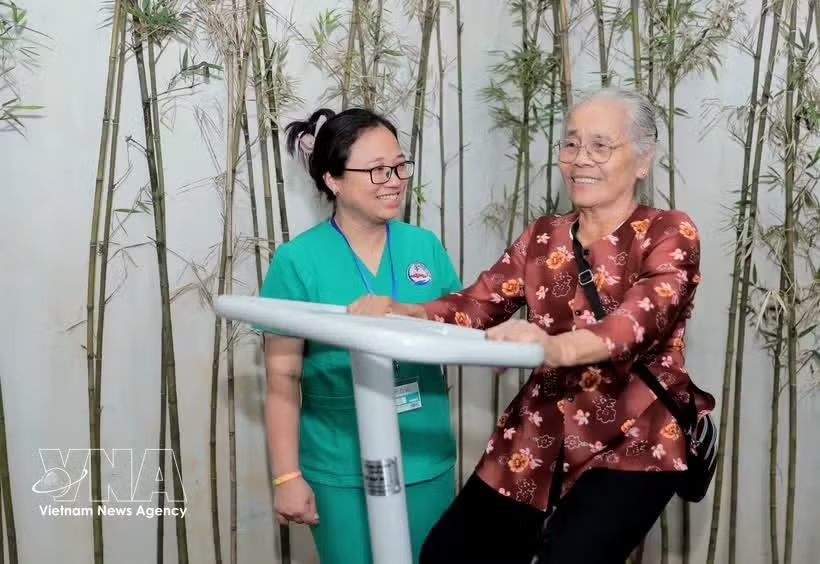
New care models are also emerging. In Long Bien ward, a daytime elderly healthcare facility launched in June 2026 allows older people to receive health monitoring, chronic disease management, nutrition advice, rehabilitation, exercise, mental health care, and opportunities to engage in community activities, and return home each day.
Meanwhile, Dong Da ward began piloting a similar daytime care model in July, providing health monitoring, exercise, rest, and community activities without overnight stays.
These initiatives demonstrate Hanoi’s gradual shift from a predominantly family-based approach toward a multi-layered care network linking primary health care, communities, families and professional services. Beyond responding to population ageing, the solution could create new markets for elderly care, rehabilitation, nutrition and home-based services, making the “silver economy” a new driver of the capital’s sustainable development./.